Leave Tin Shui Wai Station by Exit E3 around 10am and visit Tsui Sing Lau Pagoda, Tang Ancestral Hall, then Kun Ting Study Hall and the guesthouse next door, Ching Shu Hin. Allow roughly two and a half to three hours from the station and back. Together the three stops show how a village expressed its hopes for children, honoured ancestors and made room for learning. The pagoda usually closes on Tuesdays. The interiors on this route take a break from 1pm to 2pm, so plan the morning around the building you most want to enter.
Save three places before leaving the station
Mark Tsui Sing Lau Pagoda, Tang Ancestral Hall and Kun Ting Study Hall on your map. Ching Shu Hin adjoins the study hall and fits naturally into the third stop. MTR places the Ping Shan Heritage Trail about a three-minute walk from Tin Shui Wai Station Exit E3. That estimate gets you to the trail. Set aside separate time to walk the village lanes, look inside the buildings and return to the railway. MTR district guide
The full heritage trail stretches about 1.6 kilometres through Hang Mei Tsuen, Hang Tau Tsuen and Sheung Cheung Wai. It opened in December 1993. The buildings sit among homes and everyday village streets, so you can choose a few stops and still get a sense of the place. The published distance describes the full trail. This morning selects part of it and includes a return to the station. Find the three stops and your way back on the official map before you set off. Follow the public trail signs when a residential lane branches away. Antiquities and Monuments Office trail guide and map
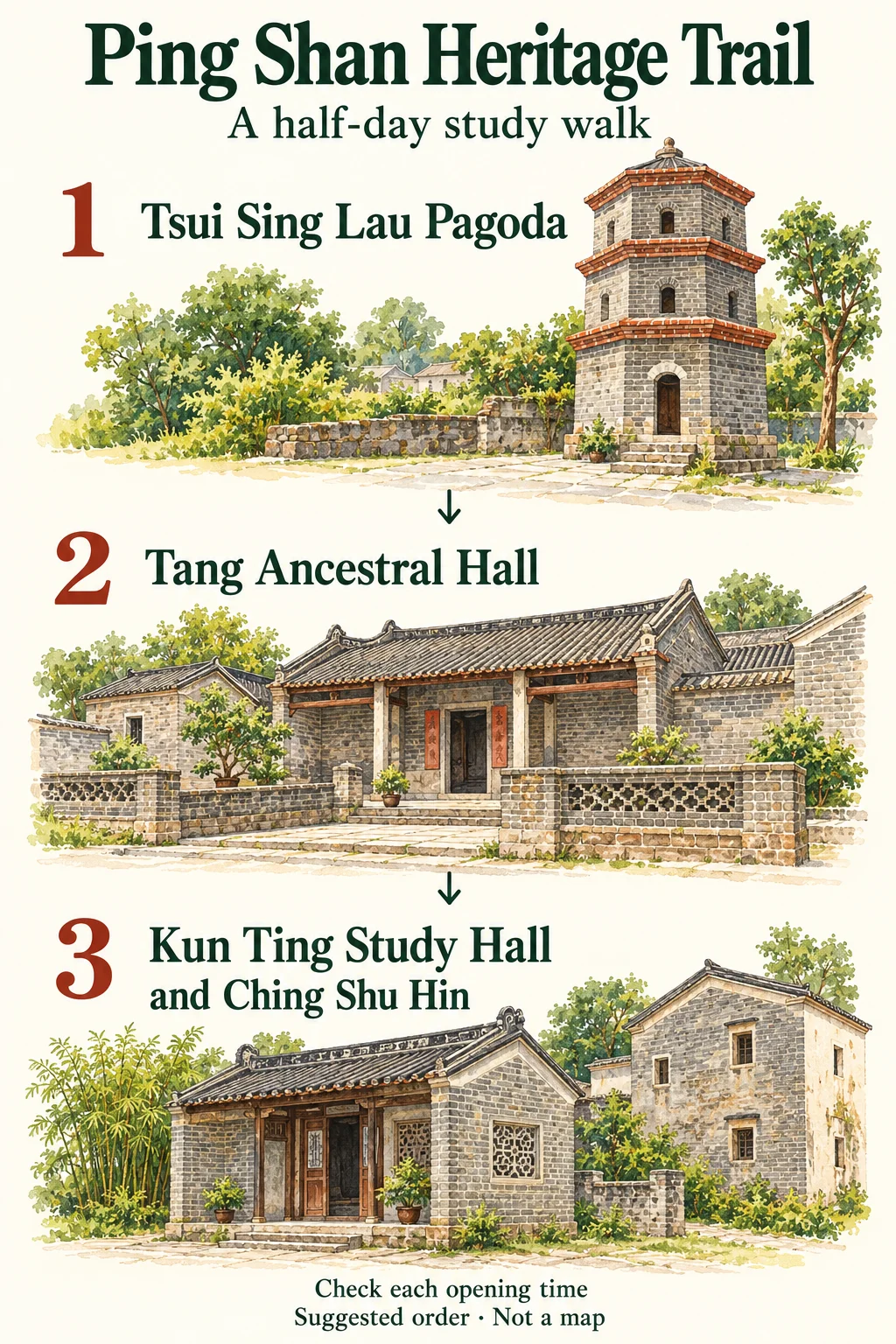
| Suggested morning | What to do there | If you have less time |
|---|---|---|
| 10:00–10:35 | Walk from Exit E3 to the pagoda and look for an angle that shows all three tiers | Study its exterior and compare its outline with the surrounding houses |
| 10:35–11:20 | Continue to Tang Ancestral Hall and follow the sequence of entrance, courtyards and halls | Stay in the open front section and save time for the study hall |
| 11:20–12:20 | Visit Kun Ting Study Hall and Ching Shu Hin together, looking for spaces for learning, worship and accommodation | Give the study hall priority and see the guesthouse from outside |
| From 12:20 | Return along the village lanes towards the station for lunch or a break | Check your walking route and leave time for the train afterwards |
These are suggested allowances, including the walking between stops. Anyone particularly interested in how a traditional school worked could give the study hall and guesthouse most of the morning. If you arrive close to midday, visit your preferred interior first, take lunch at 1pm and resume after 2pm.
Three brick eaves and a wish for success
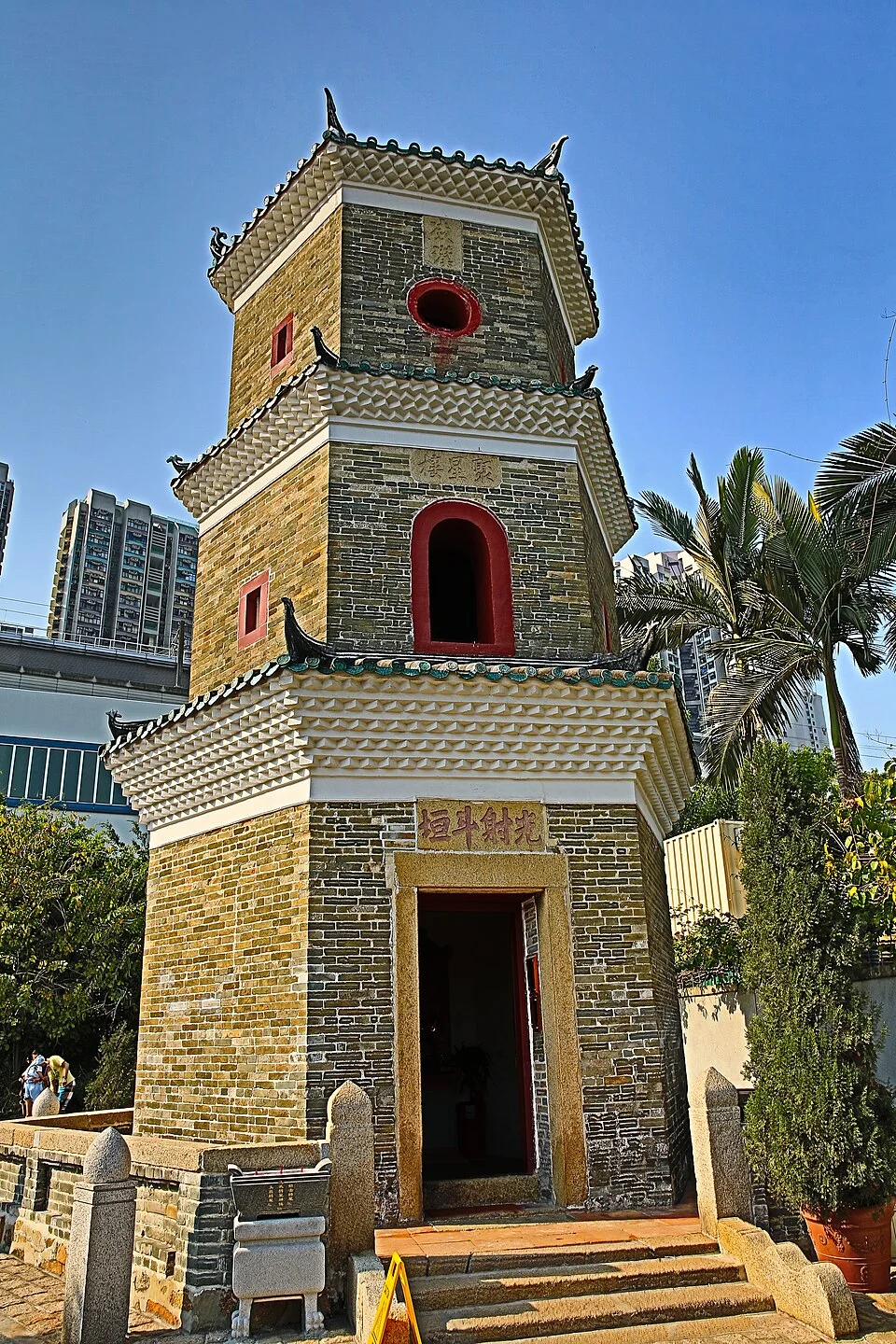
Step back from Tsui Sing Lau and look at its outline. The grey-brick tower is hexagonal, approximately thirteen metres high and three storeys tall. The bricks project outwards at each level to form an eave. Moving between public viewpoints gives a better sense of its shape than an isolated close-up of the entrance. Remember that vertical outline when you reach the lower halls later in the morning. Pagoda description and opening hours
According to the Ping Shan Tang genealogy, a seventh-generation ancestor built the pagoda more than six centuries ago. Village elders associated its site and orientation with protection and success in the imperial civil service examinations. Fui Shing, a deity associated with examination success, is honoured on an upper floor. The family tradition helps explain why a tower belongs on a walk about education. You can read the exterior from ground level and follow the access arrangements on the day. In a local feature, writer Kwong Ka-sze traced similar aspirations in the district's ancestral and study halls. HK01 feature on Ping Shan and learning
At Tang Ancestral Hall, count the courtyards
The hall stands between Hang Tau Tsuen and Hang Mei Tsuen. Pause in front of the entrance before looking into the building. Each of the two platforms at the front has an inner granite column and an outer column of red sandstone. Then follow the sightline into the open part of the building. Two courtyards separate three halls and admit daylight between the roofs. A facade photograph gives little sense of this sequence. Tang Ancestral Hall architectural notes
The clan genealogy attributes the hall to a fifth-generation ancestor about seven centuries ago. The building still serves worship, festivals, ceremonies and clan meetings. The ancestral tablets in the rear hall help explain that continuing role. The roof ridges offer a different detail to look for from a suitable public position, including Shiwan ceramic dragon-fish and lion figures. During a ceremony, the permitted front area or the exterior can make a worthwhile stop. Agree a place to meet your companions along the public lane.
Find the classrooms at Kun Ting Study Hall
The study hall stands in Hang Mei Tsuen. Tang Heung-chuen built it in 1870 to honour his father, Tang Kun-ting, and to provide a place for the education of younger members of the clan and for ancestral worship. Compare its two halls and single courtyard with the three halls at the previous stop. From a permitted viewpoint, look first at the chambers beside the courtyard, then at the altar in the central bay of the rear hall. Teaching and worship took place around the same small court. Kun Ting Study Hall visitor information
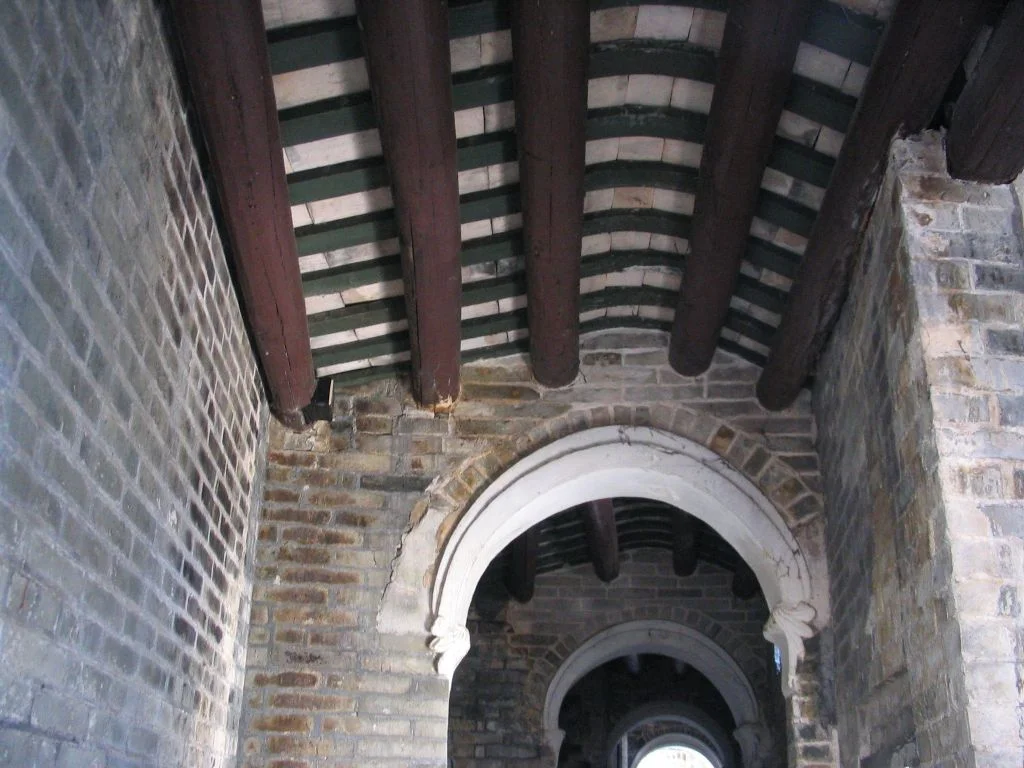
The Antiquities and Monuments Office's education trail identifies the chambers on either side of the courtyard as former classrooms. The loft above the front hall held a library, while Ching Shu Hin next door accommodated teachers. Those relationships are legible from the ground even when an upper space is outside visitor access. Education continued here for a period after the imperial civil service examinations ended in 1905. For a family visit, ask a child to point out where pupils could gather, where books might be kept and where a visiting teacher could sleep, then check the interpretation together. Education heritage trail account of the study hall
A few steps from the school to its guesthouse
Ching Shu Hin was built shortly after the study hall to accommodate distinguished visitors and scholars. The L-shaped guesthouse has two storeys, with a small upper-level passage connecting it to its neighbour. It contained chambers, a lobby, a kitchen and bathrooms. Find a position in the open area where you can see how closely the two buildings stand together. Then choose one carved panel, bracket or patterned window grille. Murals and plaster ornament are further clues to the attention given to receiving guests. Ching Shu Hin description and visitor information
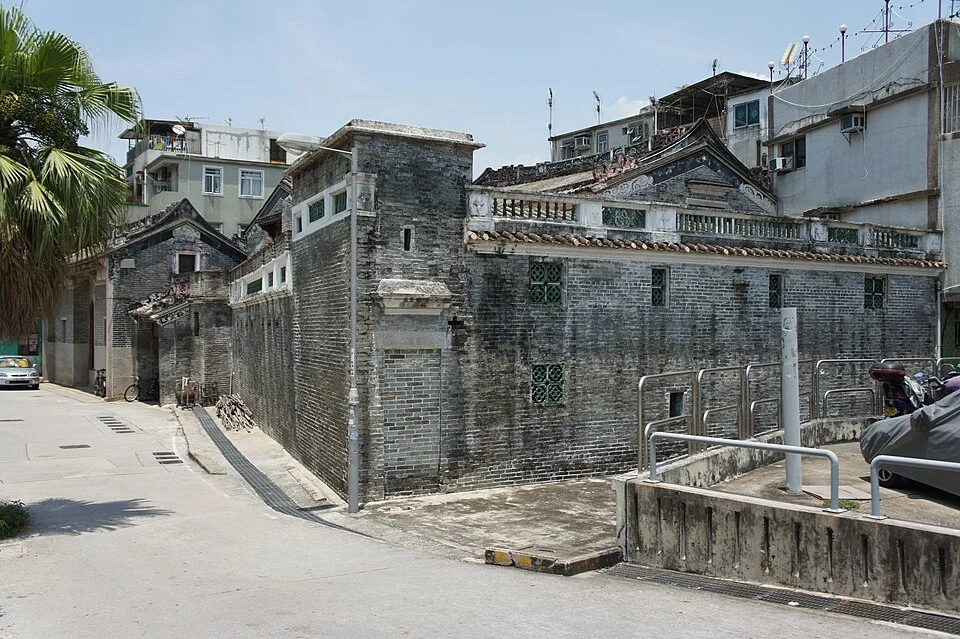
By the end of the morning, the three stops tell one story at different scales. The tower expressed hopes for success in examinations. The ancestral hall brought different generations of the clan together. The study hall and guesthouse supplied classrooms, books and a place to house teachers. Where photography is permitted, try pairing one detail of the courtyard with a comparable detail of the guest accommodation. The two photographs will recall how the buildings worked together.
Choose the day and allow for the midday break
The pagoda normally opens Monday and Wednesday to Sunday, 9am–1pm and 2pm–5pm. It closes on Tuesdays except public holidays, and also on Christmas Day, Boxing Day, New Year's Day and the first three days of Chinese New Year. Tang Ancestral Hall, Kun Ting Study Hall and Ching Shu Hin normally open daily from 9am to 1pm and 2pm to 5pm, closing on the first three days of Chinese New Year. On an ordinary Tuesday, centre the visit on the halls and the guesthouse and look at the pagoda from the public lane. Check the individual visitor pages before travelling for temporary changes.
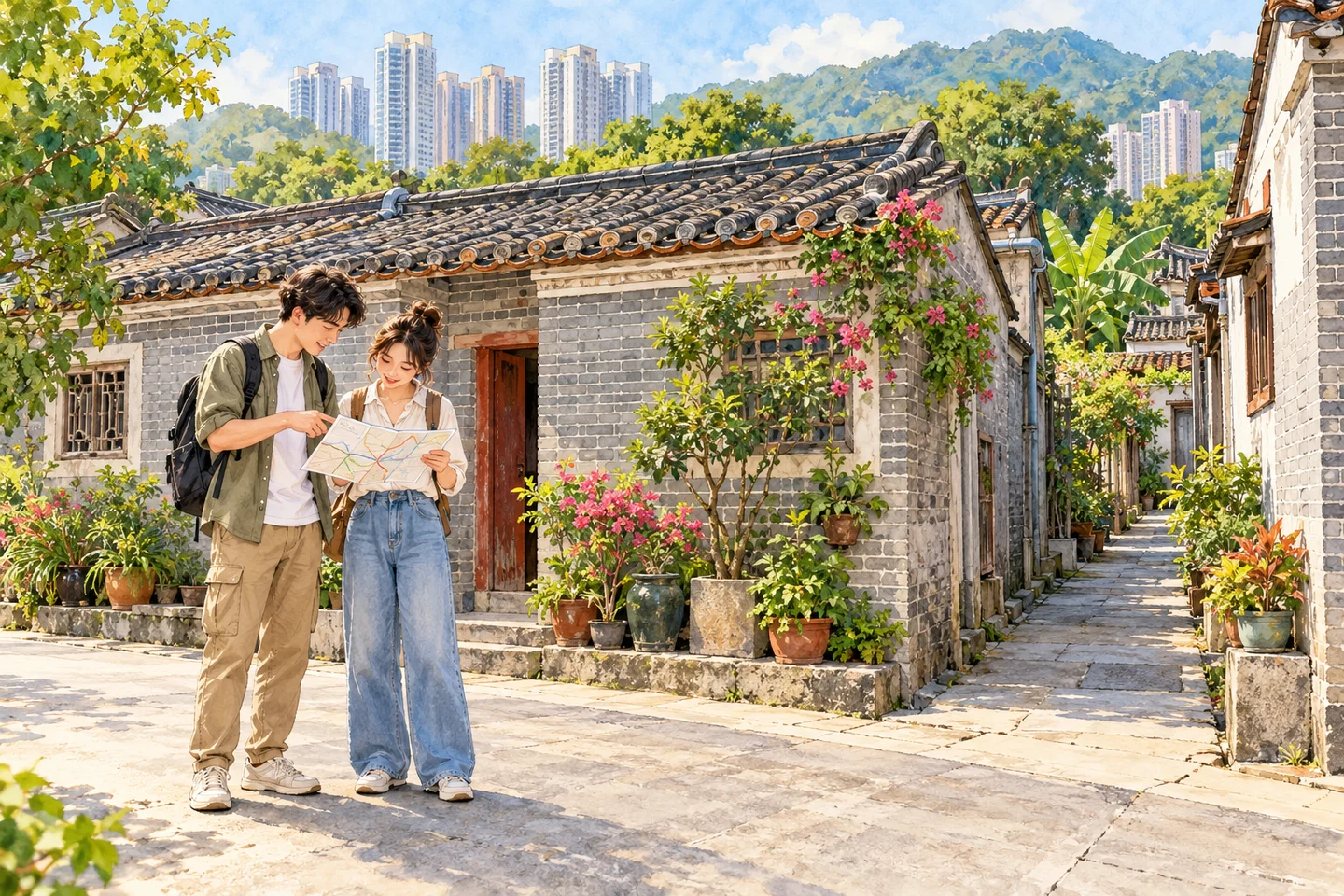
If rain or tired legs call for a shorter outing, keep the adjacent study hall and guesthouse and allow an unhurried return along the lanes. Steps, thresholds and narrow passages vary by building. For a visit requiring step-free access, confirm the specific stops and the connections with the Antiquities and Monuments Office in advance. Lunch near Tin Shui Wai Station puts you back at a familiar starting point for the next train.
Your pre-journey checklist
- Save Tin Shui Wai Station Exit E3 and the three stops. Kun Ting Study Hall and Ching Shu Hin adjoin one another.
- Keep 1pm–2pm for lunch or a rest and allow separately for the journey after returning to the station.
- Check the pagoda's Tuesday and holiday arrangements, then the individual hours for the halls.
- Look for the pagoda's eaves, the ancestral hall's two courtyards, the study hall classrooms and the guesthouse connection.
- When shortening the walk, retain the building that interests you most and return by the public village lanes.
Sources & further reading
This article draws on the media coverage and public information below. Event and transport arrangements can change; check the latest details before travelling.
- AMO: Ping Shan Heritage Trail and visitor mapamo.gov.hk (Opens in a new tab)
- MTR: rail access to the trailmtr.com.hk (Opens in a new tab)
- AMO: Tsui Sing Lau Pagodaamo.gov.hk (Opens in a new tab)
- AMO: Tang Ancestral Hallamo.gov.hk (Opens in a new tab)
- AMO: Kun Ting Study Hallamo.gov.hk (Opens in a new tab)
- AMO education heritage trail: classrooms, library and teachers’ accommodationamo.gov.hk (Opens in a new tab)
- AMO: Ching Shu Hinamo.gov.hk (Opens in a new tab)
- HK01: the Tang clan and education in Ping Shanhk01.com (Opens in a new tab)
Make it your journey
For another look at how traditional buildings organise movement and light, save the Nan Lian Garden and Chi Lin Nunnery walk for a separate day. It offers a useful comparison between the garden's covered walks and courtyards and the study spaces at Ping Shan.