Taking personal medicines into Hong Kong is not covered by a single statement that they are “for my own use” or “prescribed by a doctor”. An import-licence exemption for a reasonable personal quantity, prescription requirements for controlled medicines, and prior written approval for visitors carrying dangerous drugs are separate checks. This guide mainly concerns short-term visitors bringing their own Western medicines. The Drug Office explicitly includes transit visitors in its advance-approval advice for dangerous drugs.
Identify the ingredients, not the colour of the box
Before travelling, list each medicine’s name, active ingredients, dosage form, strength and total quantity you intend to carry. Describing it only as a cold remedy, sleeping medicine or foreign brand may not be enough to establish its Hong Kong classification. Do not assume that a brand has the same ingredients in every market.
The Drug Office’s advice on buying medicines abroad explains that classification depends on factors including ingredients, intended use and dosage form, rather than simply a seller calling it a household item or supplement. Availability in an ordinary overseas shop does not establish that Hong Kong has no import or possession controls.
The legal term “poison” in Hong Kong medicines regulation is not synonymous with a substance intended to harm someone or an illegal recreational drug. The government’s Legislative Council reply of 21 October 2026 explains that distinction. A reference to a Part 1 poison is not a reason to stop treatment yourself: ask a healthcare professional and the relevant authority to check the medicine and paperwork.
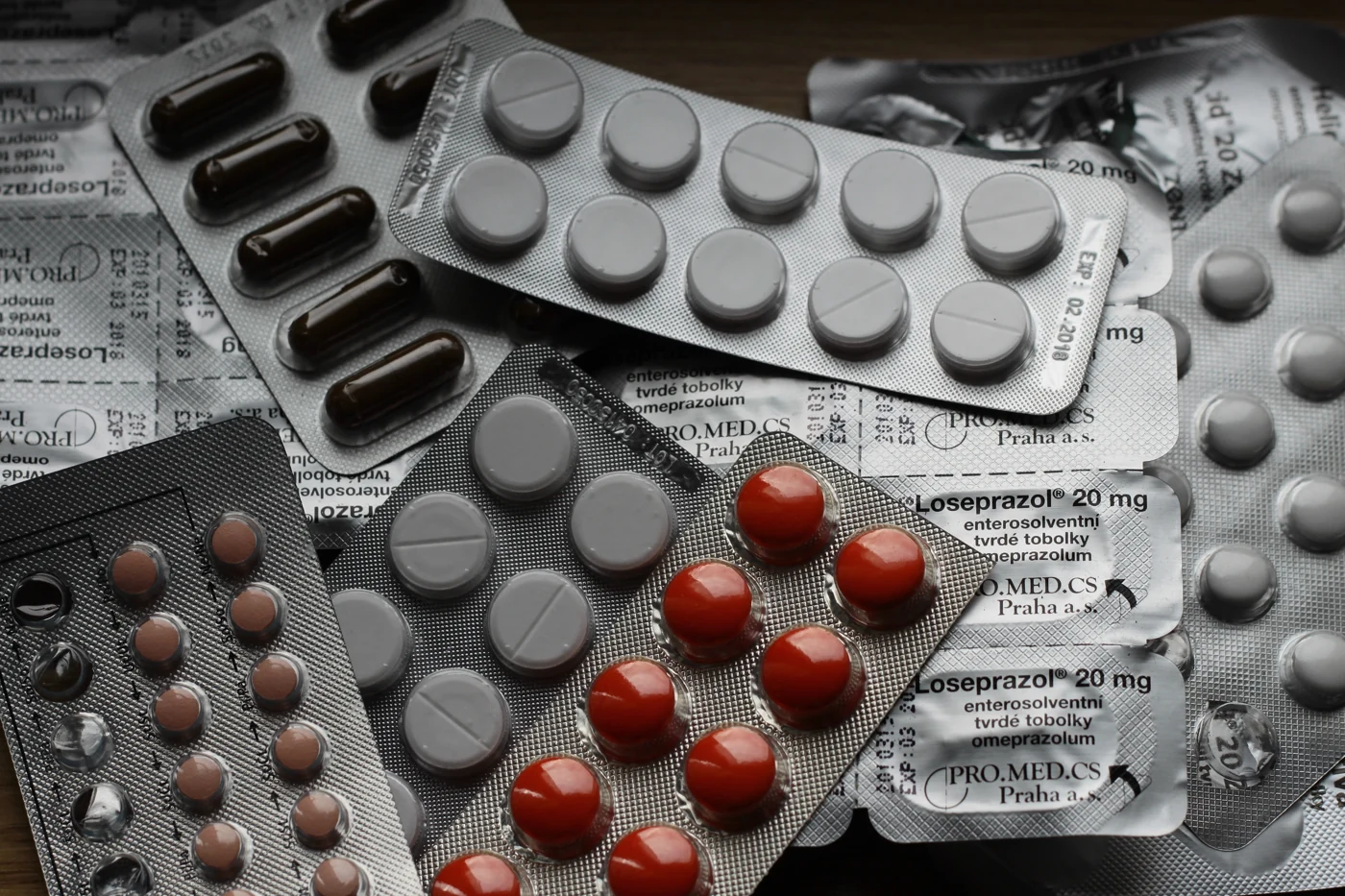
A reasonable personal quantity is not a universal number of boxes
Question 16 in the Drug Office FAQ says that medicines in the accompanied personal baggage of someone entering Hong Kong, in a reasonable quantity for that person’s own use, may be exempt from the import-licence requirement. This is not a general permission for bulk purchases for others, online resale or postal imports.
In the Legislative Council reply, the government explains that Customs considers individual circumstances, relevant information and product packaging when assessing reasonable personal use, consulting the Department of Health where necessary. There is therefore no basis here for a blanket allowance such as “three boxes” or “six months for everyone”.
As practical preparation, organise the length of your stay, current prescription and actual total quantity together so that the relationship to your needs is clear. If you need a reserve supply, have a long trip, carry medicine for a child or place it in somebody else’s suitcase, explain the real circumstances to the authority in advance. Splitting a supply between containers or bags does not establish compliance by itself.
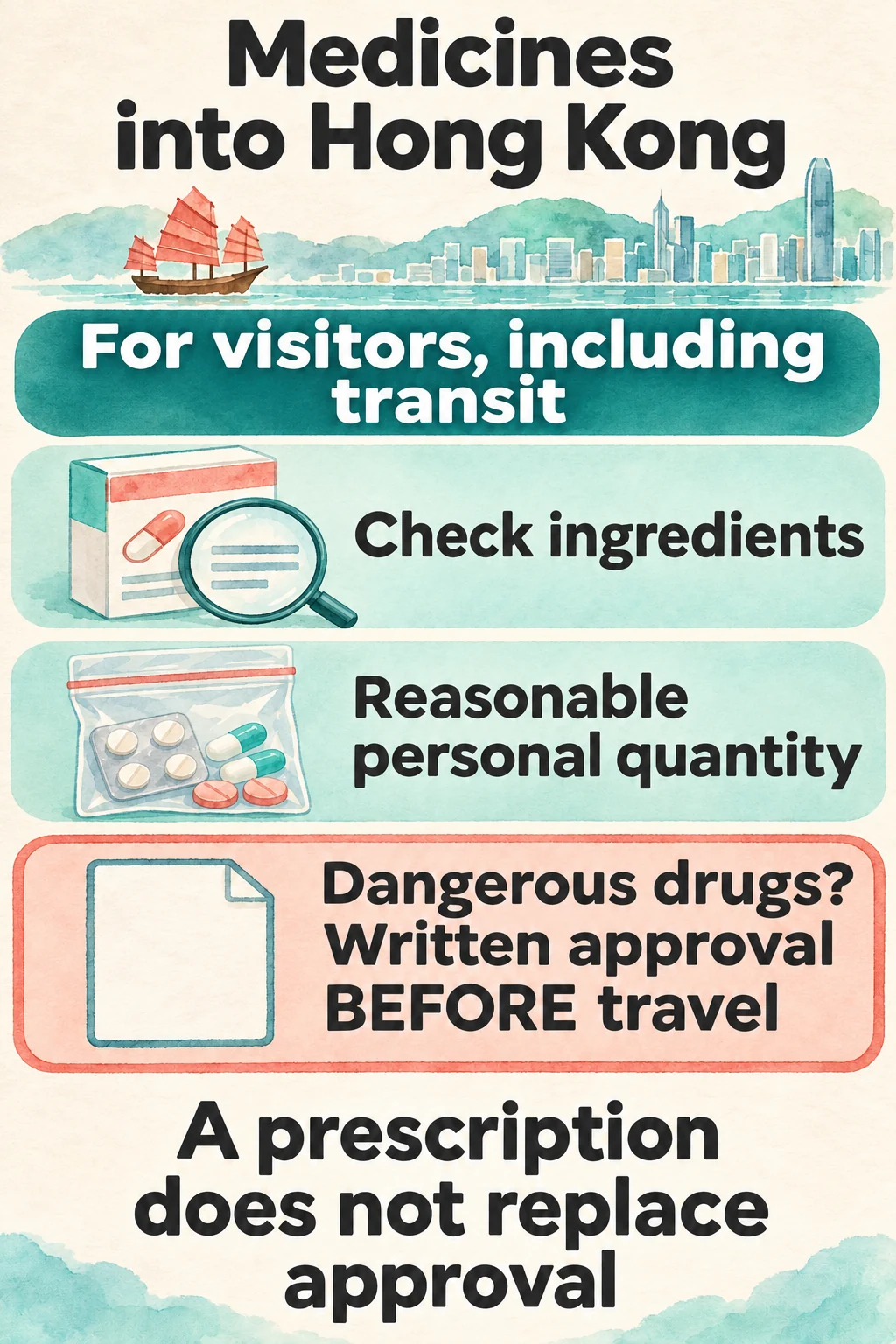
Check the exemption, prescription and approval in separate steps
| Situation | What needs checking |
|---|---|
| A reasonable personal quantity in your own accompanied baggage | Check eligibility for the import-licence exemption and whether the ingredients are subject to other controls. |
| The medicine is an antibiotic or a Part 1 poison | The government states that a doctor’s prescription is still required to carry it across the boundary. The ordinary personal-use exemption alone is insufficient. |
| A visitor brings a medicine containing a dangerous drug as defined by the Dangerous Drugs Ordinance | The Drug Office requires prior written approval before visiting Hong Kong and a doctor’s letter containing the specified information. |
| The visitor only transits Hong Kong | The Drug Office’s advance-approval advice expressly includes transit visitors; “not entering for sightseeing” is not enough to decide no approval is needed. |
These distinctions come from Drug Office FAQ question 16 and the government’s medicines-control explanation. A prescription does not automatically replace the Department of Health’s written approval. Approval issued by another country or territory should not be treated as Hong Kong approval either.
Returning Hong Kong residents, Chinese herbal medicines and proprietary Chinese medicines, postal imports and commercial purchases require checks appropriate to their own status and goods. Do not apply this short-term visitor process to them automatically. This article explains preparation, not personal treatment, substitutions or dosage.
If written approval is needed, make the doctor’s letter complete
The Drug Office specifies the following six items. The letter should be issued by the local doctor who prescribes the dangerous drug. Include the required details for every controlled medicine you intend to carry, rather than listing just one of several.
- The doctor’s full name and registration number.
- The clinic’s name and address.
- The date the letter is issued.
- The traveller’s full name and residential address.
- The medicine’s name, dosage form, strength and total quantity to be carried.
- The doctor’s original physical signature.
The official answer to question 16 links to a sample and says processing normally takes 10 working days after all required documentation has been received. This is a normal processing indication, not an approval guarantee. Do not start a personal countdown from an initial email if the necessary documents are still incomplete.
Ask about the application procedure through pharmgeneral@dh.gov.hk or +852 2572 2068, as listed on the official page. Explain your visitor status, intended arrival and departure dates, any transit arrangements, and the ingredients and quantity. Submit documents as directed by the department. Do not put private medical records, addresses or identity documents in public comments.
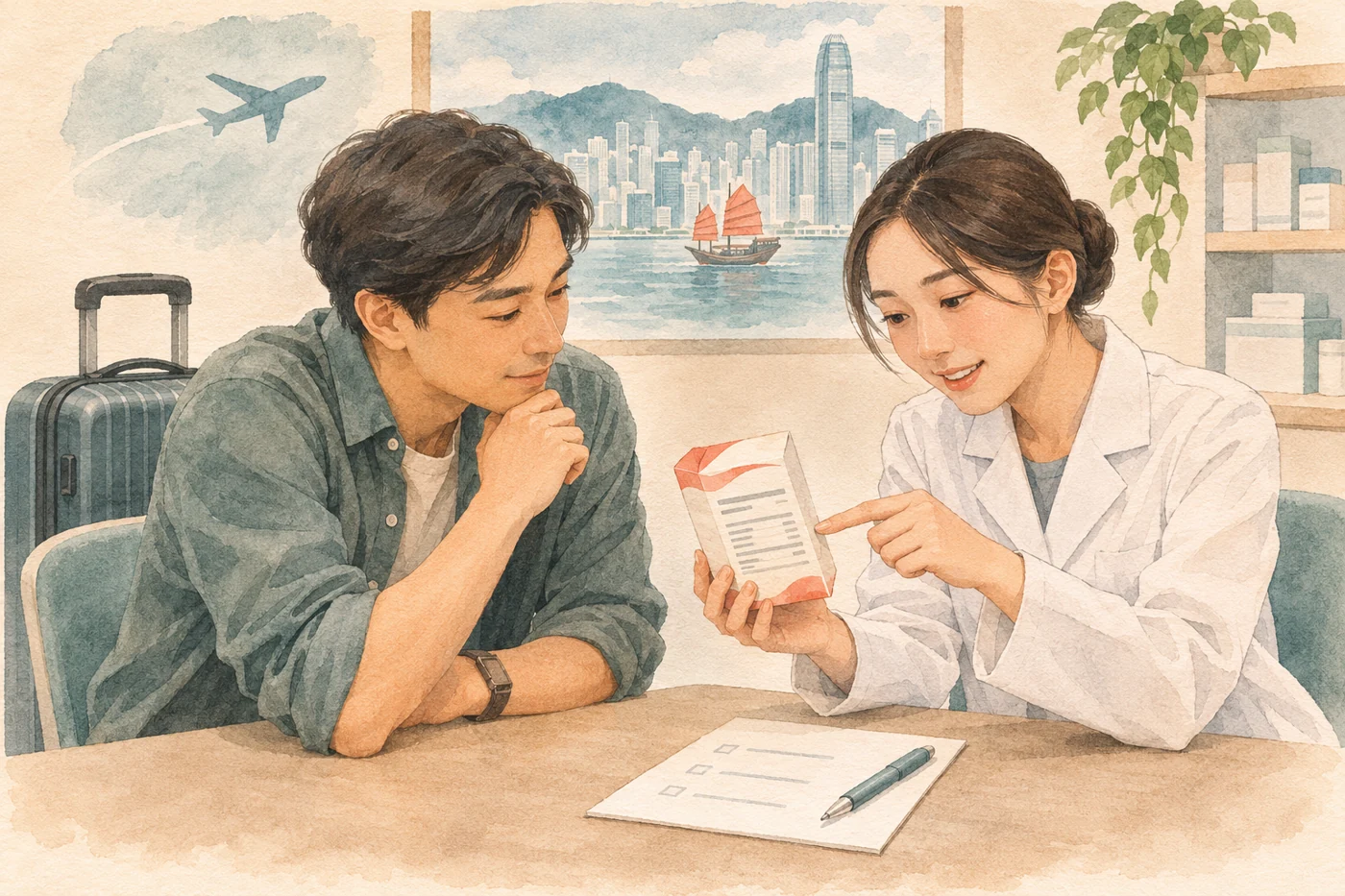
Keep identification details when packing
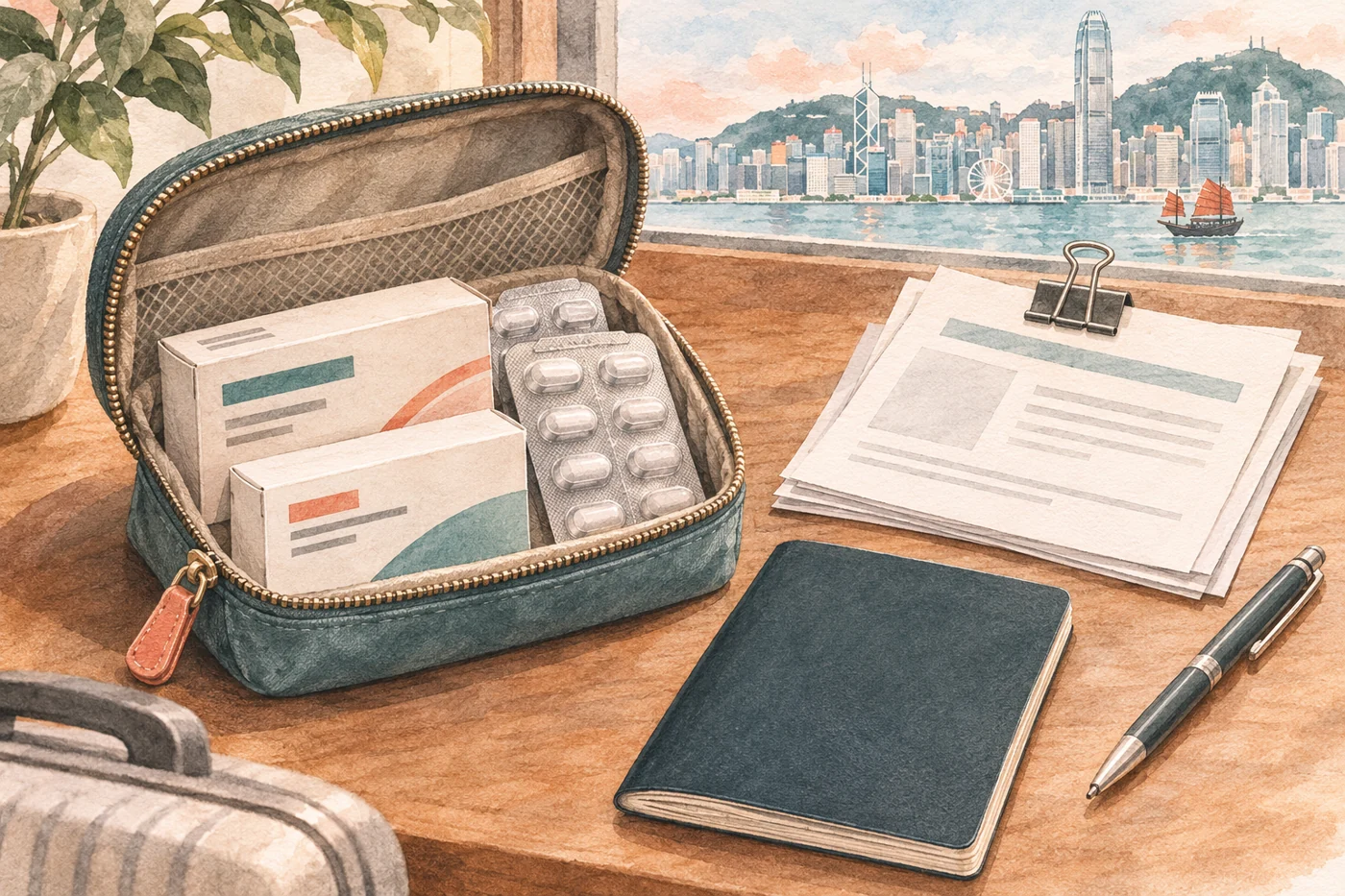
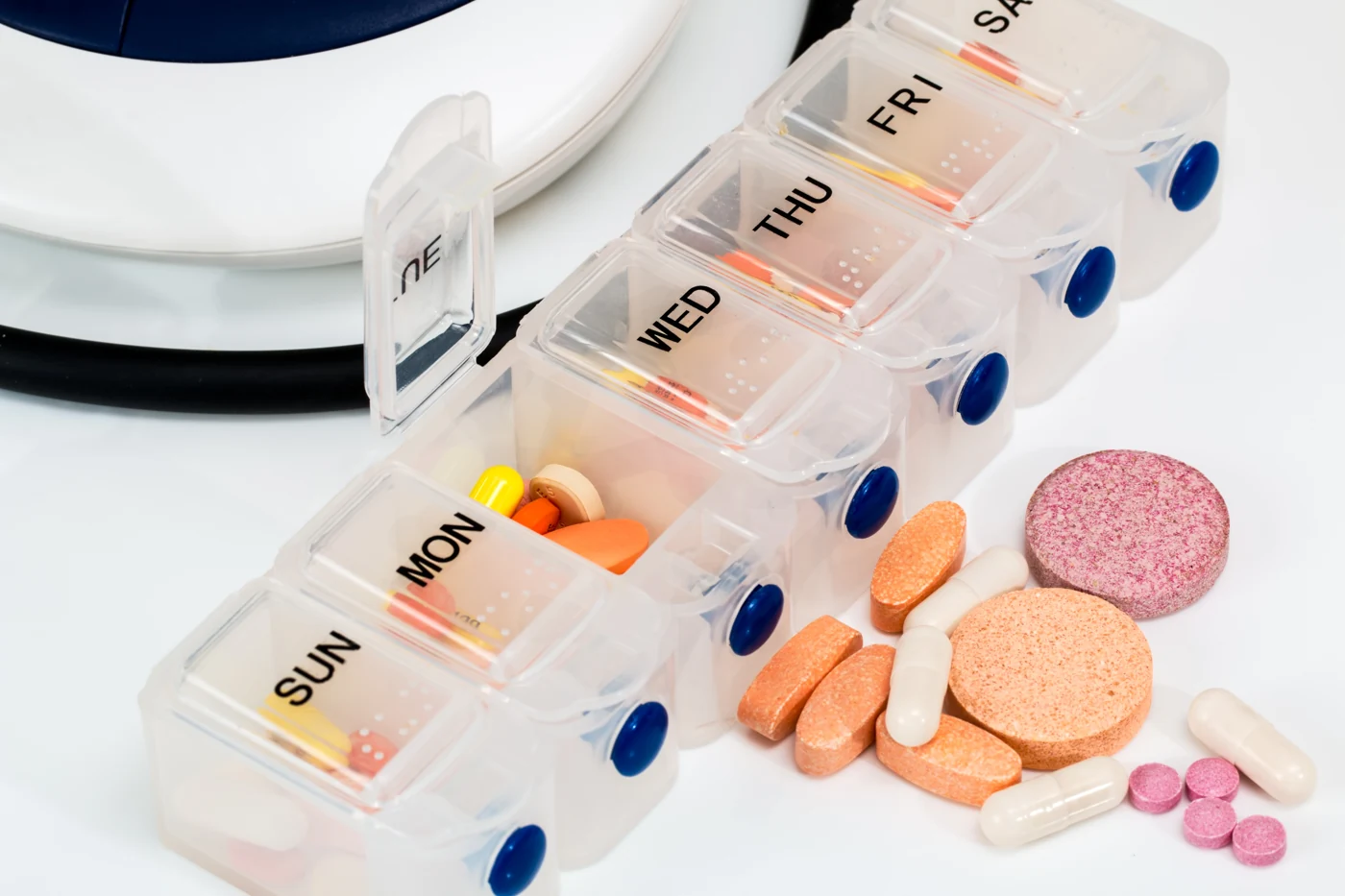
Original boxes, leaflets and prescription information help explain what you are carrying and who uses it. Keep the medicines and supporting documents identifiable against one another. If you normally use a pill organiser, ask your doctor or pharmacist about suitable storage and preserve enough original information to identify the ingredients and prescription. This is not an instruction to change treatment or storage arrangements on your own for border clearance.
The Drug Office says the relevant visitors must keep the local doctor’s letter and Department of Health approval with them on entering Hong Kong and during their stay. Check that both have actually been obtained, are readable and correspond to the medicines carried. “Application sent” does not mean “approval issued”. The location of medicines and documents in your luggage also needs to respect professional storage advice and carrier rules.
If you will need a further supply in Hong Kong, Drug Office FAQ question 15 recommends discussing availability and appropriate arrangements with a local doctor or pharmacist beforehand. A Hong Kong registration record does not mean that every pharmacy has stock. Do not replace a medicine with something that merely looks similar because you packed too little.
Border clearance, aviation screening and the next destination are different checks
Permission to bring a medicine into Hong Kong does not automatically establish that liquids, needles, cooling materials or other hand-baggage items meet aviation security and carrier requirements. Check the actual airport, flight and airline separately. A conclusion about medicine import rules does not cover every baggage rule.
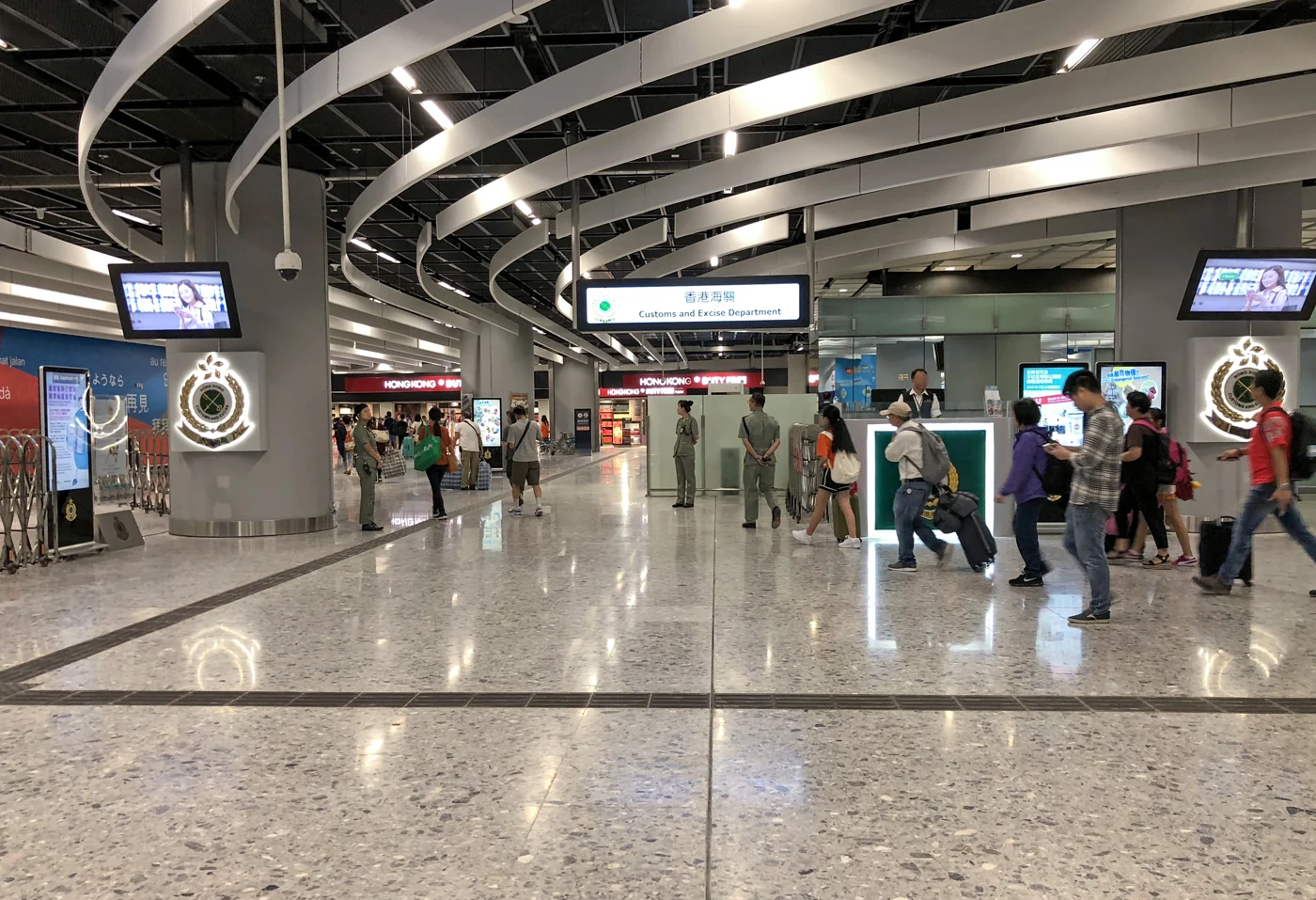
If you continue to Macau, Shenzhen or elsewhere, check that next destination’s import and carrying requirements too. Hong Kong approval does not automatically extend to the next place. Travelling by road, rail or air is not in itself a medicine-control exemption. Hong Kong Customs’ controlled-imports page, under “Pharmaceutical Products and Medicines”, also sets out the accompanied-personal-baggage conditions.
For uncertainty about medicine imports or exports, contact the Drug Office on +852 3974 4180; for general Customs clearance, contact Hong Kong Customs on +852 2815 7711. These details are from the official Drug Office guidance; check the current page before travelling. RTHK’s report on the Legislative Council reply provides background, while permission for a particular medicine still depends on the responsible authority and applicable requirements.
Your pre-journey checklist
- List each medicine’s ingredients, dosage form, strength, total quantity and actual user.
- Do not assume overseas non-prescription sale, personal use or splitting containers exempts every requirement.
- Check the appropriate prescription and advance written-approval requirements for antibiotics, Part 1 poisons and dangerous drugs.
- Where an application is needed, allow the usual 10 working days after complete documentation is received, and obtain the outcome before travelling.
- Match the doctor’s letter and approval to the actual medicines; check aviation screening, storage and onward-destination rules separately.
Sources & further reading
This article draws on the media coverage and public information below. Event and transport arrangements can change; check the latest details before travelling.
- Drug Office: FAQs 15 and 16, local supply and visitors’ medicinesdrugoffice.gov.hk (Opens in a new tab)
- Hong Kong Government: Legislative Council reply on medicines regulation, 21 October 2026info.gov.hk (Opens in a new tab)
- Drug Office: caution when purchasing medicines abroaddrugoffice.gov.hk (Opens in a new tab)
- Hong Kong Customs: controlled imports—pharmaceutical products and medicinescustoms.gov.hk (Opens in a new tab)
- RTHK: report on the medicines-control reply, 21 October 2026news.rthk.hk (Opens in a new tab)
Make it your journey
Arrange medicine paperwork before booking and packing. For a transfer, provide the itinerary and general luggage needs; medicine classification, written approval and treatment arrangements belong with the responsible authorities and healthcare professionals.