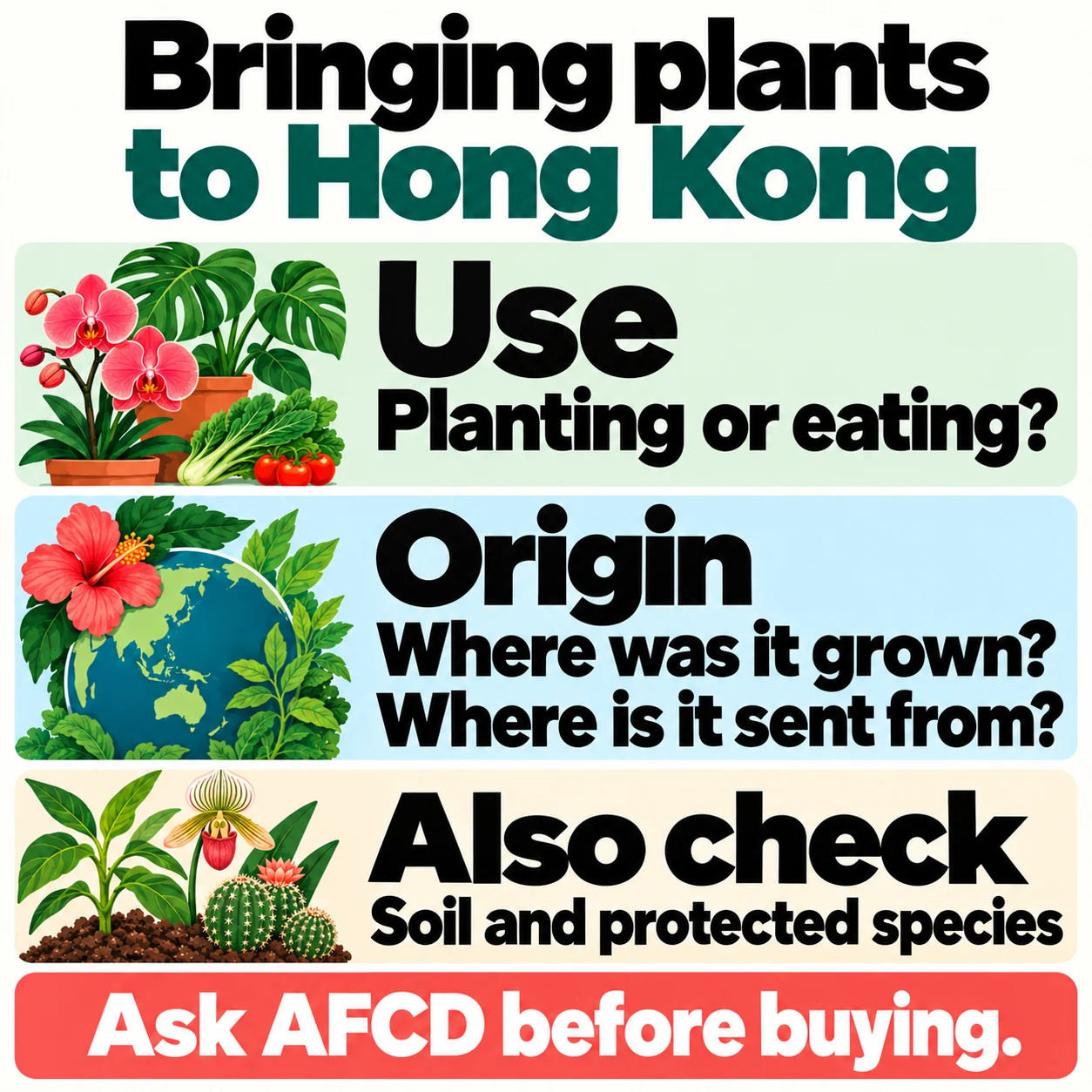
A small pot or a single packet of seeds can require documents to enter Hong Kong. Before paying, identify what it is, what you will use it for, where it was grown and where it will be imported from. Check the growing medium separately. If the species may be protected, ask about wildlife controls as well. Even a lawful sale or an airline’s agreement to transport an item does not establish that it can be imported into Hong Kong.
Describe the item before asking whether it can travel
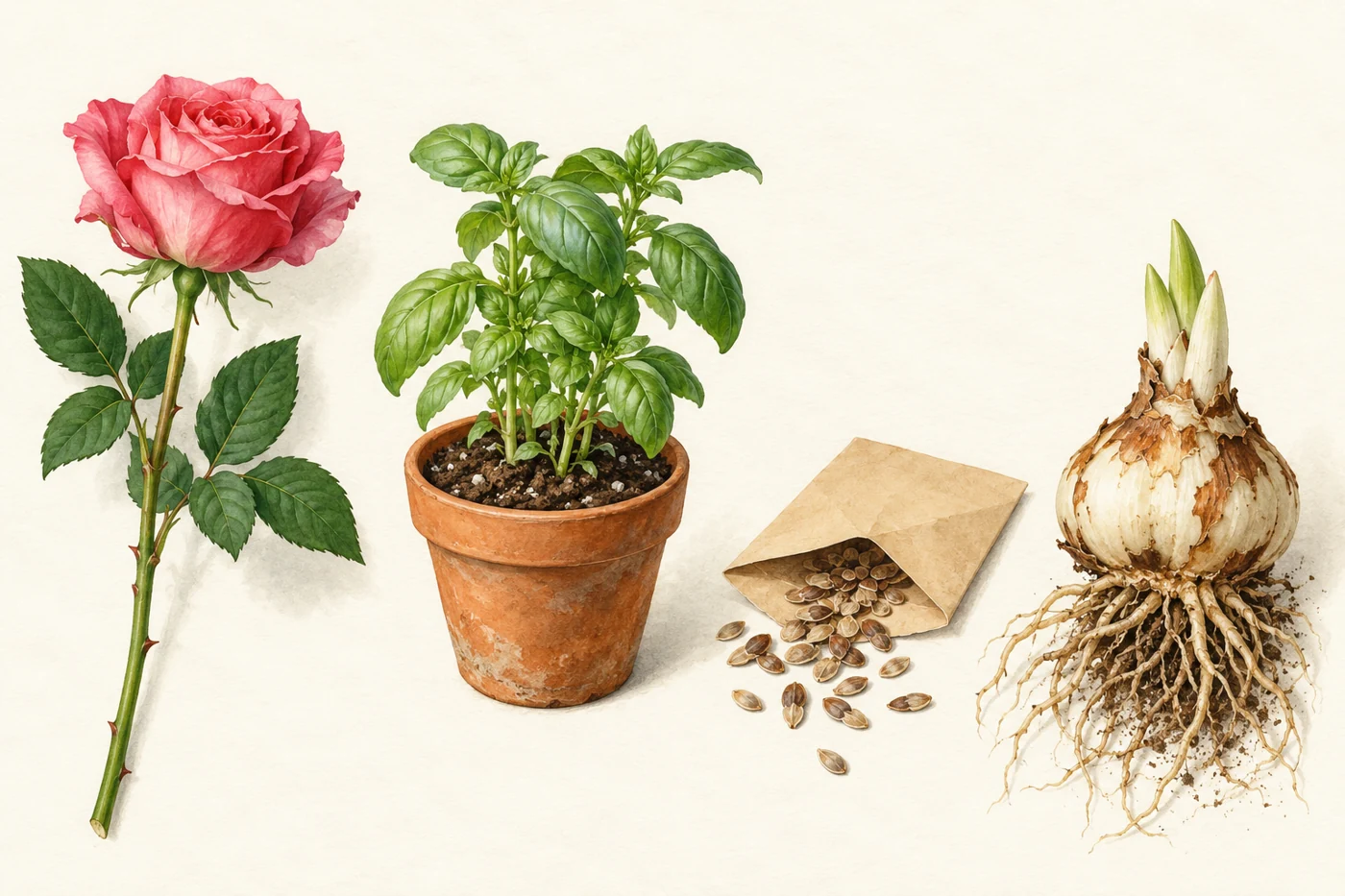
A florist's receipt might cover a bunch of cut roses, a rooted rose seedling and seeds intended for planting. “Flowers” would be an insufficient description for all three. Keep the original nursery label, the botanical name if available, a photo of the whole specimen and a photo of the medium around its roots. Note how many items you intend to carry. Do not try to identify a protected species or a legal exemption from its appearance alone.
The Agriculture, Fisheries and Conservation Department’s plant import rules distinguish two documents. The Plant Import Licence comes from AFCD in Hong Kong; a Phytosanitary Certificate comes from the competent authority in the country of origin. A till receipt or a grower’s handwritten assurance that a plant was treated cannot replace a required official document.
Cut flowers, food, seed for sowing or a living plant?
This table deals with plant quarantine under Hong Kong's Plant (Importation and Pest Control) Ordinance. Read the origin and soil sections below as well. A quarantine exemption is not permission under every other law.
| What you intend to carry | What to check for plant quarantine |
|---|---|
| Cut flowers; fruit and vegetables for consumption | Listed among the categories requiring neither of the two plant documents. A living plant with roots, bulbs or a pot should not be treated as a cut flower. |
| Grains, pulses, seeds or spices for human or animal consumption or industrial use | A listed exemption. The use matters. The same material intended for planting needs a different check, regardless of whether it came from a supermarket or a garden centre. |
| Seeds to sow | Unless another exemption applies, such as the applicable origin exemption, a valid Phytosanitary Certificate is the condition for importing seeds without a Plant Import Licence. Check any special requirements for the species concerned. |
| A live potted plant, bulb or seedling grown abroad | In general check both the Hong Kong licence and the certificate from the place of origin. Specified plants may have additional treatment, observation or other requirements. |
Suppose you find a packet of flower seeds abroad. An attractive retail envelope does not establish where the seeds were produced and is not a phytosanitary certificate. Ask for the species, place of production and any certificate from the competent authority. If you cannot verify what is needed before departure, leave the purchase open. A rooted seedling removed from its pot is still not a cut flower.
Buying in mainland China: a shop address is not proof of where the plant grew
AFCD lists an exemption for plants produced in and imported from any place in China outside Hong Kong. Under that provision the Hong Kong plant licence and phytosanitary certificate are not required. There are two facts to establish: production and the place from which the plant is imported. Buying from a florist in Shenzhen identifies the place of sale only. A seedling grown in the Netherlands and resold in Shenzhen does not meet this production condition. If the growing history is unknown, the place of sale is insufficient to establish an exemption.
For a potted seedling, first ask for its botanical name, the nursery that grew it, where it will be sent from and the medium in the pot. These are more useful details to bring to AFCD than a general “Can I take this through customs?” A seller's description of the plant as local does not settle any separate endangered-species requirements.
Check the material in the pot as its own item
Soil is not limited to dark garden earth. AFCD's examples include earth, sand, clay and peat. The general rule is that a plant pest or soil may not be imported without the Director's authorisation. Soil imported from any place in China outside Hong Kong is exempted from control under that Ordinance. The plant and its medium are separate checks; a plant certificate does not automatically authorise everything around its roots.
If a supplier calls a mix “soil-free” but cannot explain what it contains, send the ingredients, source and a photograph to the authority for clarification. Shaking a little visible soil off a plant before a flight would not establish that the plant itself, its growing medium or its species meets the requirements.
Orchids and other potentially protected plants need a separate check
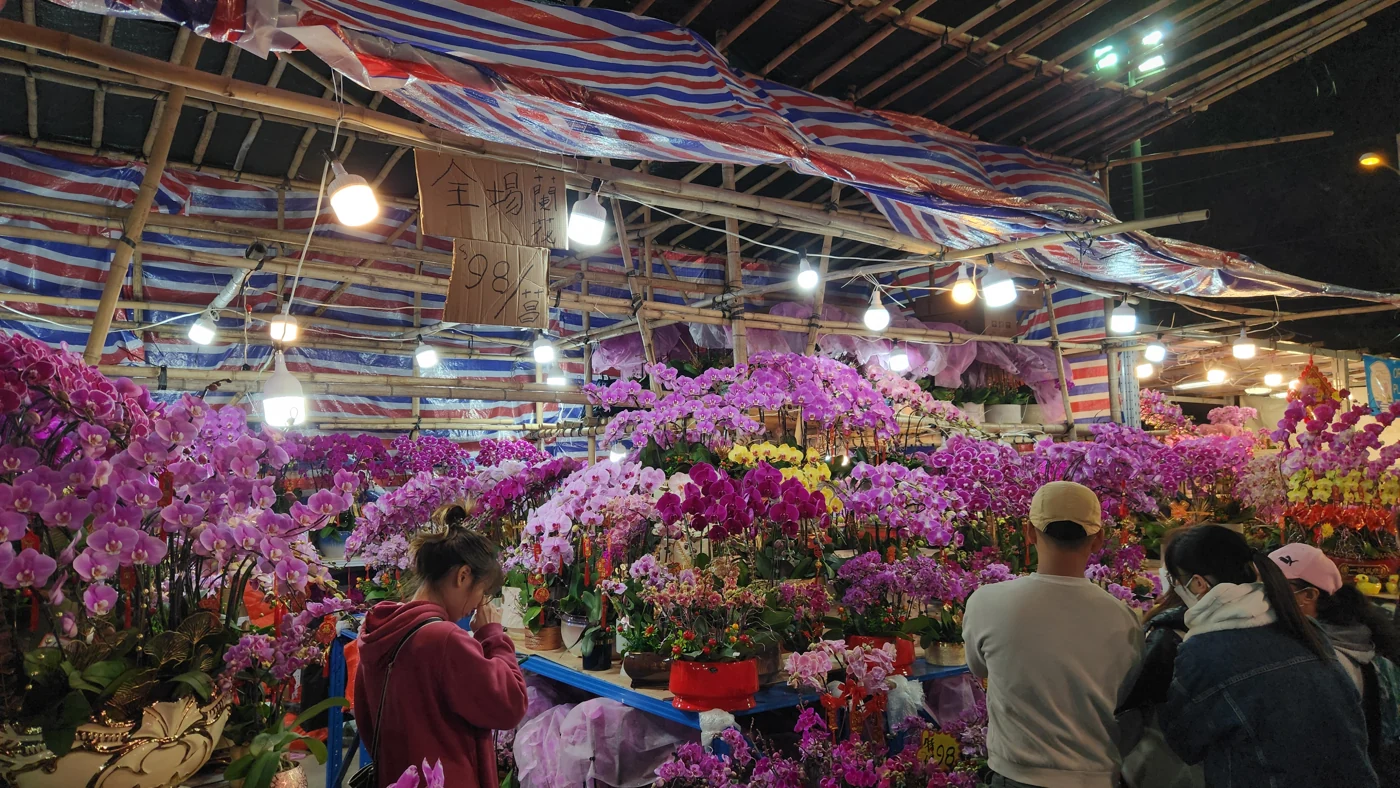
HK01 reported on orchids intercepted at land checkpoints and described a recurring misunderstanding: assuming a nursery-grown plant must be unrestricted. That report explains the question to ask; it does not determine the status of every specimen. Protected-species controls can cover artificially propagated plants, not just wild-collected specimens. Equally, the plant-quarantine treatment of cut flowers does not dispose of all protected-species controls.
Find out the botanical name, whether the item is a whole plant or cut material, whether it is wild or artificially propagated, and its origin and exporting place. Ask the responsible authorities whether a CITES document from the exporting place, a Hong Kong licence or inspection on arrival is required. The answer can turn on the relevant listing, origin and form of the specimen. A common name such as “orchid”, its colour or its price is not a sound basis for claiming an exemption.
For example, AFCD’s licensing and inspection guide says that importing a regulated Appendix II specimen generally requires a valid CITES export permit and inspection on landing. A live specimen of wild origin also requires a Hong Kong licence obtained in advance. A phytosanitary certificate issued at origin and a wildlife export document serve different purposes; one cannot replace the other.
If you need a licence, resolve the paperwork before committing to the purchase
AFCD's Plant Import Licence application guidance calls for the common and botanical names, quantity, purpose, growing medium, exporting country and nursery or company. It also asks about the means of transport and expected arrival date and whether the plants are wild or artificially propagated. Organising these details makes it possible for an officer to identify the missing document rather than having to guess what is in your luggage.
AFCD says a Plant Import Licence will normally be issued after two working days from receipt if the application is in order. There is no fee for applying for or issuing this particular licence. Two days is not a promised clearance time. It does not cover the certificate in the place of origin, separate permissions, inspection or transport. Once a licence is issued, comply with its individual conditions. The Plant and Pesticides Regulatory Division can be reached on +852 2150 7000.
The rules change with the direction of the journey
This guide concerns bringing an item into Hong Kong. Buying a plant at Hong Kong's flower market and keeping it in the city is not the same event as carrying it across a border. If you later leave for Macau, mainland China or another country with the plant, check export requirements and the next destination’s import rules separately. A Hong Kong answer cannot clear the next leg of a trip.
Your pre-journey checklist
- Record species, quantity, physical form and intended use: eating, sowing or something else.
- Establish where it grew, where it is being sent from, and what the growing medium contains.
- Check the Hong Kong plant licence and origin certificate separately from any soil or protected-species controls.
- If a requirement cannot be verified before departure, postpone the purchase or leave the plant behind. Keep official replies and documents.
Sources & further reading
This article draws on the media coverage and public information below. Event and transport arrangements can change; check the latest details before travelling.
- AFCD: quarantine rules for importing plants and soilafcd.gov.hk (Opens in a new tab)
- AFCD: applying for a Plant Import Licenceafcd.gov.hk (Opens in a new tab)
- AFCD: traveller FAQ on live flowering plants (question 11)afcd.gov.hk (Opens in a new tab)
- AFCD: licensing and inspection of endangered speciesafcd.gov.hk (Opens in a new tab)
- Hong Kong Government: AFCD reminder about endangered speciesinfo.gov.hk (Opens in a new tab)
- HK01: land passengers and orchidshk01.com (Opens in a new tab)
Make it your journey
If you also have alcohol or tobacco with you, check the Hong Kong tobacco and alcohol guide separately. Passenger duty-free allowances do not determine plant quarantine.