Give Macau’s Communications Museum about two hours to follow one question: how does a message get from one person to another? Begin with collecting and sorting letters, then explore telegraph codes and telephone connections. Understanding a few interactions is more rewarding than pressing every button. General admission is free, but the museum closes on 19–22 November 2026 because of the Macau Grand Prix.
Choose the date before deciding how much to see
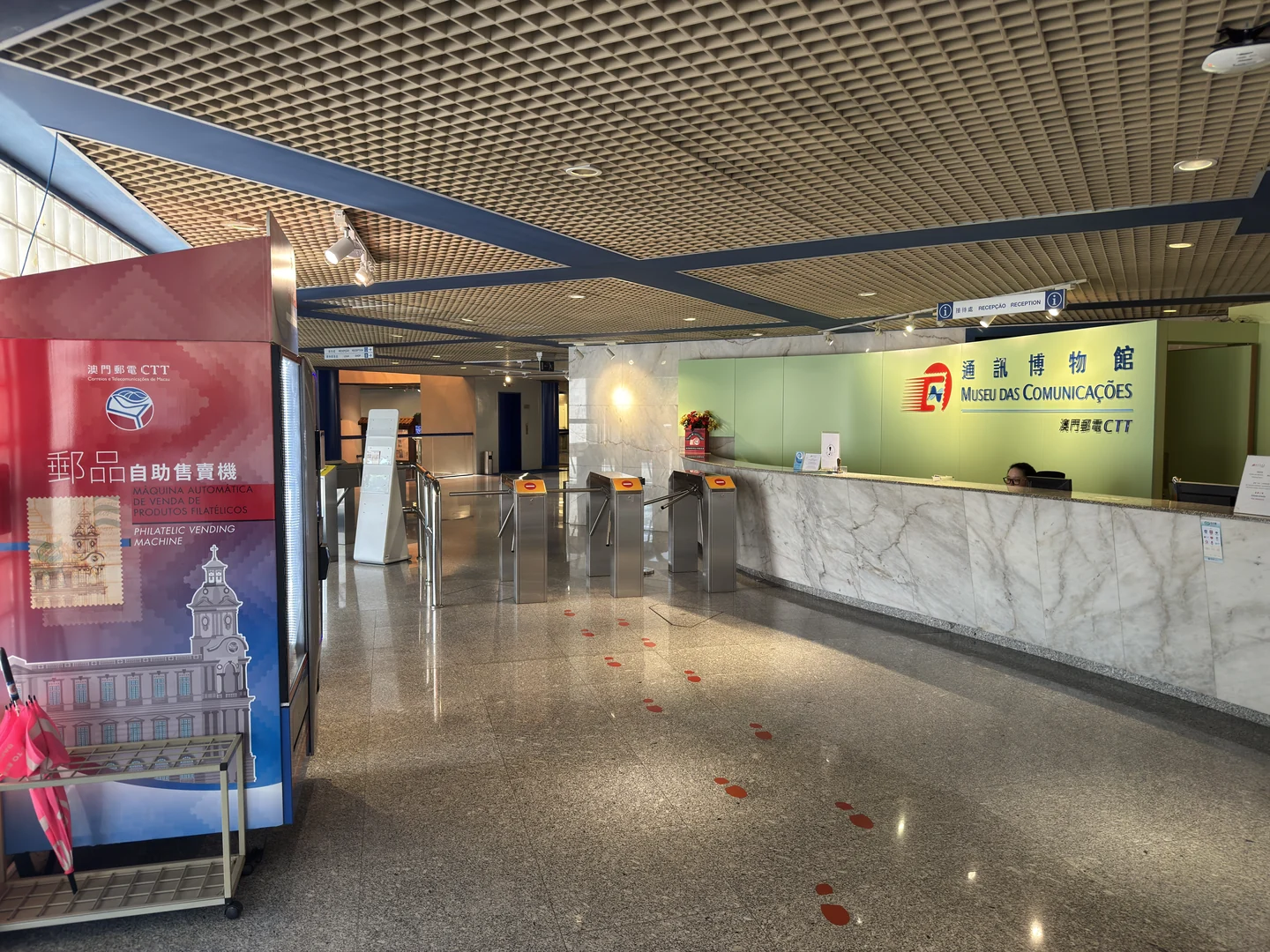
The museum is managed by the Post and Telecommunications Bureau and stands at 7 Estrada de D. Maria II. Its first floor concerns post and philately; the second focuses on electricity, telecommunications and related technology. This is not a display inside the General Post Office at Senado Square, nor is it the Grand Prix Museum. Save the full museum name and address when planning your journey.
Checked on 15 November 2026, the museum’s opening information gives Monday–Sunday hours of 09:00–17:30. Public holidays operate normally, except the first three days of Lunar New Year. A separate current notice closes the museum on 19–22 November for the Grand Prix. Read regular hours together with temporary notices: a search result saying “daily” is not enough to establish that your intended date is available.
The admission page exempts both local residents and visitors from entrance charges. That concerns general admission, not every workshop, material, philatelic purchase or postal service. The opening page checked for this article does not give a separate last-entry time. Do not treat 17:30 as an arrival target. A visit around 09:30–11:30 or 14:00–16:00 leaves a useful uninterrupted period, with onward travel afterwards; these are editorial suggestions, not official tour sessions.
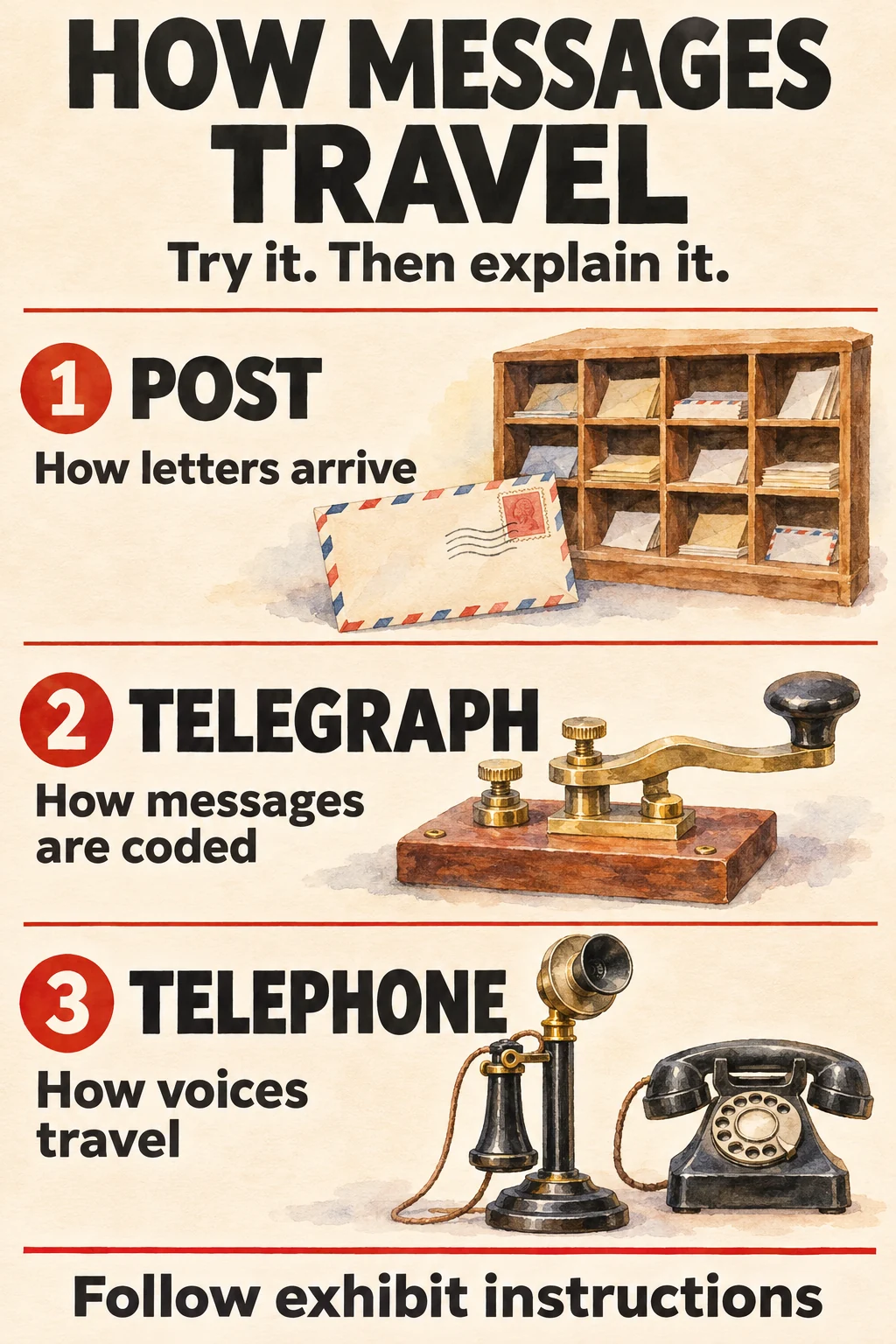
Start with post: what happens after the letter leaves your hand?
A postbox is familiar; the work following collection is less visible. The museum’s postal activities include a replica sorting rack, collection boxes from different places, and interactive tasks about checking mail and choosing a postal service. Select one complete question, such as “why does this letter belong in this compartment?”, before following the exhibit’s instructions.
The sorting activity classifies correspondence by destination. With a companion, one person can make a choice and the other check the reason before you swap roles. Speed is less important than understanding how an address becomes part of a working process. The illustration below simplifies envelopes to show the action. It supplies no real addresses, and stamp colour is not a substitute for reading a destination.
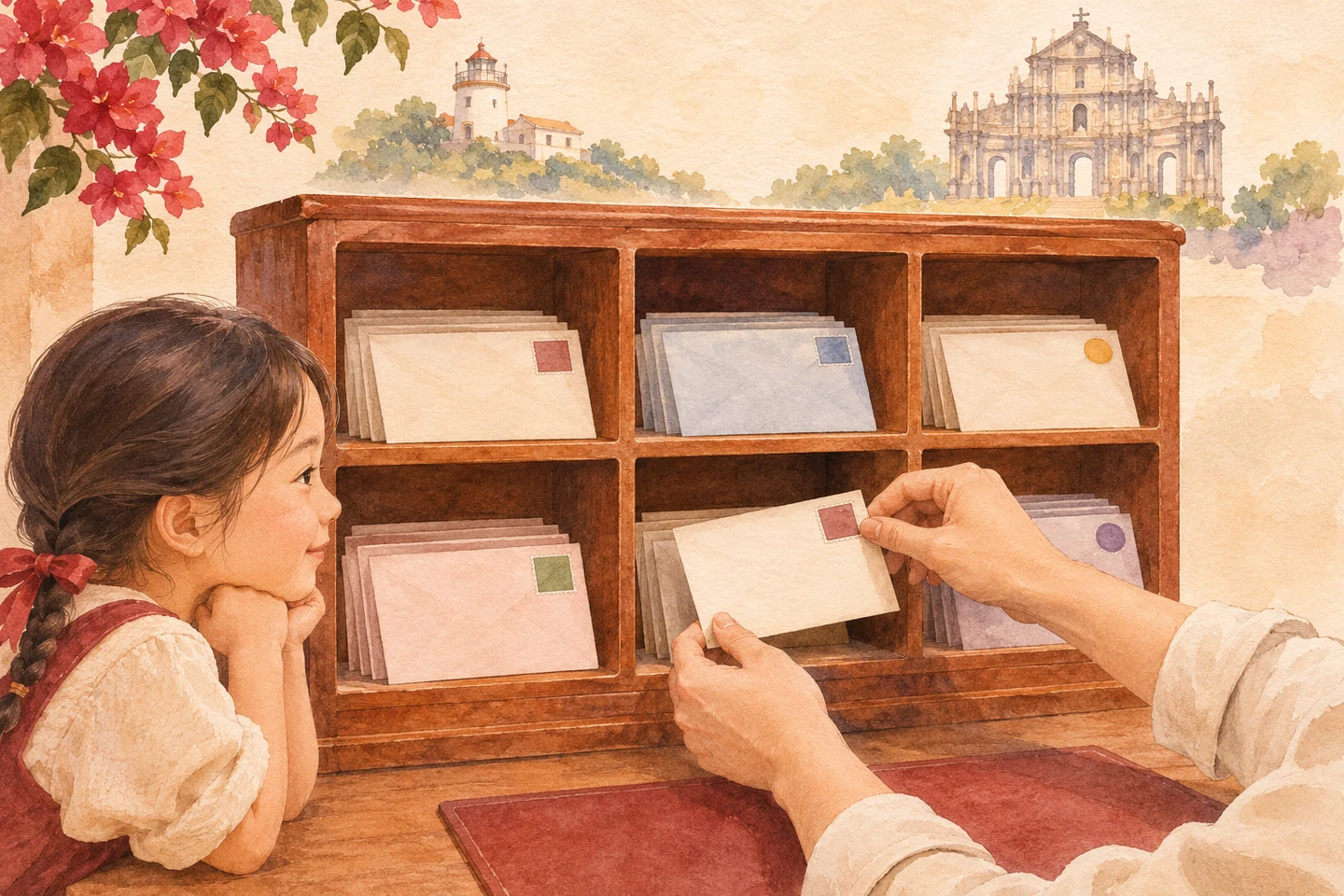
At the mail-checking or service-choice activities, distinguish whether an item can be sent, how it should be sent, and what postage it requires. A game’s answer is not a quote for the parcel in your bag. To use a real postal service, explain the destination, contents and requirements to the counter staff. Keeping the demonstration separate from the actual transaction avoids carrying a mistaken rule away from the museum.
The official description also includes making a personalised photo postcard, which can be kept or posted after buying stamps. If this matters to your visit, ask whether the equipment is working and about printing and posting arrangements before you begin. Do not leave it until closing time, and avoid uploading a photograph that you or a companion would not want shared without understanding how the device uses it.
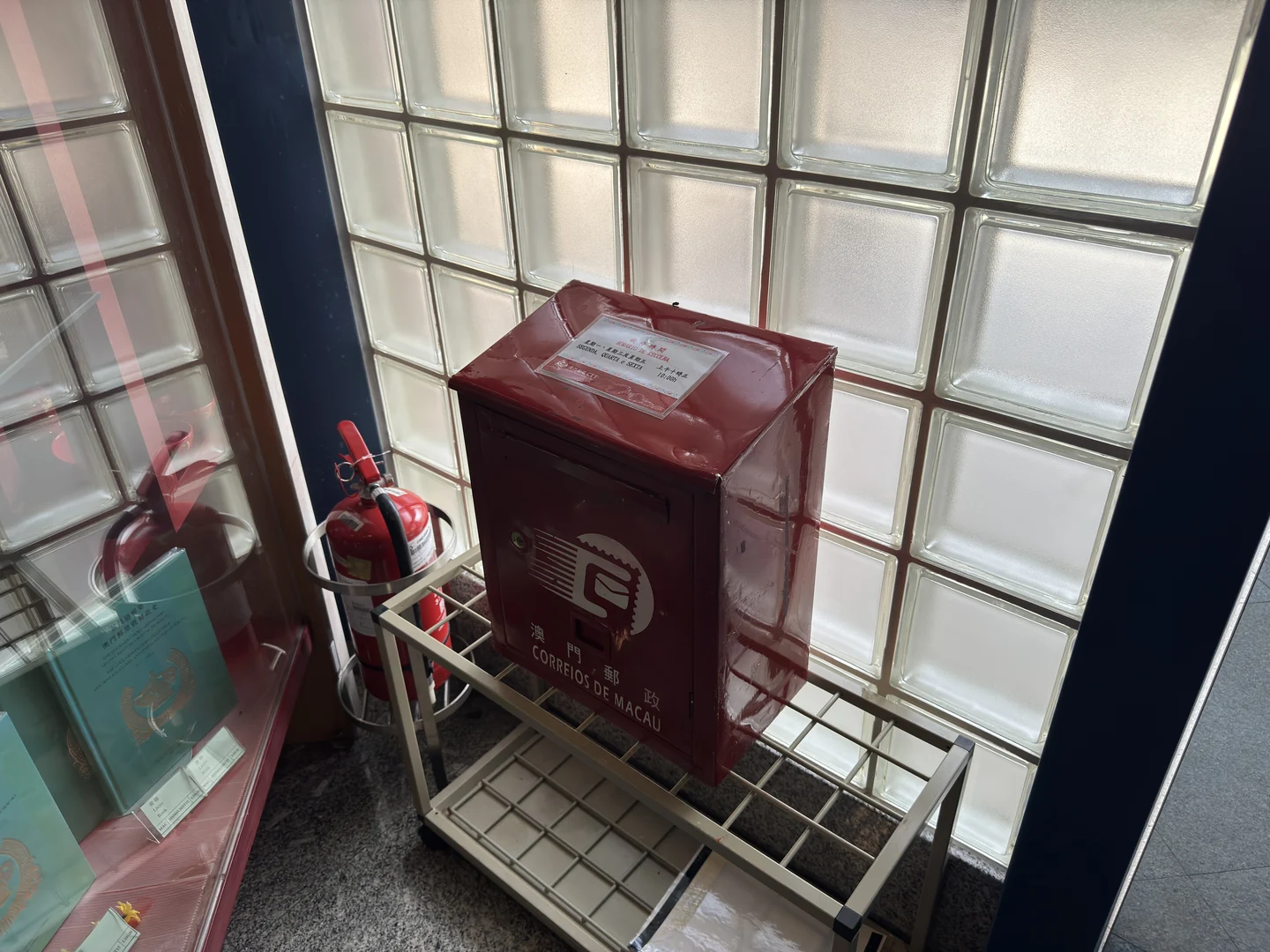
A stamp is more than a miniature picture
The museum introduction places stamp collections, postal objects and the bureau’s history together on the first floor. Choose one subject in the stamps and notice how images vary within a group. Understanding how a series presents an idea is more useful than photographing every small item in the case.
Alternatively, each companion can choose a postal object and ask whether it helps collect, organise or transmit something. A historical stamp’s face value does not establish how far today’s postage will take a letter. Historical collections and current tariffs are different sources of information. For a child, explaining that attaching a stamp does not mean the letter has already arrived reconnects the picture with practical work.
There may also be temporary exhibitions on this level. This guide concentrates on permanent themes, without treating a promotional image or competition as an experience available to everyone every day. Check current exhibition and service notices when you arrive, then spend the remaining time where your interest is strongest.
Try the telegraph: how can the length of a press carry meaning?
The official telegraph description explains that Morse code represents characters through dots and dashes, and visitors can enter a message using a key. Choose a very short sequence, check the instructions, enter it and observe the response. Change one thing at a time, such as the length of a press, to understand what affected the result.
The valuable idea is not merely that you can tap a rhythm. Sender and receiver need to understand the same convention. Without an agreed code, a series of sounds cannot clearly tell someone what you mean. After a mistake, compare the instructions again rather than pressing faster. If someone is waiting, complete one short attempt and offer them a turn.
The museum also lists a pointer telegraph, describing it as easier to use but slower to operate. If both devices are available on the day, compare ease of learning with speed of transmission. They do not always improve together. If equipment is under maintenance, its structure and interpretation can still explain that trade-off. A successful visit does not require every button to illuminate.
Telephone calls: who connects the two ends?
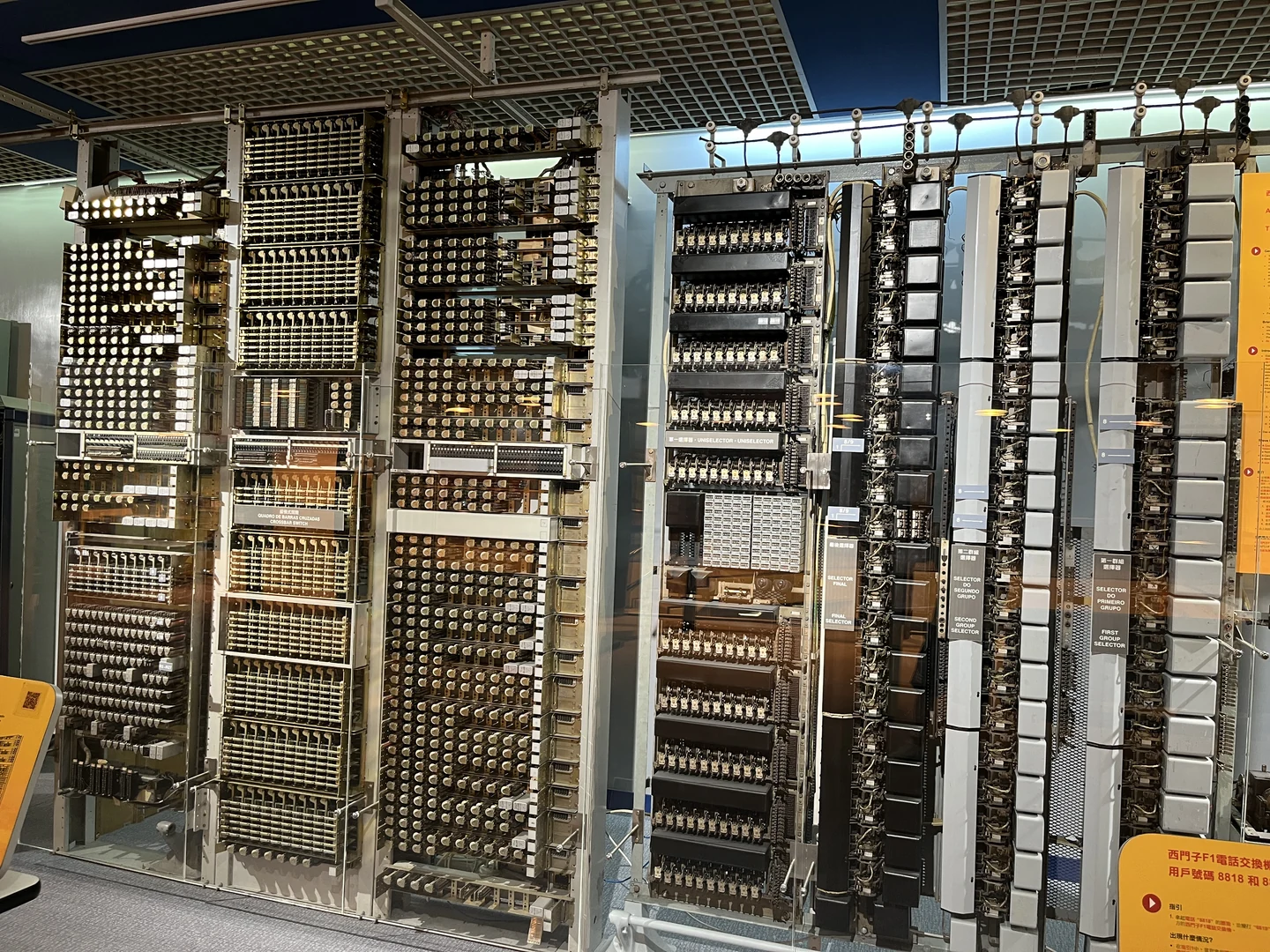
The telephone section includes replica Bell telephones, a manual switchboard and different switching technologies. Talking to another person is immediately understandable. The more revealing question is what happens when many people want to call different destinations at once.
In the museum’s description of the replica manual switchboard, one visitor can act as operator while two others speak on connected telephones. If that activity is open, listen to the instructions before assigning roles. Historical equipment displayed behind a barrier is not automatically touchable because an interactive replica nearby is: follow the instructions attached to the particular object.
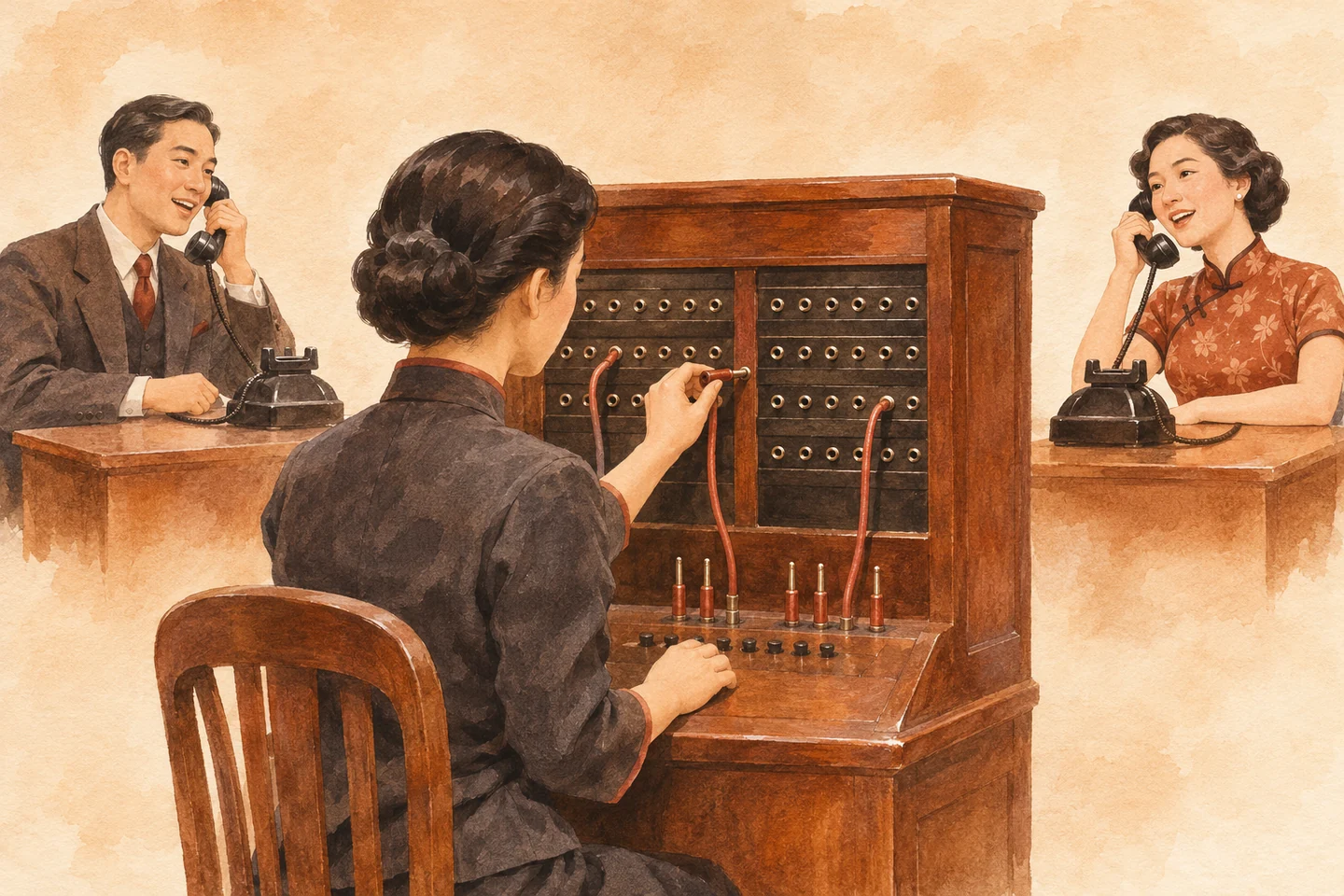
This illustration explains the idea of manually connecting a call. It does not reconstruct a real Macau exchange from a particular period, or provide a wiring diagram for museum equipment. It makes visible the work done by a person or system behind a conversation. Use the actual exhibit instructions, rather than copying the illustrated cord positions.
At the Ericsson ARF503 exchange, compare its scale with a telephone handset. One is the terminal in front of a user; the other belongs to a larger connection system. The museum records that this type supplied lines on the peninsula and islands during the 1970s and 1980s. The 2025 reference photograph below shows historical equipment. It does not suggest that Macau’s present network still operates through that machine.
Finish within two hours, and book specialist services separately
Allow roughly ten minutes to find the galleries and ask about equipment availability, 35–40 minutes on the first floor, 50–60 on the second, and a final ten minutes to revisit a favourite object. With school-age children, sorting, coding and connecting are enough questions for one visit. Adults more interested in postal history can spend longer downstairs and shorten the electricity section rather than dividing time equally between floors.
The museum’s group-visit guide distinguishes self-guided visits, general introductions, specialist tours and workshops. The specialist services for overseas schools, organisations and visitors have group-size conditions; workshops also have participation and charging rules. A small family should not assume an instructor will be available on arrival. Ask in advance about language, seating or a particular learning topic and obtain confirmation, rather than supplying only the number of people.
The official location page lists nearby buses 2, 2A, 6A, 18, 18B and H2. Check your boarding stop, direction and any diversions for the actual departure point. Our first-time Macau bus guide explains the boarding process; travel time remains additional to time in the galleries. If using a wheelchair or pushchair, or avoiding slopes, ask about the entrance, lifts and currently accessible areas. A historical photograph is not an accessibility guarantee.
Before leaving, each person can explain one thing: how letters are sorted, how a dot-and-dash sequence represents characters, or why a telephone call needs a connection. Putting one idea into your own words makes the visit complete. There is no need to cross the peninsula for another large museum at the expense of rest and your onward journey.
Your pre-journey checklist
- Check temporary notices: the museum closes on 19–22 November 2026.
- General admission is free; usual hours are 09:00–17:30, with different rules for public holidays and the first three Lunar New Year days.
- Follow post, telegraph and telephone questions, distinguishing interactive replicas from protected historical exhibits.
- Check separate arrangements and costs for posting, purchases and workshops.
- Confirm language, tours, seating and mobility needs in advance, and budget for travel separately.
Sources & further reading
This article draws on the media coverage and public information below. Event and transport arrangements can change; check the latest details before travelling.
- Communications Museum: Location and opening hourscmm.gov.mo (Opens in a new tab)
- Communications Museum: News and November closure noticecmm.gov.mo (Opens in a new tab)
- Communications Museum: Admission arrangementscmm.gov.mo (Opens in a new tab)
- Communications Museum: Introductioncmm.gov.mo (Opens in a new tab)
- Communications Museum: Postal activitiescmm.gov.mo (Opens in a new tab)
- Communications Museum: Telegraph exhibitioncmm.gov.mo (Opens in a new tab)
- Communications Museum: Telephone exhibitioncmm.gov.mo (Opens in a new tab)
- Communications Museum: Visits and booked servicescmm.gov.mo (Opens in a new tab)
Make it your journey
Confirm that the museum will open on your chosen day, then select the communication question you most want to understand. Time to try, observe and discuss one interaction is worth more than a rapid circuit of every control.