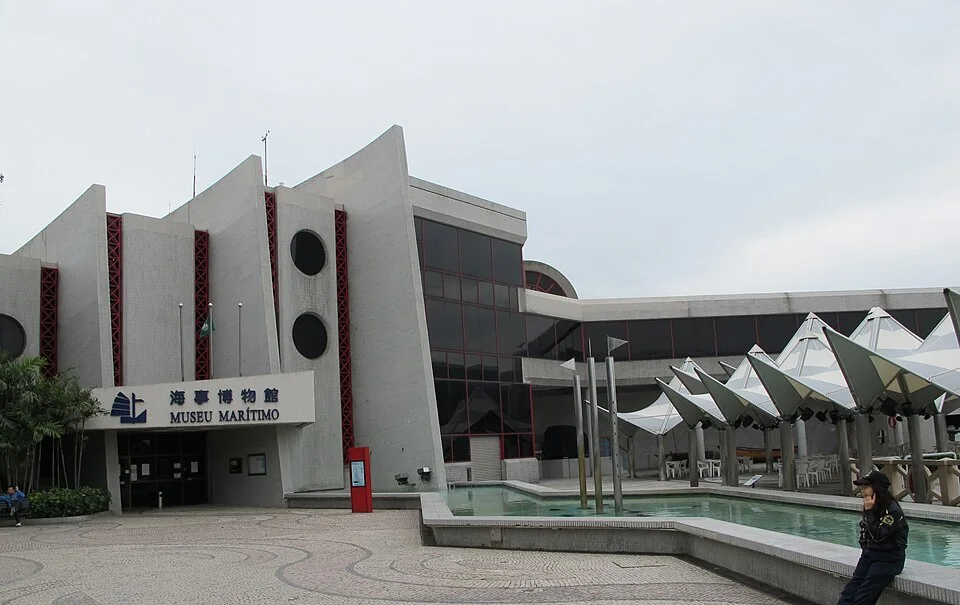
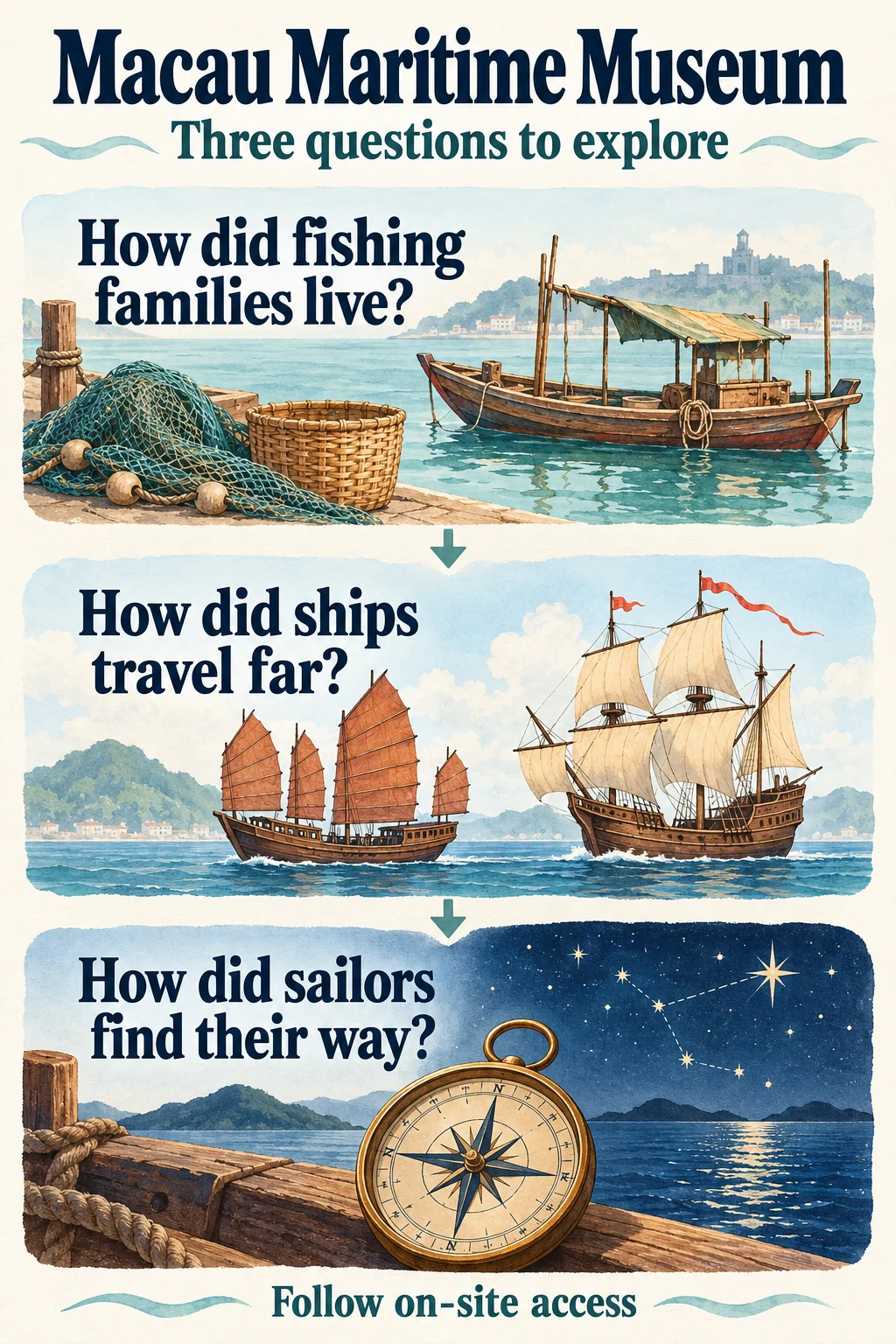
Macau Maritime Museum makes the city’s relationship with the sea tangible: how fishing families lived, how ships travelled long distances, and how sailors understood direction and depth. Allow roughly 90 minutes for a first visit, or longer for ship models and a guided tour. Admission is free and the museum closes on Tuesdays. Weekend scheduled tours suit visitors who understand Cantonese.
Connect Macau’s maritime story at Barra Square
Churches, hotels and food often shape a first impression of Macau. This museum brings boats and the sea back into view. Fishing provided a livelihood, sailing vessels connected trading networks, and instruments helped people interpret waters without visible boundaries. At 1 Largo do Pagode da Barra, it deserves a distinct period indoors rather than a photograph at the entrance between other stops.
The Macau Government Tourism Office’s museum introduction describes fishing traditions, maritime history, maritime technology and an aquarium. You need not memorise every ship’s name. Follow three questions instead: how did people live aboard boats, how could vessels carry people and goods far away, and how did sailors establish where they were after losing sight of land?
This is a guide to understanding the museum, distinct from our Macau historic-centre walk and its choices between Senado Square, St Paul’s and Guia. If another substantial museum is on your list that day, consider choosing one and giving its subject room to develop.
Free admission and weekend tours: choose your visit first
These arrangements were checked on 23 October 2026. Regular opening hours and temporary programmes are separate matters; check Marine and Water Bureau notices again before travelling.
| Item | Verified arrangement |
|---|---|
| Regular opening | 10:00–18:00; last admission 17:30 |
| Weekly closure | Tuesday |
| Admission | Free |
| Address | 1 Largo do Pagode da Barra, Macau |
| Enquiries | +853 2859 5481 |
| Saturday Cantonese tour | One session at 14:30 |
| Sunday Cantonese tours | Sessions at 14:30 and 15:30 |
The bureau’s scheduled-tour announcement, published in February 2026, introduced these sessions from 14 February. Each lasts about 45 minutes, is free, needs no reservation and starts at a designated meeting point inside. The advertised language is Cantonese: this is not an on-demand private tour in English or Mandarin. Ask where to meet and whether the session is running that day. Arriving about 15 minutes early is our planning suggestion, not an official check-in rule.
For the 14:30 tour, have lunch first and aim to arrive around 14:15. Afterwards, return to the displays that interested you most. For an independent visit, arriving near the 10:00 opening lets you start with about 20–25 minutes on fishing life before giving more time to historical vessels and navigation. That is a reading rhythm, not an official route.
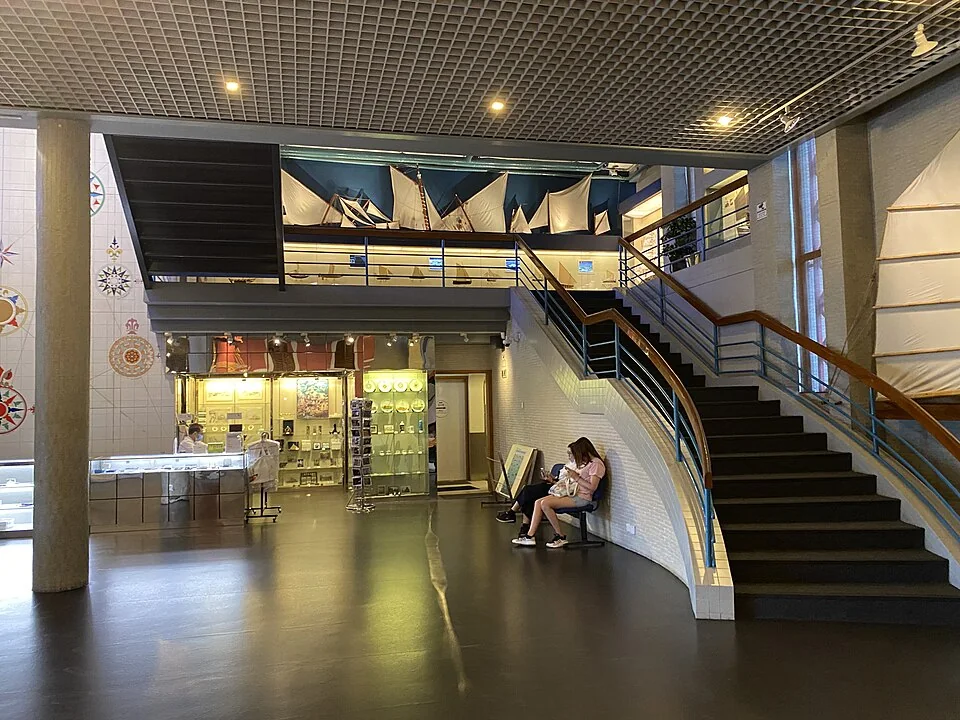
The building has several levels. If you use a wheelchair or pushchair, or need to avoid stairs, call ahead about the appropriate entrance, lifts and areas accessible that day. One photograph of a staircase cannot establish the accessibility of the whole building. Leave large bags at a storage location you have confirmed, so you can comfortably approach and read display labels.
Fishing life: understand the work before the shape of the boat
The fishing-traditions displays introduce lives in Macau and southern China through boat types, fishing equipment and methods, and domestic settings. First see a boat as a place of work and life. Its shape becomes more meaningful than it would in a succession of photographs of models.
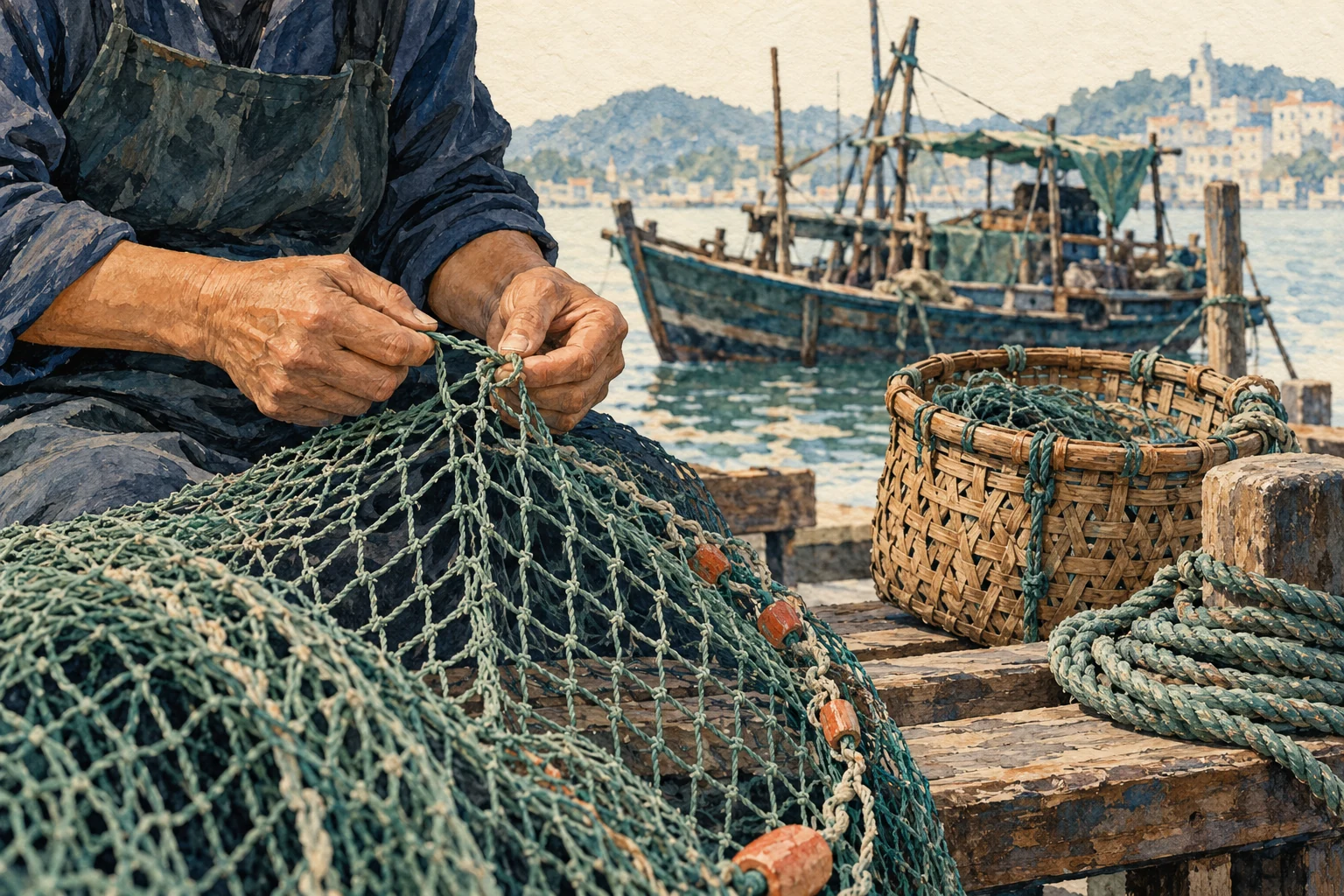
With equipment, ask what net mesh, rope and containers each do. In a domestic display, notice how everyday possessions sit alongside the tools of a livelihood. The relationship suggests how work, storage and living share limited space; it does not mean every fishing family lived identically. Use the labels for the particular period, location and purpose.
School-age children can choose one tool, sketch its most obvious feature and explain in one sentence why it might be useful. Checking a guess against the label encourages observation more effectively than memorising a list of boat names. The net-mending illustration below shows relationships between net, cord and basket; it does not reconstruct a named fisherman or a specific historical period.
Ocean-going models: compare hulls, sails and cargo space
The maritime-history displays place Chinese and Portuguese seafaring in a shared field of view. The tourism office identifies Zheng He’s voyages, Portuguese maritime connections in the fifteenth and sixteenth centuries, and trading exchanges among the themes. The shift from near-shore fishing to long-distance transport changes what a vessel must do. Hull form, propulsion and the place of cargo become useful things to compare.
Pick two models with clear labels. Look first at the hull outline, number of masts and arrangement of sails, then read the names and sailing context. Their displayed size cannot by itself tell you which real ship was larger: model scales may differ. Nor is sail colour a reliable clue to national identity.
Macao Magazine’s feature in issue 78 offers a specific example. Its discussion of the lorcha represented by the vessel Macau describes Chinese-style sails combined with a European-style hull. This is a useful way to think about technical exchange rather than treating “Chinese” and “European” vessels as isolated categories. The feature records the collection at the time; check the current position and availability of particular models during your visit.
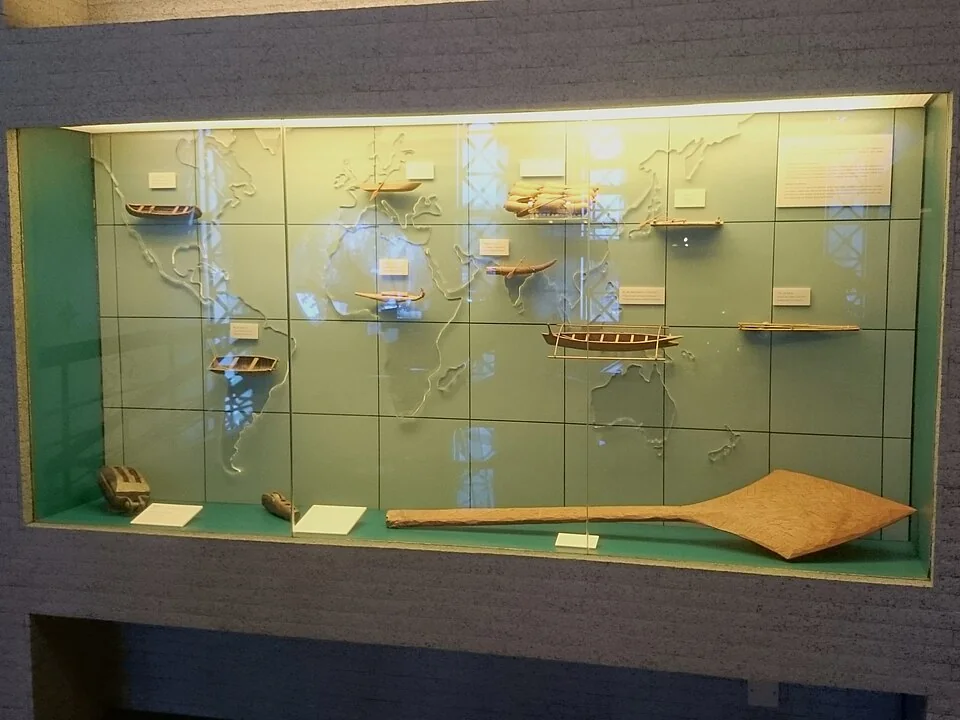
The historical photograph of the “Primitive Boats” display shows differently shaped small craft and a paddle. It supports comparison of forms, but its labels may be too small to read on a phone. Avoid assigning a name or place of origin to each model from the photograph alone. At the museum, choose one object and read its complete interpretation rather than trying to photograph the whole case from a distance.
Navigation: direction, position and water depth are different questions
The technology section shifts attention from what people sailed in to how they understood the sea. The Marine and Water Bureau’s gallery information lists compasses, telescopes, octants and sextants, alongside tides, sounding, channel markers and lighthouse systems, and displays about navigation by the stars.
You do not have to learn to operate every instrument. Separate the problems they address. A compass relates to direction; observing celestial bodies helps explain navigation and position; tide and sounding instruments remind us of conditions beneath the hull. Calling them all “ancient GPS” misses those differences. Lights on a model are more than an attractive night scene: they can help explain how a channel is identified.
The gallery includes material connected with Guia Lighthouse. If you later visit Guia, relate its maritime purpose to the building you see on the hill. This need not become an additional climb on the same day, and viewing the lighthouse outside does not establish access to its interior. With children, one clear idea is enough: knowing which way to go is not the same as knowing how deep the water is.
The aquarium introduces underwater settings including a riverbed, harbour, coral reef and shipwreck. Treat it as a complementary look at marine environments, rather than setting a task to find a particular fish. Exhibits, interactive equipment and accessible areas depend on on-site arrangements.
Give the model-making craft a few extra minutes
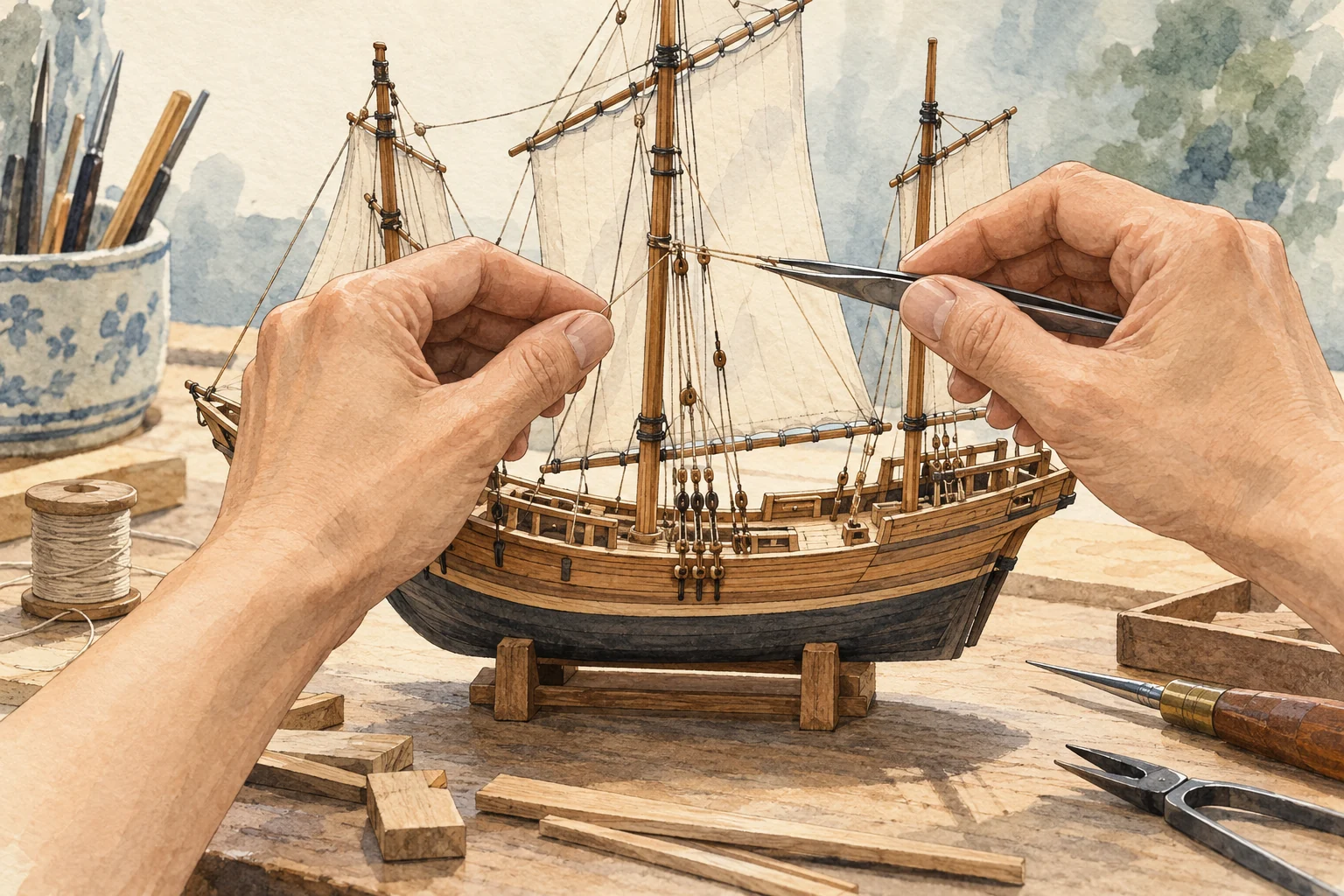
A model is not made simply by shrinking a full-size ship. The same Macao Magazine feature follows a model maker’s work with drawings, photographs, materials and fine detail. This historical profile is useful further reading for understanding the craft.
Turn that insight into a slower way of looking. Start with the hull, then see how masts, sails and rigging connect, and finally read about scale, materials and interpretation. Intricate ropes are not only decorative; they show how the maker expresses a vessel’s structure. For someone who enjoys making things, spending longer with one model can be more rewarding than quickly completing every floor. Ask the museum separately about any current public demonstration or activity.
Finish without turning the museum into a race
With only an hour, retain fishing life and one group of ship models, then choose a single navigation question. Completing every display is less useful if your companions are too tired to read it. If joining a Cantonese tour, use independent viewing as a complement and stay close enough to return to the meeting point.
Keep to open areas and do not touch exhibits or operate equipment without permission. Check local notices for photography, flash and equipment rules. Even an indoor visit involves outdoor connections around Barra; plan that last walk in rain. In severe weather, consult our Hong Kong and Macau weather-planning guide and current transport notices. An indoor attraction is not necessarily open through disruption.
Before leaving, each companion can choose one object that best explains “Macau and the sea”: a fishing tool, a boat or a navigation instrument. Being able to explain the problem it solved is closer to the purpose of the visit than remembering every vessel’s name.
Your pre-journey checklist
- Avoid Tuesday and check 10:00–18:00 opening and 17:30 last admission.
- Confirm the Cantonese weekend session, meeting point and same-day arrangements.
- Link the displays through fishing life, ocean-going transport and navigation.
- Read model scale, labels and purpose before comparing the size of real vessels.
- Confirm mobility and luggage arrangements, with separate time for the return journey.
Sources & further reading
This article draws on the media coverage and public information below. Event and transport arrangements can change; check the latest details before travelling.
- Macao Government Tourism Office: museum hours and permanent displaysmacaotourism.gov.mo (Opens in a new tab)
- Marine and Water Bureau: scheduled weekend Cantonese tours introduced in 2026gov.mo (Opens in a new tab)
- Marine and Water Bureau: Maritime Technology Gallerymarine.gov.mo (Opens in a new tab)
- Macao Magazine issue 78: maritime collections and model-making, 2023 featuregcs.gov.mo (Opens in a new tab)
Make it your journey
Choose independent viewing or a guided session first, then arrange meals and transport around Barra. Give the museum an uninterrupted visit and leave with one maritime story you can explain clearly.