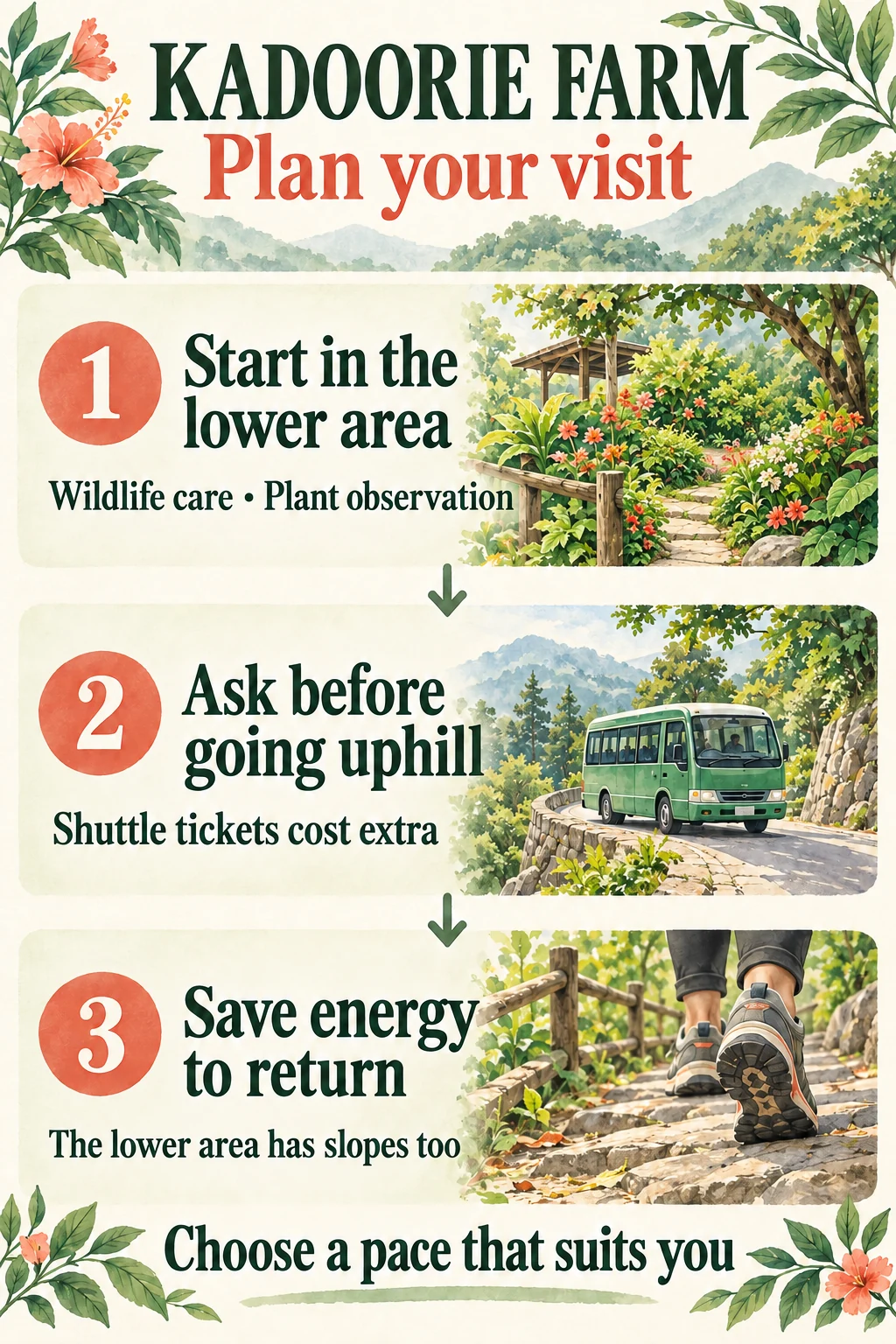
For a first visit to Kadoorie Farm and Botanic Garden, start with the lower area's wildlife-care, plant and growing exhibits. Make an uphill trip optional, depending on your energy and the day's shuttle arrangements. This is a conservation and education centre: observing how animals and plants are cared for is more rewarding than trying to photograph every attraction.
Turn animal watching into a closer look at care
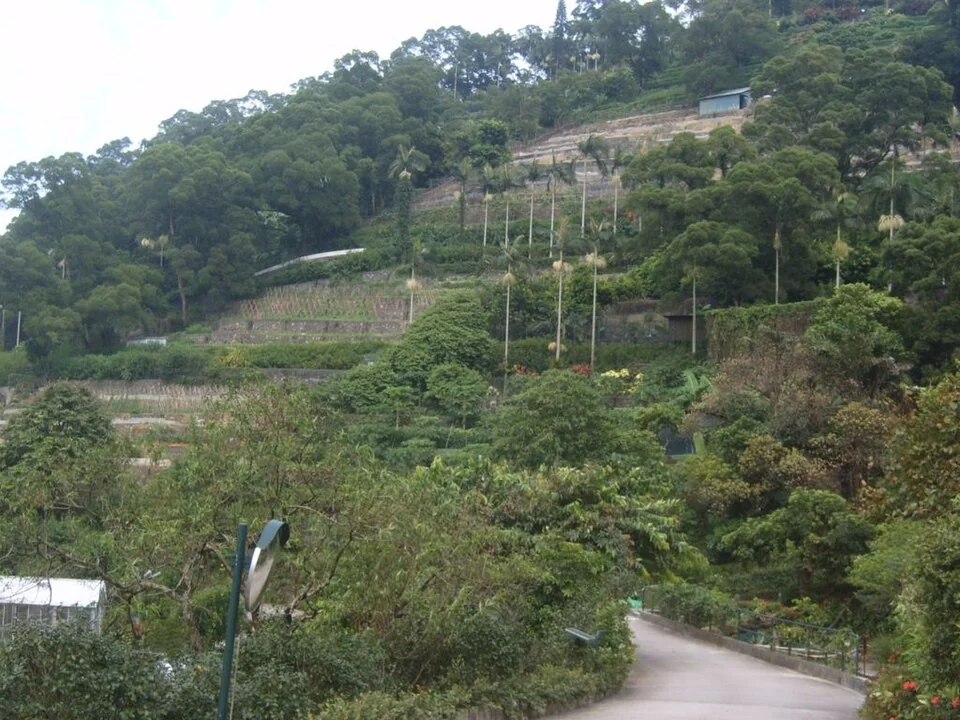
Kadoorie Farm occupies a hillside beside Lam Kam Road in Tai Po. Hong Kong China News Agency's anniversary feature traces agricultural assistance, terracing and water resources through to conservation. It suggests a useful question for a visit: why does a botanic garden still contain vegetable beds and fruit trees? They help explain changing uses of the land, rather than serving only as scenery around the animals.
This visit suits curious adults and families with school-age children who are happy to leave the upper hillside optional. We suggest about three hours for the lower area, with separate time for lunch, travel and breaks. That is our planning allowance, not an official tour duration. With just an hour, choose one animal exhibit and one plant space instead of rushing through a whole-site checklist.
Check admission, closing days and the journey first
The official visitor information, checked on 27 October 2026, lists opening hours of 09:30–17:00 and last entry at 16:00, subject to designated closing days and weather arrangements. Individual visitors can currently buy admission on arrival without advance registration. The free-registration summer campaign in 2026 has ended; it is not the year-round admission rule.
| Visitor category | Published admission, Hong Kong dollars |
|---|---|
| Ages 12–59 | HKD50 |
| Ages 4–11 | HKD25 |
| Ages 60 and above, and eligible disabled visitors | HKD20 |
| Under 4 | Free |
Groups of 20 or more have separate application requirements; concessionary groups must apply in advance with supporting documents. Walk-in arrangements for individuals should not be applied to a large group. Admission can be limited for operational reasons. Workshops and guided programmes may also require their own booking: an entry ticket does not automatically include every activity.
Official directions give two MTR connections: Tai Wo Exit A for bus 64K towards Yuen Long (West), or Kam Sheung Road Exit D for 64K towards Tai Po Market Station. Alight at Kadoorie Farm. The directions are opposite, so check the return stop. The operator's approximate 15–20-minute bus journey excludes waiting and is not a guarantee in busy traffic.
Parking is limited and must be booked in advance, up to 30 days ahead; a parking reservation and admission are separate. Wheelchair users and anyone needing walking assistance should contact the Farm about a suitable route before travelling. Official information says wheelchairs cannot be used on steep sections. The lower area should not be assumed to be entirely level either.
Look for shelter, activity space and ground materials
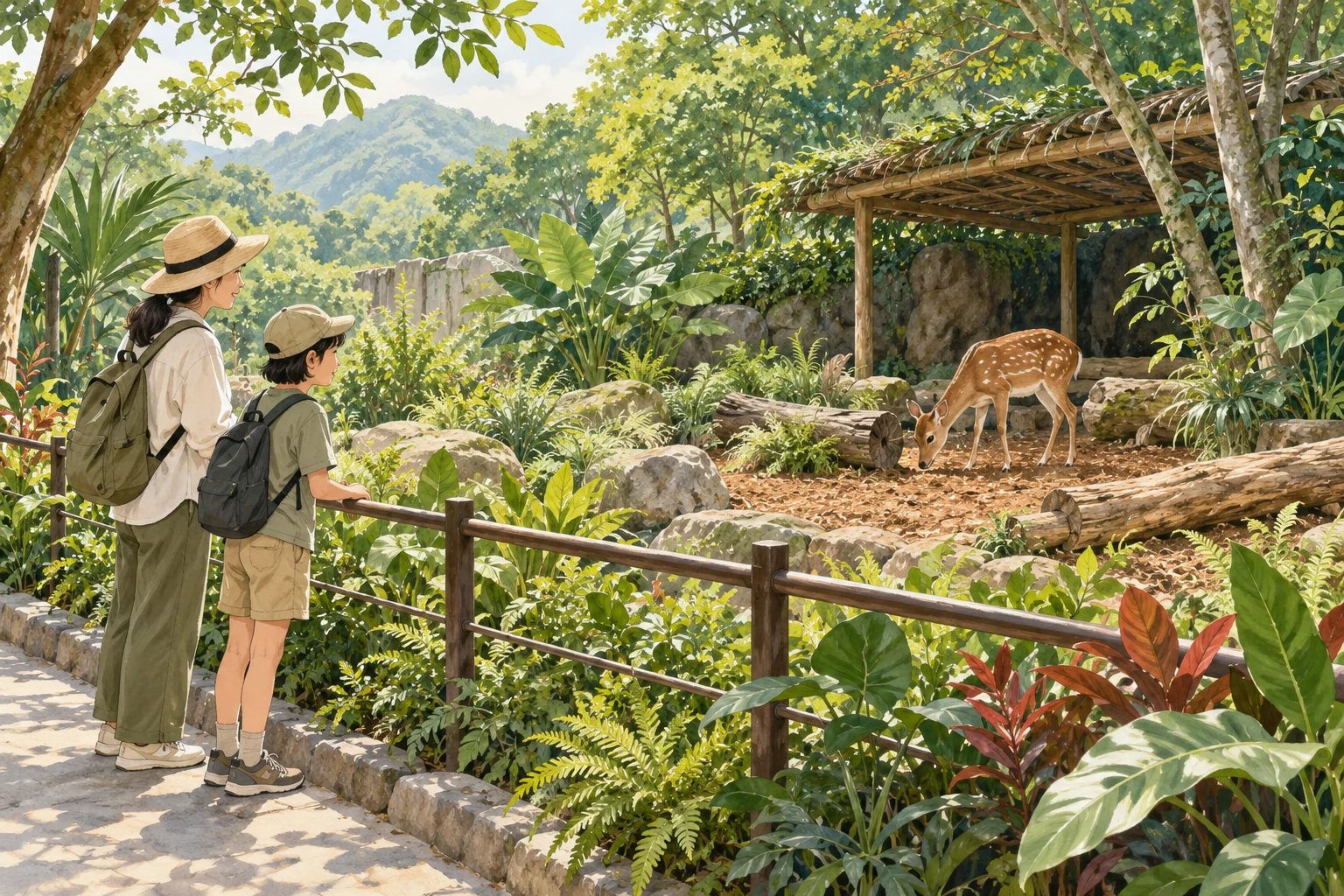
The Farm's account of Piers Jacobs Wildlife Sanctuary explains changes to the residents' environment: logs for barking deer, climbing branches for a leopard cat, softer straw-and-compost bedding and improved airflow. These details offer a way of looking. Find places to retreat into shade, notice different heights and possible activities, then look at the ground surface rather than only waiting for an animal to approach your camera.
An animal may be resting out of sight, and exhibits or access can change. Read the interpretation, study the space or return later. Calling, tapping barriers or offering food to create an interaction defeats the purpose of observing care.
The Farm explains that rescued animals may be released after treatment where circumstances allow. Individuals unsuitable for release but able to adapt to care may be placed with conservation organisations or take an educational role. A public exhibit does not give access to rescue work areas. Follow boundaries and do not treat an animal's absence from view as evidence that conservation work is not taking place.
Plants: notice leaves and growing positions, not only flowers
Choose one plant space that is open that day and spend time with it. The Gloria Barretto Orchid Sanctuary and Orchid Greenhouse offer orchid biology and ecology; Walter Kerr Garden provides opportunities to notice plants, streams and native ecology. Read labels before attempting identification, then compare leaf shapes, textures and where plants sit in relation to light.
A visit outside flowering season can still be specific. Which leaves catch light higher up? Which grow in damper shade? How do roots and stems attach or support the plant? With children, draw a shape each, then check the label together. Do not pick leaves, move pots or cross growing-area boundaries for a comparison.
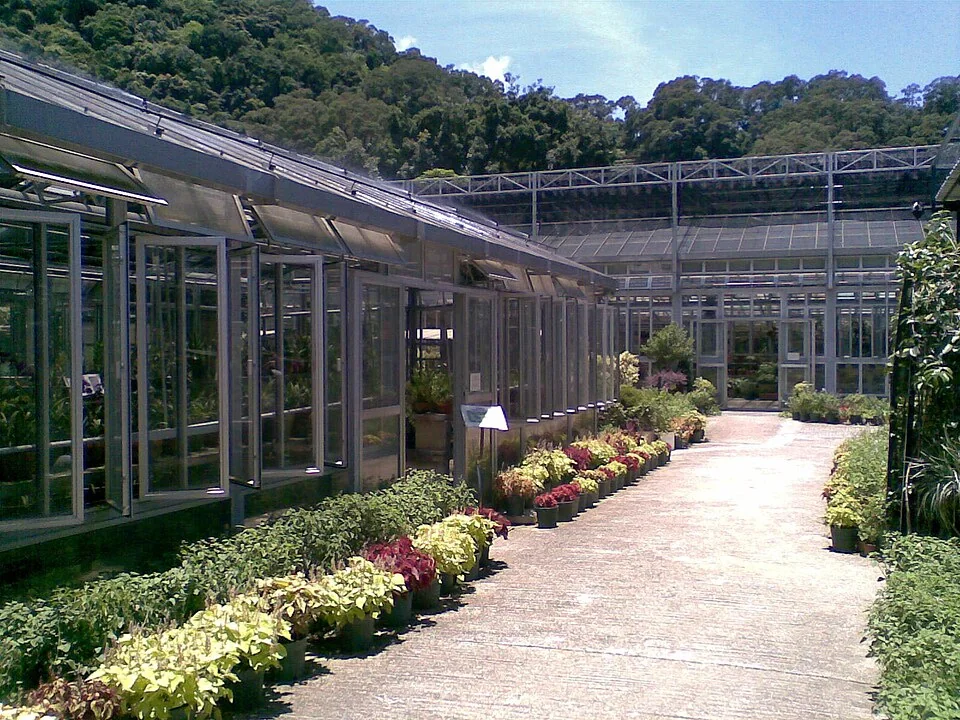
The photograph records greenhouses in 2008. It illustrates a type of plant-display space, not today's opening status, plant arrangement or entrance. Use current maps, closure signs and staff advice for actual access.
Vegetable plots and the Fruit Forest: observe growing, not picking
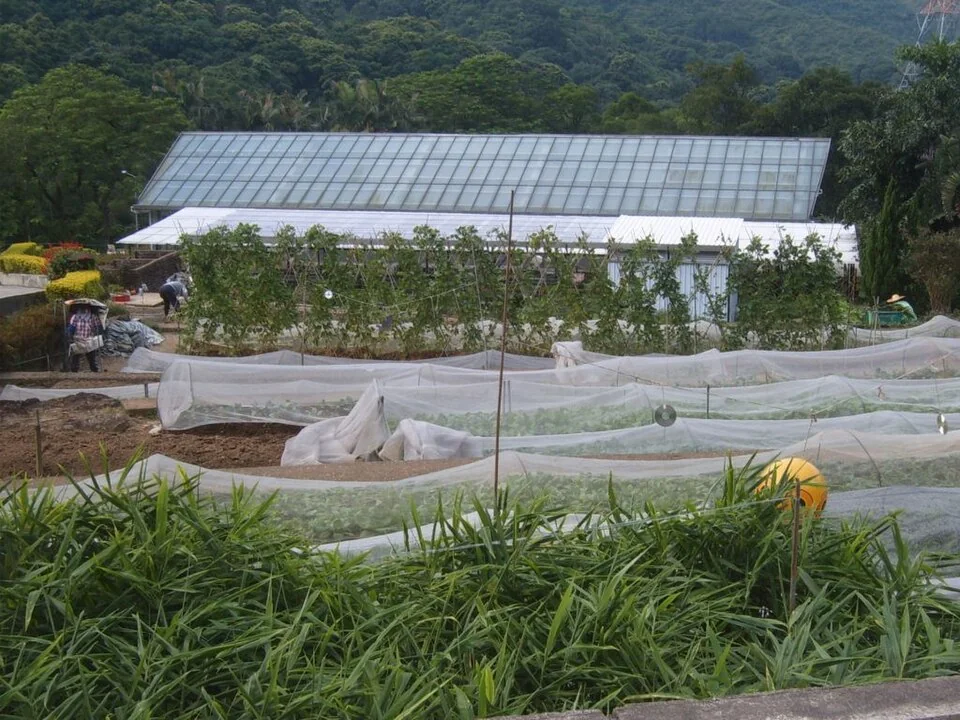
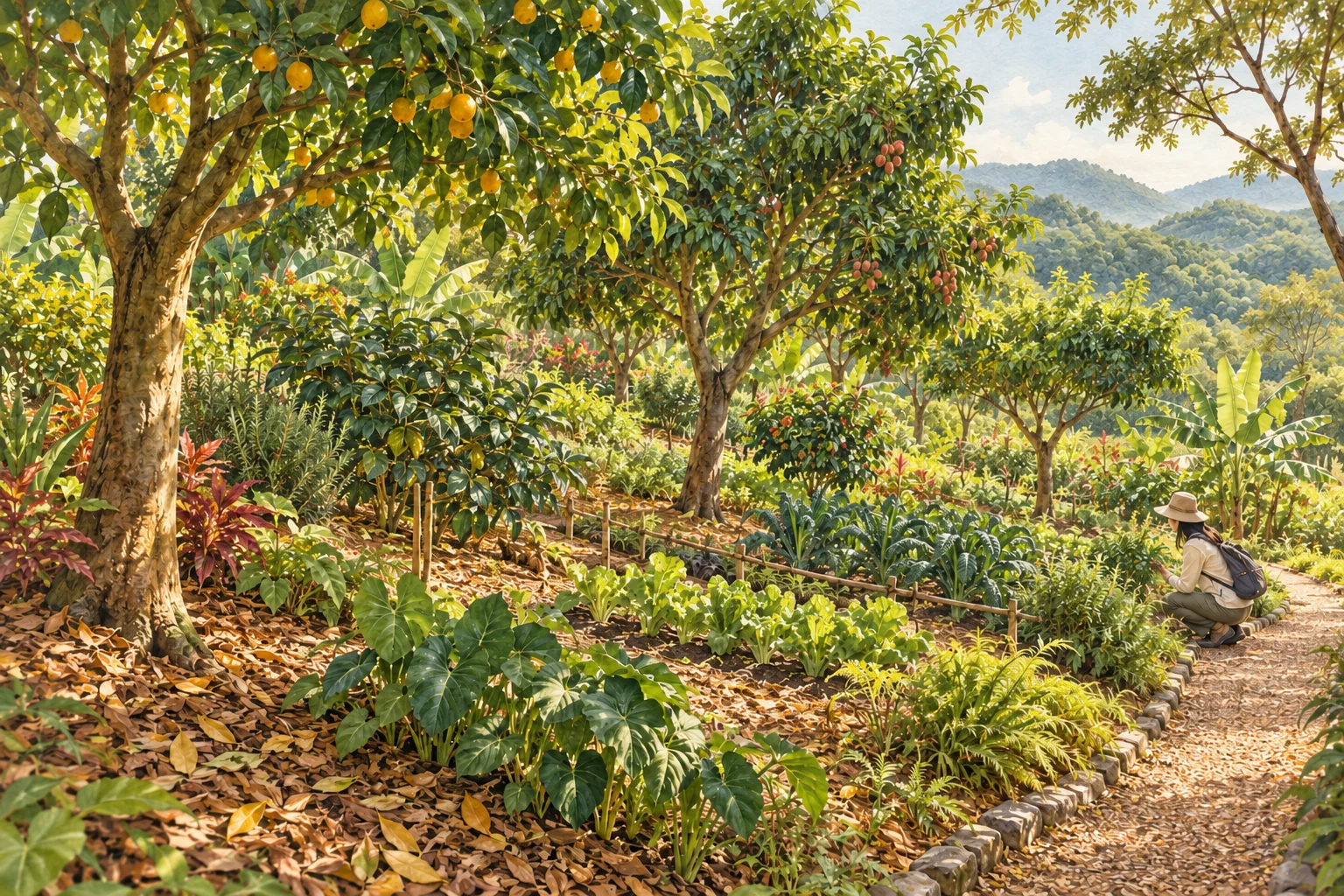
The Farm describes the Eco-garden and One-dou Farm as places to learn about organic growing, and the Fruit Forest as an example of fruit trees interplanted with edible crops. Look at three levels: the canopy, plants below it and crops closer to the ground. Then consider how light, fallen leaves and growing positions relate.
The concept illustration below shows plants sharing space at different heights. It is not an inventory of a particular Farm plot or evidence that the pictured fruit is in season. At the real beds, read current labels and observe management; do not assume every green leaf is edible. Admission is for observing, not a permission to harvest.
A useful small exercise is to record differences between plants in two accessible places, one shadier and one sunnier. Avoid concluding from a single observation that a species must always prefer shade or sun. Look up the identified plant afterwards to turn an observation into better understanding.
Going uphill: ask about the shuttle and the return first
The internal shuttle leaves the Reception Car Park. Its complete route is described as about 40 minutes with seven stops, including Fern Walk, Orchid Haven, the Kadoorie Brothers Memorial Pavilion, Kwun Yum Shan and Butterfly Garden, finishing at Raptor Sanctuary. That running time excludes your visits and waiting after getting off. Use the current route map for actual boarding points.
Shuttle tickets cost extra: HKD30 for ages 12–59, or HKD15 for ages 4–11, visitors aged 60 and above and eligible disabled visitors. Under-fours travel free when accompanied by an adult aged at least 18. Tickets are sold with admission at Reception, first come, first served, without reservations. The operator allows visitors to get off en route and re-board with the same day's ticket subject to seats being available. Buying a ticket does not reserve a seat at every intermediate stop.
Weekday and weekend/public-holiday schedules differ; do not use the ended summer timetable. Ask which departure works for you, how to return after getting off, and where walking is involved. The published guidance asks passengers to reach the starting stop five minutes early. Missing a departure does not qualify for a refund or exchange, so leave room before any onward pickup.
If there is no suitable departure, energy is low or weather deteriorates, keep the lower-area visit. Skipping Kwun Yum Shan does not diminish the wildlife-care and plant observations you have already made. Do not hurry onto an unsuitable steep path to catch a last bus.
Lunch, breaks and what to leave out
Eat Well Café and the Farm Shop are in the lower area, with drinking-water refill facilities at the shop. Bring a reusable bottle, shoes with grip and sun or rain protection. Official pages currently give different café starting times; contact the Farm if breakfast is essential. We have not planned access before the Farm opens around either café claim.
Arriving in the morning, ask about the shuttle first, visit one animal exhibit and one plant space, then decide after a break whether to add growing exhibits or the upper hillside. Arriving in the afternoon, keep two lower-area observations as the main plan. The 16:00 last-entry time is not a recommended arrival time for exploring the entire hillside. Follow announcements during heavy rain, strong winds or closures, and never enter a closed area for a photograph.
Your pre-journey checklist
- Recheck designated closing days, weather announcements and the 09:30–17:00 visitor hours.
- Separate individual admission, group applications, parking and programme bookings.
- Choose a wildlife-care, plant or growing focus and allow breaks.
- Ask about departures, extra fares and conditional re-boarding before an uphill trip.
- Do not feed, pick or cross barriers; let animals rest out of view.
- Confirm wheelchair, pushchair and walking needs with the Farm rather than assuming the lower area is flat.
Sources & further reading
This article draws on the media coverage and public information below. Event and transport arrangements can change; check the latest details before travelling.
- Hong Kong China News Agency: Kadoorie Farm’s seventy-year storyweb.hkcna.hk (Opens in a new tab)
- Kadoorie Farm: admission, visitor and group informationkfbg.org (Opens in a new tab)
- Kadoorie Farm: visitor tipskfbg.org (Opens in a new tab)
- Kadoorie Farm: wildlife care, plants and cultivation highlightskfbg.org (Opens in a new tab)
- Kadoorie Farm: shuttle-bus servicekfbg.org (Opens in a new tab)
- Kadoorie Farm: travel and parkingkfbg.org (Opens in a new tab)
Make it your journey
For a different nature visit, compare the habitats and birdwatching at Hong Kong Wetland Park. If another day takes you beyond managed visitor paths, use our Hong Kong hiking preparation guide to plan for that specific route.