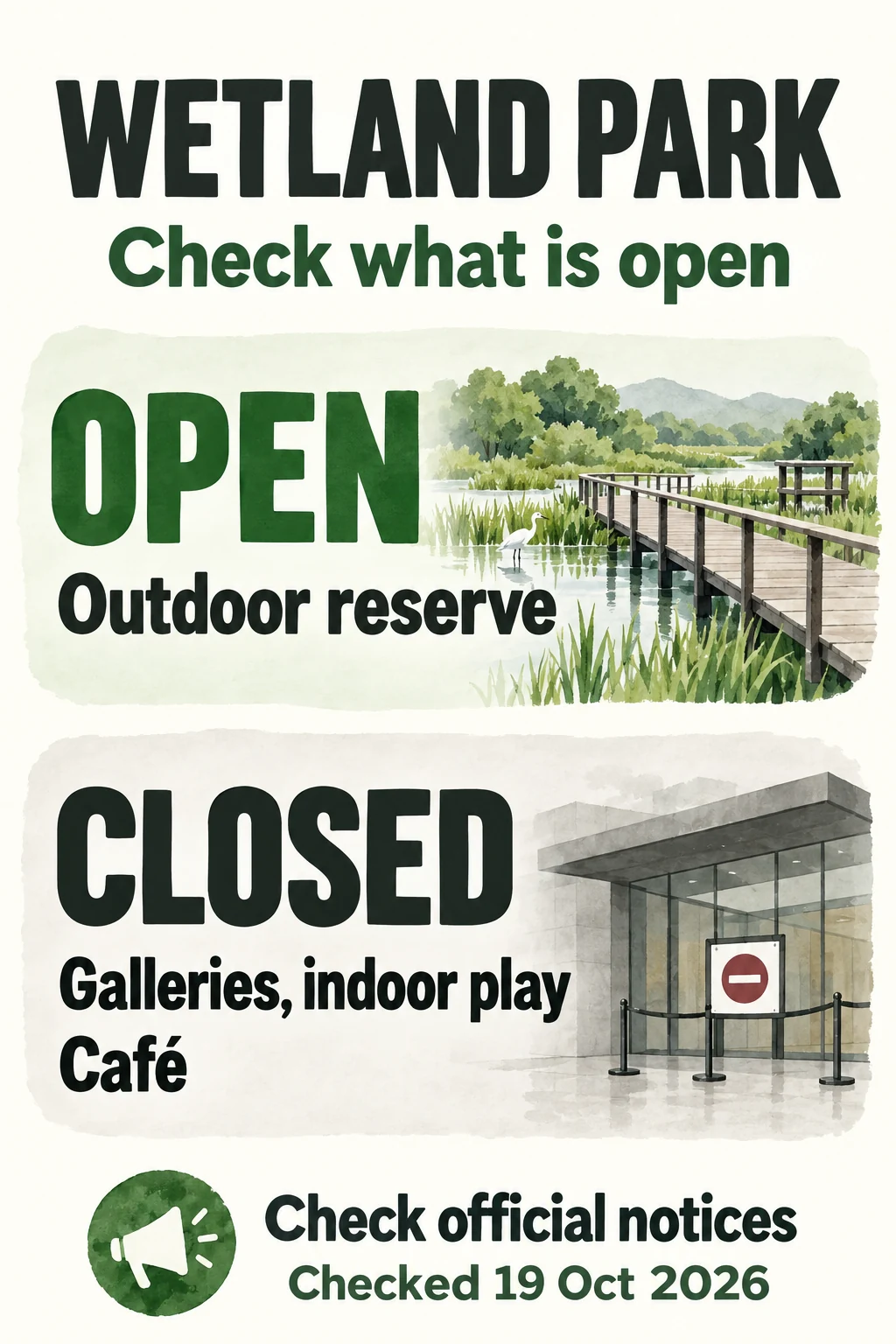
Hong Kong Wetland Park remains a worthwhile place to explore habitats and watch birds, but plan an outdoor visit. Rechecked on 25 October 2026, the exhibition galleries, indoor play area and café are temporarily closed for upgrading. The outdoor reserve remains open, and the latest notice also lists Mangrove Boardwalk among the open facilities. Read the latest notice before leaving, and do not rely on the indoor galleries as a complete rainy-day alternative.
Decide whether you want nature or indoor attractions
The park in Tin Shui Wai offers more than reeds reflected in water. Its 60-hectare outdoor reserve contains conserved or recreated freshwater marshes, ponds, reedbeds, mudflats, mangroves and woodland. Comparing a few habitats and noticing why different animals use them is a more rewarding starting point than chasing a checklist of must-see birds.
For a first visit, our suggestion is to allow roughly three to four hours and choose a few paths plus one bird hide. This is a light-visit planning allowance, not a promise of seeing the entire park. The official FAQ suggests four hours to a full day for a walk around the whole park. During upgrading, choose another outing if children mainly want the indoor play area or someone needs continuous air-conditioned rest space. Treat this as its own half-day rather than squeezing it into a two-day Central, harbour and West Kowloon itinerary.
What is open during upgrading?
The official upgrading notice, updated in October 2026, lists the outdoor reserve as open. That includes Stream Walk, Wetland Discovery Centre, Butterfly Garden, bird hides and other trails. The information counter, toilets, mother's room, first-aid room and car park also remain open.
The official notice checked on 25 October now lists Mangrove Boardwalk among the open facilities. We have therefore removed the expired 21–23 October maintenance advice from the visit plan. Follow entrance notices and staff directions for any changes on the day; this update is based on the current notice, not simply an assumption that the earlier scheduled maintenance end date guarantees access.
Temporary closures cover the atrium, four main exhibition galleries, viewing gallery, indoor play area, theatre, multi-function rooms, souvenir shop and café. The entry plaza is partly closed, with access retained to the Eco-Maze and Green Roof on either side. An open reserve does not mean that every individual location is immune to short-term maintenance: read the day's signs at the entrance.
The atrium ticket gates are out of service, admission is checked manually and electronic ticketing is temporarily suspended. Do not plan around an old description of buying online and going straight through the gates. The notice does not give a full reopening date. Similarly, upgrade ideas mentioned in earlier news reports are not proof that a new facility can be used today.
Explore through three questions
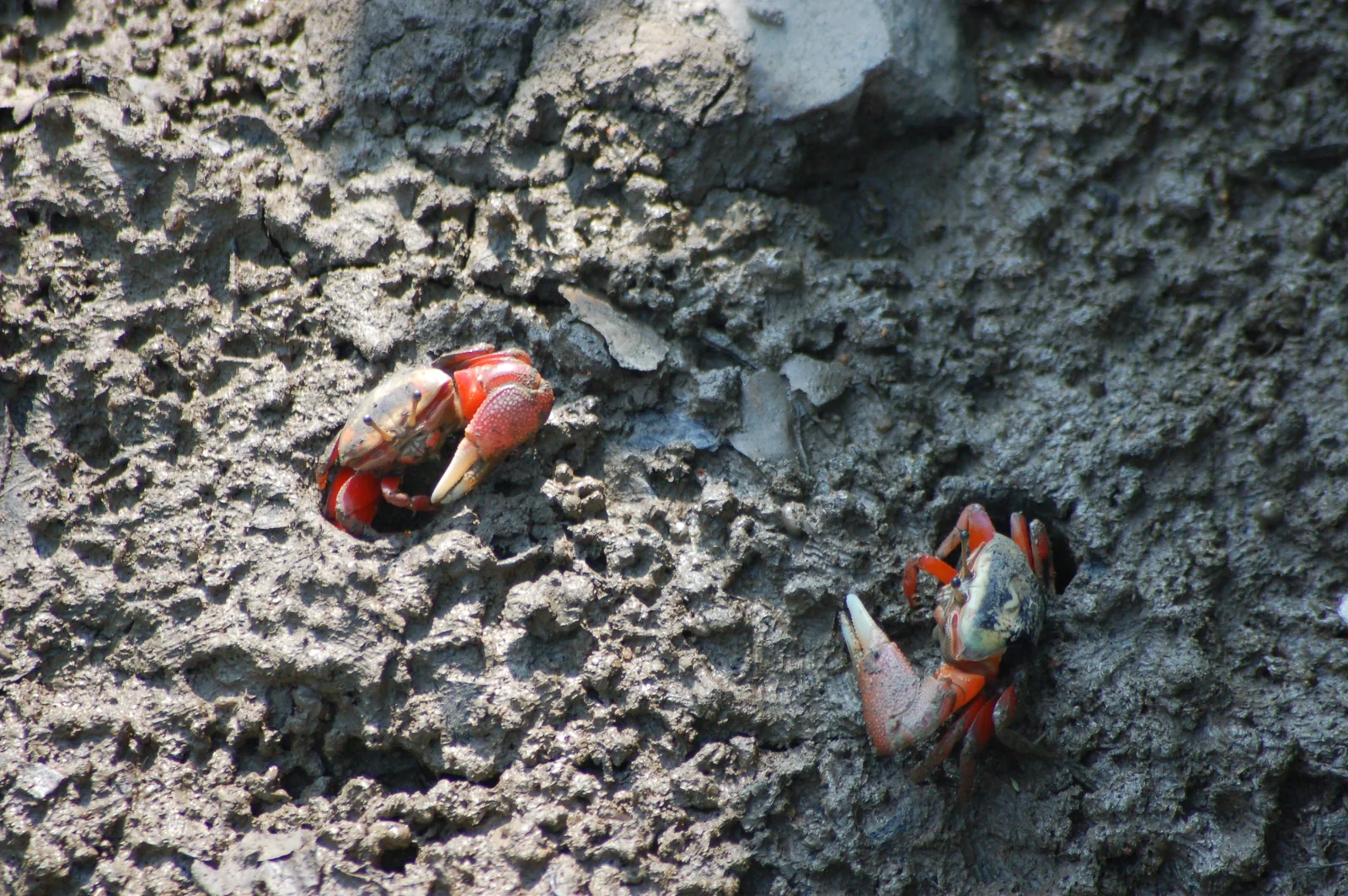
First ask: what is different about the water and vegetation here? At freshwater marshes, compare open water, shallow edges and dense vegetation. Mangroves show how plants cope with a salty, muddy intertidal environment and limited oxygen in the soil. The park's habitat guide explains that they provide food, shelter and nursery space for animals such as mudskippers and fiddler crabs. A burrow, a moving crab or a waterline can make a satisfying observation without waiting for a large bird to appear.
Next ask: what is the animal doing? A bird perched on a branch, feeding or using a different depth of water gives you more to notice than its name alone. Watch quietly before raising binoculars. After taking a photograph, put the camera away briefly and compare what changes over several minutes. Note the location, behaviour and broad appearance, then consult a field guide later instead of leaving the path to get closer.
Finally ask: why might I see this today? The official FAQ identifies October to April as the peak birdwatching season, spring and autumn as opportunities to observe passage migrants, and summer as a good season for butterflies and dragonflies. These are opportunities, not guarantees. Weather, water level, animal activity and patience all influence a visit. Individual wildlife records on the park's website have observation dates; they do not promise that the same bird will be in the same place today.
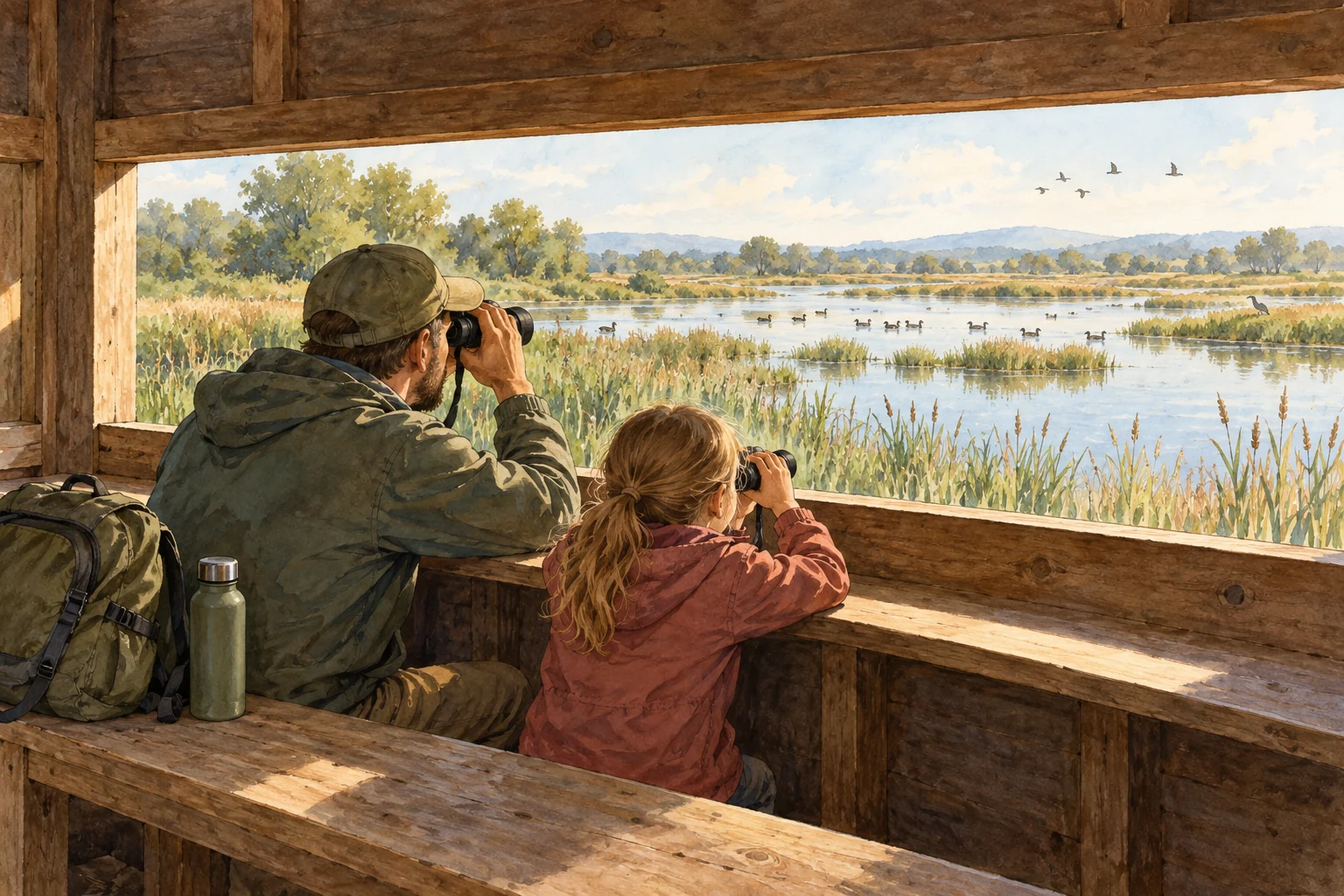
Slow down at a bird hide
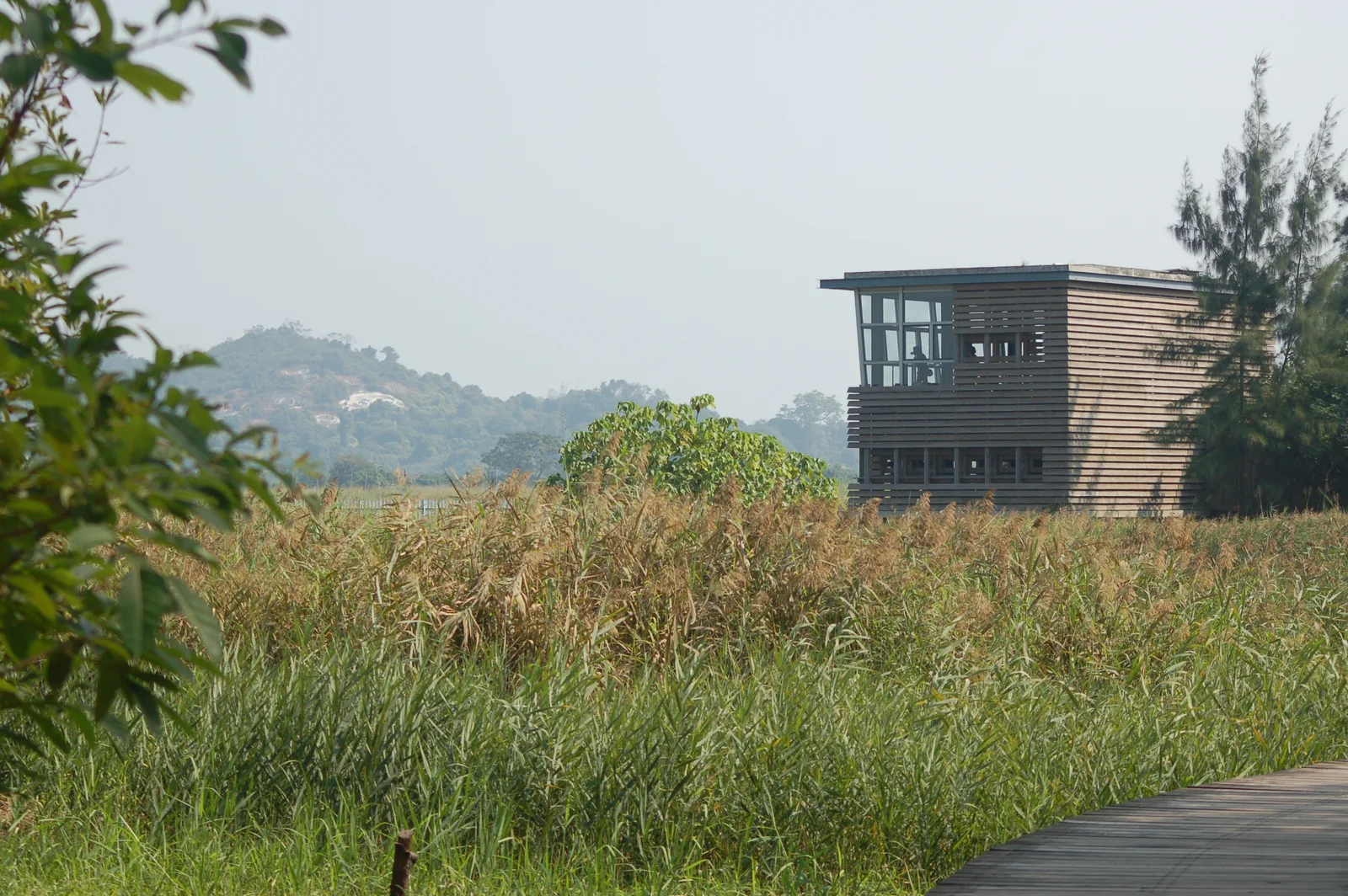
A hide is a place to observe the distant wetland quietly. Lower your voice before entering and wait for an available viewing position instead of crossing in front of another person's lens. With children, set a small observation task, such as finding two different resting postures, rather than demanding a photograph of a particular species.
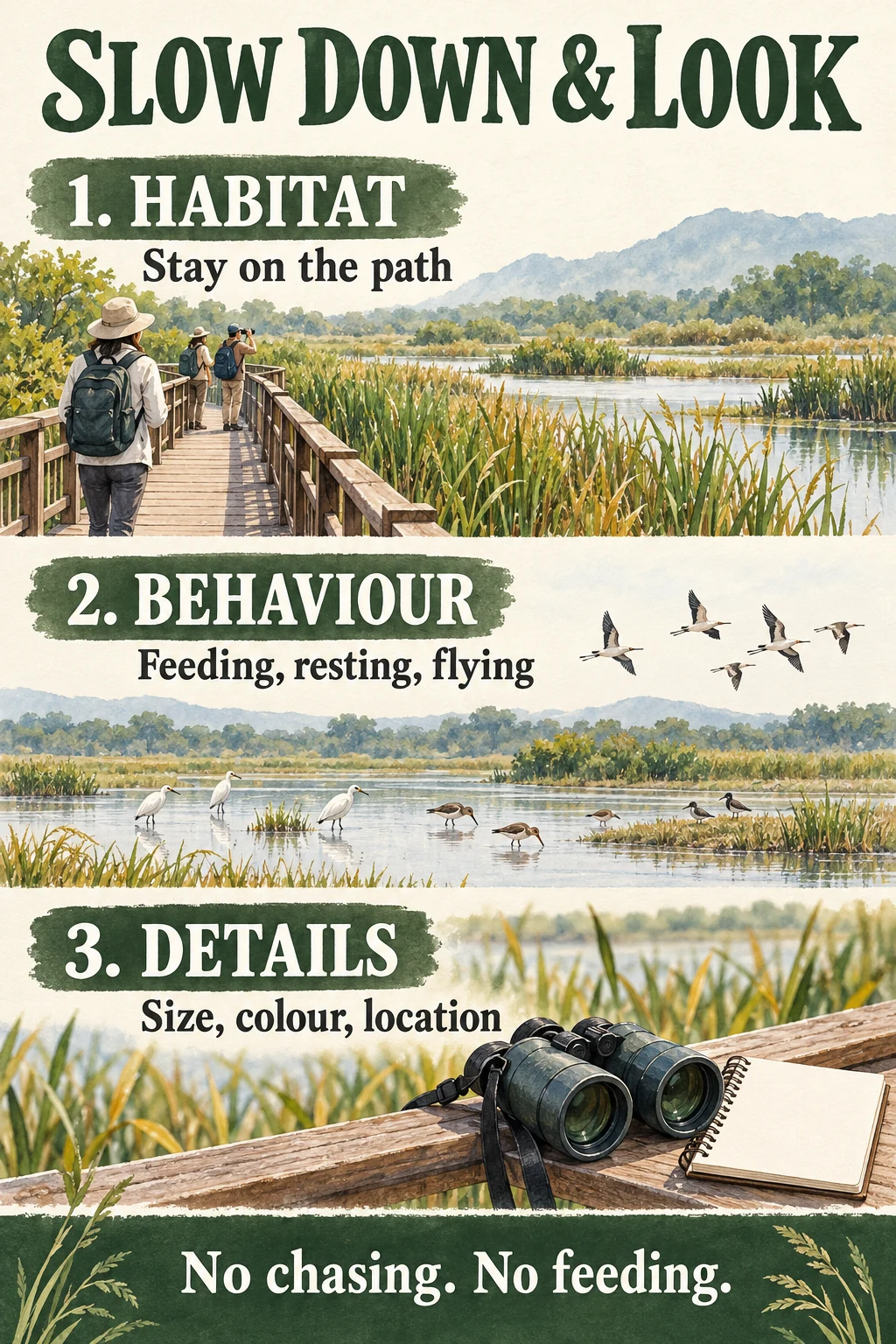
Ordinary binoculars and a small notebook are enough. Without binoculars, you can still observe the water, vegetation and nearby insects. Keep your distance from wildlife: do not feed or chase it, play sounds to lure birds, touch feathers or droppings, or reach beyond barriers for a picture. The official code requires quiet behaviour, designated-path use and avoidance of disturbance. If an animal is out of sight, moving on is better than trying to flush it out.
Build a half-day with room to pause
Start after opening and ask staff about a suitable short route and current trail conditions. Begin with a streamside or freshwater area to settle into the pace of observation, then follow on-site directions to an open bird hide. If you would like to add Mangrove Boardwalk, confirm access on the day and judge the extra stop by your energy level. Around midday, decide whether there is enough energy for another habitat rather than trying to complete every path.
| Stage | Our suggested focus | When to shorten it |
|---|---|---|
| Arrival | Read notices, confirm the open route and use the toilets | Reduce outdoor time if the weather is uncomfortable |
| First habitat | Observe water, plants and small animals; take a few photos | Move towards rest or the exit if children tire |
| One bird hide | Observe quietly without a species target | Wait or try another observation point if windows are crowded |
| Optional extension | Add a trail open that day; confirm Mangrove Boardwalk access first | Keep time for water, food and the return journey |
This is a decision framework, not an official guided route or a substitute for the park map. The FAQ says that most outdoor areas are wheelchair-accessible, which does not mean every outdoor section. Wheelchair users, families with pushchairs and visitors needing a short, gentle route should confirm a specific route with the park before travelling and follow the facilities available on the day.
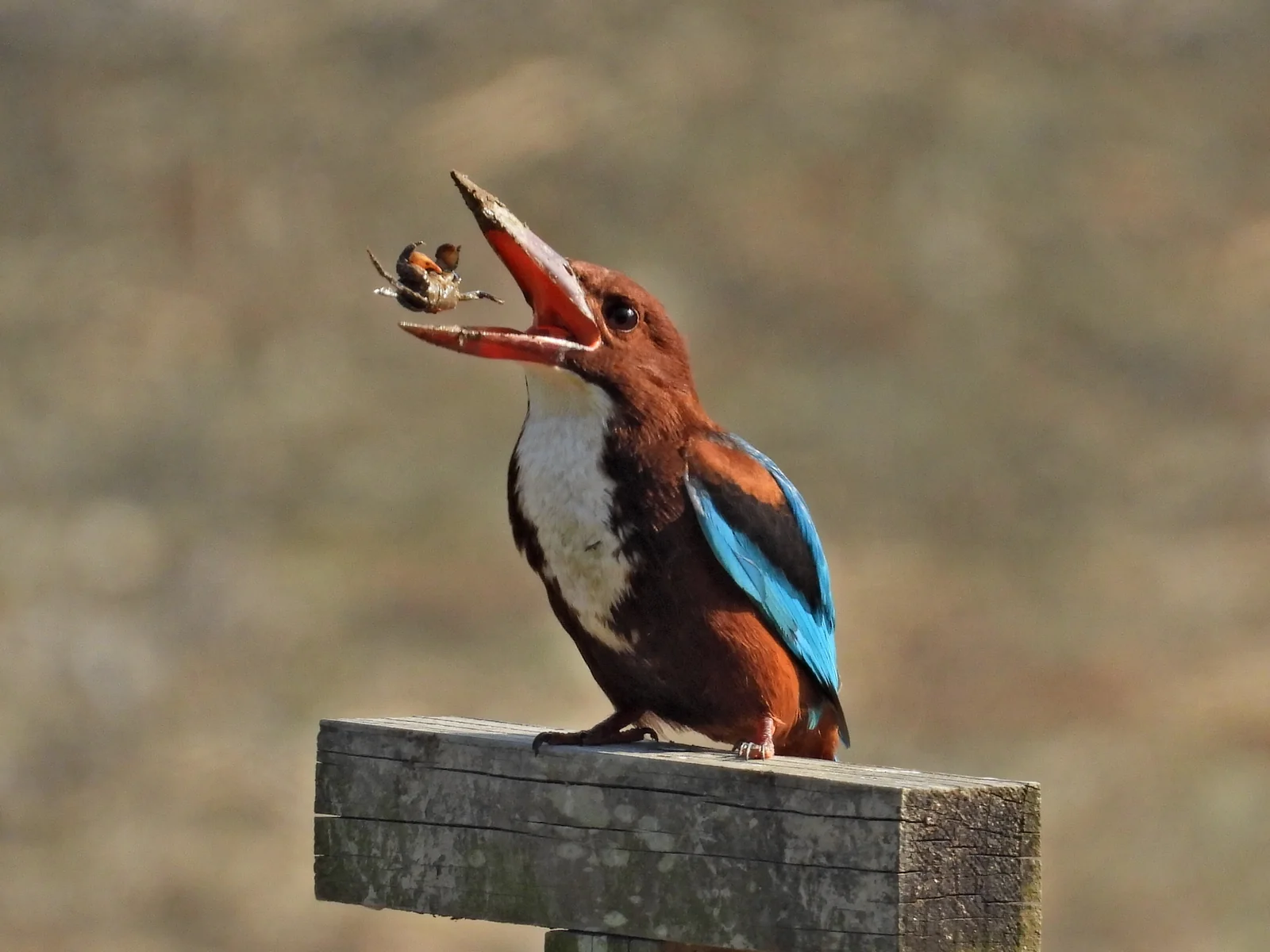
Plan water, food and weather before buying a ticket
The café closure is particularly easy to overlook. Eat outside the park beforehand or arrange a meal after leaving. Carry enough drinking water in a reusable bottle rather than relying on catering inside. The official code prohibits picnics and leaving food outdoors: bringing lunch does not mean you can spread it out in the reserve, and food must never be used to attract wildlife.
Light long sleeves and trousers, a hat, sun protection, appropriate insect repellent and closed shoes are more useful than excessive camera equipment. Cut stops when someone is hot or tired. In worsening rain, do not force an outdoor visit or assume the closed galleries will rescue the plan.
The park has closure arrangements for Tropical Cyclone Warning Signal No. 8 or above, Black Rainstorm Warnings and extreme conditions. Reopening depends on cancellation times and safety conditions. Check the official hours and weather arrangements that day instead of judging only by an apparent improvement in the weather. For broader itinerary changes, see our Hong Kong and Macau typhoon and rainstorm guide.
Hours, tickets and arrival
Normal hours checked for this article are 10:00–17:00, with the ticket office open 09:30–16:00. The park closes on Tuesdays except public holidays. A standard single-entry ticket is HKD 30; concession admission is HKD 15. Concessions cover children aged 3–17, full-time students, people aged 65 or over, people with disabilities and one accompanying carer. Children under 3 enter free without a ticket. Bring any required proof of eligibility and follow the park's rules; upgrading does not make the whole park free.
The park's transport page gives a rail option via Tin Shui Wai on the Tuen Ma Line, changing to Light Rail route 705. Alight at Tin Sau and approach through the tunnel, or use Wetland Park stop. Check route 705's direction, services and station signs on the day. Allow time for the interchange and final walk, not just the train ride.
Your pre-journey checklist
- Check the latest upgrading notice, daily trail access and weather arrangements.
- Arrange food outside, carry water and avoid picnics or feeding wildlife in the reserve.
- Choose a few habitats and one hide without promising a particular bird.
- Confirm a specific accessible route if using a wheelchair or pushchair.
- Check the Tuesday exception, ticket-office hours and light-rail connection.
Sources & further reading
This article draws on the media coverage and public information below. Event and transport arrangements can change; check the latest details before travelling.
- Hong Kong Wetland Park: upgrading and facility-access notice, updated October 2026wetlandpark.gov.hk (Opens in a new tab)
- Hong Kong Wetland Park: hours and adverse-weather arrangementswetlandpark.gov.hk (Opens in a new tab)
- Hong Kong Wetland Park: admission fees, concessions and electronic-ticket suspensionwetlandpark.gov.hk (Opens in a new tab)
- Hong Kong Wetland Park: public transportwetlandpark.gov.hk (Opens in a new tab)
- Hong Kong Wetland Park: habitat descriptionswetlandpark.gov.hk (Opens in a new tab)
- Hong Kong Wetland Park: outdoor reserve and habitatswetlandpark.gov.hk (Opens in a new tab)
- Hong Kong Wetland Park: wildlife seasons, visit duration and accessibility FAQwetlandpark.gov.hk (Opens in a new tab)
- Hong Kong Wetland Park: the three bird hideswetlandpark.gov.hk (Opens in a new tab)
- Hong Kong Wetland Park: visitor code and preparationwetlandpark.gov.hk (Opens in a new tab)
- HK01: report on proposed Wetland Park upgrading, 2021 historical backgroundhk01.com (Opens in a new tab)
Make it your journey
If the park is one stop in a wider Hong Kong journey, share your starting point, party size and onward destination so that pickup arrangements and return time can be considered before choosing an entry time.