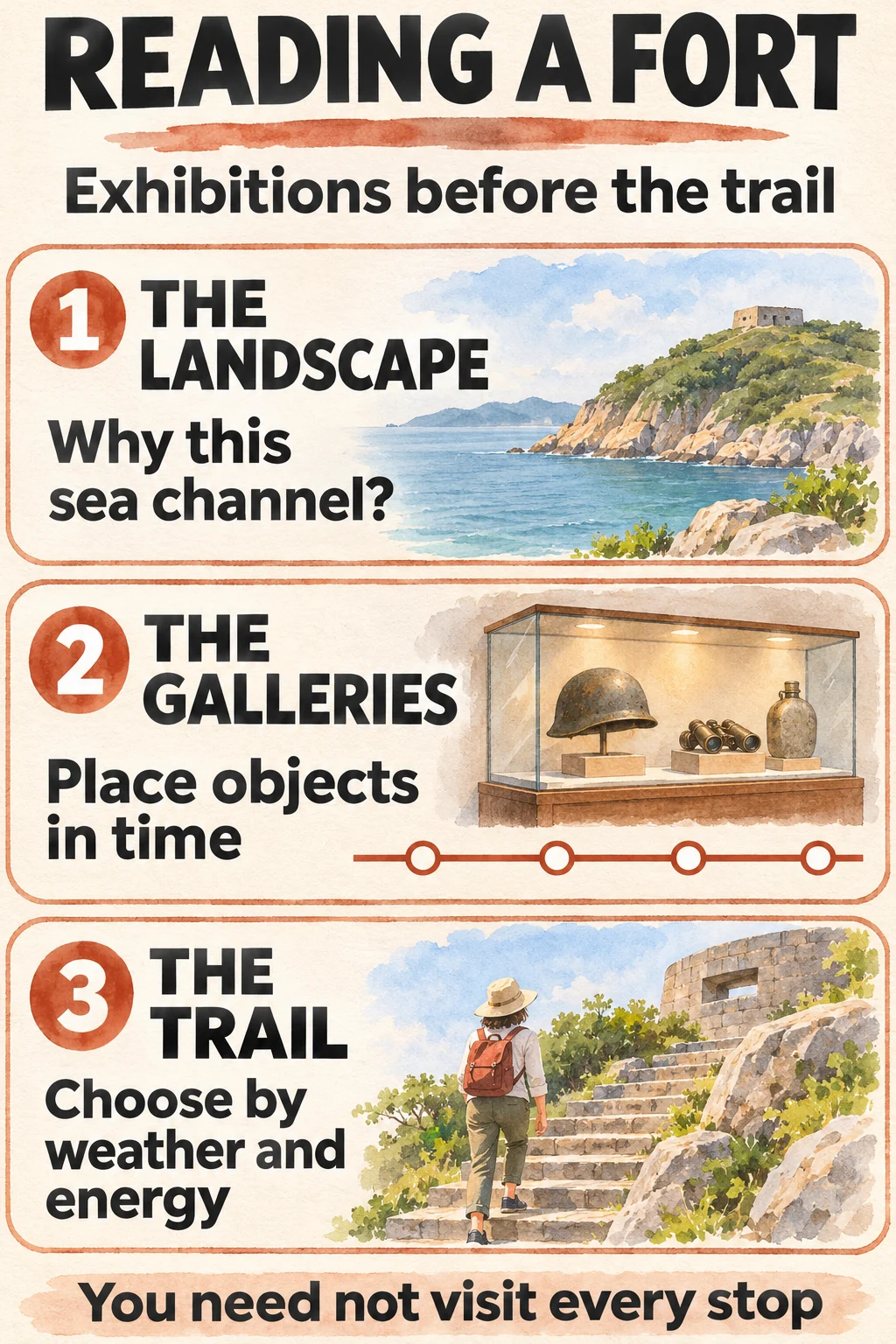
The Hong Kong Museum of the War of Resistance and Coastal Defence is best understood by connecting its galleries with the original landscape. Start inside the redoubt to establish dates and people, then use the open sections of the Historical Trail to relate the sea channel, fortifications and paths. Allow two to three hours without trying to complete all 24 historical sites. Much of the museum is outdoors, with changes in level. If weather or mobility makes that unsuitable, the redoubt galleries can be a worthwhile visit in their own right.
Recognise the museum, then choose a question
The Shau Kei Wan museum was converted from the Hong Kong Museum of Coastal Defence into the Hong Kong Museum of the War of Resistance and Coastal Defence on 3 September 2024. The museum introduction describes 11 permanent galleries, including four devoted to the War of Resistance. Older photographs and some historical websites retain the former name; they do not refer to another museum requiring a separate ticket.
This visit suits people willing to read explanations, examine maps and discuss how war affected a city. Architecture enthusiasts can investigate the conversion of military structures into a public museum. With school-age children, choose one question instead of treating every military term and date as something to memorise. If anyone is sensitive to war-related material, review the subject matter before deciding how much to see.
HK01's museum feature suggests ways into the multimedia displays, maps and oral histories. It is sponsored content first published in 2023 and still uses the old museum name in its text. Opening hours, guided tours and outdoor closure conditions below were checked against the museum's own pages on 17 November 2026, rather than assumed from that older feature.
Look at the channel: the landscape belongs to the story
The site occupies a headland on the southern shore of Lei Yue Mun, overlooking Victoria Harbour's eastern approach. The official exhibition page connects this position with the fort's strategic role. From viewing areas open to visitors, ask where ships pass, what can be seen from above, and how the shoreline connects with the ridge.
These questions make more sense of the site than immediately searching for its largest gun. The channel, differences in height and lines of sight help explain why the structures were not all built on one level. The boats, buildings and shoreline visible today belong to the present, however; do not treat the modern cityscape as a reconstruction of the nineteenth century or 1941.
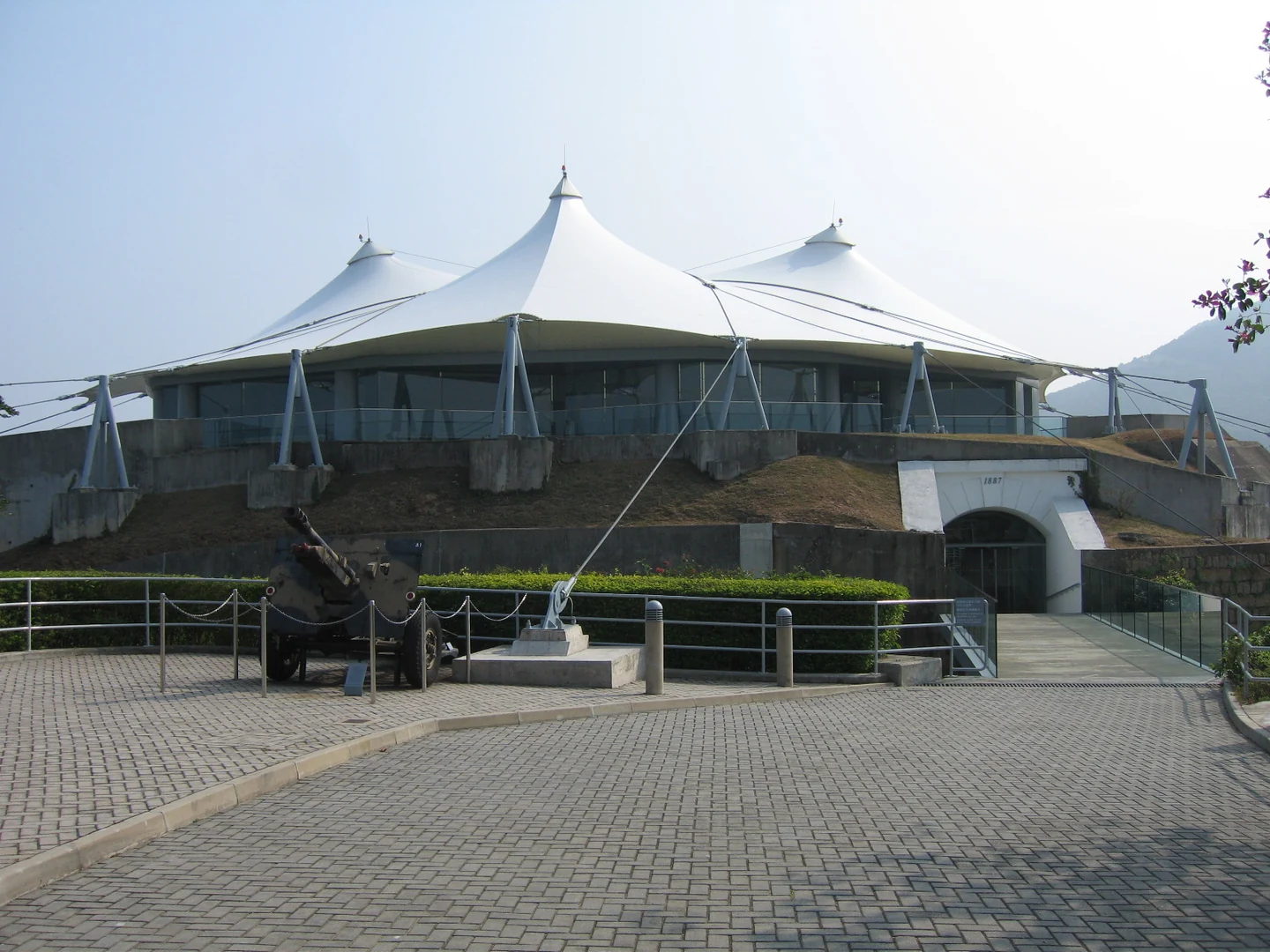
The Architectural Services Department's account dates the fort to 1887. It explains how the museum conversion introduced a lift tower and footbridge to reach the higher headland and adapted underground casemates for galleries and other uses. The tensile fabric canopy above the courtyard belongs to that museum conversion: it is not an original nineteenth-century soldiers' tent. Separating surviving fortifications from later visitor facilities makes the architecture more intelligible than simply labelling everything “old”.
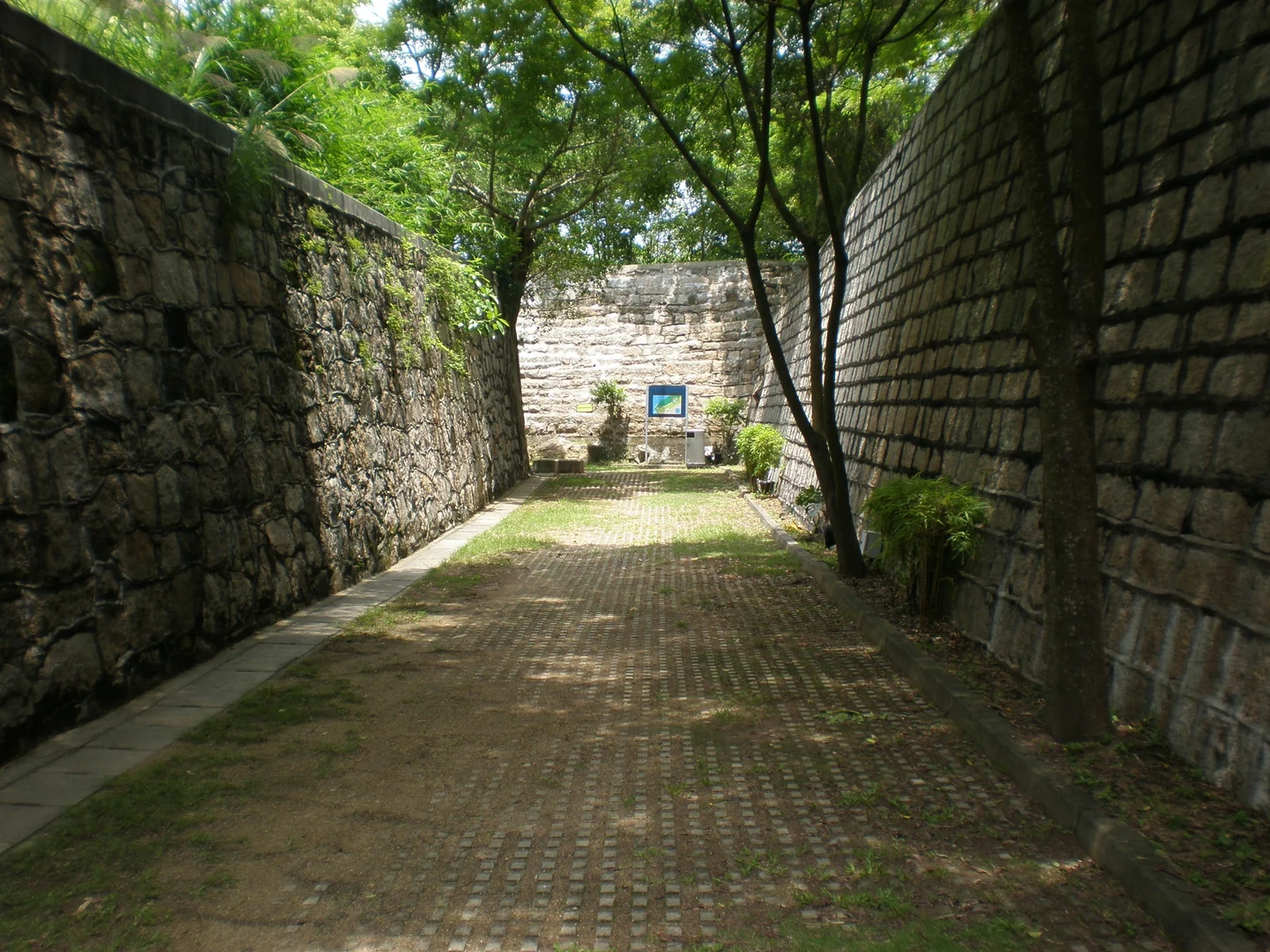
Inside the redoubt, place an object in its time
The visitor information divides the museum into the Reception Area, the Redoubt on level 8 and the Historical Trail. That floor designation belongs to the present visitor facilities; it does not mean the original redoubt was an eight-storey barracks. The 11 themed galleries occupy converted casemates. Their subjects include coastal and military change, Japanese aggression, the occupation of Hong Kong, the Hong Kong and Kowloon Independent Brigade of the East River Column's activities behind enemy lines, and Japan's surrender.
On a first visit, read the introductory explanation and timeline before choosing one group of objects, photographs or film material to examine closely. Ask when the material was created, who used it or supplied the account, and what it can—and cannot—establish by itself. Personal recollections and military maps offer different perspectives; they are not interchangeable types of evidence.
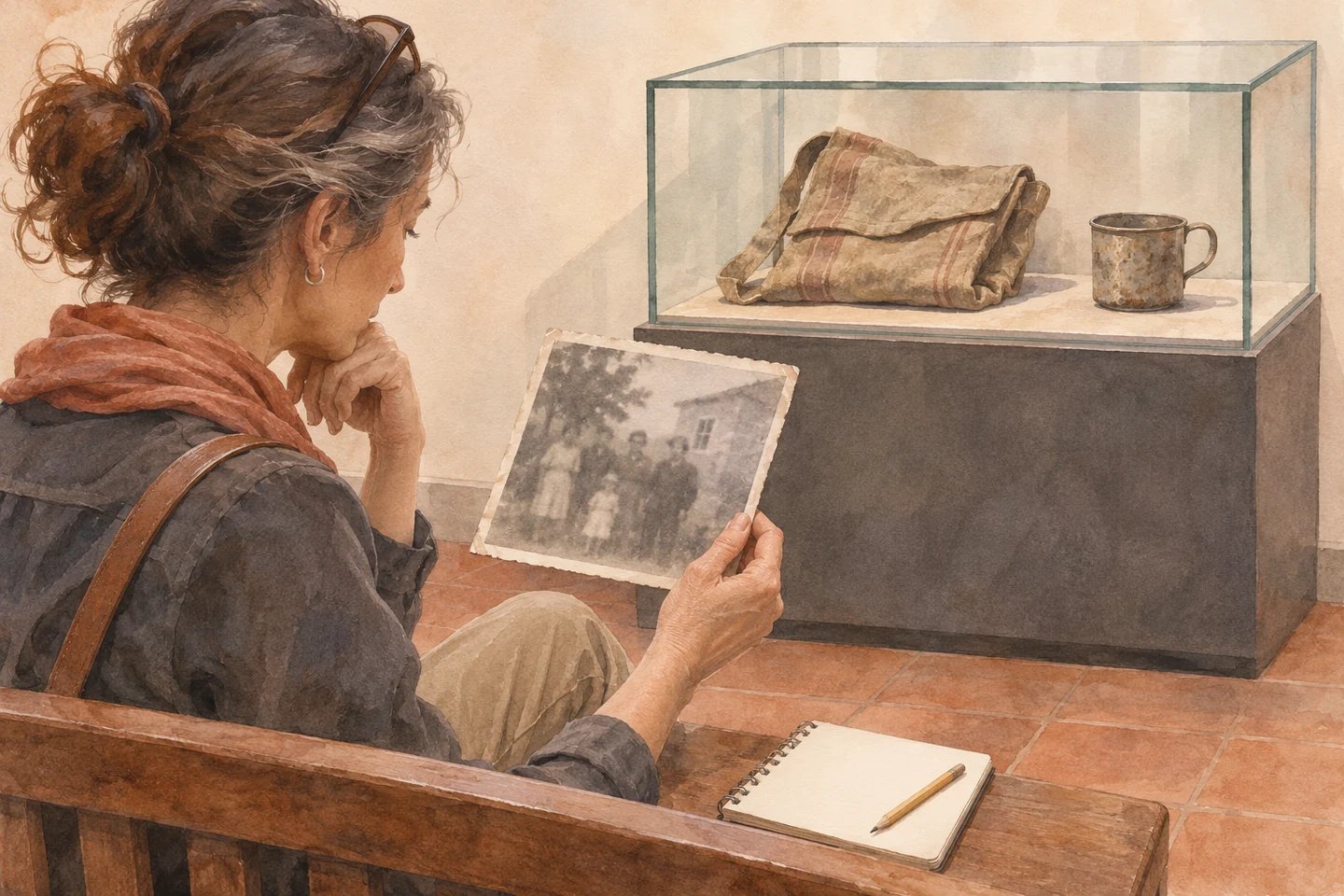
Children and adults could each select one item and explain its purpose in their own words after leaving the gallery. Photographing every case is unnecessary. The illustration of a visitor examining a historical photograph and everyday objects demonstrates a reading method; it reconstructs neither an actual gallery nor particular exhibits.
Online audio guides are available through the exhibition page. Bring headphones for listening indoors. If a temporary exhibition especially interests you, check its own announcement and dates. The website's exhibition archive is not a list of shows still open today.
The trail's 24 sites are a range, not a target
The official introduction lists 24 historical sites. Its lowest point, the waterfront Brennan Torpedo Station, is around two metres above sea level; the redoubt on the ridge is at 64 metres. Those elevations establish that the site has substantial changes in level, but do not establish the length of the walking route. Descending towards the waterfront also leaves a return journey to consider.
After the galleries, consult the current guide map and staff advice to choose a few open features. Focus on how one structure relates to its surroundings: how the ditch follows the redoubt, how walls constrain the view, or how passages connect different levels. Make these observations from permitted paths, without crossing barriers, climbing historic structures or entering closed areas.
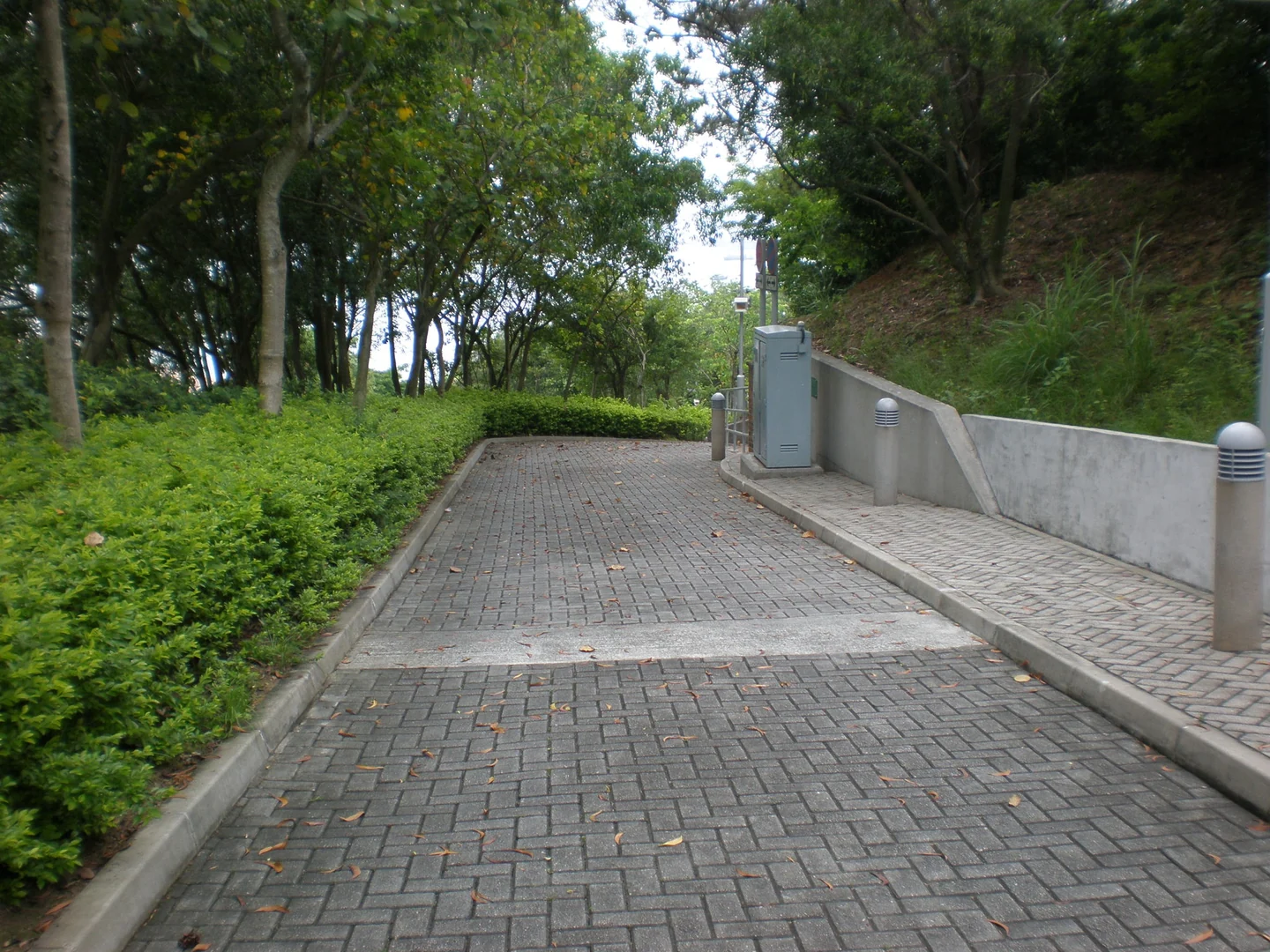
With only half an hour left, avoid hurrying downhill simply to reach the lowest point. Choose an open section near your current location that allows a straightforward return, and reserve time to reach the exit. Wheelchair users, families with pushchairs and people with knee problems should ask at reception about suitable areas. Lifts and ramps serving the redoubt do not make the entire outdoor trail step-free.
Outdoor access has specific weather conditions. The visiting page states that the trail closes temporarily and outdoor tours are cancelled during a thunderstorm warning, red or black rainstorm warning, or tropical cyclone warning signal No. 3 or above. Even without those warnings, assess the actual paths and your group's energy. Do not wait until surfaces are slippery or everyone is exhausted before considering the return.
Plan two or three hours, or build around one guided tour
The following allowances are suggestions for an independent visit, not an official route or a guarantee that every facility can be included. Travel to the museum, lunch and the return to the city are additional.
| Time available | Suggested focus | What to leave out |
|---|---|---|
| About 90 minutes | Reach the redoubt, examine two or three groups of displays and use an open viewing area | Do not descend in pursuit of every historical site |
| About two hours | Around an hour indoors, followed by a short outdoor section with time to return | Avoid combining a temporary show with distant remains |
| About three hours | More sustained gallery reading, a rest and an outdoor section suited to your energy | Completing all 24 sites still need not be the goal |
Free public tours are currently listed on Wednesdays, Saturdays, Sundays and public holidays: the permanent exhibition at 11:00, the War of Resistance galleries at 14:15, and the Historical Trail at 15:30. All are in Cantonese, last about an hour and admit up to 30 people on a first-come, first-served basis. Meet in the Redoubt lobby ten minutes before the start. The museum notes that sessions may change or be cancelled.
A guided tour changes the pace of a self-guided plan. For the 11:00 indoor session, allow time to reach the redoubt first. For the 15:30 outdoor session, remember the 17:00 winter closing time rather than adding a full round of galleries afterwards. Visitors who do not understand Cantonese can use written interpretation and the audio-guide resources independently; this public-tour timetable does not guarantee tours in other languages.
Opening, arrival and practical details
Admission to the permanent exhibition and Historical Trail is free. Normal hours are below; recheck temporary announcements and severe-weather arrangements before setting out.
| Period | Normal arrangement |
|---|---|
| March–September, Monday–Wednesday and Friday–Sunday | 10:00–18:00 |
| October–February, Monday–Wednesday and Friday–Sunday | 10:00–17:00 |
| Thursday | Closed, except public holidays |
| First two days of Lunar New Year | Closed |
Save 175 Tung Hei Road, Shau Kei Wan, Hong Kong. The museum gives an indicative 15-minute walk from Shau Kei Wan MTR station Exit B2. Add time for trains, leaving the station and reaching the redoubt inside the museum. Citybus routes 85 and 82X also pass the museum; check the direction and current stops for your actual journey.
There is a drinking-water dispenser in the Reception Area. Eating and drinking are allowed only in designated areas, so do not assume you can snack beside any display. Photography must not use flash, additional lighting, selfie equipment or tripods, and individual gallery rules apply. Ask the museum about any special filming or photography arrangements.
The museum lists lifts and ramps to the redoubt and accessible toilets. For specific assistance, call +852 2569 1500. Its private-car park operates during museum hours and offers each visitor three hours of free parking, subject to actual availability. That does not establish unlimited waiting or a reserved space for every kind of vehicle.
Your pre-journey checklist
- Use the current museum name and 175 Tung Hei Road; check seasonal hours and the Thursday exception.
- Treat the redoubt galleries as the core visit, then select outdoor sections by weather and energy.
- Distinguish the original fortifications, museum adaptations and present-day cityscape.
- There is no need to complete all 24 sites; allow time to return to the exit.
- Public tours are currently Cantonese, about an hour and first come, first served; recheck that day.
- Bring headphones for audio guides and follow local photography and food rules.
Sources & further reading
This article draws on the media coverage and public information below. Event and transport arrangements can change; check the latest details before travelling.
- Museum: hours, tours, trail closures and visitor facilitieshk.waranddefence.museum (Opens in a new tab)
- Museum: permanent exhibition, 24 historical sites and audio guideshk.waranddefence.museum (Opens in a new tab)
- Museum: renaming, redoubt and War of Resistance gallerieshk.waranddefence.museum (Opens in a new tab)
- Architectural Services Department: fort and museum conversionarchsd.gov.hk (Opens in a new tab)
- HK01: sponsored museum feature, first published in 2023hk01.com (Opens in a new tab)
Make it your journey
Before leaving, choose one observation that connects a gallery explanation with the landscape. That is enough to complete a focused visit. For another day exploring how technology shaped the city, consider our Hong Kong Railway Museum guide. The museums are in different parts of Hong Kong and deserve separate visiting slots.