The Dr Sun Yat-sen Museum brings together two histories: Sun's education and revolutionary activities in Hong Kong, and Kom Tong Hall's life as Ho Kom-tong's residence. Allow about 75–100 minutes to explore both, rather than visiting only for a staircase photograph. As checked on 11 November 2026, the first-floor permanent exhibition “Dr Sun Yat-sen and Modern China” has been suspended since 16 October until further notice. Build your visit around the currently listed Hong Kong history and building displays, instead of assuming every gallery in an older guide remains open.
Read the exhibition notice before choosing your priorities
The museum's exhibition page attributes the suspension to preparations for a thematic exhibition. This does not mean the whole museum is closed. The page continues to describe “Hong Kong in Dr Sun Yat-sen's Time” and “History and Renovation of Kom Tong Hall”, both with free admission. If you are travelling specifically to see an object, ask the museum first: an online collection highlight is not proof that the object is currently in a display case.
A useful question for this visit is how Hong Kong's schools, urban institutions and exchange of ideas became part of Sun's experience. Treat the house as a second, separate historical subject. If you want a complete life chronology, the first-floor exhibition or a new thematic show, check the latest announcement before leaving. Do not include a suspended gallery among your essential stops without confirmation.
Our 75–100 minutes is an independent visiting allowance, excluding the journey uphill, queues, lunch or a guided tour. With only 45 minutes, choose one section of Hong Kong history and the exterior. For a guided tour, plan around its actual start and duration instead.
Kom Tong Hall belonged to Ho Kom-tong
The official architecture and visiting information dates the house to 1914, identifies Hong Kong businessman Ho Kom-tong as its original resident and records its declaration as a monument in 2010. The museum opened in 2006. The original household, the construction date and the person commemorated by the later museum are different things. Its present name should not lead you to describe each room as somewhere Sun lived.
Begin with the columns supporting the curved balcony and the proportions of brickwork, windows and doors. Within areas open to visitors, look for stained glass, tiles and the teak staircase. Comparing Chinese and Western decorative elements is more rewarding than calling the whole building simply “European”. The museum also describes it as one of Hong Kong's earlier private homes with a steel frame and electrical wiring. This invites questions about changing domestic technology without requiring an architectural vocabulary test.
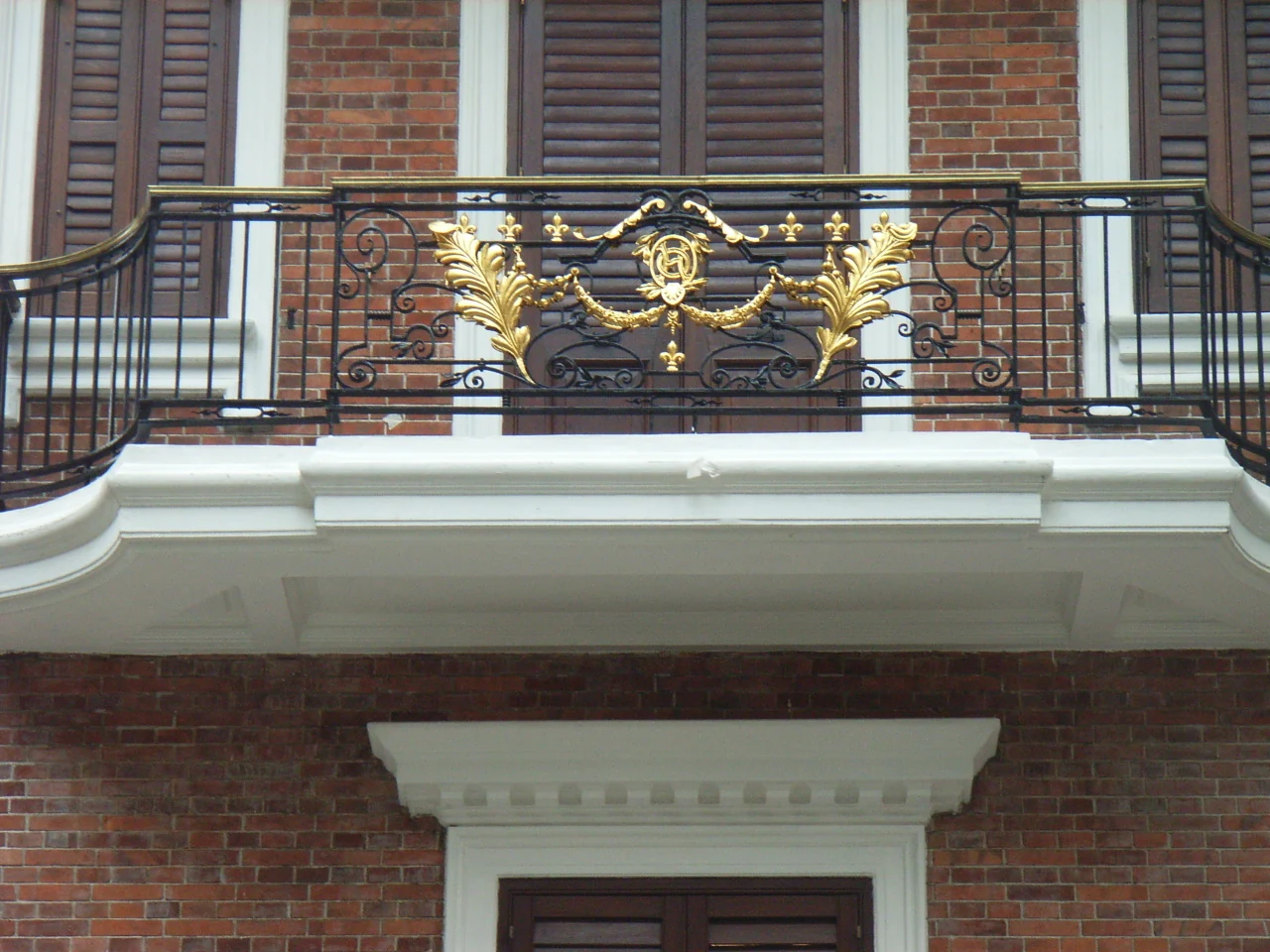
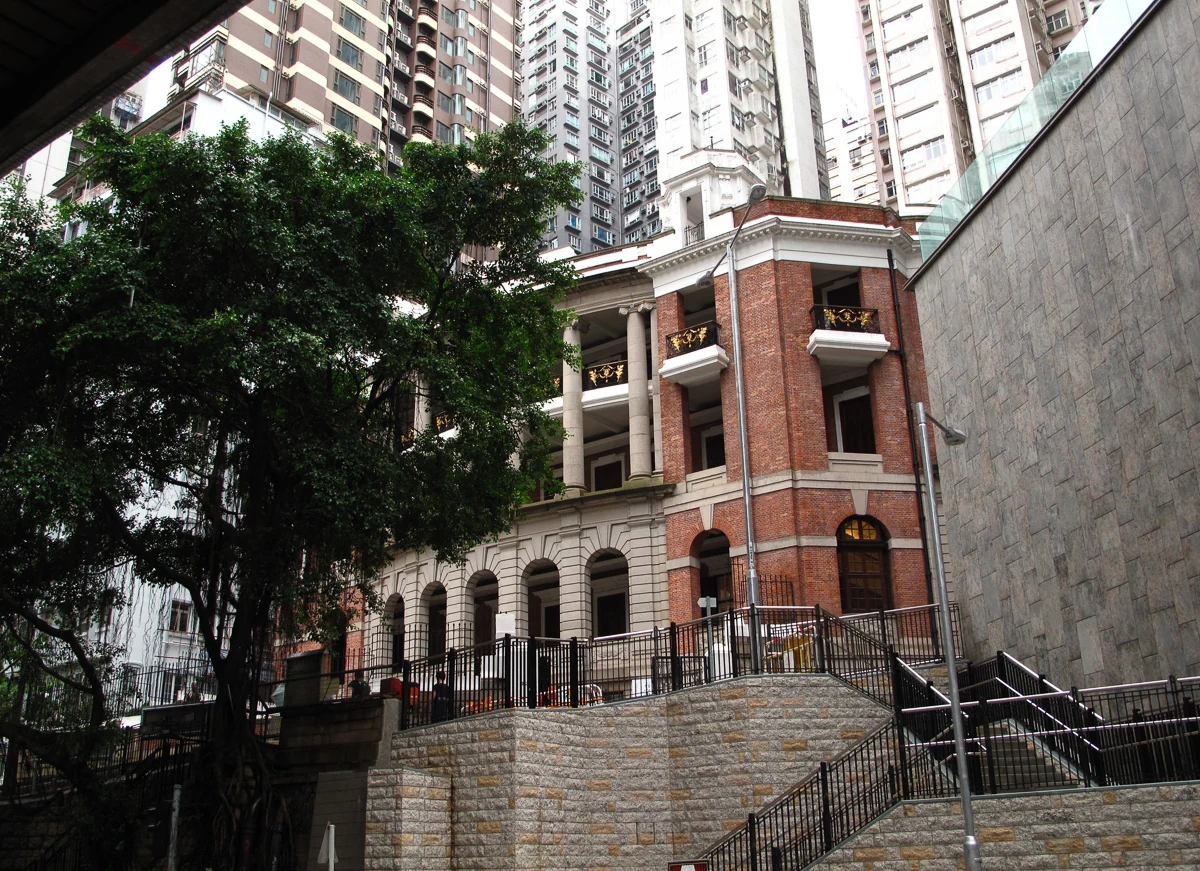
The 2006 photograph helps you compare balcony metalwork and the façade; it does not establish today's access or photography permission. The house-history exhibition uses objects donated by Ho's descendants and interview material to explore residents, architectural significance and restoration. Look separately for explanations of original use and later adaptation into a public museum. Something that looks old need not have remained entirely unchanged since construction.
Read Hong Kong history through education and city life
The museum introduction explains that Sun received secondary and university education in Hong Kong, developed revolutionary ideas here and planned uprisings. The Hong Kong exhibition therefore extends beyond one person's dates to the city's late-nineteenth-century institutions, municipal development, medicine and cultural encounters.
With school-age children, ask what a certificate can tell you, then look for its name, institution, date and purpose in the label. The official exhibition description includes a Hong Kong College of Medicine graduation certificate, a night pass and a ship model. These connect education, urban administration and movement between places; they should not all be interpreted as the same kind of revolutionary object. Check what is actually on display and distinguish originals from replicas using the labels.
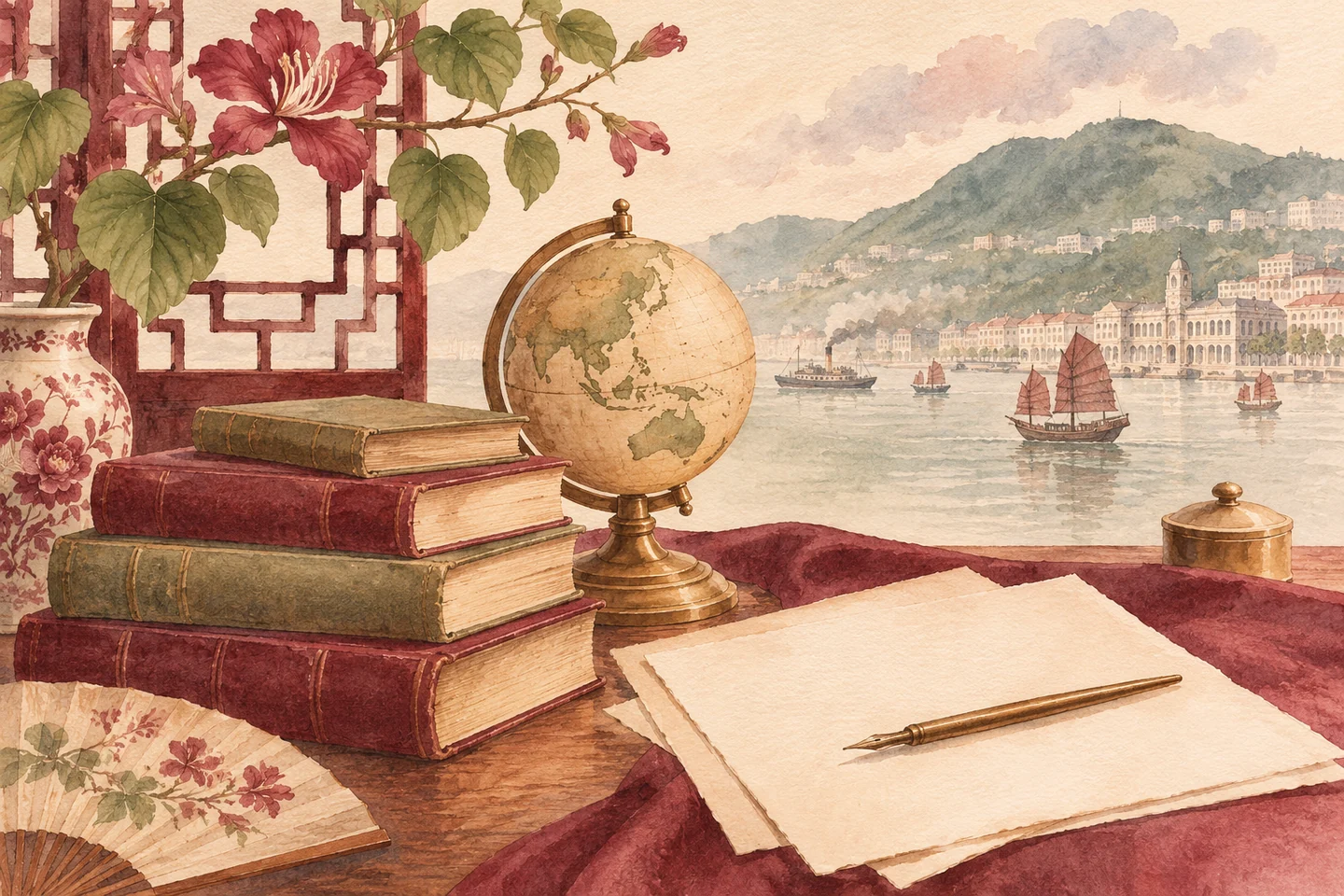
The illustration uses books and a harbour as symbols of education and circulating ideas. It reconstructs neither an actual artefact nor a historical room. Each person could choose a question: how schools trained people, how a port connected places, or how city rules shaped everyday life. At the end, share one piece of evidence from the exhibition. That is more likely to leave a clear impression than trying to photograph every panel.
Enjoy the architecture, but keep cameras out of the galleries
HK01's October 2026 feature introduces the staircase, balcony and White Hall as architectural points of interest. It is a useful starting point, while the museum sets the actual photography rules. Its FAQ prohibits photography and filming in exhibition galleries, video rooms, the interactive learning room and reading room. Other areas allow non-commercial photography or filming without tripods. The visiting rules also prohibit flash, additional lighting and selfie equipment, and require compliance with individual gallery notices.
Free admission does not authorise brand or advertising photography. Ask the museum about permission for wedding shoots, commercial work or special equipment; a media recommendation is not a licence. Ordinary visitors should also keep stairs and passages clear and follow staff directions and more specific notices.
The openly licensed historical photographs in this article have their own reuse conditions. Those conditions are separate from the rules for taking photographs at the museum today. Their inclusion should not be read as permission to conduct a commercial shoot in the same location.
Opening hours: Thursday has exceptions
These are the normal arrangements on the official page read on 11 November 2026. Severe weather, special activities or temporary measures may affect opening.
| Day or circumstance | Normal arrangement |
|---|---|
| Monday–Wednesday and Friday | 10:00–18:00 |
| Saturday, Sunday and public holidays | 10:00–19:00 |
| Christmas Eve and Lunar New Year's Eve | 10:00–17:00 |
| Thursday | Closed, except public holidays, Sun's birthday on 12 November and death anniversary on 12 March |
| First two days of Lunar New Year | Closed |
12 November 2026 falls on a Thursday but is a birthday exception explicitly listed by the museum. Do not conclude that it is closed solely from “closed Thursdays”. The exception concerns the weekly closure; it does not mean every exhibition has reopened or every anniversary activity requires no booking. Check the relevant announcement for any specific programme.
Permanent-exhibition guided tours last about an hour, with 20 places allocated first come, first served. The page lists Cantonese sessions on weekends and public holidays, Mandarin at 15:00 on Saturdays and English at 15:00 on Sundays. It also lists a Wednesday 14:00 Cantonese session from 4 November 2026. A tour changes the pace of an independent visit: confirm the meeting point and that day's arrangements rather than squeezing an extra hour into an unchanged schedule.
Plan the final uphill approach and entrance
Save the full address: 7 Castle Road, Mid-Levels, Central, Hong Kong. The museum suggests taking the Central–Mid-Levels escalator to Caine Road, then walking west along the pavement for around five minutes. That is an indication from Caine Road, not the total from Central MTR station, and not a guarantee of a fully step-free journey. Escalator direction, streets and individual walking speed affect the approach.
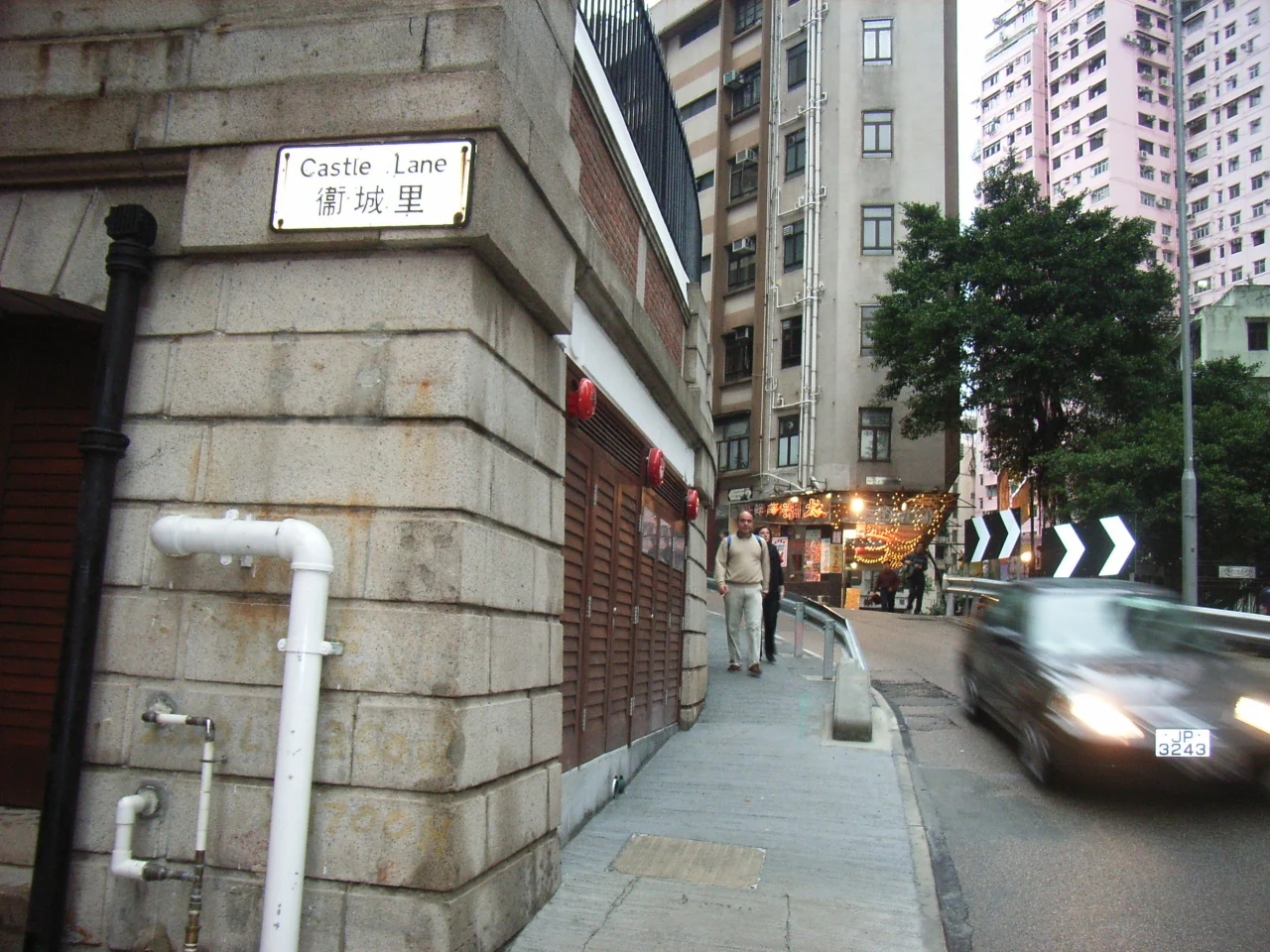
The 2006 street-corner photograph illustrates the house's sloping surroundings. Its sign reads Castle Lane, not a museum entrance direction. Use current navigation for 7 Castle Road rather than using the old photograph to choose a drop-off. The museum lists an entrance ramp, lifts, wheelchair lending and accessible toilets on each floor. For wheelchair or pushchair access, or to minimise hills, call +852 2367 6373 to confirm a suitable approach and accessible areas.
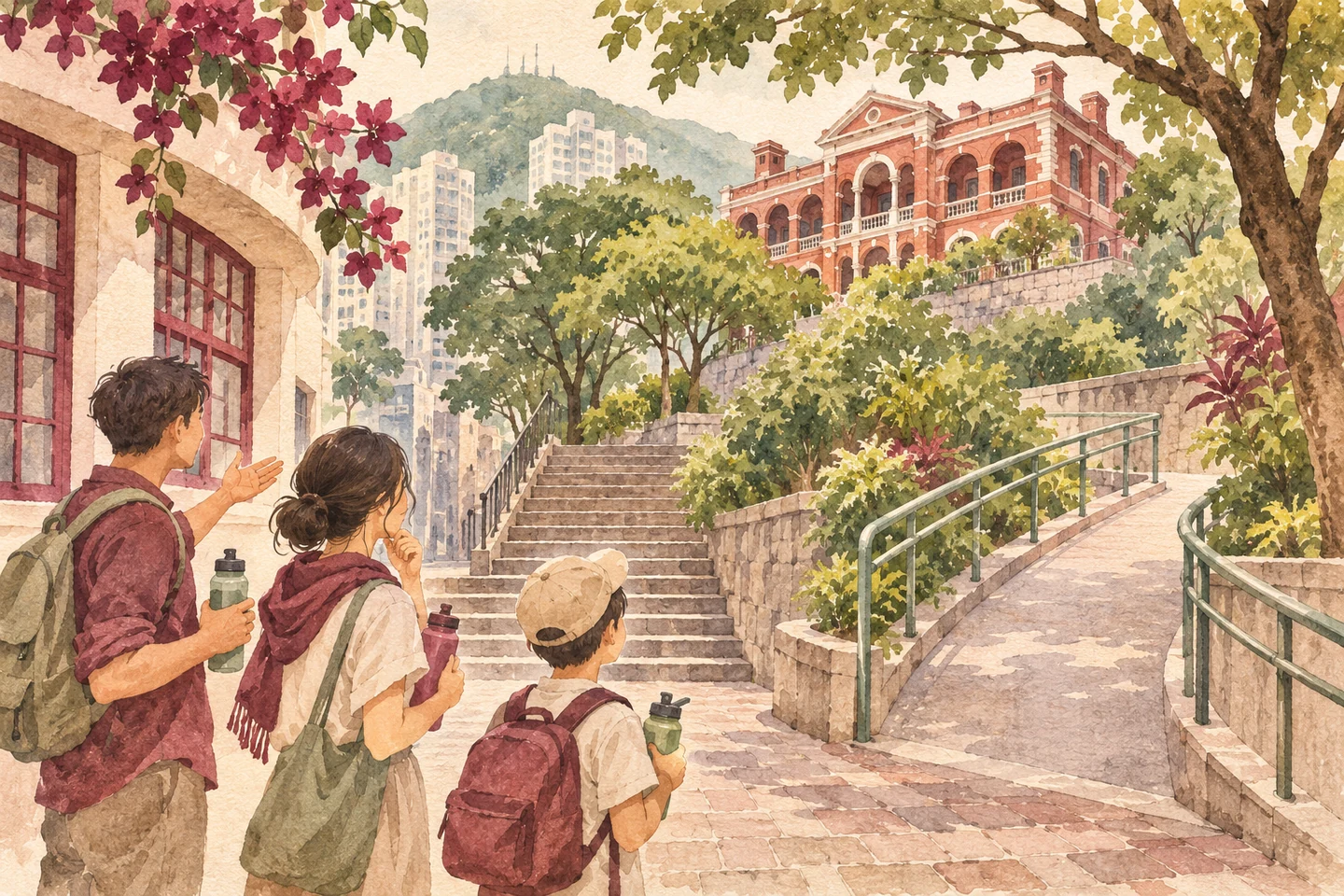
There is no museum car park. For a transfer, explain walking ability, group size and the meeting point so the driver can confirm a legal place to set down or collect. Do not expect a vehicle to wait in a narrow street or outside the entrance. Finish food and drinks before entering; eating and drinking inside are prohibited. If the weather makes walking uncomfortable, shorten the neighbourhood section or return another day rather than letting a photograph checklist dictate the effort.
Your pre-journey checklist
- Check the first-floor exhibition suspension; collection pages do not prove every object is on display.
- Separate Ho Kom-tong's house history from Sun's experiences in Hong Kong.
- No photography in galleries, video rooms, the interactive learning room or reading room; follow non-commercial and other limits elsewhere.
- Check Thursday exceptions, holiday hours and tour language, leaving a complete visiting slot.
- Save 7 Castle Road and confirm the final approach if you need accessibility support or a transfer.
Sources & further reading
This article draws on the media coverage and public information below. Event and transport arrangements can change; check the latest details before travelling.
- Museum introductionhk.drsunyatsen.museum (Opens in a new tab)
- Official visiting, architecture, hours and FAQhk.drsunyatsen.museum (Opens in a new tab)
- Official exhibitions and suspension noticehk.drsunyatsen.museum (Opens in a new tab)
- HK01: Kom Tong Hall architectural visithk01.com (Opens in a new tab)
Make it your journey
For a different strand of city history, consider the Hong Kong Museum of Medical Sciences on another day, comparing a former public-health workplace with a commemorative museum. If Central sightseeing, a hotel transfer or a cross-border journey follows, decide when this visit will finish before connecting the next part of your day.