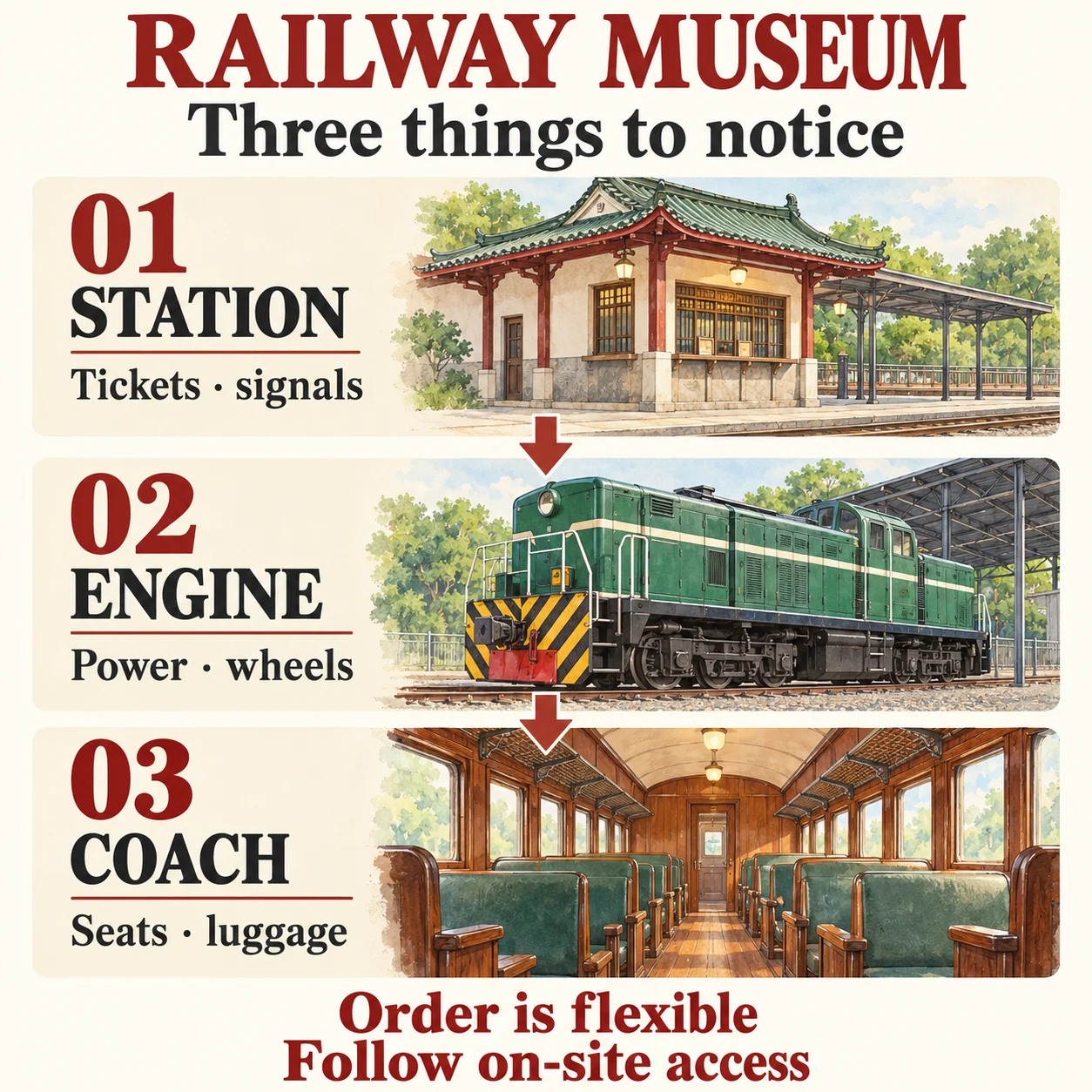
Hong Kong Railway Museum rewards a visit organised around three questions: how did the station work, what pulled the trains, and how did passengers travel? Start with the old Tai Po Market station, then explore the locomotives and coaches that are accessible that day. Allow around 60–90 minutes inside, adding travel, meals and rest separately. This is our planning suggestion, not an official duration or a measured guarantee.
Find the right place: a museum in a former station
The museum is at 13 Shung Tak Street in Tai Po Market. It is not inside the paid area of today's Tai Po Market MTR station. The museum describes itself as an open-air site of about 6,500 square metres, converted from the old station. Its building, railway objects and vehicles tell different parts of the story; you do not need to memorise every vehicle number to enjoy them.
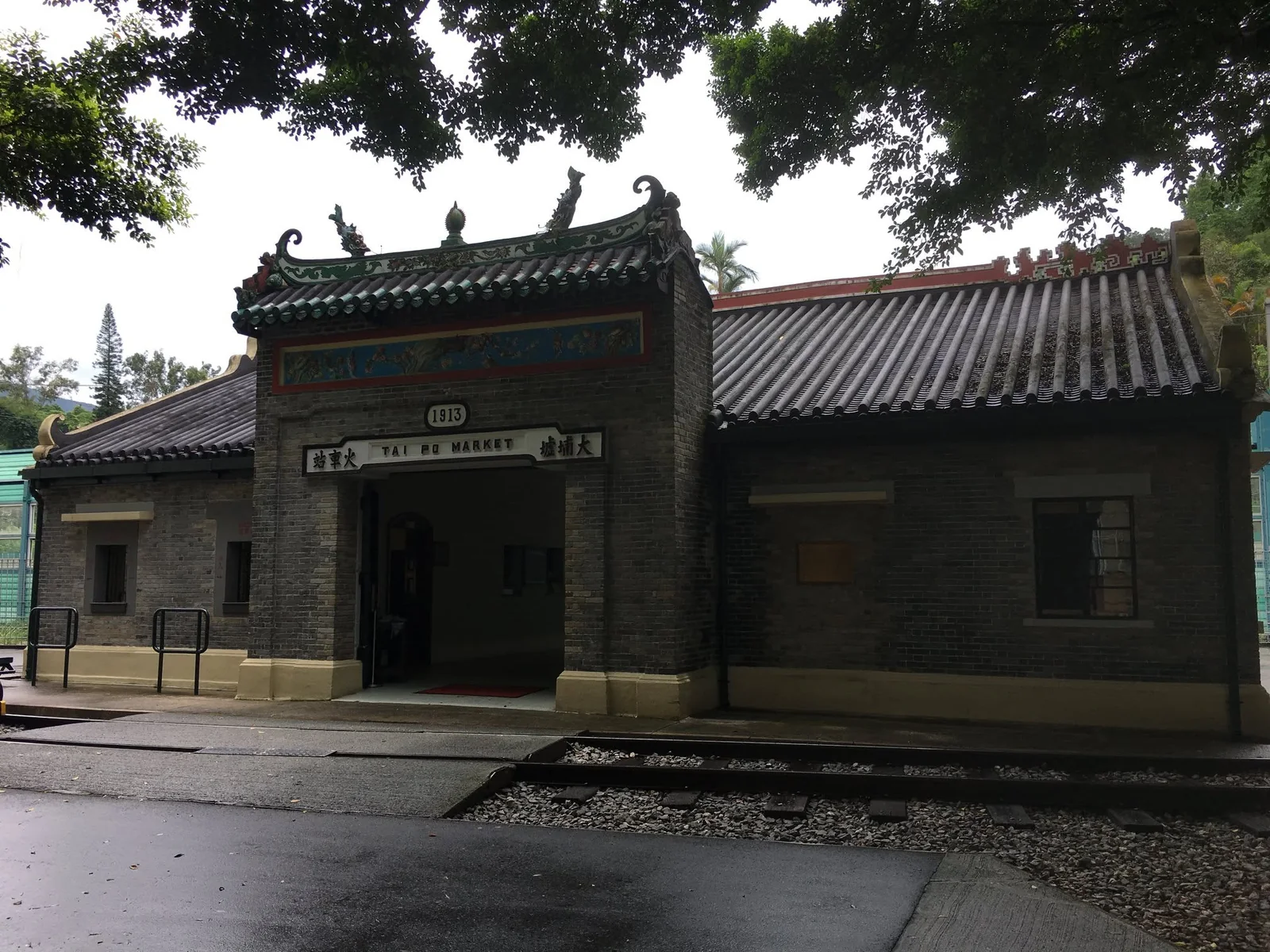
The Antiquities and Monuments Office records the station's completion in 1913, its redundancy when a new station opened nearby in 1983, and its declaration as a monument in 1984. The museum's own account adds that it opened as a museum in 1985 after refurbishment. These are separate milestones: an operating transport building became a public cultural space, rather than a newly constructed imitation of an old station.
The three observation tasks below can be rearranged around people, sunshine and on-site access. If a coach is closed, look at its exterior and interpretation instead of waiting repeatedly just to finish a list.
Opening hours, getting there and checking the day
Checked on 21 October 2026, the museum page displayed a last-update date of 20 October and the regular arrangements below. An HK01 report about tree removal concerned closure on 22 July 2024 and reopening on 24 July that year. A search result saying “temporarily closed” from that event does not describe the present situation.
| Item | Regular arrangement checked |
|---|---|
| Monday, Wednesday–Sunday and public holidays | 10:00–18:00 |
| Tuesday | Closed, except public holidays |
| First two days of Chinese New Year | Closed |
| Christmas Eve and Chinese New Year's Eve | 10:00–17:00 |
| Admission | Free |
| Address | 13 Shung Tak Street, Tai Po Market |
The museum provides walking routes from Tai Wo Station Exit B and Tai Po Market Station Exit A2. Compare the journey from your accommodation to those stations, then use the museum map and current navigation to reach Shung Tak Street. A similar station name does not mean the museum is immediately outside the ticket gates. Allow walking time for your own pace, pushchair and the weather, plus time to meet companions.
For a relaxed half-day outing, eat before entering, visit after opening, then find a meal or rest in Tai Po Market afterwards. Eating and drinking are prohibited inside the museum. A picnic in a historic coach is therefore not a suitable family plan. Arrange food, water breaks and a lawful place to rest outside rather than discovering at the gate that a child still needs breakfast.
The station: a traditional exterior and a working interior
Step back to see the roof, frontage and decoration, then look more closely at openings and divisions between spaces. The Antiquities and Monuments Office explains that its exterior follows Chinese architectural traditions while its interior was designed for railway operation. That relationship is worth noticing. An attractive facade cannot tell you what every room did; read the interpretation alongside the space itself.
The museum lists an exhibition gallery, old ticket office and signal cabin within the station building. Try three practical questions: where did passengers obtain tickets, where did staff handle information about train movements, and what thresholds did travellers pass between the street and platform? These are observation prompts, not claims that every surviving doorway still serves its original function.
When comparing historical photographs or models with the building, check their dates first. Look for roof lines, openings, platform relationships or equipment positions that correspond. A detail that cannot be matched may reflect alterations, a different display or simply a different viewpoint. This exercise often makes the station's former role more memorable than taking only a photograph of its frontage.
The locomotives: separate traction from passenger accommodation
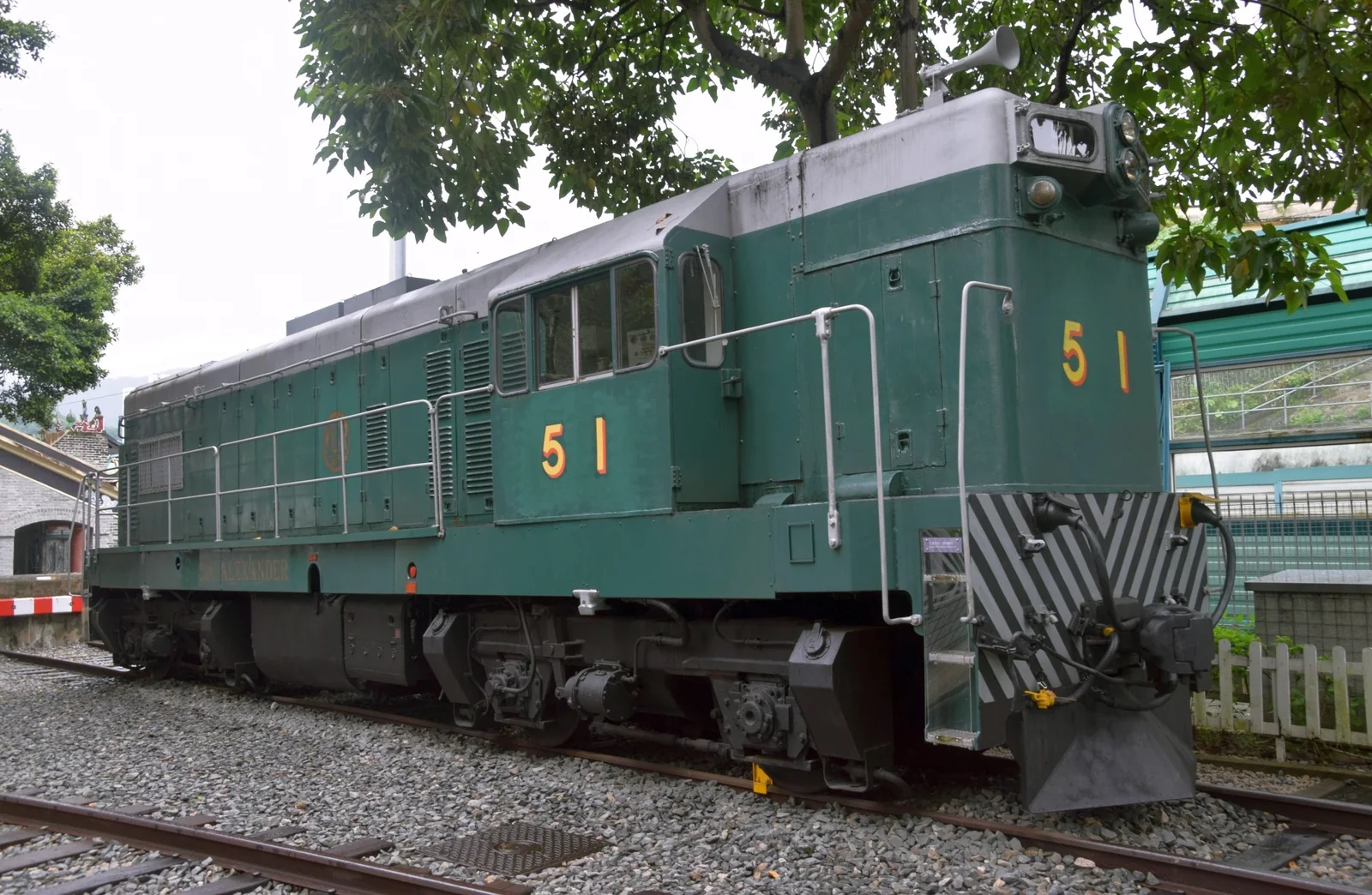
The outdoor displays include a narrow-gauge steam locomotive, diesel-electric engines, historical coaches, trolleys and semaphore signals. Start with wheels and body shape, then read the interpretation for power type, period and function. A locomotive supplies traction; a passenger coach principally accommodates travellers. Vehicles sharing railway tracks do not all perform the same job.
The 2018 photograph of locomotive No. 51 helps you look at the relationship between its body, cab and wheel assemblies. Its current position, barriers and accessible parts depend on the day's arrangements. Observe the wheels from permitted viewing areas, without crossing barriers or going beneath a vehicle.
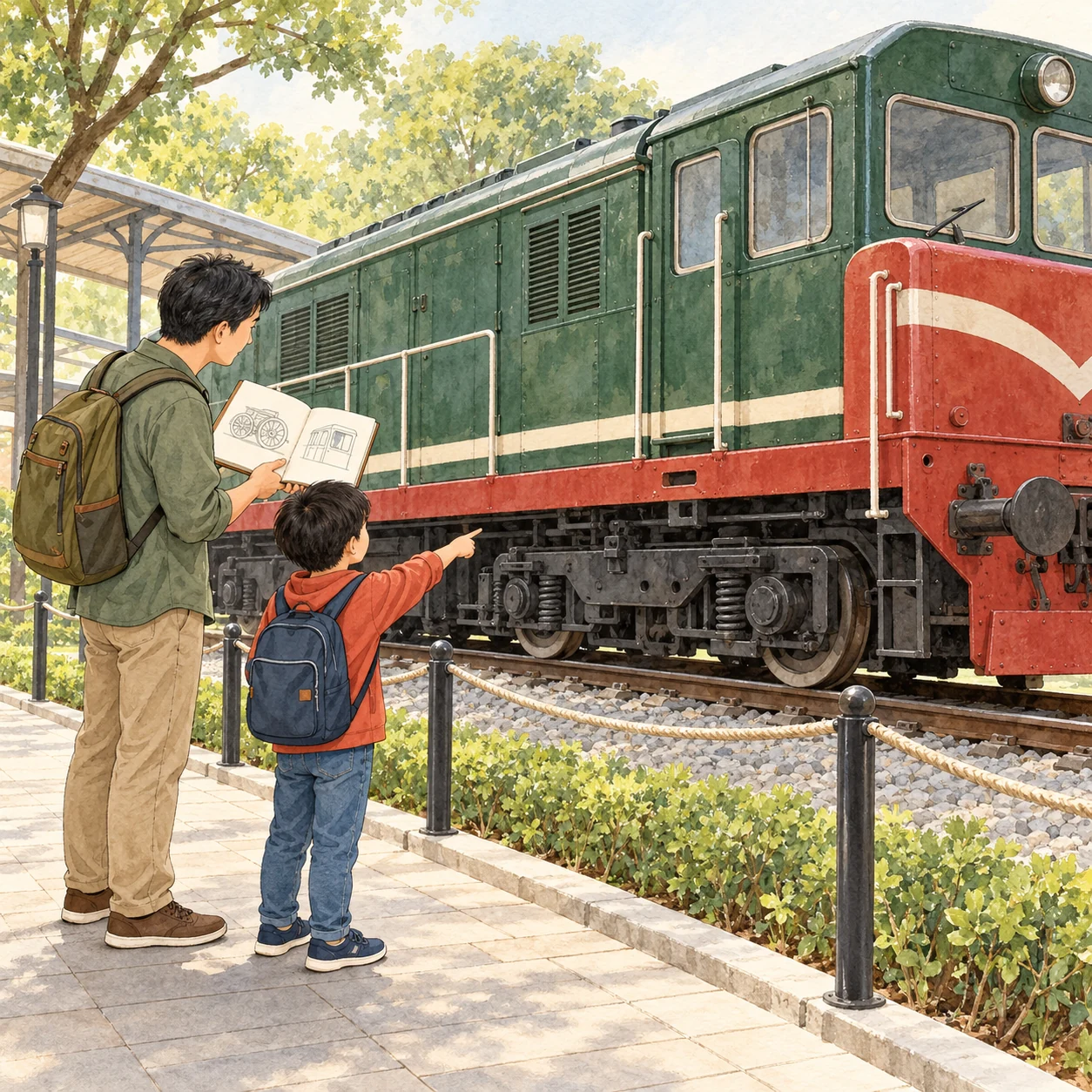
With children, begin with “where could the driver look ahead?” or “which parts are the wheels?”, then check the explanation together. There is no need to turn every question into a technical lecture. Observing, making a tentative guess and consulting the label lets people without specialist knowledge participate.
The coaches: seats, aisles and luggage reveal everyday travel
There is more to a coach than its paint colour. Seat direction, hard or upholstered surfaces, backrests, windows, aisles and luggage racks affect how passengers sit, move and store belongings. First check whether entry is allowed. Where it is, stay within the permitted area, do not operate doors or windows without permission, and do not use exhibits as climbing equipment.
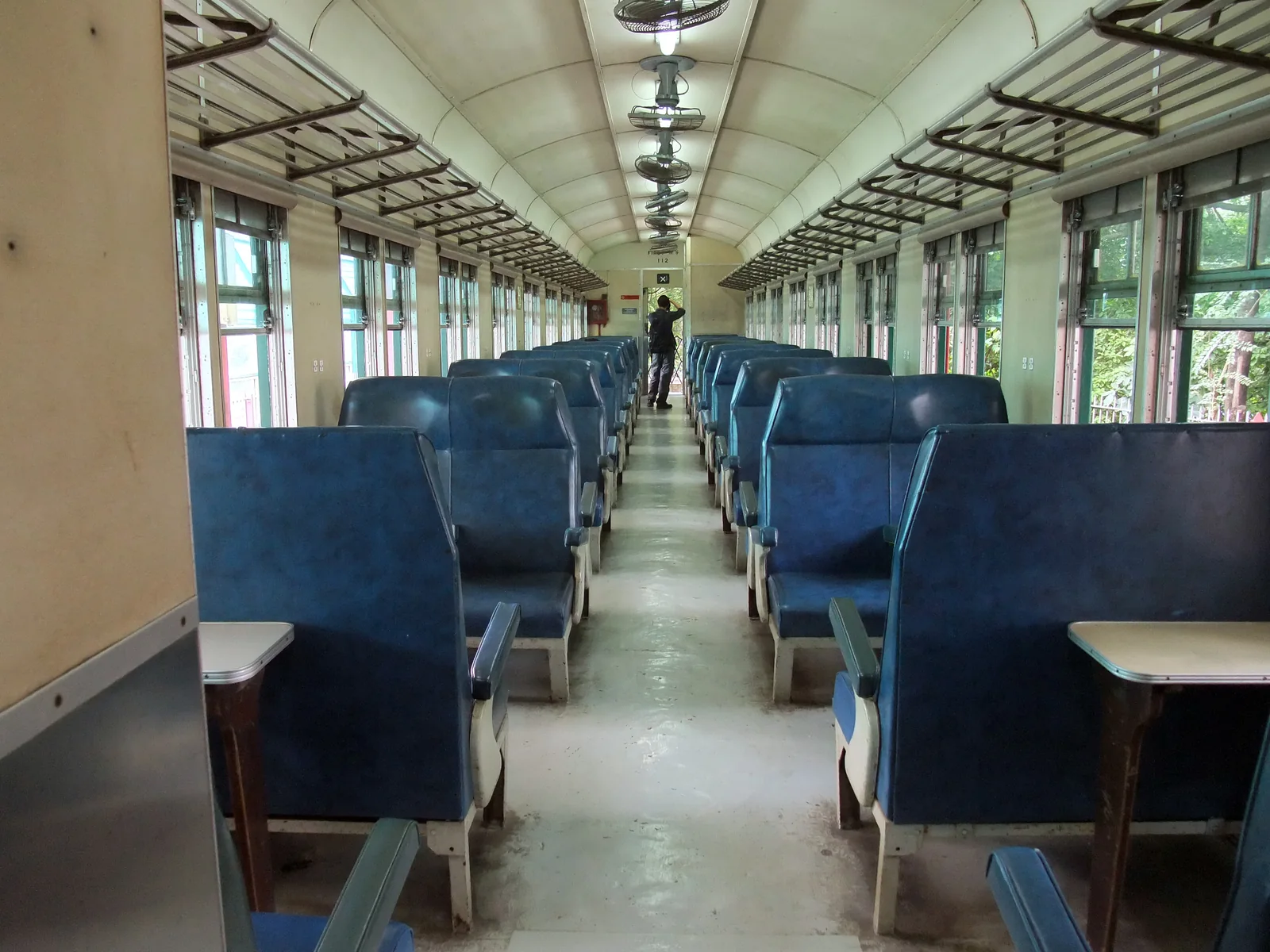
This photograph was taken in 2010; its file description identifies the interior as a first-class compartment dating from 1964. The date of the coach and the date of the photograph mean different things. It is useful for looking at seating and circulation, but it does not prove that every coach is open today, or represent every period and class of travel.
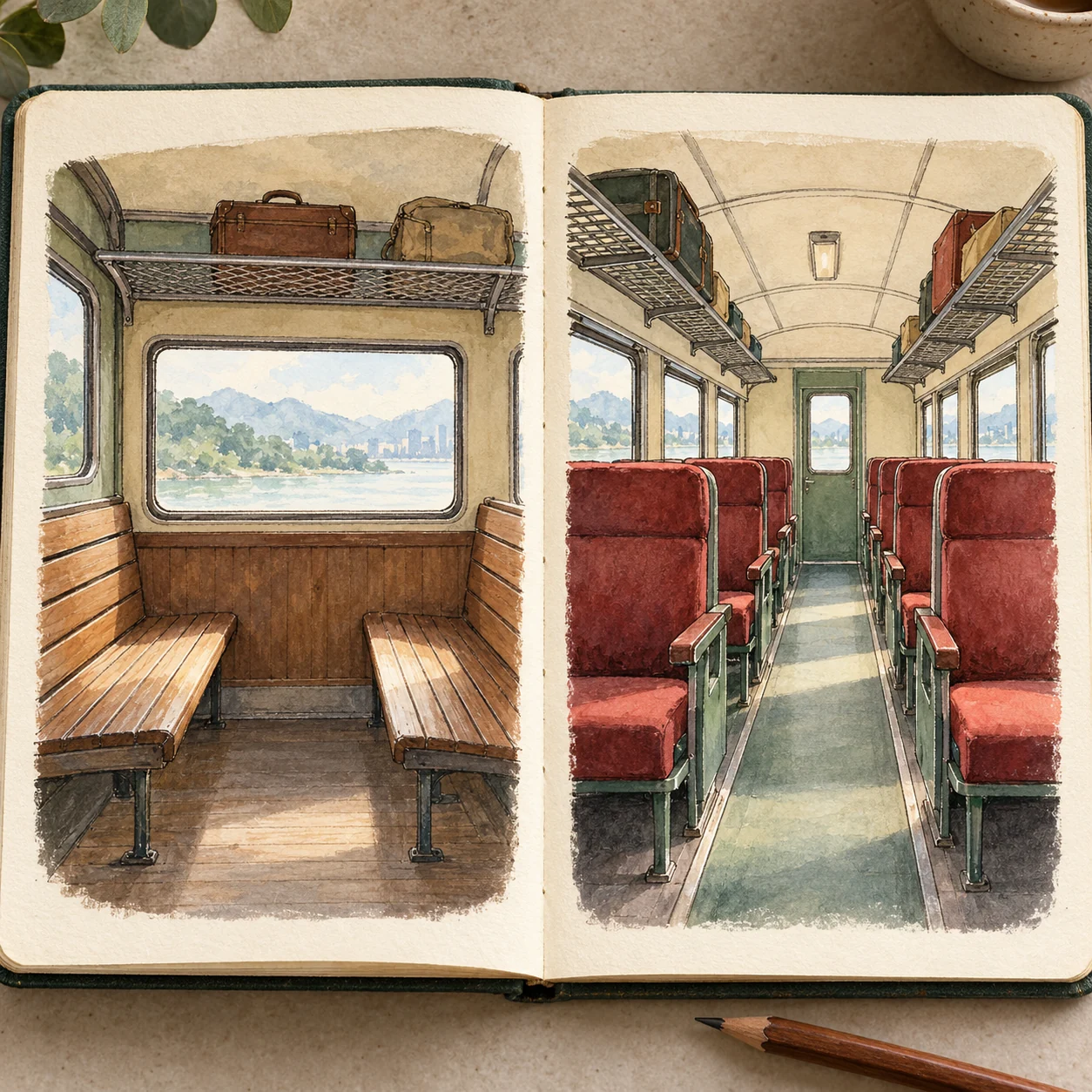
Choose two interiors you can actually see and note three things: seat materials, luggage storage and the relationship between passengers and windows. The illustration above is a comparison method, not a reconstruction of a particular class or year. Do not decide in advance that wooden seats must mean one class, or upholstery must mean a later date. Read each exhibit's identification before drawing that conclusion.
How an old coach reaches a museum is another story
A 2020 HK01 report describes the restoration and road transport of coach No. 313. It records its entry into service in 1921 and explains how its length and size required planning for road turns and the narrow approach to the museum. The historical example shows that preserving a large object also involves conservation, transport and display decisions.
The report also mentioned pandemic restrictions preventing visitors from boarding coaches at that time. That is a statement about 2020, not a current rule. Equally, “permanent display” does not mean every part is publicly accessible every day. Use the story to understand preservation; consult current museum and on-site arrangements for access.
If travelling with older relatives, invite them to describe buying a ticket, carrying luggage or spending time on a train. Keep personal recollections and object records distinct: a memory describes someone's experience, while a label identifies a particular exhibit. They can enrich each other without requiring everyone to learn the same list of dates.
Rain, photography and access needs
Despite its indoor gallery, the museum is explicitly an open-air museum. In heat or rain you can shorten the outdoor part, but it is not an entirely air-conditioned or rain-free alternative. If conditions are unsuitable for outdoor walking, another day may work better than waiting beside a locomotive for the weather to improve.
Museum rules prohibit flash or lighting equipment, tripods and selfie sticks in the exhibition gallery and historical coaches. Wedding, graduation and portrait/cosplay photography are also prohibited in those spaces. Follow on-site notices for ordinary visitor photography. If bringing professional equipment or planning commercial filming, check the application requirements first; free admission does not authorise arranging a photoshoot.
Wheelchair users and visitors with particular mobility needs can call +852 2653 3455 in advance about assistance using the vehicle entrance on On Fu Road. The museum lists accessible toilets, tactile facilities and a ramp at the office/enquiries counter. These provisions do not establish step-free access into every historical coach. Explain the equipment and assistance required, then prioritise what is accessible.
Opening arrangements differ between Tropical Cyclone Signal No. 8 or above, the Black Rainstorm Warning and Extreme Conditions. For example, a Black Rainstorm Warning in force before opening keeps the museum closed, whereas one issued during opening hours leaves it open; this is not advice to travel there in a storm. Check the museum's weather arrangements and our Hong Kong and Macau severe-weather guide , including the return journey, before leaving.
Your pre-journey checklist
- Confirm the Shung Tak Street address and allow separately for walking from the MTR.
- Check Tuesday, Chinese New Year and festive-eve exceptions.
- Understand the station first, then explore accessible locomotives and coaches.
- Read exhibit labels for dates and classes; illustrations and older photographs do not prove current access.
- Plan food and drink outside, and check photography equipment and access assistance in advance.
- Allow around 60–90 minutes to look closely, shortening outdoor time when conditions require it.
Sources & further reading
This article draws on the media coverage and public information below. Event and transport arrangements can change; check the latest details before travelling.
- Hong Kong Heritage Museum: Railway Museum hours, exhibits, rules and accessibilityheritagemuseum.gov.hk (Opens in a new tab)
- Antiquities and Monuments Office: former Tai Po Market station history and architectureamo.gov.hk (Opens in a new tab)
- HK01: restoration and transport of coach No. 313, historical report from 2020hk01.com (Opens in a new tab)
- HK01: temporary tree-removal closure in July 2024hk01.com (Opens in a new tab)
Make it your journey
If the day also includes a Hong Kong hotel, airport or cross-border transfer, establish the visit date and the group's walking needs before agreeing a lawful meeting point outside. Allow separately for the museum, a meal and walking from the exit to the vehicle.