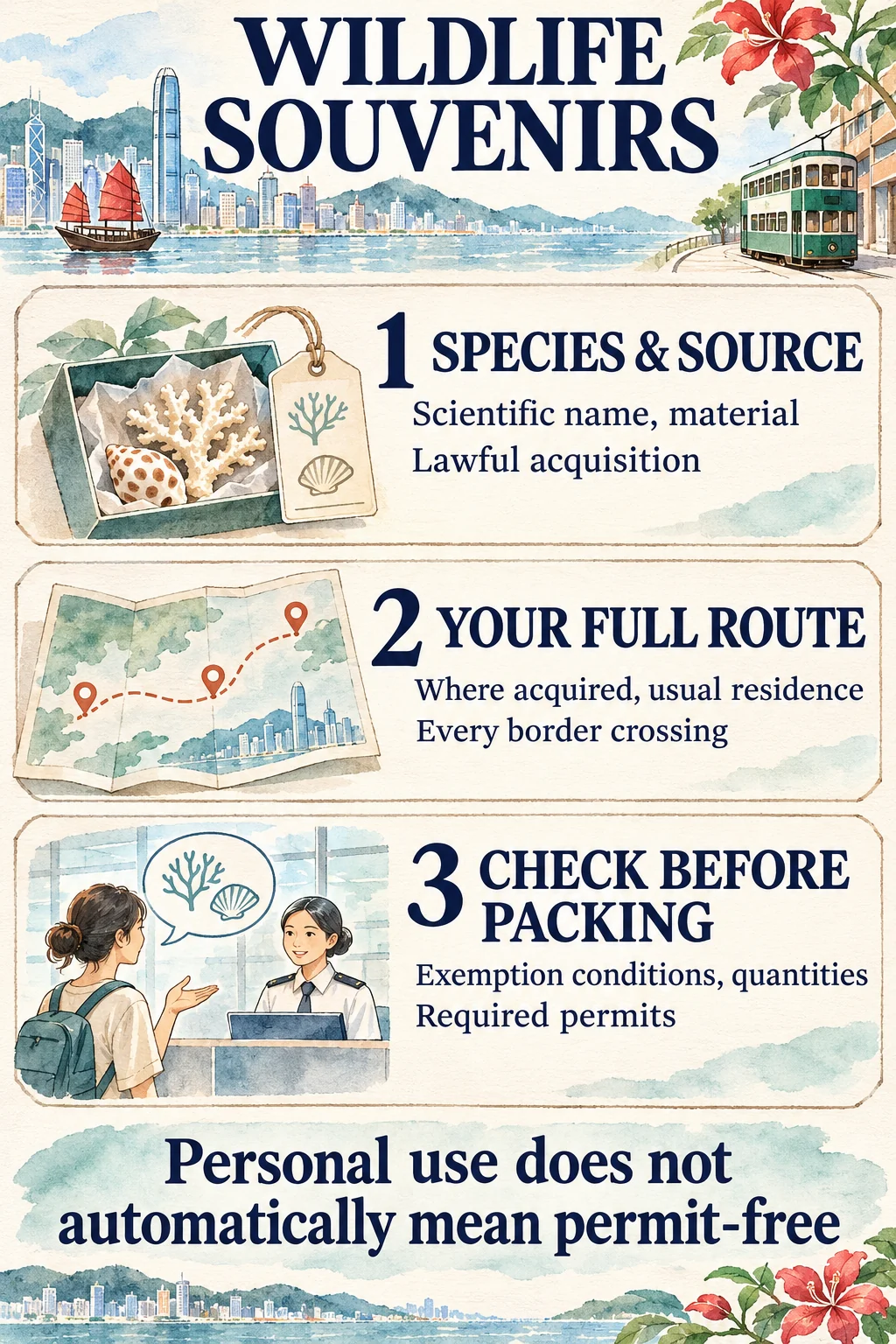
A handbag, shell or ornament made from an animal does not automatically escape Hong Kong's species controls because it is a single item, for personal use or already being worn. An existing travel possession and a souvenir acquired outside your usual place of residence need separate consideration. Identify the species, lawful acquisition, place of acquisition and every border crossing before checking an exemption or arranging the required export, re-export and Hong Kong documents.
Ask what it is before asking what it costs
Shop labels such as “natural leather”, “marine stone” and “shell ornament” do not identify a species or establish its regulatory status. Hong Kong's Protection of Endangered Species of Animals and Plants Ordinance can cover living and dead specimens, parts and derivatives. Making something into a wallet, jewellery or decoration does not automatically take it outside those controls.
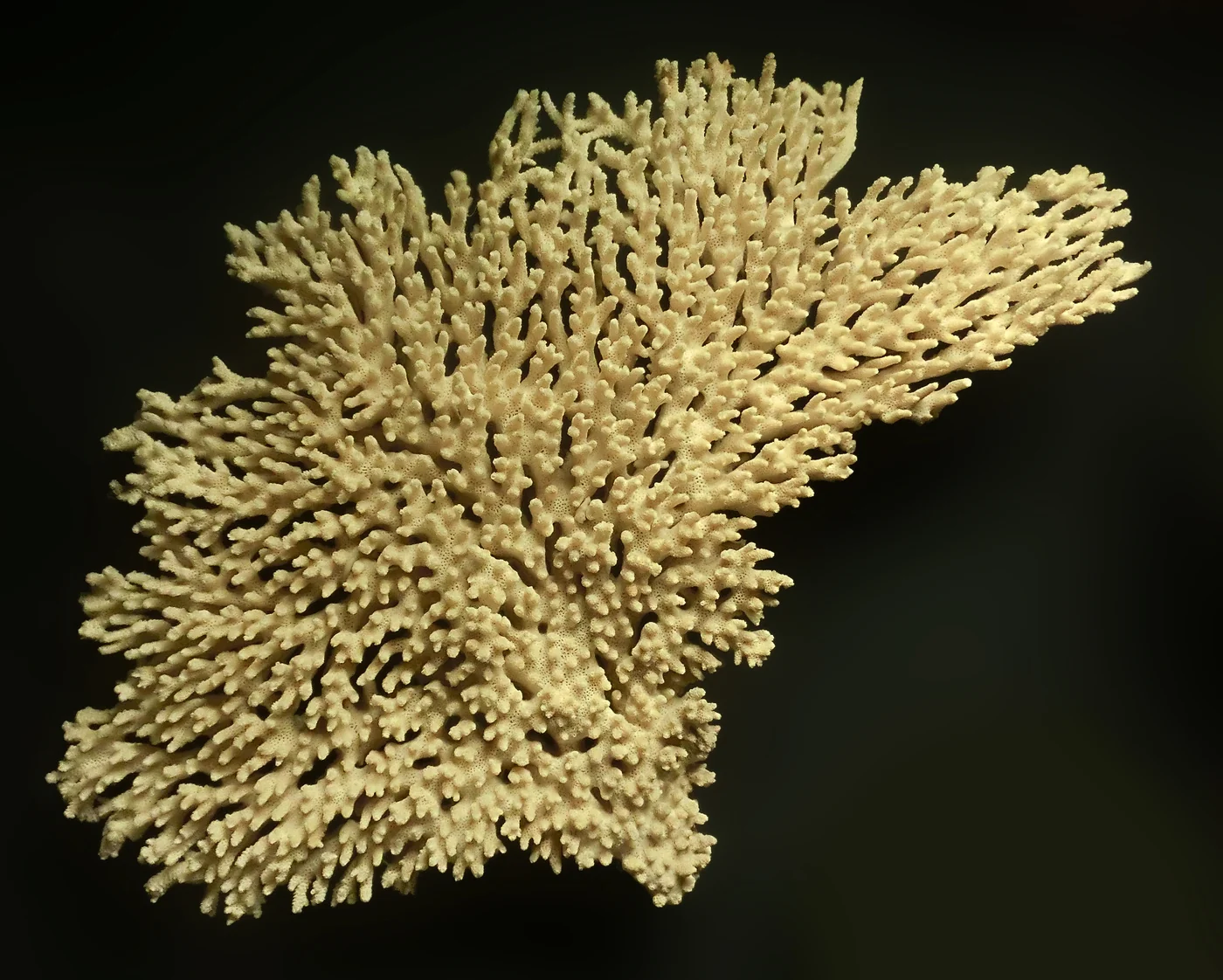
A 2019 HK01 report about a coral specimen concerned entry at Yinchuan: a traveller had mistaken a beach find for a stone. It is a useful illustration of an identification problem, not evidence of Hong Kong's particular licensing requirements. Finding something without paying for it does not make it an ordinary rock. This guide addresses the Hong Kong part of a personal-baggage journey, not permission to enter your next destination.
The AFCD enquiry guidance recommends providing information such as the scientific name, origin and a photograph to help establish whether a species is controlled. Before buying, ask the seller to specify the material, species and quantity, and retain labels, invoices and verifiable documents. A receipt can show a transaction; it does not replace a CITES permit.
What counts as personal or household effects?
The AFCD personal-effects explanation and the Cap. 586B Exemption Order combine two conditions: an individual personally owns or possesses the specimen for non-commercial purposes only; when it is imported, exported or re-exported, the person wears or carries it, includes it in personal baggage, or moves it as part of a household move. The applicable lawful-acquisition and other conditions must also be met.
This does not mean that everything inside a suitcase is exempt. Goods carried for a shop or intended for sale do not become personal possessions merely because the quantity is small. Putting a newly bought belt on immediately does not change where or how it was acquired. Separately posted purchases are also not interchangeable with the accompanying personal baggage of a traveller.
The examples here concern non-living animal-derived personal products. Do not apply them to live animals, hunting trophies, elephant ivory or other specimens subject to special restrictions. Send the specific details of such an item to AFCD for a separate assessment.

Keep acquisition details for existing belongings and new purchases
If you bring an animal-leather possession you already own on a Hong Kong trip, establish the species, lawful source and whether it genuinely qualifies as non-commercial personal effects. Having used it for years is not proof of an exemption. Acquisition records can still matter, and a worn appearance does not remove Appendix or special-specimen conditions.
A different situation arises when you acquire an item while travelling outside your usual place of residence, then bring it into Hong Kong, take it from Hong Kong back to that usual residence, or leave Hong Kong intending eventually to take it there. Sections 5(3) and 5(4) of Cap. 586B provide a separate assessment for that situation involving Appendix II specimens. The question includes where you acquired it, where you usually live and the journey home, not just whether it looks new when entering Hong Kong.
When enquiring, describe the complete route: “I normally live in A, bought this in B, will enter Hong Kong, continue to C and finally return to A.” Each crossing matters. This is more useful than asking whether you can bring one bag to Hong Kong. Nationality and usual residence are not necessarily the same, so providing only your passport nationality may leave a key question unanswered.
A tourist-souvenir exemption is conditional
AFCD's tourist-souvenir page explains that lawfully acquired souvenirs meeting the personal-effects definition may qualify for an exemption: Appendix III specimens exclude live animals, while this tourist-souvenir arrangement for Appendix II excludes live animals and plants. Particular specimens can also have special restrictions.
For Appendix II souvenirs, section 5(4) additionally checks whether the relevant exporting place or destination has notified, through the CITES Secretariat, that it requires an export permit or re-export certificate. AFCD gives mainland China, the European Union and Indonesia as examples of places that do not provide the tourist-souvenir exemption. These are not a complete worldwide list. A destination's absence from those three examples is not confirmation of an exemption.
Do not buy first and rely on explaining personal use at the border while these conditions remain unresolved. If your next leg leaves Hong Kong for Macao, mainland China or another destination, check that place's import conditions and Hong Kong's export or re-export requirements separately. Clearance on one leg is not reusable permission for every subsequent crossing.
Read quantity limits together with their conditions
The following table explains selected animal-related entries in the Cap. 586B Schedule. It is not an unconditional permit-free allowance for everything sharing a common name. First establish the applicable Appendix II category, non-living status, lawful acquisition, personal-effects conditions and requirements of the relevant places. An Appendix I animal does not qualify for the Appendix II arrangement just because both are described as crocodiles.
| Category in the Schedule | Limit per person, at one time and in one lot |
|---|---|
| Species of the order Crocodylia, including alligators, crocodiles and caimans | Up to four specimens. This does not make every crocodile-leather product permit-free. |
| Shells of Strombus gigas, the queen conch | Up to three specimens. Other shells do not automatically belong to this row. |
| Shells of the family Tridacnidae, giant clams | Up to three specimens, not exceeding three kilograms per person. Each specimen may be one intact shell or two matching halves. |
For example, three giant-clam shell specimens weighing 3.2 kilograms in total would exceed the weight limit despite meeting the count limit. A single lighter specimen must still satisfy the species, source and place-related conditions above. Do not separate two matching halves and describe them as different kinds of item, or use the phrase “small souvenir” instead of identifying the specimen.
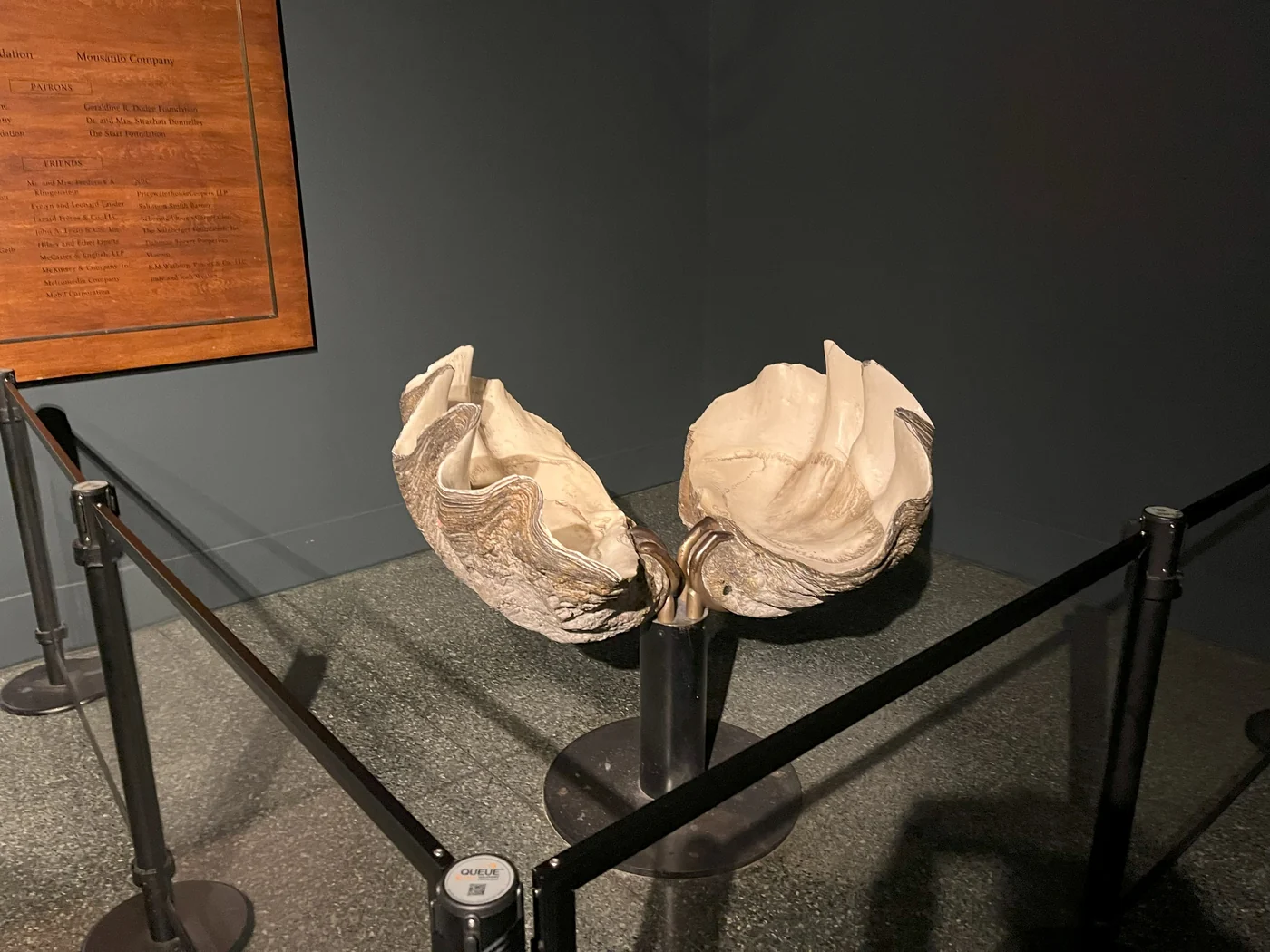
Coral is not covered by those three rows; it cannot borrow a shell allowance. The treatment of stony-coral skeletons, live coral and other material depends on the species and specimen. A photograph helps describe an item but does not allow a traveller to identify and clear it independently. If its identity is unresolved, postpone buying, collecting or carrying it across a border.
When an exemption does not apply, arrange documents before travel
Under AFCD's licensing and inspection guidance, the general regime for controlled Appendix II imports requires a valid CITES export permit and inspection; export or re-export requires the relevant Hong Kong licence in advance. Other Appendices and special specimens have different requirements. A seller's assurance, invoice, airline baggage acceptance and a permit used for an earlier shipment are not interchangeable documents.
An application may need the relevant CITES documents, import or possession records and invoices. AFCD's FAQ stresses that issuance is not automatic and the relevant licence must be issued before arranging the movement. A general processing time is not a promise of catching a particular flight. When inspection is required, ask in advance about the applicable control point, appointment and original documents to bring rather than leaving the first enquiry until arrival.
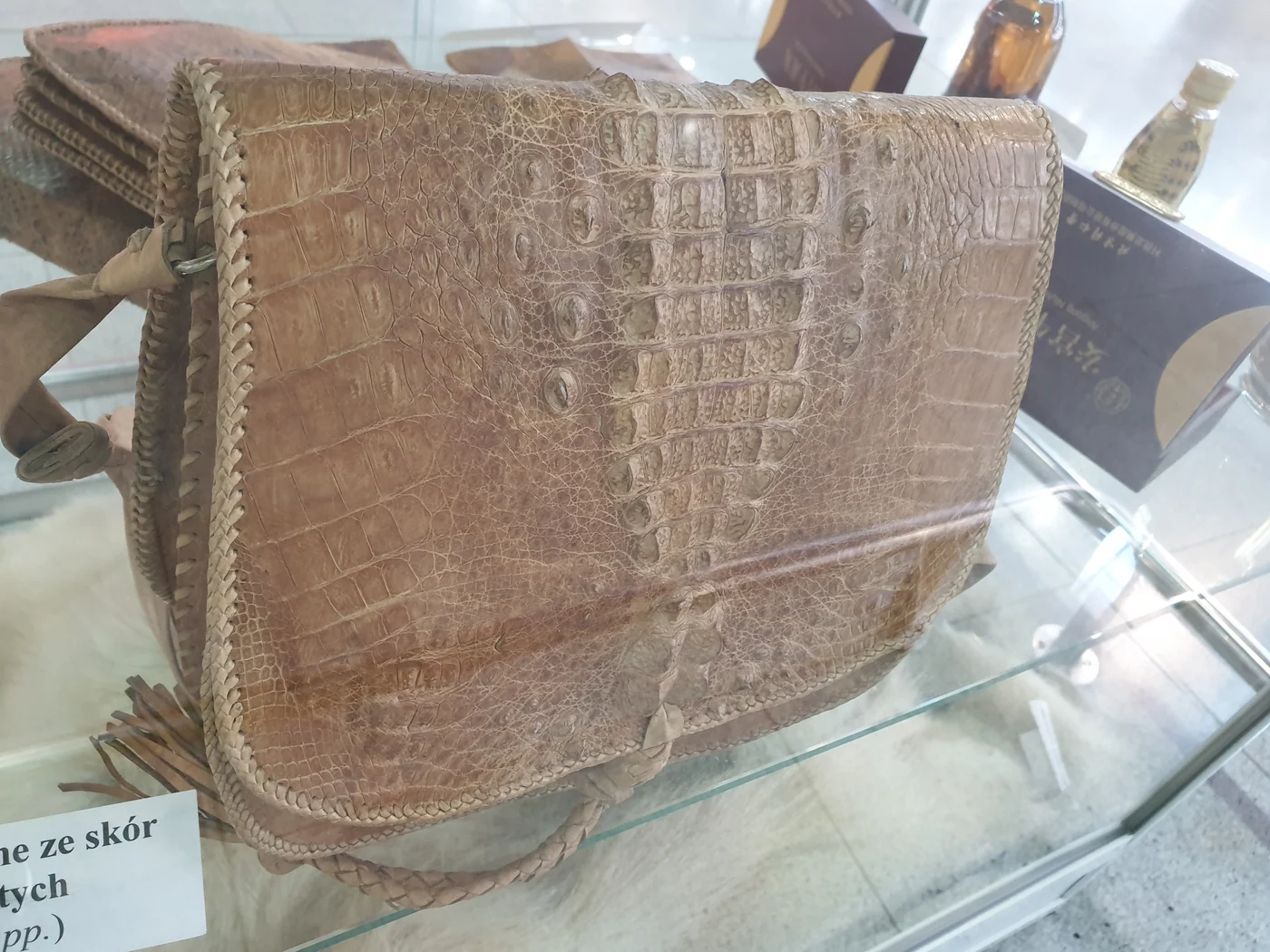
This historical image of a leather bag held by a foreign customs authority illustrates why finished products warrant material checks. It does not document a Hong Kong inspection, establish an offence or prove the permit status of a particular branded product. Enquire using the actual source and itinerary of your own item.
Send the details before paying
Put together photographs and labels, the scientific name and material, count and weight, acquisition place and date, lawful-acquisition records, your usual residence, the complete route and the intended use. Ask which documents and specific exemptions apply to each movement, then decide whether to purchase or travel with the item.

If the seller cannot identify the material or the documents cannot be checked before departure, choosing a product without animal-derived materials, or postponing the purchase, makes the travel decision clearer. Switching an uncertain item to a postal shipment does not resolve its regulatory status or preserve the personal-baggage conditions.
Your pre-journey checklist
- Identify the species and material rather than relying on “natural”, “stone” or “leather”.
- Separate existing possessions from souvenirs acquired outside your usual residence and keep lawful-acquisition records.
- Check personal, non-commercial and accompanying-baggage conditions, followed by the Appendix and any special restrictions.
- For Appendix II tourist souvenirs, check relevant places and quantity together, not the number of items alone.
- Confirm each import, export and re-export leg and arrange required documents and inspections in advance.
Sources & further reading
This article draws on the media coverage and public information below. Event and transport arrangements can change; check the latest details before travelling.
- AFCD: Exemption for personal or household effectsafcd.gov.hk (Opens in a new tab)
- AFCD: Tourist souvenirsafcd.gov.hk (Opens in a new tab)
- Hong Kong Cap. 586B: Protection of Endangered Species of Animals and Plants (Exemption) Orderelegislation.gov.hk (Opens in a new tab)
- AFCD: Licensing and inspection requirementsafcd.gov.hk (Opens in a new tab)
- AFCD: Endangered species frequently asked questionsafcd.gov.hk (Opens in a new tab)
- HK01: 2019 Yinchuan coral case (identification context only)hk01.com (Opens in a new tab)
Make it your journey
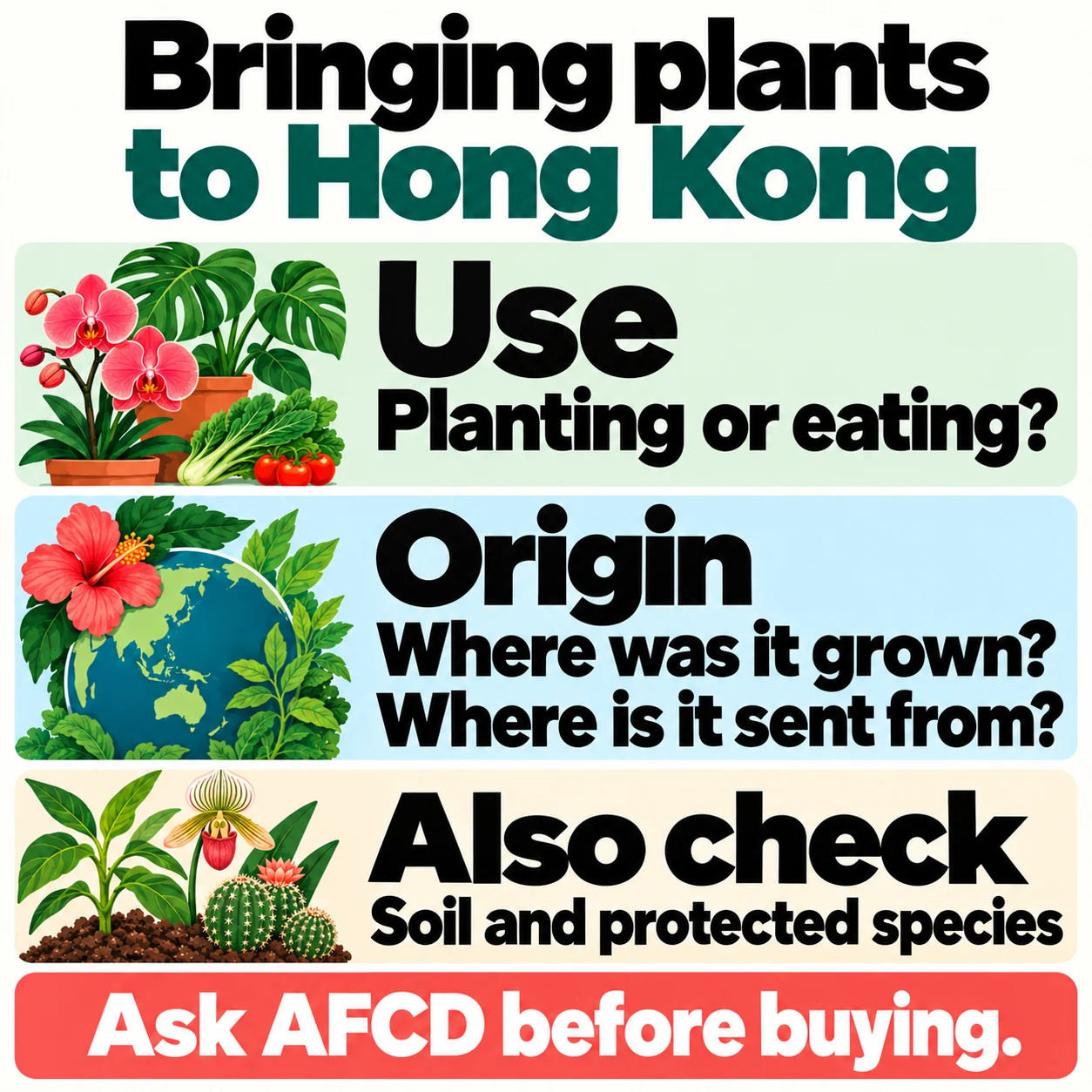
For potted plants, seeds or flowers, read the separate Hong Kong plant-quarantine and soil guide. An animal-product souvenir exemption cannot replace the different rules governing plant imports.