Before taking powdered formula out of Hong Kong, check its intended use, the traveller's age and departures during the previous 24 hours, then add the net weight of every container. The ordinary personal exemption requires a traveller aged 16 or above, no Hong Kong departure in the previous 24 hours and a total net weight of no more than 1.8 kg. It is not an unconditional “two tins” allowance, and it does not reset at midnight.
First establish whether the product is controlled powdered formula
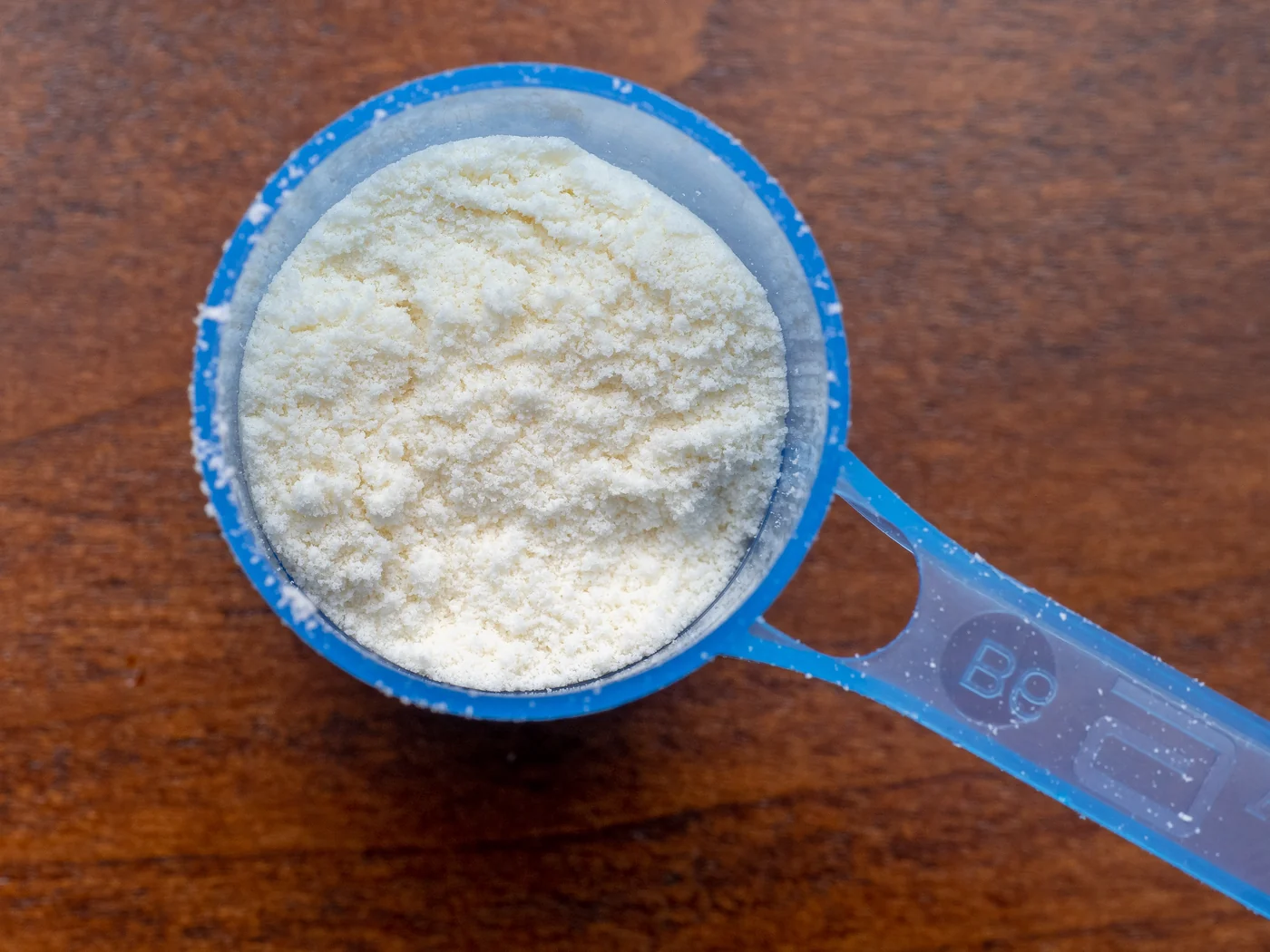
Hong Kong Customs' current controlled-exports guidance treats powdered formula for children under 36 months as an item requiring an export licence unless an exemption applies. A traveller's accompanied baggage qualifies only under the specified conditions. The arrangement began on 1 March 2013; it is not a newly announced policy at this article's verification date.
The wording “infant formula” on the tin is not the only test. The official definition covers a powder that is, or appears to be, for children under 36 months, is milk or a milk-like substance and wholly or partly satisfies their nutritional requirements. Milk powder and soya milk powder can be included. The official FAQ explains that a product labelled for ages one to ten can still be controlled because it is also for children under 36 months. Relevant formula for special nutritional needs is included too.
By contrast, powders that do not become milk-like substances after preparation, such as orange, rice, wheat or other cereal powders, are outside that definition. If a mixed product or its intended use is unclear, keep the complete label and ask the responsible authority before buying rather than relying on its supermarket shelf category. This article concerns export rules, not infant-feeding or product-selection advice.
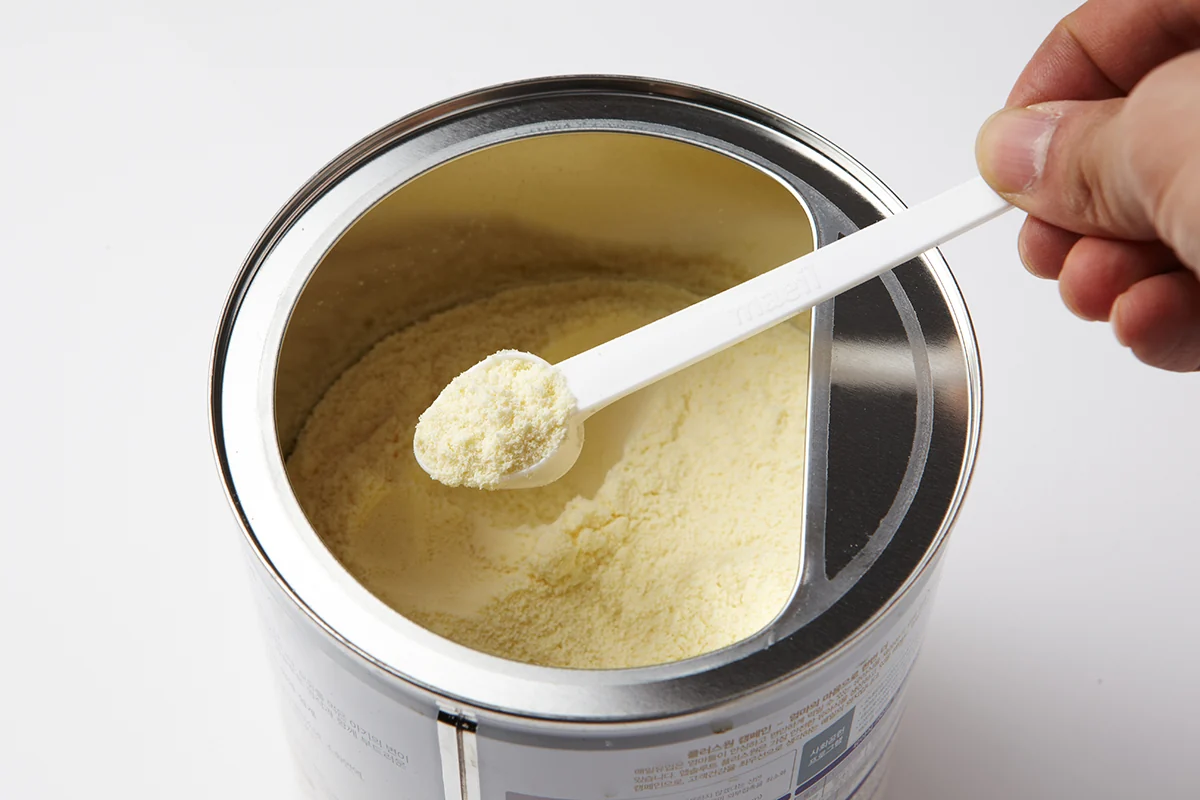
The 1.8 kg limit is total net weight, not an allowance for each bag
Customs states that the ordinary accompanied-baggage exemption applies to a person aged 16 or above who has not left Hong Kong in the previous 24 hours, carrying no more than 1.8 kg total net weight of powdered formula. One container or several, different formulas and different brands all count towards that total.
Net weight means the contents, not the container's gross weight. For sealed retail products, read the declared net quantity and add every container. Cabin baggage and checked baggage do not each receive a separate 1.8 kg allowance; dividing products between bags does not remove them from the total.
| Example quantity | Combined net weight | Weight condition only |
|---|---|---|
| Two 900 g tins | 1,800 g | Exactly 1.8 kg; the age and previous-departure conditions still apply |
| Two 800 g tins plus one 400 g tin | 2,000 g | Exceeds the ordinary personal exemption's weight limit |
| Four 400 g tins | 1,600 g | Below the weight limit, but all other conditions still apply |
“Two tins” is therefore only a shorthand example for certain pack sizes, not the actual calculation. A child travelling with you does not create another adult allowance: a traveller under 16 does not meet this exemption's age condition.
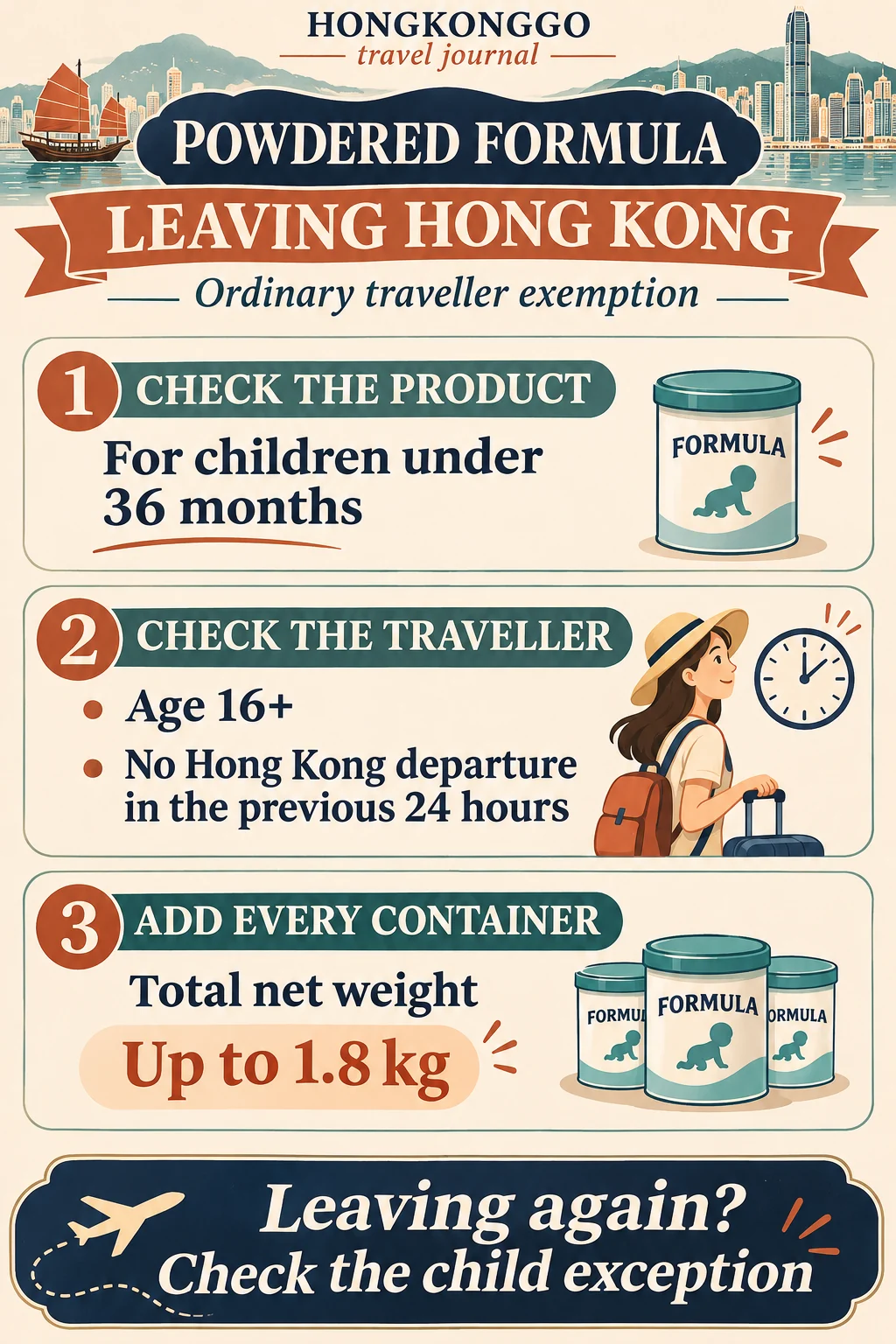
The previous 24 hours is a rolling period, not a calendar day
The ordinary 1.8 kg exemption applies only if you have not departed Hong Kong during the previous 24 hours. Suppose you leave at 6 pm on Monday, return to Hong Kong and plan to leave again at 10 am on Tuesday. The date has changed, but only 16 hours have passed since that departure, so the ordinary first-departure condition is not met.
A return car, ferry or flight booking does not alter this export rule. For a same-day return or several crossings close together, record the actual date and time of your last departure. Check that condition for each traveller before shopping rather than estimating “yesterday” or “today” at the border.

The accompanying-child exception for another departure has three linked conditions
There is a limited alternative for someone who has already left Hong Kong once or more in the previous 24 hours. The person carrying the formula must still be aged 16 or above and must meet all these conditions: travel with a child under 36 months; carry the formula in an unsealed container; and carry no more than a reasonable quantity for that child's consumption during the journey from the Hong Kong point of exit to the next point of entry outside Hong Kong.
This is not the quantity needed for the whole holiday, accommodation after arrival or supplies for relatives. Opening a newly bought tin does not by itself qualify it for the exception. The accompanying child, age, journey boundary and reasonable consumption quantity must all be considered. It is also not another 1.8 kg allowance granted on every crossing.
If your journey has several transport legs, or the “next point of entry” is unclear, explain the actual route, child's age, container status and intended quantity to the responsible authority before deciding what to carry. A driver, retailer or online comment cannot replace that assessment.
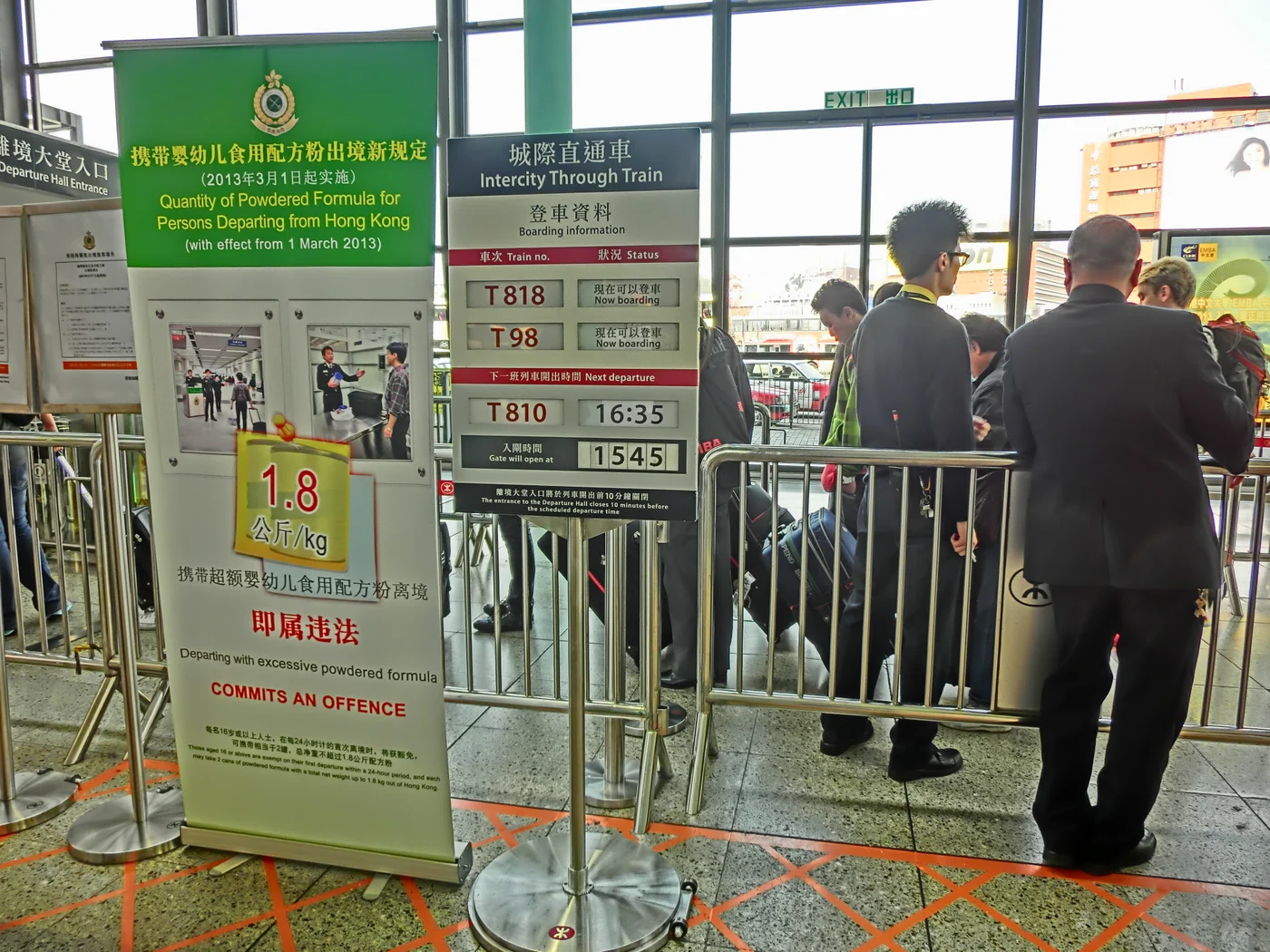
An export licence is not a border-counter baggage upgrade
Export licensing and the traveller exemption are different arrangements. The official FAQ and Trade and Industry Department circular explain that licences are generally issued only to the relevant formula importers registered under the Food Safety Ordinance, or importers covered by the specified registration exemption. Applications also involve evidence that the particular consignment was directly imported from elsewhere.
An ordinary visitor should therefore not treat the online application service as a way to buy an extra baggage allowance, or assume that submitting an application immediately before departure permits export. This guide makes no approval-time promise and does not suggest posting, splitting or changing transport as a workaround. Ask about uncertain product classifications or quantities beyond the personal exemption before buying and committing to tightly connected transport.
The Customs page checked for this article lists the Trade and Industry Department's powdered-formula export-licence enquiry number as +852 3403 6220, with email enquiry@tid.gov.hk. Have the product label, net weight, quantity and actual itinerary ready so that the enquiry is specific. General policy enquiries can also use the relevant contact channels shown on the official website.

Meeting Hong Kong's export rules does not guarantee admission at the destination
This article explains powdered-formula export conditions when leaving Hong Kong. Macau, mainland China and other destinations have their own rules for food in personal baggage, which must be checked separately. Airline security and carrier baggage requirements are another layer. Hong Kong's personal exemption does not replace any of those checks.
If the journey also involves returning to Hong Kong, see our document and itinerary checks for re-entry after Macau.
Do not transfer rules from another type of food to formula: our guide to meat, poultry and eggs in personal baggage entering Hong Kong covers different products travelling in the opposite direction.
Your pre-journey checklist
- Read the product's full intended-age and use information, not only its short name.
- Confirm the traveller is at least 16 and check actual departures in the previous 24 hours.
- Add the net weight of all containers; cabin and checked bags have no separate allowances.
- For the repeat-departure child exception, check accompaniment, unsealed containers and reasonable journey consumption together.
- Check destination food-entry and carrier requirements separately; ask the responsible authority about uncertainty before travelling.
Sources & further reading
This article draws on the media coverage and public information below. Event and transport arrangements can change; check the latest details before travelling.
Make it your journey
When arranging Hong Kong, Macau or Pearl River Delta transfers, tell us your passenger and luggage numbers through the HONGKONGGO contact page. A vehicle booking does not change customs rules. Confirm what you can carry, then allow sufficient time for the crossing.