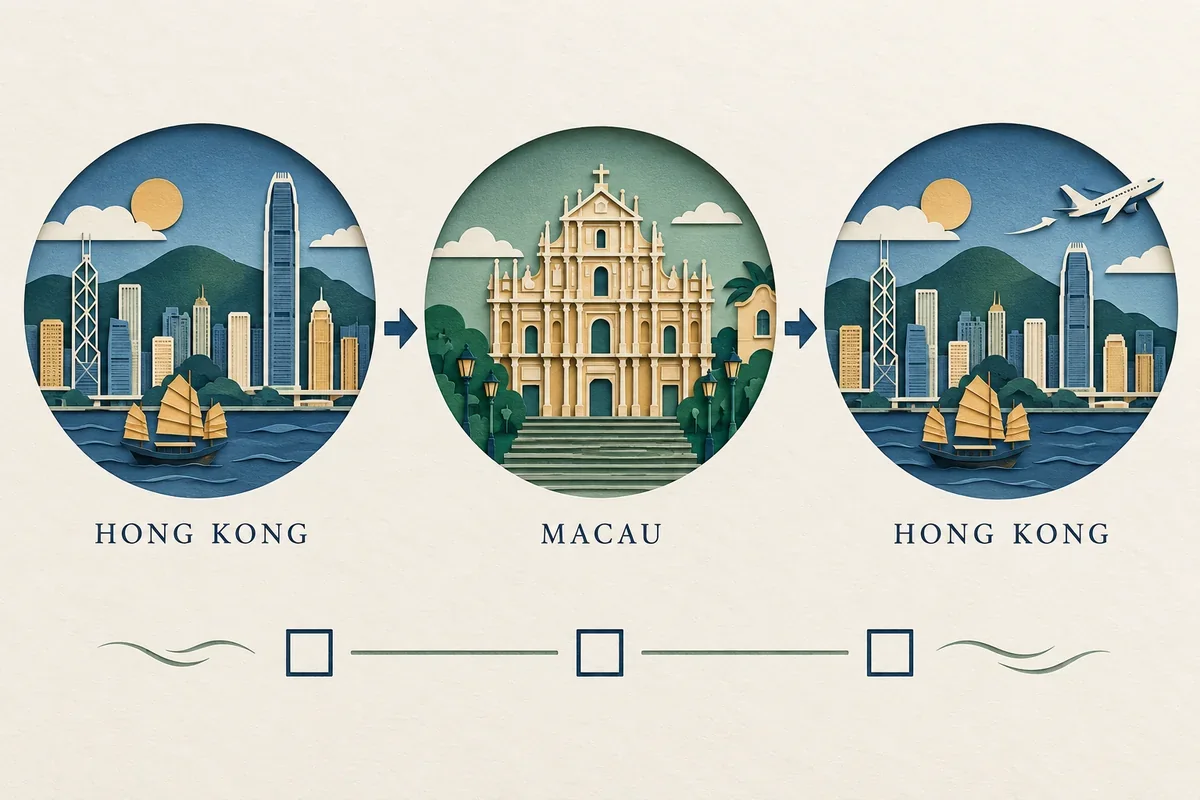
If you fly into Hong Kong from overseas, spend a night in Macau and return to Hong Kong for your flight home, check your first arrival in Hong Kong, entry to Macau, and return to Hong Kong separately. Each destination has its own immigration procedures. Hong Kong visa-free eligibility, a Hong Kong visa or the date you were permitted to remain there is not permission to enter Macau.
Break down the whole trip, not just the first flight
This guide is for short-term tourists who do not hold Hong Kong or Macau resident status, with a focus on common journeys starting overseas. Policy information was checked on 15 October 2026. Residents, workers and students have different arrangements and should not rely on the ordinary-visitor examples below. Immigration authorities decide admission and the actual period of stay granted.
For an itinerary such as London–Hong Kong–Macau–Hong Kong–London, work through these three checks:
| Stage | What to establish | Documents to keep available |
|---|---|---|
| Arriving in Hong Kong from London | Does this passport qualify for a visa-free visit, or is a visa, entry permit or pre-arrival registration required? | Passport, any required visa or registration, and onward itinerary |
| Travelling from Hong Kong to Macau | Do you meet Macau's requirements for your nationality and document type? | Passport, any required Macau permission, accommodation and departure arrangements |
| Returning from Macau to Hong Kong | Are you eligible to enter Hong Kong on the return date, and do your permission's conditions cover this journey? | The original travel document, any required permission, Hong Kong accommodation and the flight home |
A return ferry or cross-border bus ticket is a transport booking, not an immigration permission. You still go through the relevant departure and arrival formalities on a day trip, even if your luggage remains at a Hong Kong hotel. Resolve the third row before booking the night in Macau rather than discovering an unanswered return-entry question after your flight home is fixed.

Foreign passports do not all receive the same stay in both places
Start with the nationality and document category printed in your passport, not simply the country where you live or board your flight. Two ordinary tourism examples illustrate the difference:
| Document held | General visa-free visit limit in Hong Kong | Corresponding maximum visit in Macau |
|---|---|---|
| British passport held by a British citizen | Up to 180 days | Up to 6 months |
| Ordinary US passport | Up to 90 days | Up to 30 days |
“British citizen” is a specific nationality category, not a catch-all for every travel document bearing the word British. The US example does not include diplomatic passports. Hong Kong's 180 days and Macau's six months should also be read as written; do not convert months into an assumed fixed number of days. These are the policy limits. Travellers must still meet general entry conditions and check the period actually granted to them. Hong Kong Immigration Department nationality and document requirements; Macau non-resident immigration requirements.
For example, a visitor with an ordinary US passport spending three nights in Hong Kong, one in Macau and two more in Hong Kong has more to check than “Hong Kong allows 90 days”. They must also meet Macau's document-validity, financial-means and departure requirements, and will be assessed again when returning to Hong Kong. A published stay limit is not a guarantee that repeated border crossings will automatically extend a visit.
Pre-arrival registration or a visa must cover the return journey too
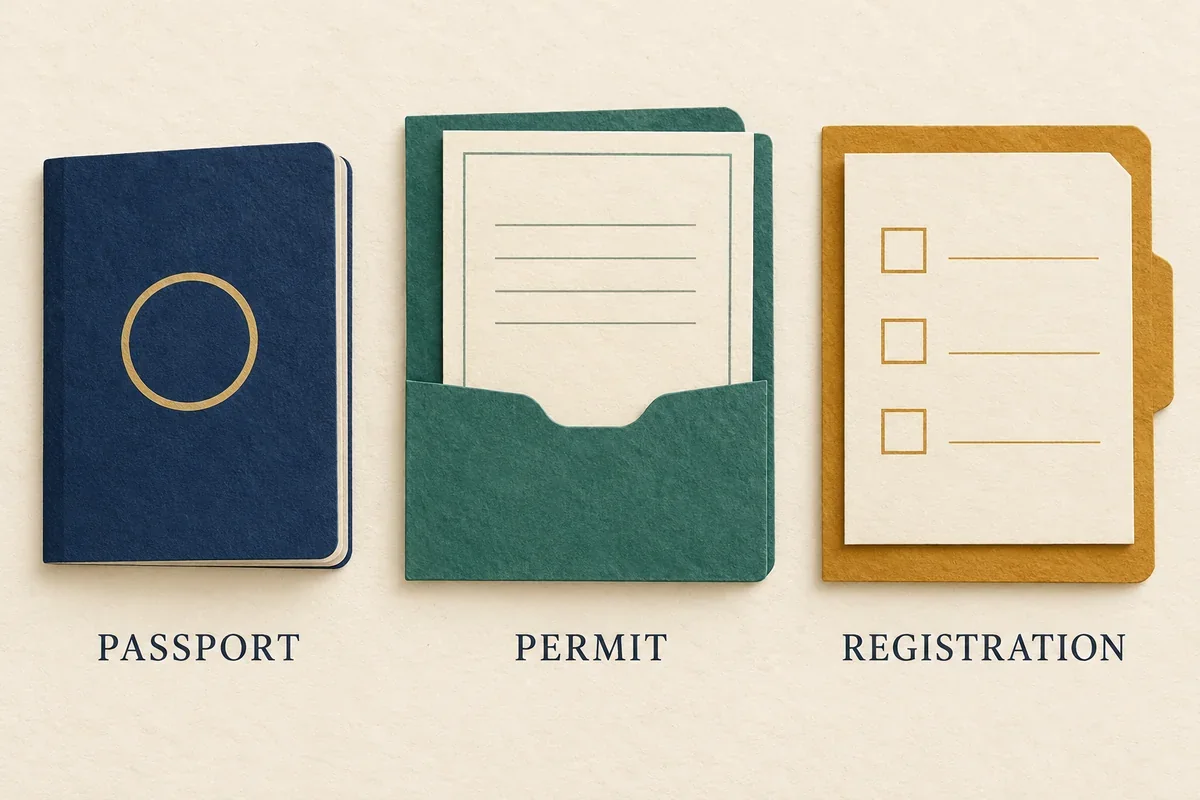
Travellers using ordinary Indian passports provide a useful example. Under the usual visitor arrangements, those who are not in one of the listed exempt categories must successfully complete Hong Kong pre-arrival registration (PAR) in advance. Eligibility includes an Indian passport valid for at least six months and an intended visit of no more than 14 days. Successful registration is normally valid for six months and can be used for multiple Hong Kong visits of up to 14 days each, subject to the general entry conditions.
For a Hong Kong–Macau–Hong Kong itinerary meeting those conditions, crossing the border does not in itself mean applying for a new PAR each time. Carry the printed and signed notification slip, together with the same valid Indian passport used for registration. A change of passport or personal particulars requires a new registration under the rules. If registration is unsuccessful, an application screenshot is not approval: follow the Immigration Department's visa application procedure instead. Official PAR guidance for Indian nationals.
PAR deals only with the Hong Kong side of the journey. Macau lists Indian nationals among those exempt from a visa. Short-term visitors holding a valid ordinary Indian passport can generally stay for up to 30 days, subject to Macau's general entry requirements. A Hong Kong registration document is not Macau admission approval. Macau visa exemptions and periods of stay.
Other visitors who require a Hong Kong visa or entry permit should check its validity, permitted number of entries and conditions together. “It has not expired” is not enough to establish that it covers another arrival. Explain the Macau excursion and both Hong Kong arrival dates when applying. If you already have a permit but cannot establish whether its conditions cover the return, give the Immigration Department your complete itinerary and permit details, rather than asking only whether a visa is needed for Macau. Hong Kong visit/transit application guidance.
Chinese passports and Exit-entry Permits follow different arrangements
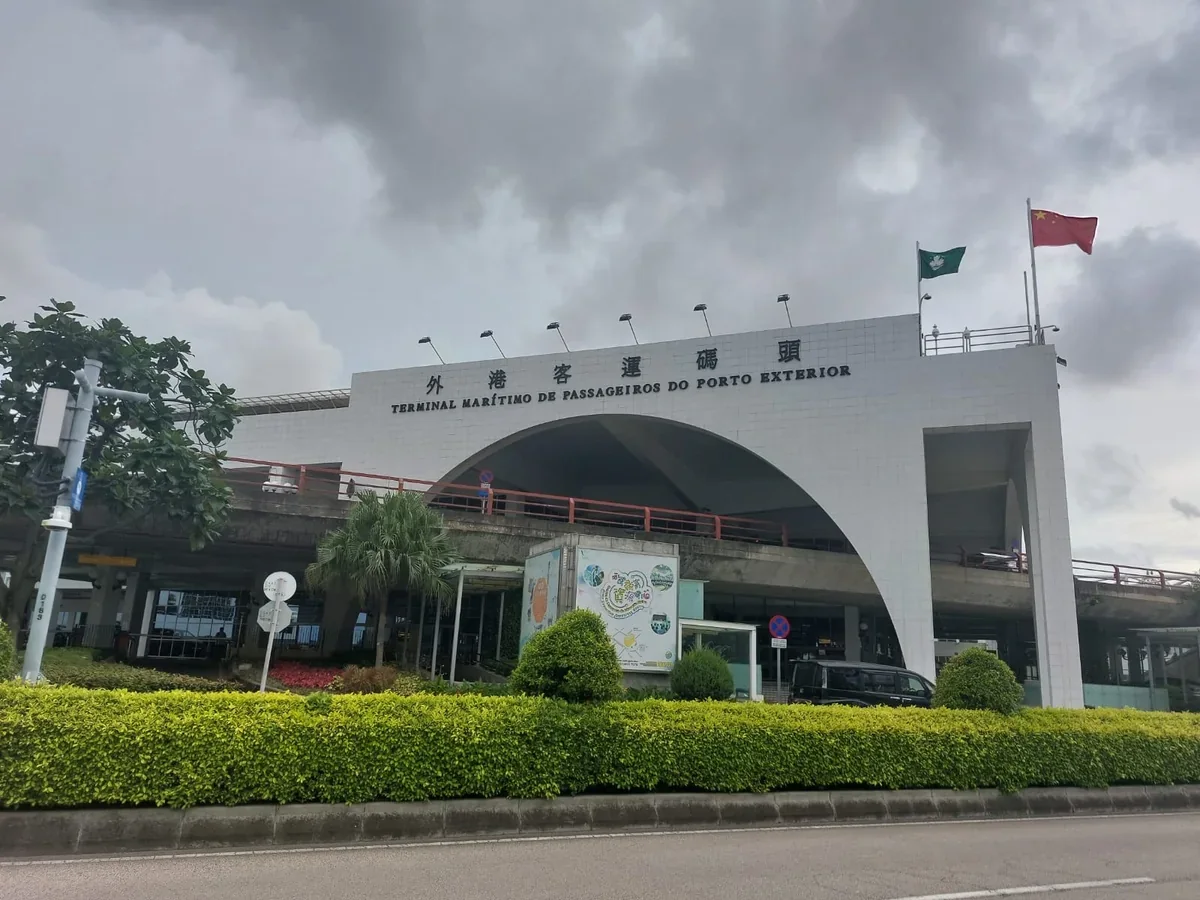
Hong Kong transit arrangements for Chinese passport holders depend on the journey. The Immigration Department states that eligible Chinese passport holders transiting Hong Kong to or from another country or region may be granted seven days on each landing. Conditions include valid permission to enter the destination and confirmed onward travel arrangements as required. This cannot be simplified to “a Chinese passport allows any seven-day holiday in Hong Kong and Macau”. Departing from overseas or holding an overseas residence permit does not turn someone into a foreign-passport visitor in the table above. Check the arrangements for the Chinese passport, overseas residence status and each leg of the journey. Entry and transit arrangements for Chinese residents.
An Exit-entry Permit for Travelling to and from Hong Kong and Macao is a separate document. For eligible holders of single- or double-journey Hong Kong endorsements, official arrangements cover a short side trip to a neighbouring region followed by a return through Hong Kong to the mainland. If the traveller returns before the original permitted stay expires, that original limit normally continues to apply. For example, permission to remain until 20 October does not automatically gain seven days when the holder returns from Macau on 18 October. Entry to Macau still requires a valid Macau endorsement. This arrangement concerns particular documents and itineraries; it should not be applied to foreign visa holders or Chinese passport holders using transit provisions. Hong Kong Immigration Department guidance on side trips.
Before Macau, check document validity and your departure evidence
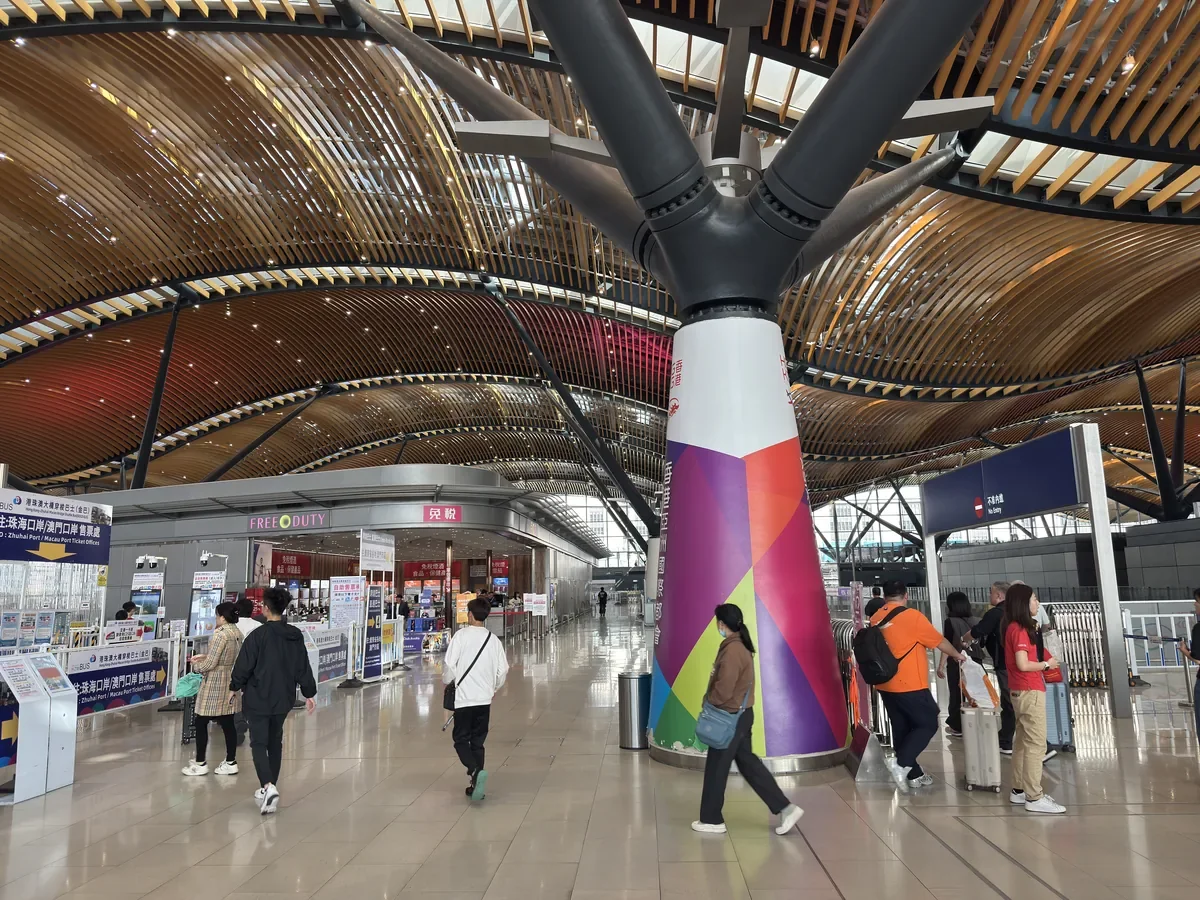
Macau's non-resident entry rules generally require an applicable passport or travel document to remain valid for at least 90 days beyond the intended stay. Count forward from the date you plan to leave Macau, not merely from arrival. Requirements and exceptions for specific documents, including Exit-entry Permits, must be checked under their own provisions.
Short-term overseas visitors should also have return or onward travel evidence and proof of sufficient funds. Macau's official requirement for an intended stay of no more than seven days is evidence of at least MOP5,000 in means of subsistence. This is an entry-condition requirement, not an arrival fee, and should not be interpreted as a blanket instruction to carry the whole amount in cash. Higher bands apply to longer stays. An ordinary overseas visitor who cannot demonstrate residence in mainland China or Hong Kong should not rely on the departure-ticket exemption for qualifying residents of those places. Macau entry conditions and periods of stay.
After booking, keep your passport details, any required visas or registration documents, accommodation in both places, evidence of departure from Macau and your final flight home together in an offline folder. After each admission, check the period of stay actually granted. If the date is unclear or does not fit the trip, ask an officer at the time. Treating “can enter Macau” and “can return to Hong Kong” as two separate questions completes the document preparation for this journey.

Your pre-journey checklist
- Establish eligibility for the first Hong Kong arrival, Macau entry and the return to Hong Kong separately.
- Use passport nationality, document category and residence status, not just the departure country.
- Check any visa or PAR validity, entry count and original-document or notification-slip requirements.
- Count document validity from your intended departure from Macau and prepare onward travel and funds evidence.
- Save both stays and the final flight offline, and check the permitted stay after each admission.
Sources & further reading
This article draws on the media coverage and public information below. Event and transport arrangements can change; check the latest details before travelling.
- Hong Kong Immigration Department: visit visa and entry permit requirementsimmd.gov.hk (Opens in a new tab)
- Macao Government: immigration clearance of non-residentsgov.mo (Opens in a new tab)
- Hong Kong Immigration Department: pre-arrival registration for Indian nationalsimmd.gov.hk (Opens in a new tab)
- Hong Kong Immigration Department: entry, transit and side-trip arrangements for Chinese residentsimmd.gov.hk (Opens in a new tab)
- Hong Kong Immigration Department: visit/transit applicationsimmd.gov.hk (Opens in a new tab)
Make it your journey
Confirm the three entry stages before arranging ferries, buses and accommodation. Keep the documents needed at each crossing easy to reach so every leg of the trip has a clear plan.