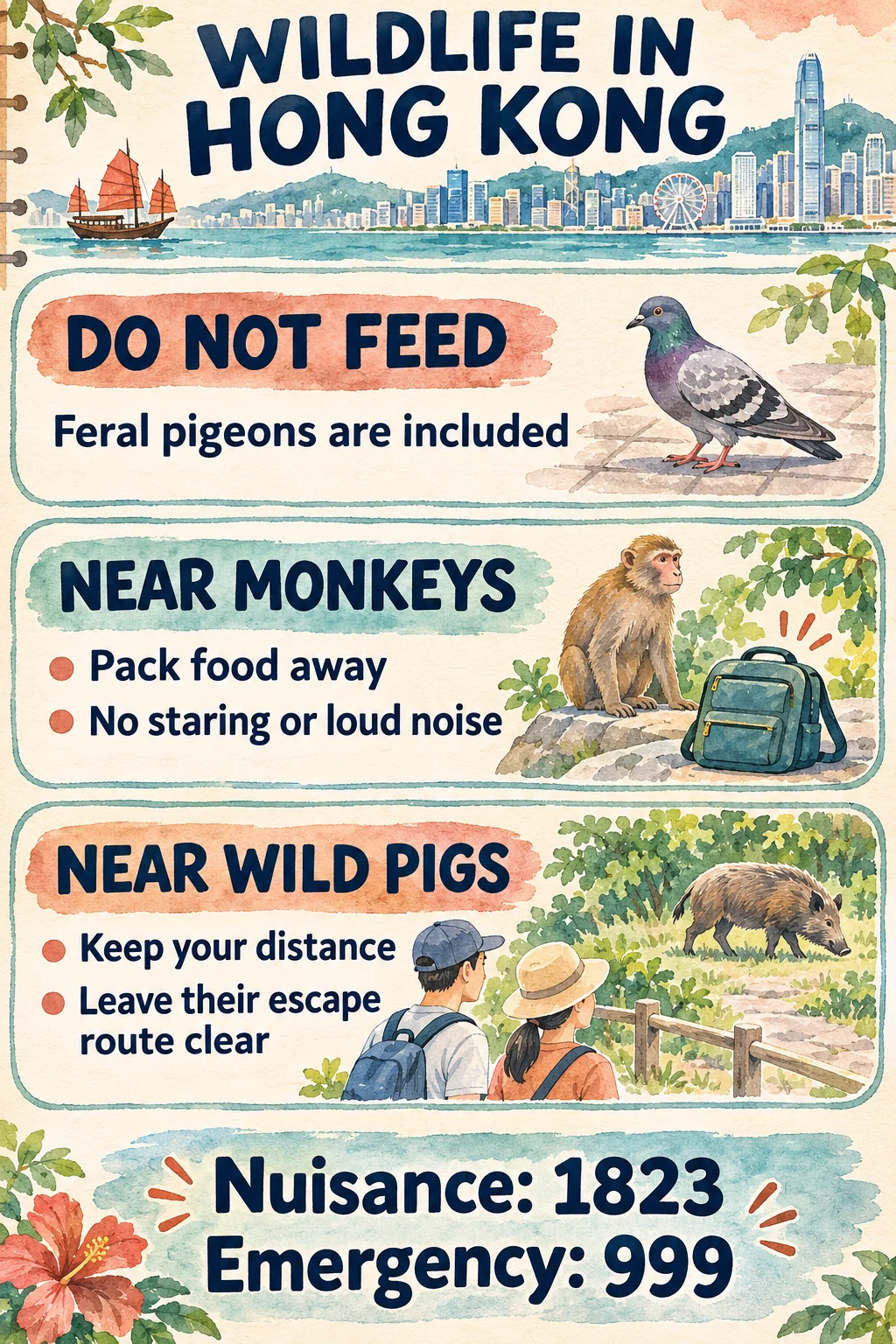
When you encounter animals on a Hong Kong street, in a park or in the countryside, put food away and give them space. Do not feed them or use a snack to obtain a closer photograph. The territory-wide feeding ban includes wild animals and feral pigeons. Near monkeys, avoid staring, loud noise and throwing objects; near wild pigs, leave their escape route clear. Call 1823 about ordinary nuisance and 999 for an emergency.
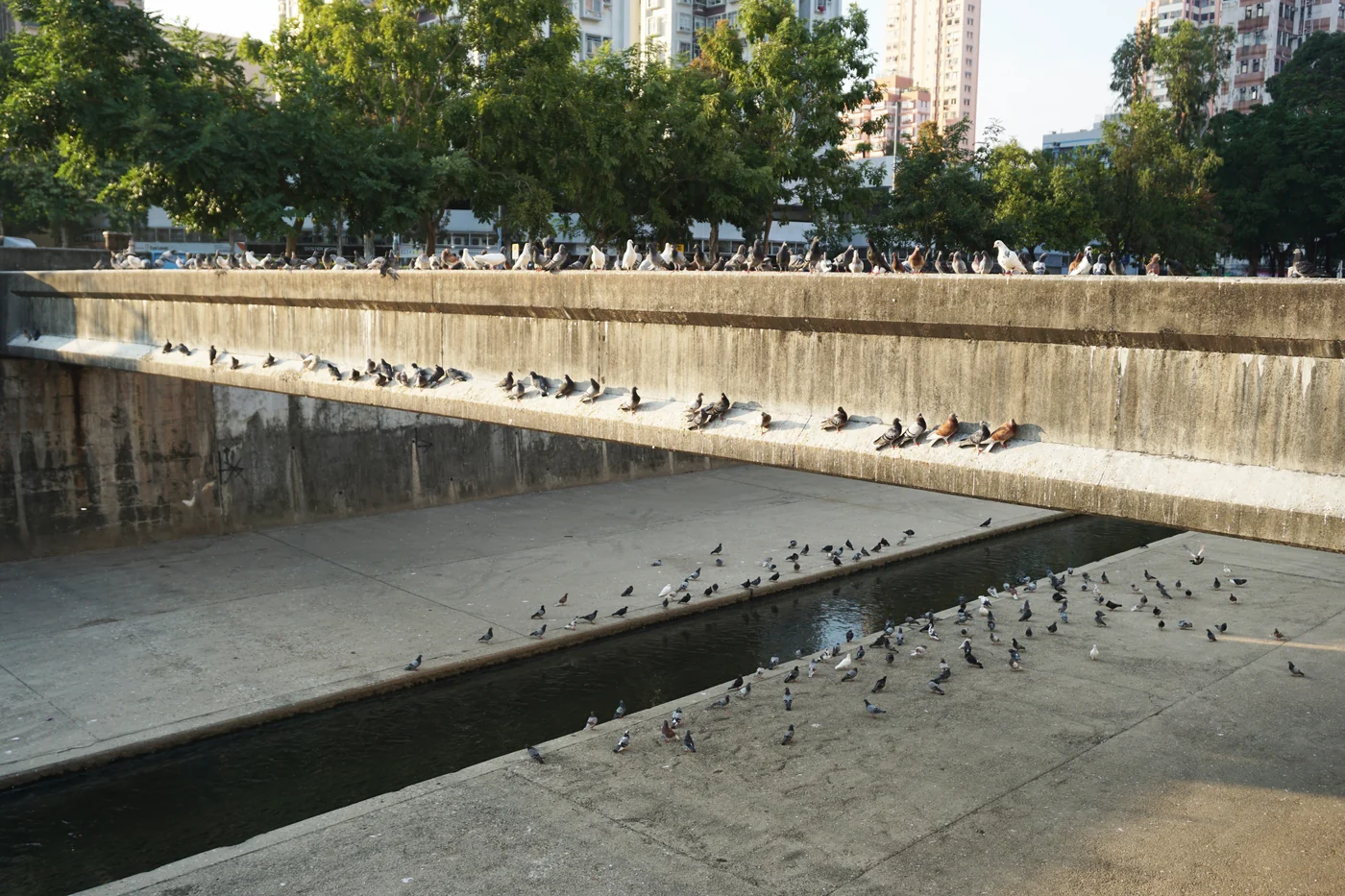
City pigeons are included
Feeding pigeons may be a familiar holiday activity elsewhere, but the rules need checking again in Hong Kong. An HK01 report about a visitor feeding pigeons illustrates the misunderstanding: an apparently small interaction with an animal was treated as unrestricted. An individual's reported experience is not a promise of how every case will be handled. Use the authority's current guidance for the scope and penalties.
The Agriculture, Fisheries and Conservation Department's territory-wide feeding-ban page explains that the amendment effective on 1 August 2024 extended the prohibition to feral pigeons and introduced a HKD 5,000 fixed penalty. Illegal feeding may instead lead to prosecution, with a maximum fine of HKD 100,000 and one year's imprisonment. This is an established rule, not a new measure announced today, and it is not confined to country parks. A missing banner directly in front of you does not turn a handful of rice or a piece of bread into permission.
For a visitor, the simplest preparation is not to bring bird feed or let children scatter snacks. The scope here is wild animals and feral pigeons; do not conflate it with every kind of pet care or professional activity under a special permit. Refer any unusual situation to the authority rather than assuming that you qualify for an exception.
Why a small amount of food changes the next encounter
AFCD explains that repeated feeding draws animals together and changes how they forage and respond to people. With frequent contact, monkeys and wild pigs may lose their natural wariness and start snatching plastic bags or food from people's hands. Leftovers and droppings also affect hygiene in public spaces. The issue is larger than whether an animal finishes this particular mouthful.
Do not use food to calm an animal, lure it away or arrange a photograph. Other people feeding nearby are not evidence that it is permitted. Observe from somewhere you may safely stand without blocking people or animals. When the animal moves away, let the encounter end instead of following it to improve the camera angle. Seeing an animal forage is not a sign that it needs a meal from you.
Deal with food and bags before the camera
Before setting out, put snacks, takeaway food and plastic bags inside a cloth bag or backpack that can be closed. Holding a bag aloft while looking for a camera can distract you from the animal and your companions. AFCD specifically notes that monkeys learn to associate plastic bags with food, so even an empty bag is not something to wave at them or use for teasing.
These are preparation steps, not instructions to rummage suddenly through your belongings or fight over an item when an animal is already beside you. Stay calm and create space as the situation safely allows. Do not reach towards its mouth to retrieve something or offer another snack in exchange. Before a family outing, agree that an adult will carry food and children will stay with their companions rather than chasing animals, reaching out or crouching next to young ones.
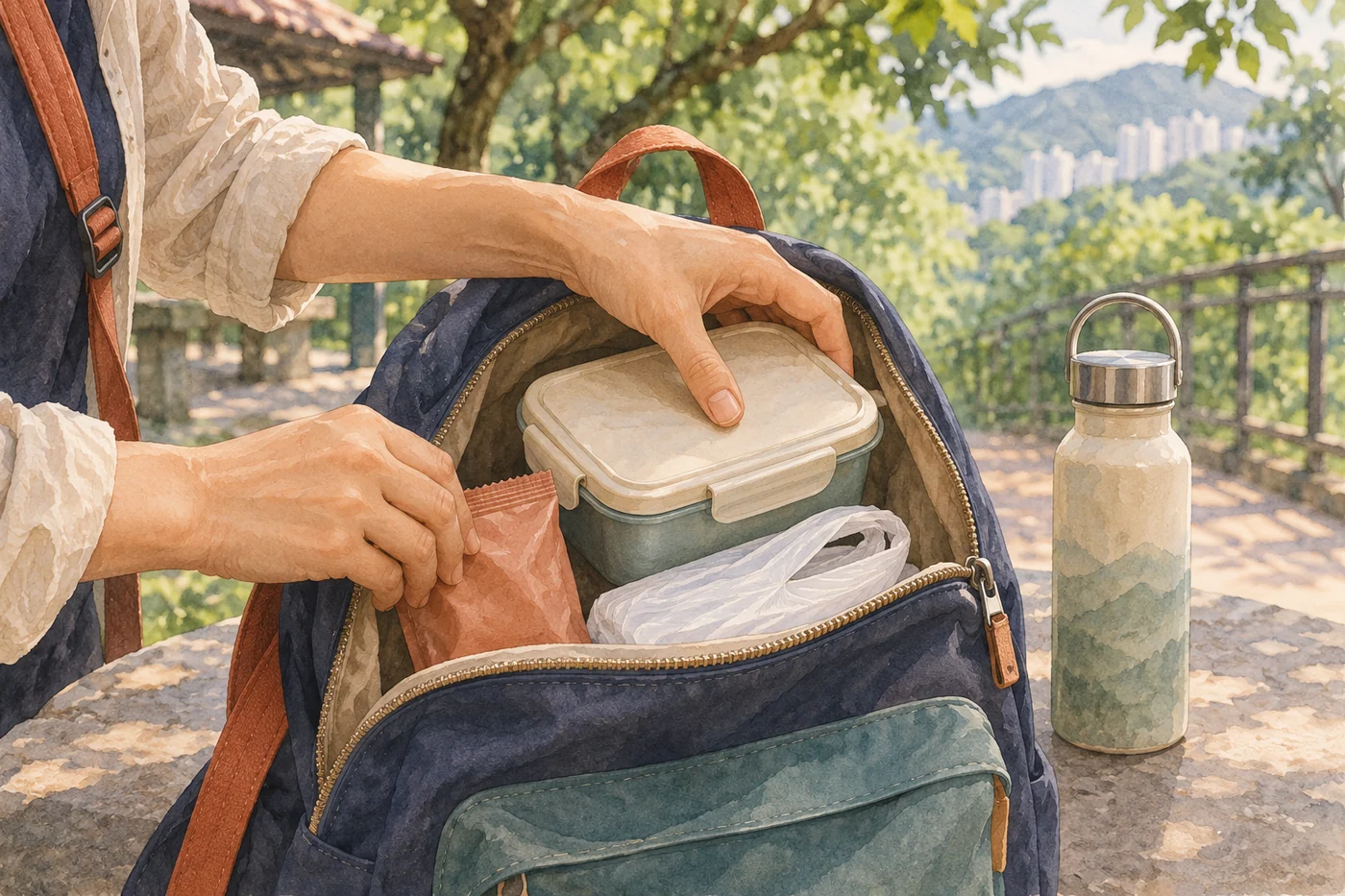
Clearing up after eating matters too. Dispose of rubbish properly in a bin with a secure lid and close it afterwards. If the bin is full or cannot close, keep the waste with you until a suitable disposal point is available; leaving a food bag beside it is not the same as clearing it away. Check the seat and ground for dropped snacks and packaging before leaving.
Near monkeys: no staring, loud noise or eating
The AFCD monkey-nuisance guidance advises remaining calm, keeping your distance and not approaching monkeys, including babies. Do not eat around them; put food and plastic bags in a cloth bag or backpack. Staring can provoke them, while loud noise can make them nervous.
For a family, the actions are straightforward: put food away, lower your voices, stop approaching and keep the group together. Do not send a child forward for a better look, or try to move monkeys with shouting, thrown food or other objects. There is no single distance that makes every encounter safe, so this guide does not promise protection at a particular number of metres. If the way ahead is obstructed, wait in a safe place or change the route rather than squeezing through a group of monkeys to continue taking pictures.
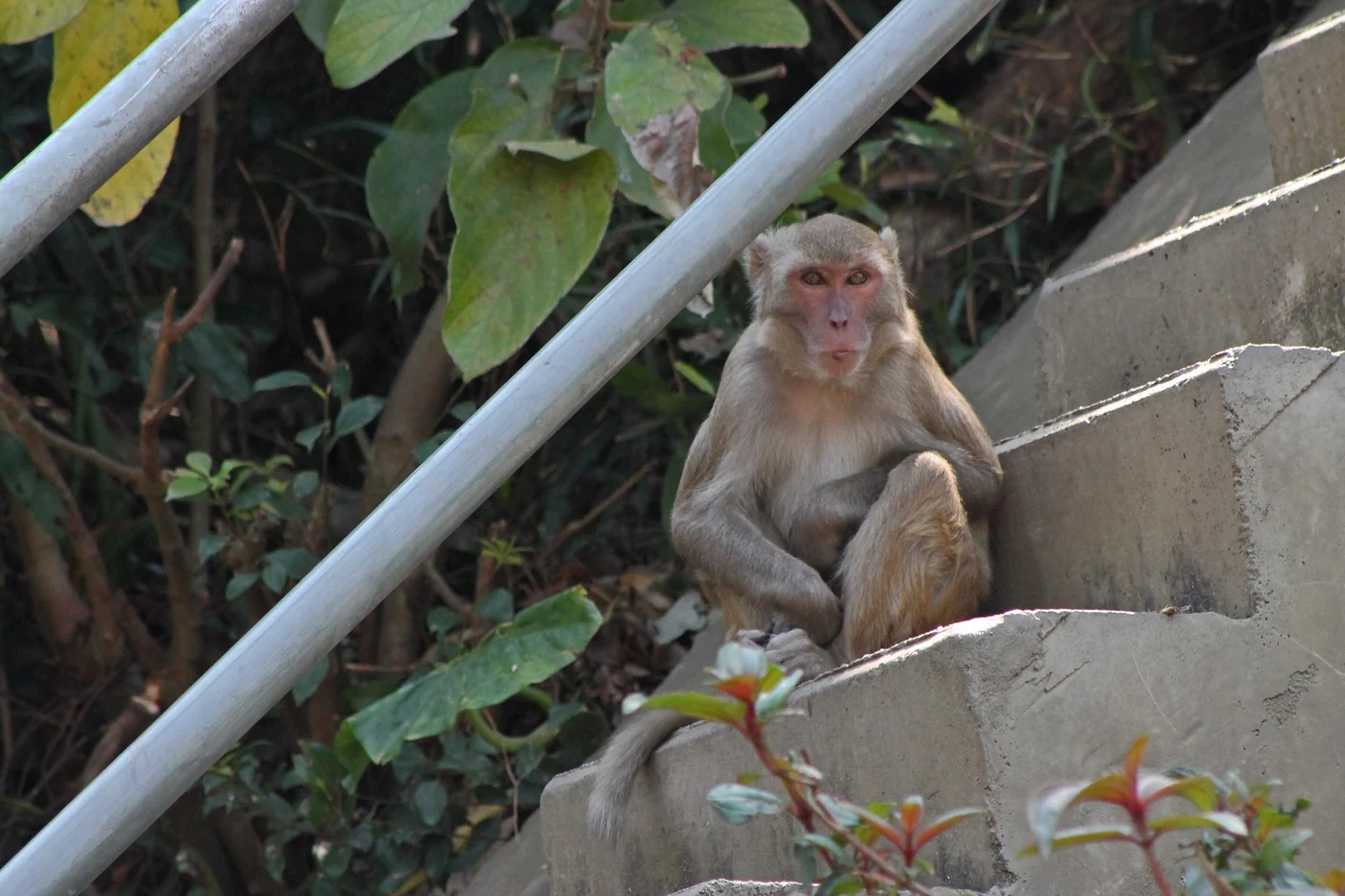
A photograph helps identify an animal and its setting; it is not a map of where monkeys are today. A monkey sitting quietly in an older image also says nothing about how another animal will react to an approach. Watching is different from touching or feeding. Keeping space is part of the experience.
Near wild pigs: leave an exit and use a barrier if necessary
The AFCD wild-pig guidance advises staying calm, keeping away and leaving pigs undisturbed. Do not touch piglets. If necessary, take cover behind a barrier and wait for the pigs to leave before continuing. Do not throw objects, try to chase them away, corner them or block their escape route.
That rules out surrounding an animal for a photograph. If a wild pig is ahead, first consider where you can safely stop and whether the animal still has space to leave. Do not send someone to the other end of the path to stop it moving away, and keep children away from piglets. If the only passage is temporarily occupied, change that part of the outing. Being late for the next stop is not a reason to squeeze past.
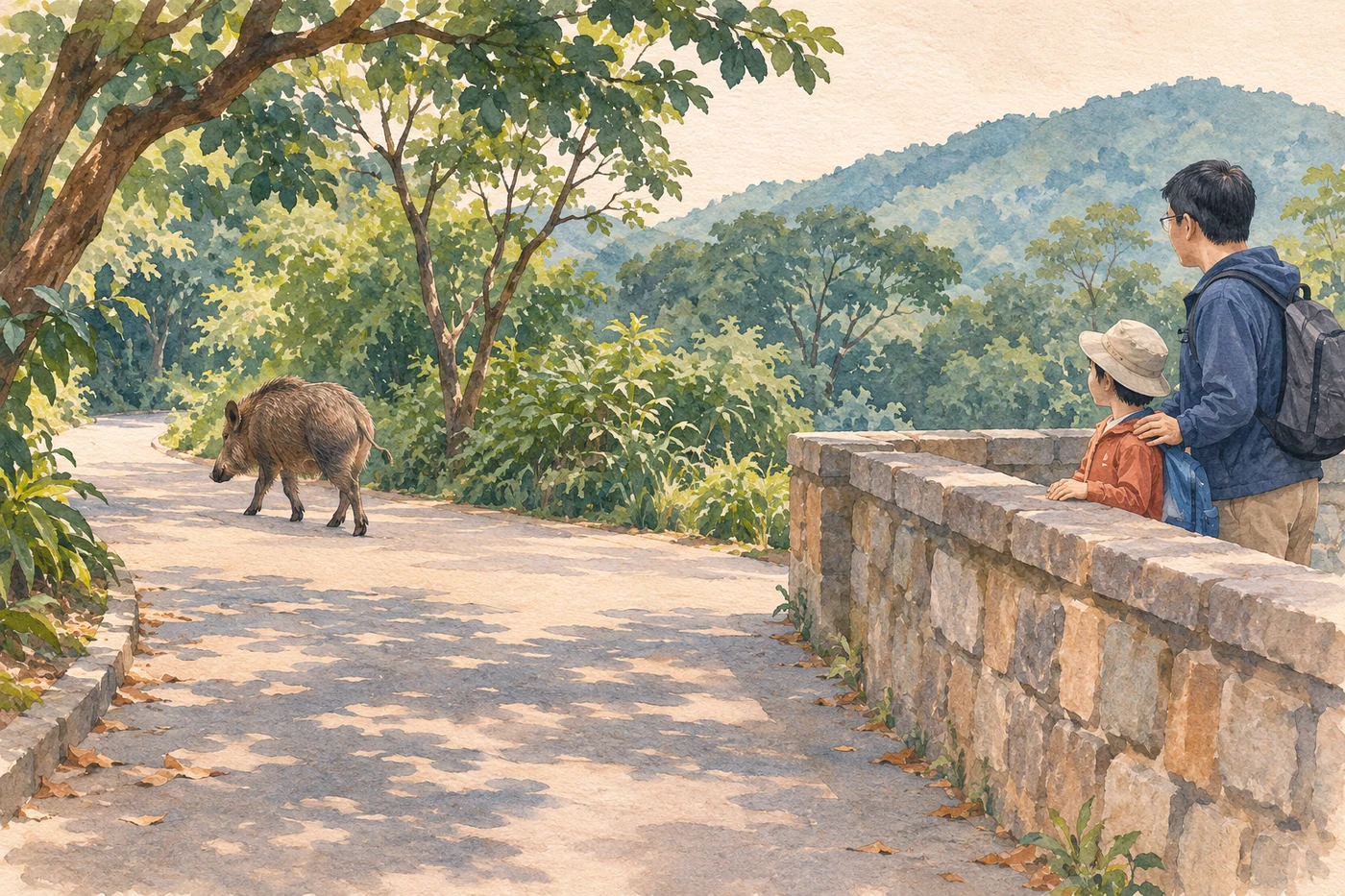
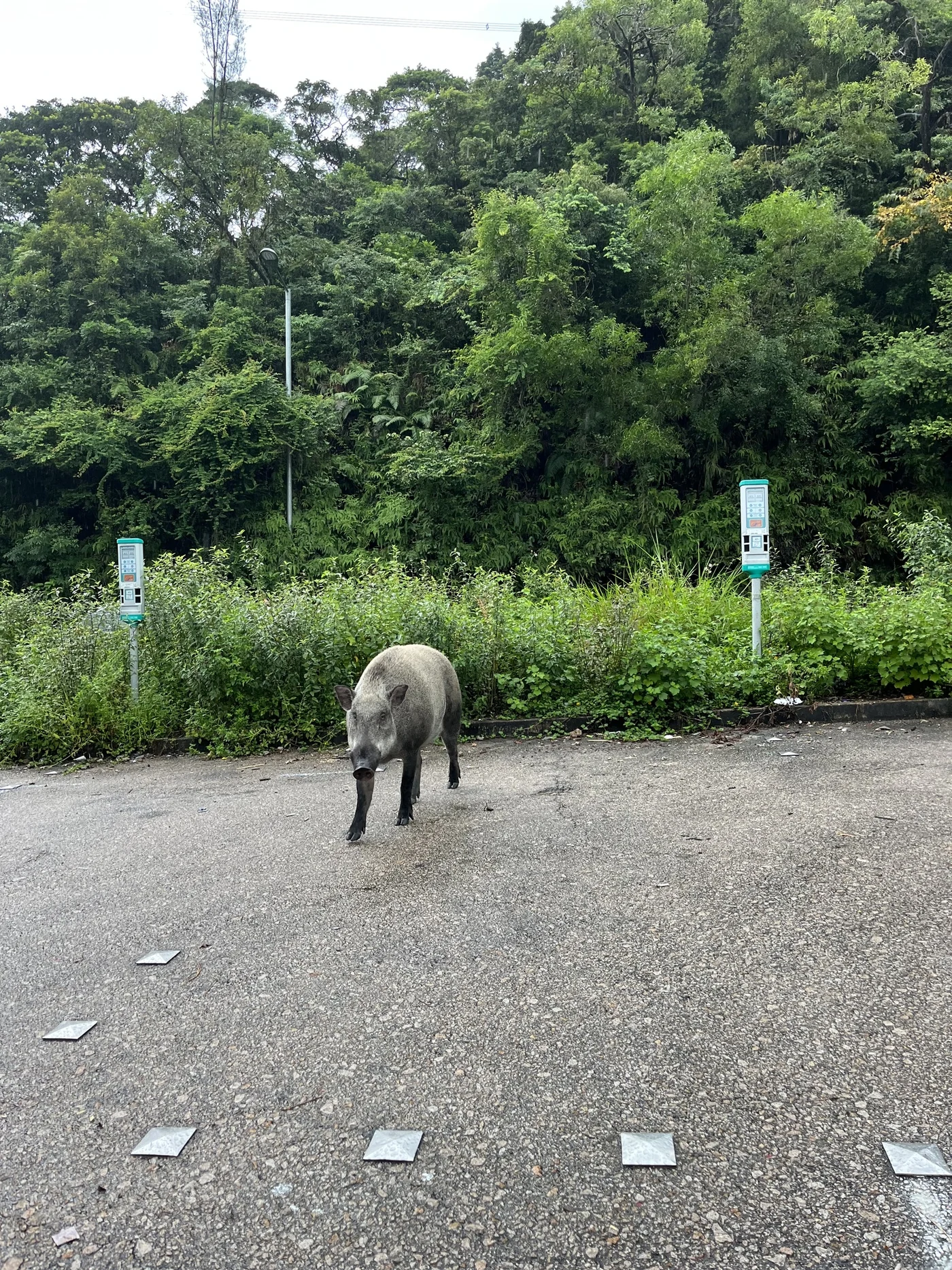
AFCD explains that pigs are generally wary of people but may attack if threatened or provoked, particularly adult males or sows with piglets. A visitor does not need to decide whether one looks “friendly”, and is not responsible for catching it or driving it away. An umbrella, food bag or camera should not be used to test its response.
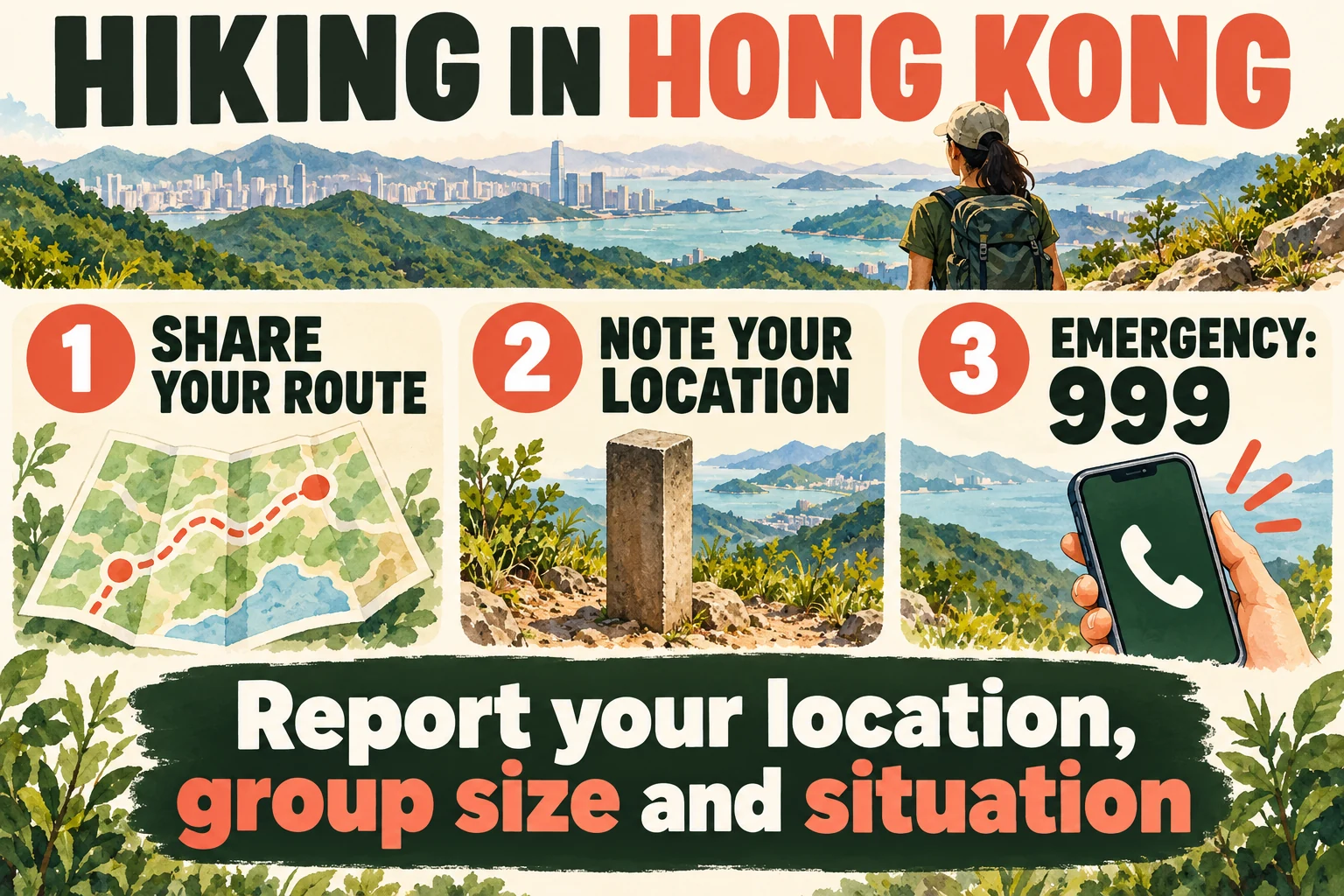
Calling 1823 or 999: explain the place and what is happening
Call 1823 to report ordinary animal nuisance or suspected illegal feeding for departmental follow-up. Call 999 if there is immediate danger or an emergency. Neither number promises a particular response time. Do not describe an animal simply being present as an attack; report what you actually see and answer the operator's questions.
| Information | A useful way to describe it |
|---|---|
| Location | Give the park or road, nearby entrance, street number or a clear landmark rather than only “on the hill”. |
| Animal and incident | Say whether it is a monkey, wild pig or pigeon, and whether it is obstructing a path, chasing someone, trapped or involved in an injury. Say when you are unsure. |
| People | Explain the number of companions, any children or people needing assistance, and whether everyone is now in a safe place. |
| Contact | Give a number for a return call and follow instructions about waiting or moving; do not try to capture the animal. |
After contact with a wild animal or its excreta, AFCD advises washing your hands thoroughly with soap and water immediately. If a monkey bites or scratches you, wash the wound immediately and seek medical attention promptly. Do not continue an entire day's itinerary merely because an injury looks small, or substitute a travel company's reply for medical or emergency assistance. This guide provides preparation and contact routes, not an assessment of an injury.
Your pre-journey checklist
- Do not bring food specifically to feed wild animals or feral pigeons, or copy another person's feeding behaviour.
- Pack food and plastic bags away; leave no food on seats, the ground or beside an overflowing bin.
- Around monkeys, do not eat, stare, shout, throw objects or approach babies.
- Around wild pigs, do not touch, chase or block an exit; wait behind a barrier if needed.
- Use 1823 for ordinary nuisance and 999 for immediate danger; follow hygiene and medical guidance after contact or injury.
Sources & further reading
This article draws on the media coverage and public information below. Event and transport arrangements can change; check the latest details before travelling.
Make it your journey
If your next outing includes a proper hike, read the Hong Kong route, location and emergency-preparation guide and prepare for the whole walk as well as possible animal encounters.