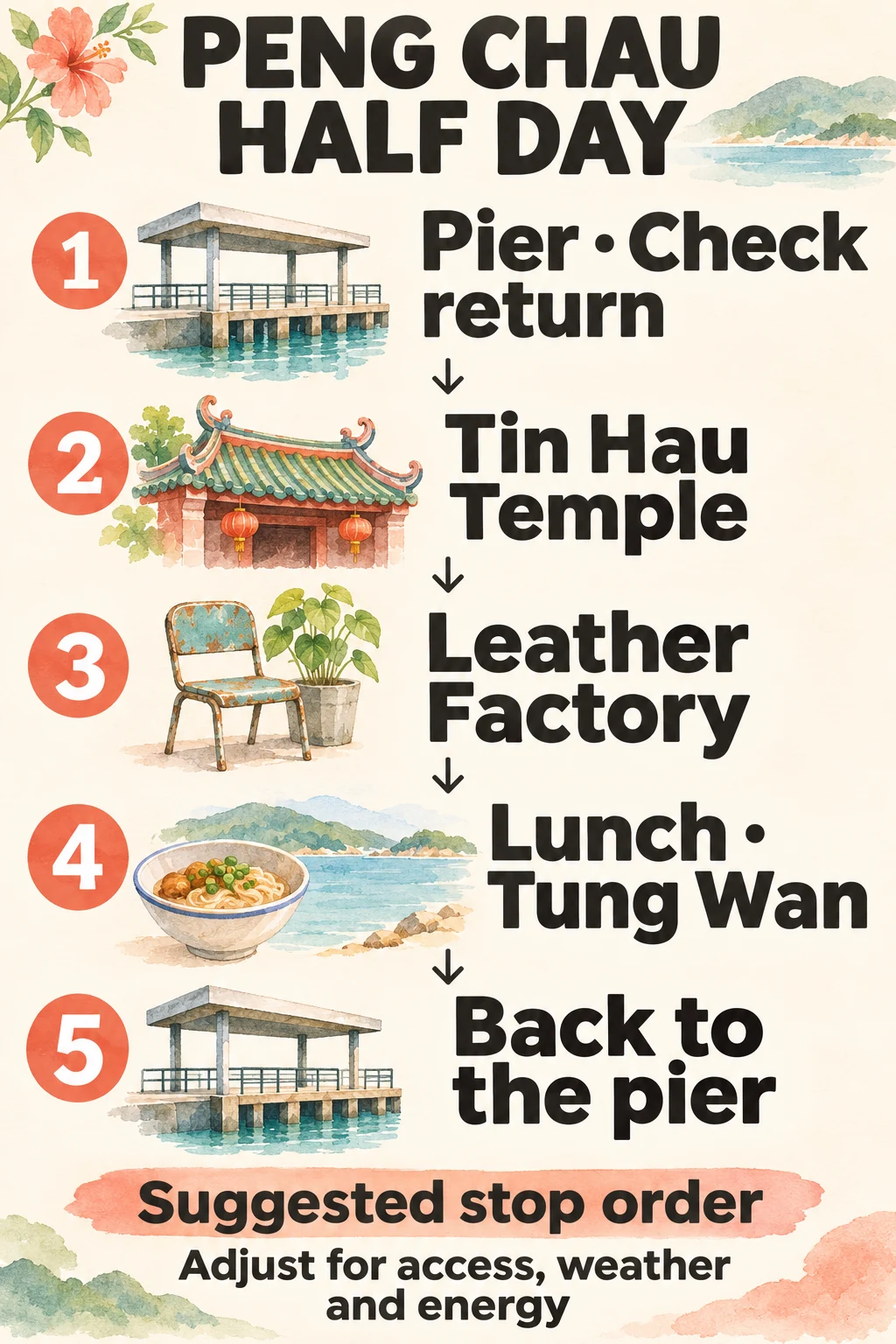
A half day on Peng Chau need not include Finger Hill. Walk from the ferry pier into Wing On Street, visit Tin Hau Temple and the old Leather Factory art space, have lunch and, if energy allows, continue to Tung Wan before returning to the same pier. Allow roughly four hours on the island, with hotel transfers and both ferry journeys calculated separately. The focus is lived-in village streets and creative reuse, rather than completing every attraction.
Decide how you will return before starting the walk
This route suits visitors travelling from Central who enjoy buildings and village life but do not want to plan a hill walk. Peng Chau is smaller than one square kilometre, yet lanes, photographs, lunch and ferry waits still take time. A small island is not a promise that everything fits before lunch. Unlike our Lamma Island day walk, this itinerary does not aim to cross a hill route to a second departure pier.
Take the Hong Kong & Kowloon Ferry service from Central Pier 6 to Peng Chau. Check that day's departures and identify two acceptable return sailings: your intended one and a fallback. The operator states that timetable entries are pier gate-closing times. Do not plan to reach the entrance at the printed minute. This guide does not tie the walk to a single fixed sailing or promise a tight connection with a flight or cross-boundary journey.
As checked on 3 November 2026, the operator lists the following single fares, effective from 1 April 2026. Older guides may still separate ordinary and fast services or quote previous fares; those figures should not replace the current operator table.
| Passenger | Monday–Saturday | Sundays and public holidays |
|---|---|---|
| Adult single | HKD 31.90 | HKD 46.60 |
| Child aged 3 to under 12, single | HKD 15.90 | HKD 23.30 |
Children under three travel free when accompanied by an adult. If both adult journeys use the same day-category fare, two singles add up to HKD 63.80 or HKD 93.20. That is simple budgeting arithmetic, not a return-ticket product or promised discount. Check service notices, the applicable fare and the weather before leaving.
First stop: Wing On Street and a temple within everyday village life
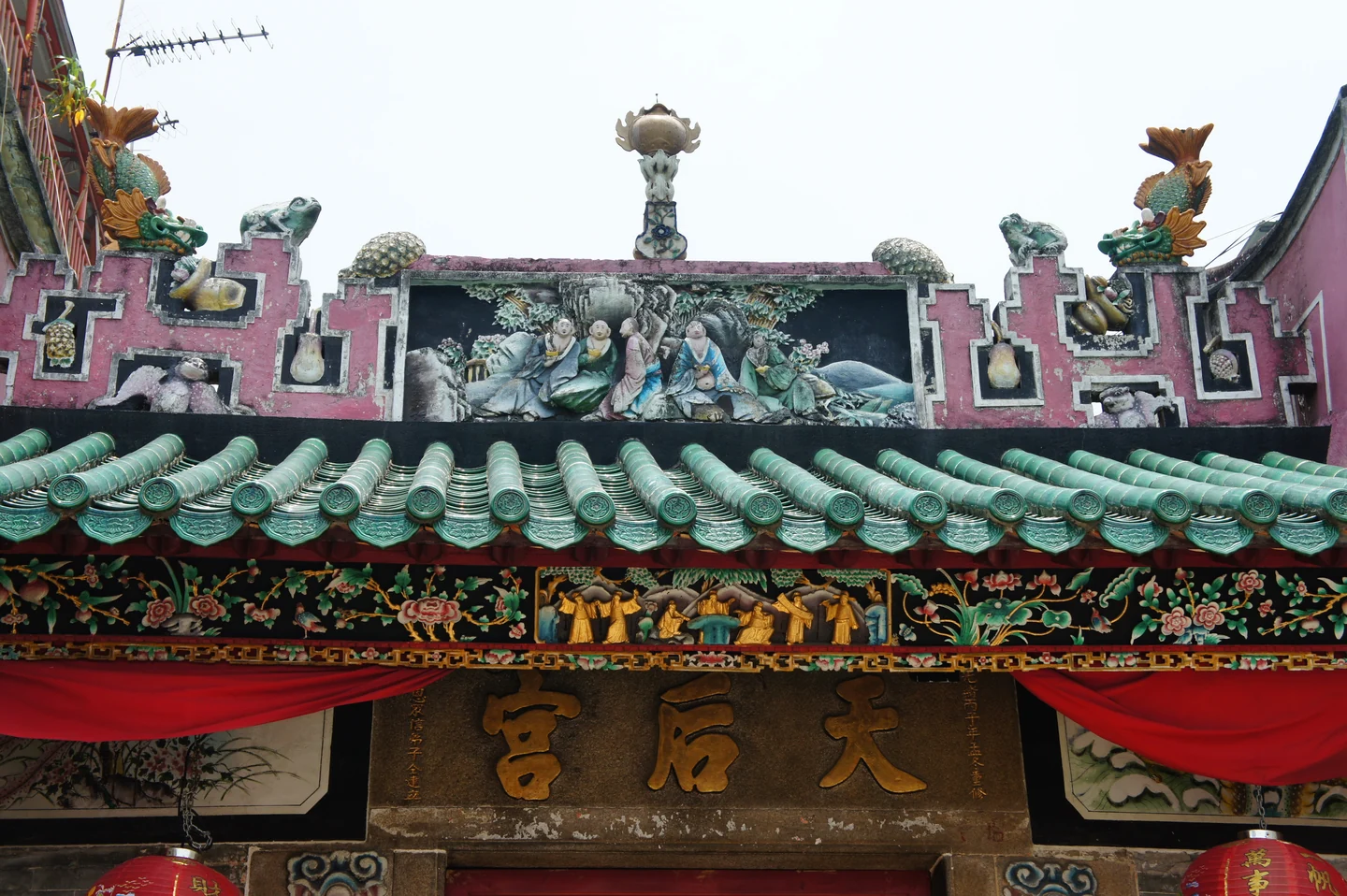
From the pier, enter the village with Tin Hau Temple at 69B Wing On Street as your first clear destination. Official district information describes a temple with more than two centuries of history, dedicated to Tin Hau and connected with seafarers and fishing communities. Rather than collecting the names of every temple, notice how this one sits within an ordinary inhabited street.
Start in public space with the roof ridge, ceramic decoration and entrance plaque, then decide whether to enter. The roof detail shown in this article was photographed in 2012. It helps identify features worth looking at, but cannot tell you which door is open today. Do not invent stories from the colour or appearance of a decorative figure: read an available explanation and leave uncertain details as questions.
The temple is first a place of worship. Make room when a ceremony is taking place or someone is praying. Look for notices and ask before photographing people, the interior or worship areas. Even a brief stop can focus on the relationship between building and street without needing to capture a ceremony as proof of the visit.
Second stop: distinguish the old factory from its creative reuse
The old Leather Factory is also on Wing On Street. The Islands District Office describes a building dating to the early 1930s, graded as a Grade III historic building in 2010 and subsequently revitalised by residents as an art space often called a secret garden. Reused chairs, glass bottles and tyres offer a useful way into the visit.
This is not a tour of a functioning leather production line, nor a guarantee of an on-site guide or walk-in workshop. Pick one object and consider its original function, then how it now supports, suspends or contains something else. Look next at how an old building surface and a newer installation share space. You do not need art terminology to make that comparison, or a hunt for a particular social-media photograph to determine what is worth seeing.
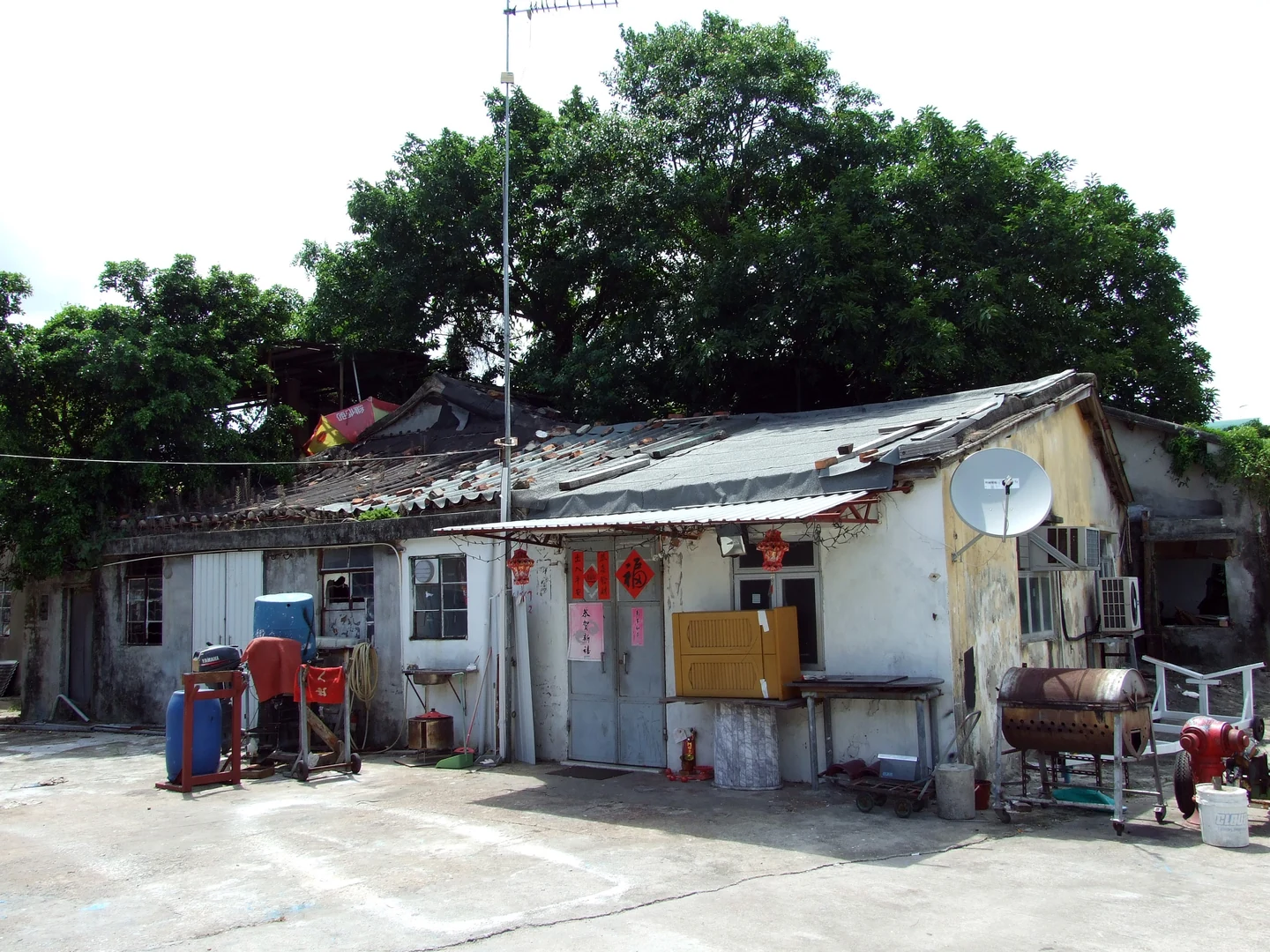
The factory photograph above dates from 2010 and records an earlier exterior, not the appearance of today's installations. The official attraction page does not supply fixed hours sufficient to guarantee access every day. Follow entrance notices and management arrangements on arrival. If it is closed, remain in accessible public streets to view the exterior; do not open a gate, cross a barrier or enter neighbouring private property.
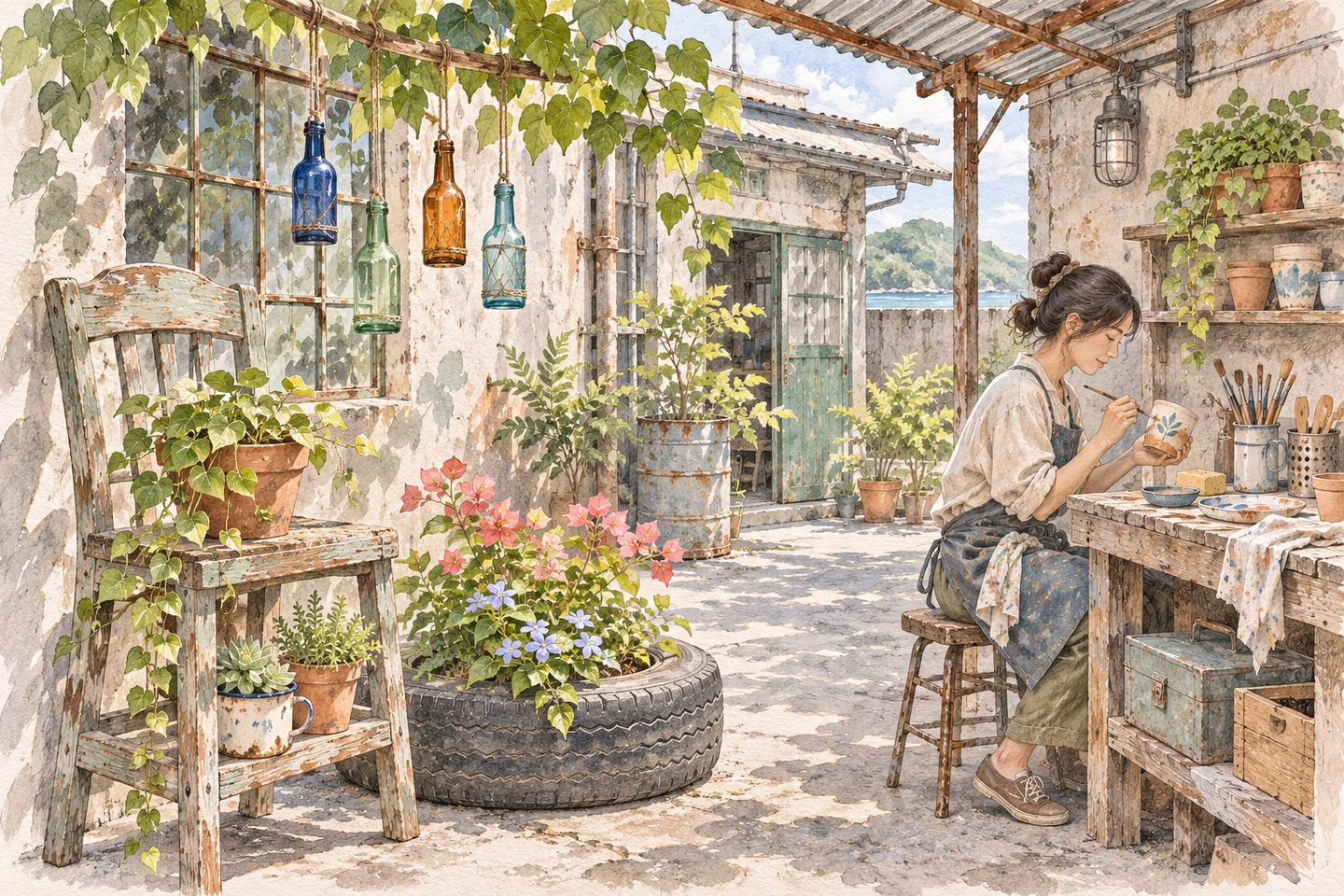
A closure does not break the half day. Spend longer in the village or at lunch, then consider Tung Wan if conditions suit. There is no need to add Finger Hill as compensation and turn a gentle plan into a rushed walk. The reuse illustration suggests a way of looking at materials; it does not promise those exact works, an artist session or a course at the site.
Lunch and the lanes: allow time for a functioning neighbourhood
Back on Wing On Street and nearby streets, choose lunch by what is actually open, the menu, the wait and whether everyone can sit and rest. A compulsory list of famous snacks is less useful than a workable break. Small businesses' rest days and sold-out dishes can change; a media recommendation is not a guarantee of today's service. Recheck your return options before joining a queue so that lunch does not consume all the margin.
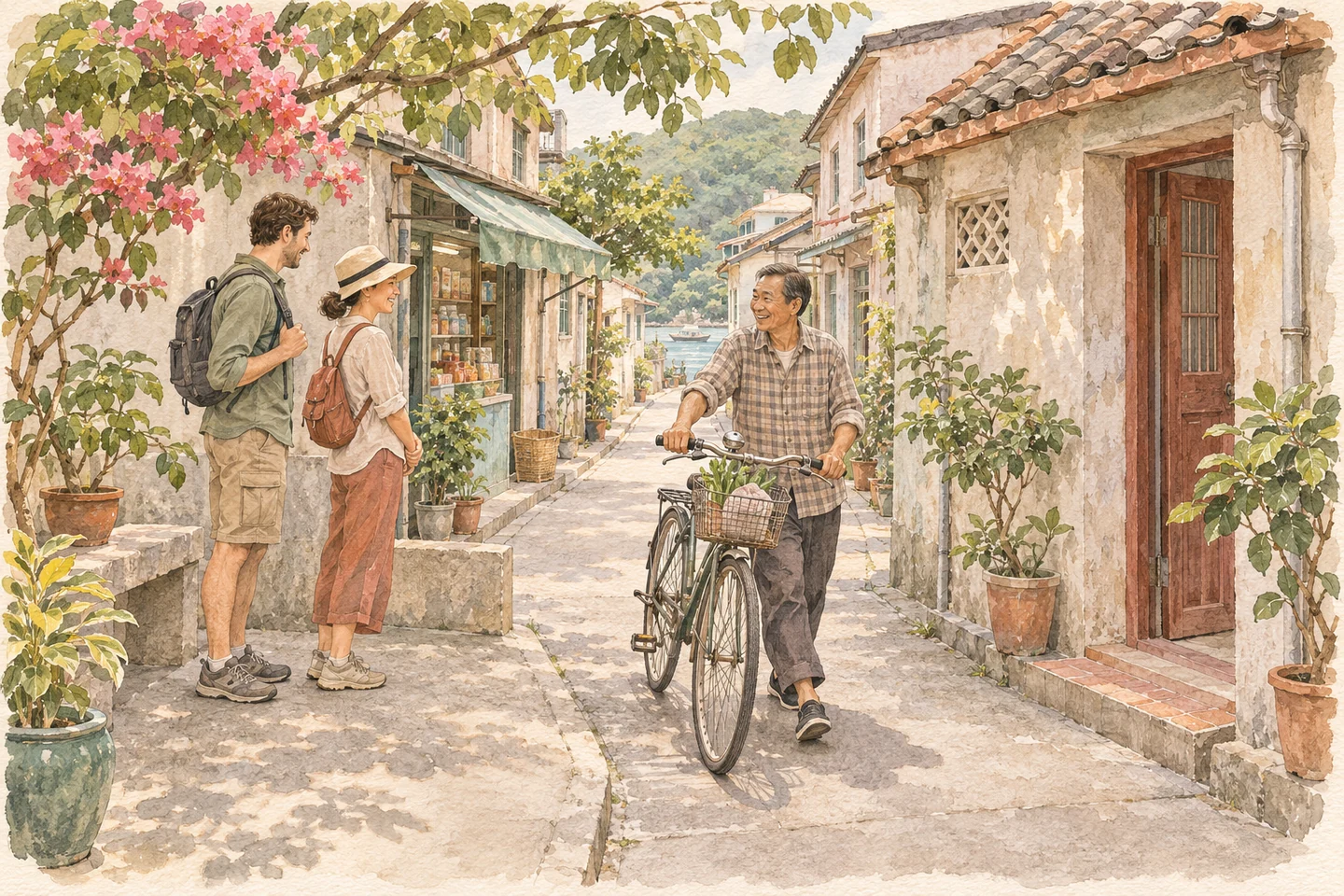
Part of Peng Chau's appeal is that its streets remain everyday living spaces. Sitting with water and watching village life is a valid stop in itself; every stage need not be a paid activity. Slow visiting still means keeping the way clear. Do not block doors or treat private possessions as photographic props, and step aside for residents moving bicycles, trolleys or goods.
Tung Wan is an optional shore walk, not a compulsory finish line
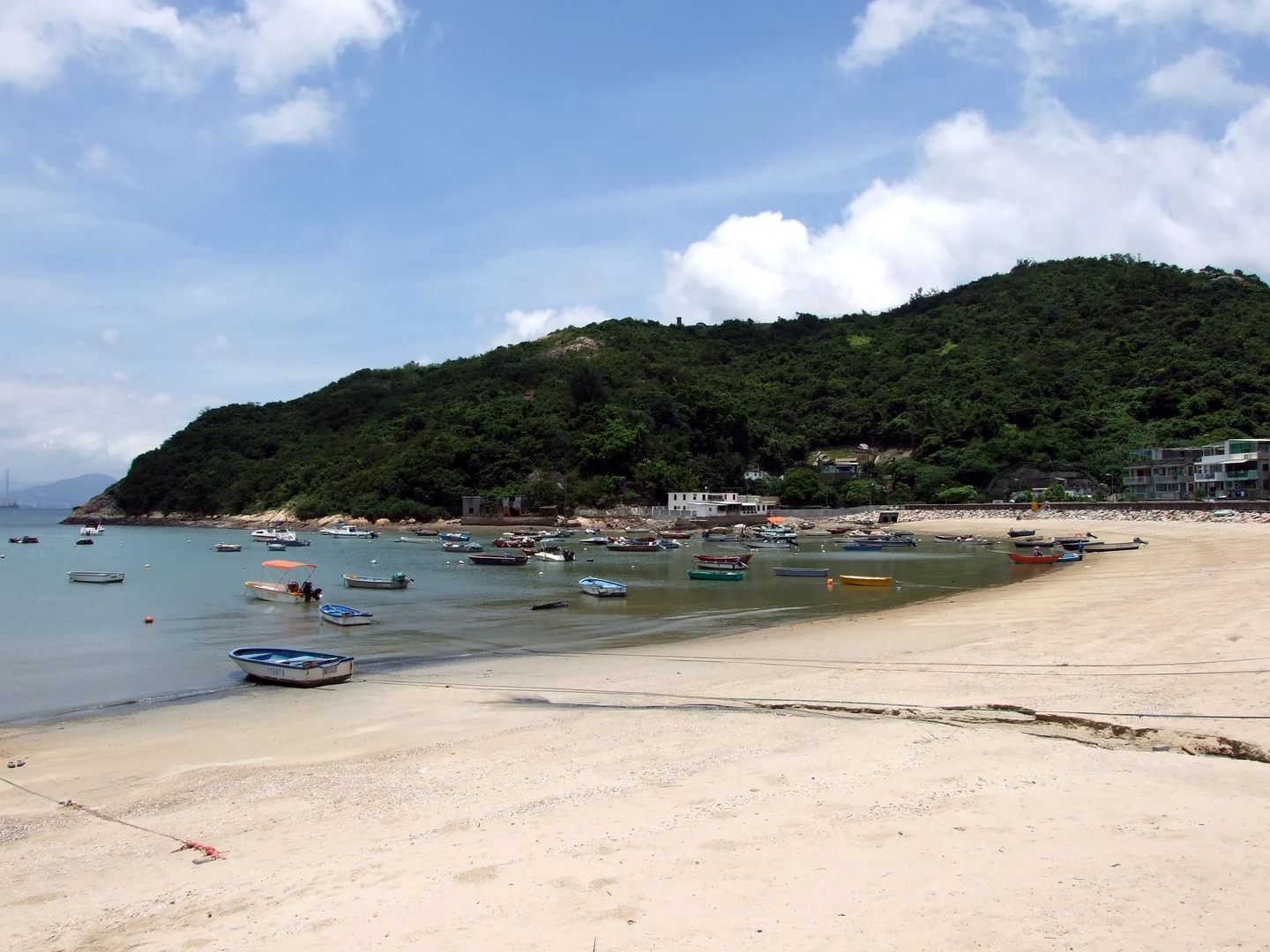
After lunch, if there is energy left and the weather is suitable, follow signs towards Tung Wan around Chi Yan Street. The Islands District Office describes a quiet bay. Here the suggestion is simply to look along the shore, rest briefly and return towards the village—not to add swimming, boating or a climb.
The historical bay photograph introduces the coastal setting. It does not establish today's water quality, tide, waves or lifeguard arrangements. With children, a calm sea in a photograph is no reason to relax supervision near the water. Strong sun, rain, slippery surfaces or tired companions are good reasons to remain in the village and head back to the pier instead.
Return through familiar streets to the same ferry pier. Do not add Finger Hill or extend the coastal walk at the last moment simply to see one more place. A longer exploration deserves a separate full-day plan, rather than time borrowed from the ferry buffer.
Divide four hours, keeping the final part for departure
This flexible budget starts after arriving on the island; it is not a schedule matched to a particular sailing. The stages include short walks but still need adjustment for actual stops and crowds. Head for the pier earlier if you expect a queue or members of the group move more slowly.
| Stage | Suggested time | Adjustment on the day |
|---|---|---|
| Check return options and walk to Tin Hau Temple | About 30 minutes | If entry is unsuitable, view what is visible from public space |
| Leather Factory and nearby lanes | About 60 minutes | Shorten this if closed rather than waiting for an unknown opening |
| Lunch, water and rest | About 60 minutes | Choose another place if a queue consumes the return margin |
| A short Tung Wan visit and return towards the village | About 60 minutes | Omit this whole section in heat, rain or fatigue |
| Return to the pier and waiting margin | About 30 minutes | A planning allowance, not a guarantee of enough boarding time |
If the weather is clearly unsuitable for an outdoor day, consider postponing before boarding. Do not assume every stop has an indoor substitute. Visitors needing accessible travel, or carrying large bags, should confirm boarding and handling arrangements with the operator and consider actual lanes, thresholds and surfaces. Avoiding a hill is not the same as guaranteeing a step-free route or suitability for every wheelchair.
Your pre-journey checklist
- Allow roughly four hours on the island, plus hotel travel and both ferry journeys.
- Check the current Central Pier 6–Peng Chau schedule and save two return options.
- Treat printed times as gate-closing times, rather than arrival targets at the entrance.
- Follow actual access at the Leather Factory; historical photographs do not show current installations.
- Bring water and weather-appropriate shade or rain protection; the bay stop is a walk, not a swimming promise.
- Keep residents' doors clear and confirm permission for temple interiors and people photographs.
- Drop Tung Wan if energy or weather is unsuitable; do not fill the gap with a hill route.
Sources & further reading
This article draws on the media coverage and public information below. Event and transport arrangements can change; check the latest details before travelling.
- Islands District Office: Peng Chau Tin Hau Templeislands.gov.hk (Opens in a new tab)
- Islands District Office: Peng Chau Leather Factoryislands.gov.hk (Opens in a new tab)
- Islands District Office: Tung Wan, Peng Chauislands.gov.hk (Opens in a new tab)
- Home Affairs Department: Peng Chaugohk.gov.hk (Opens in a new tab)
- Hong Kong & Kowloon Ferry: Central–Peng Chau timetable and fareshkkf.com.hk (Opens in a new tab)
- Time Out Hong Kong: Peng Chau guidetimeout.hk (Opens in a new tab)
Make it your journey
For a hotel or airport transfer connecting with Central's piers, share the date, starting point, passenger count and luggage through our contact page. Vehicle transfers, ferries and island walking are separate stages and need separate time allowances. This half day on Peng Chau is mainly completed on foot.