At a Hong Kong crossing, distinguish two decisions: whether to start, and how to continue once you are already in the road. A flashing green pedestrian light is not an invitation to run. If you are still at the kerb, wait for the next cycle; if you have begun crossing, keep walking steadily to the opposite pavement or refuge island. This guide separates signals, zebra crossings and staged crossings for first-time visitors, families and anyone walking with an older companion.
Choose a crossing before choosing a shortcut
A destination on the opposite side of your map does not make the road immediately in front of you a suitable crossing place. Look for a footbridge, subway, signal-controlled crossing or zebra crossing. When travelling with someone who walks slowly, a pushchair or bulky luggage, identify a usable crossing before setting off rather than checking the route in the middle of the road.
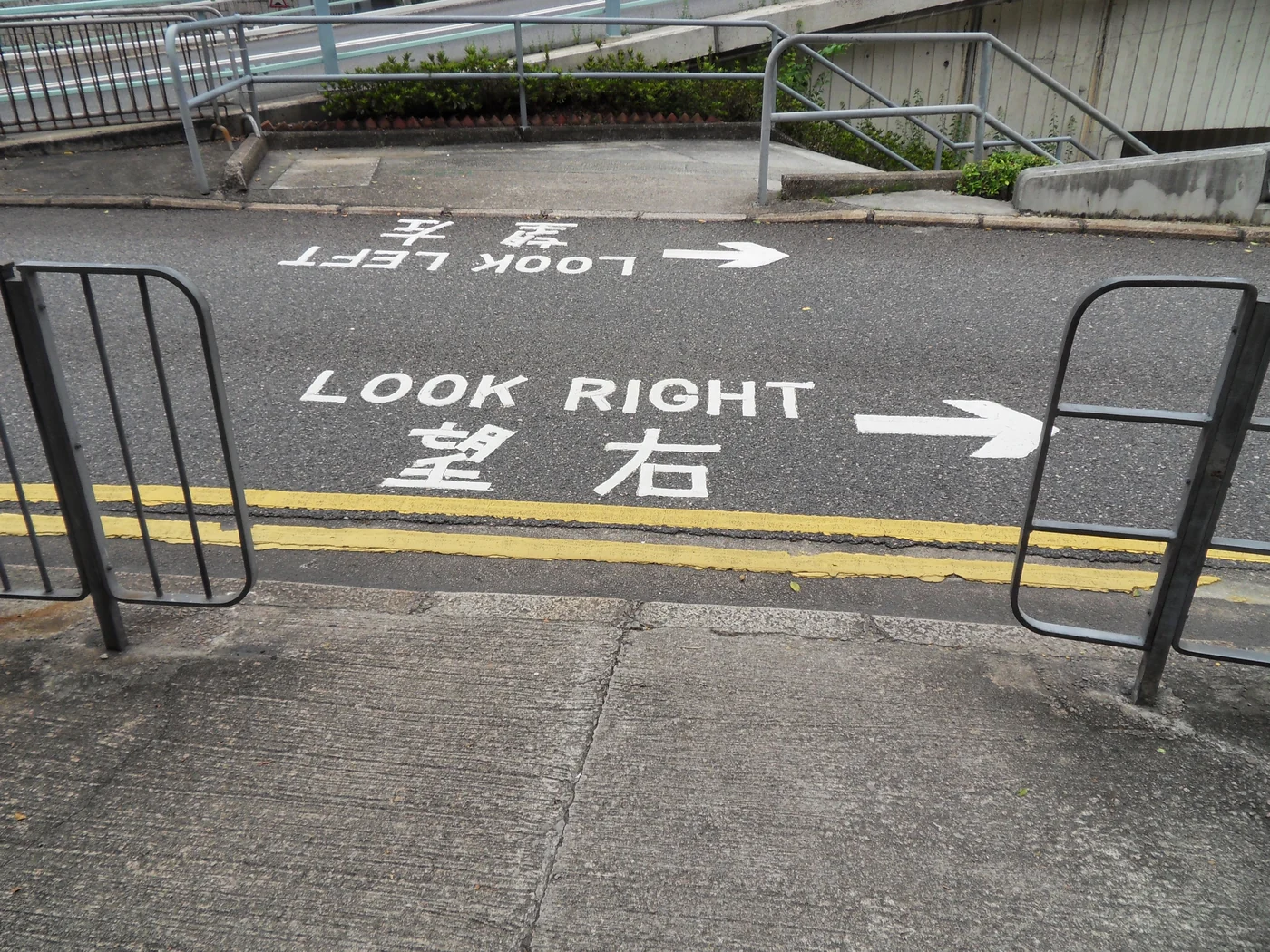
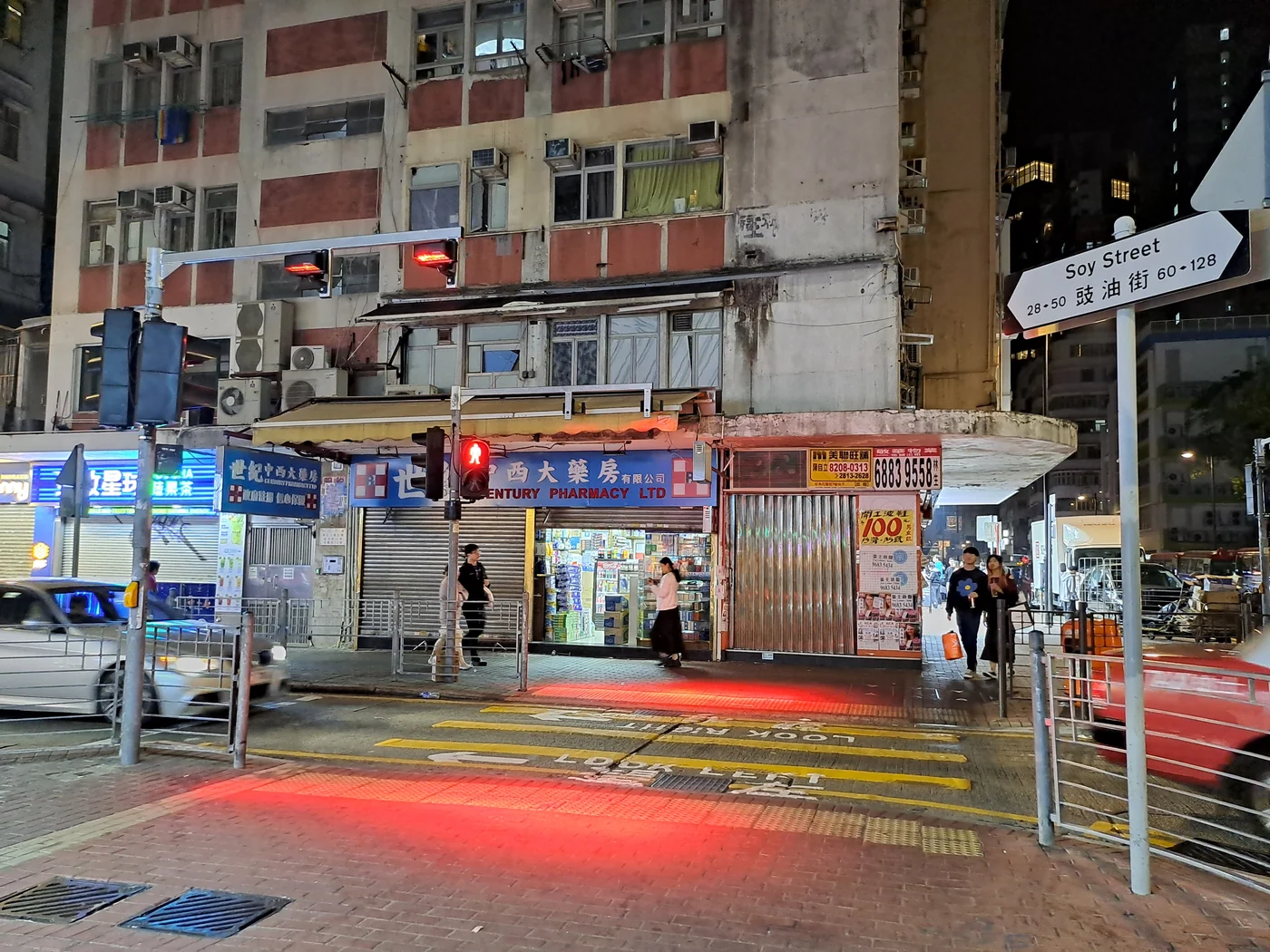
The Transport Department’s Road Crossing Code sets out the sequence: choose a safe place, stand back from the kerb, look and listen for traffic in every direction, then cross straight when safe. Watch for bicycles, motorcycles and quiet vehicles as well as cars. Looking in only one direction is insufficient, and another pedestrian starting is not your signal. Ground markings such as “LOOK LEFT” or “LOOK RIGHT” help orient you at a particular location; they do not replace checking the whole junction.
Red, steady green and flashing green mean different things
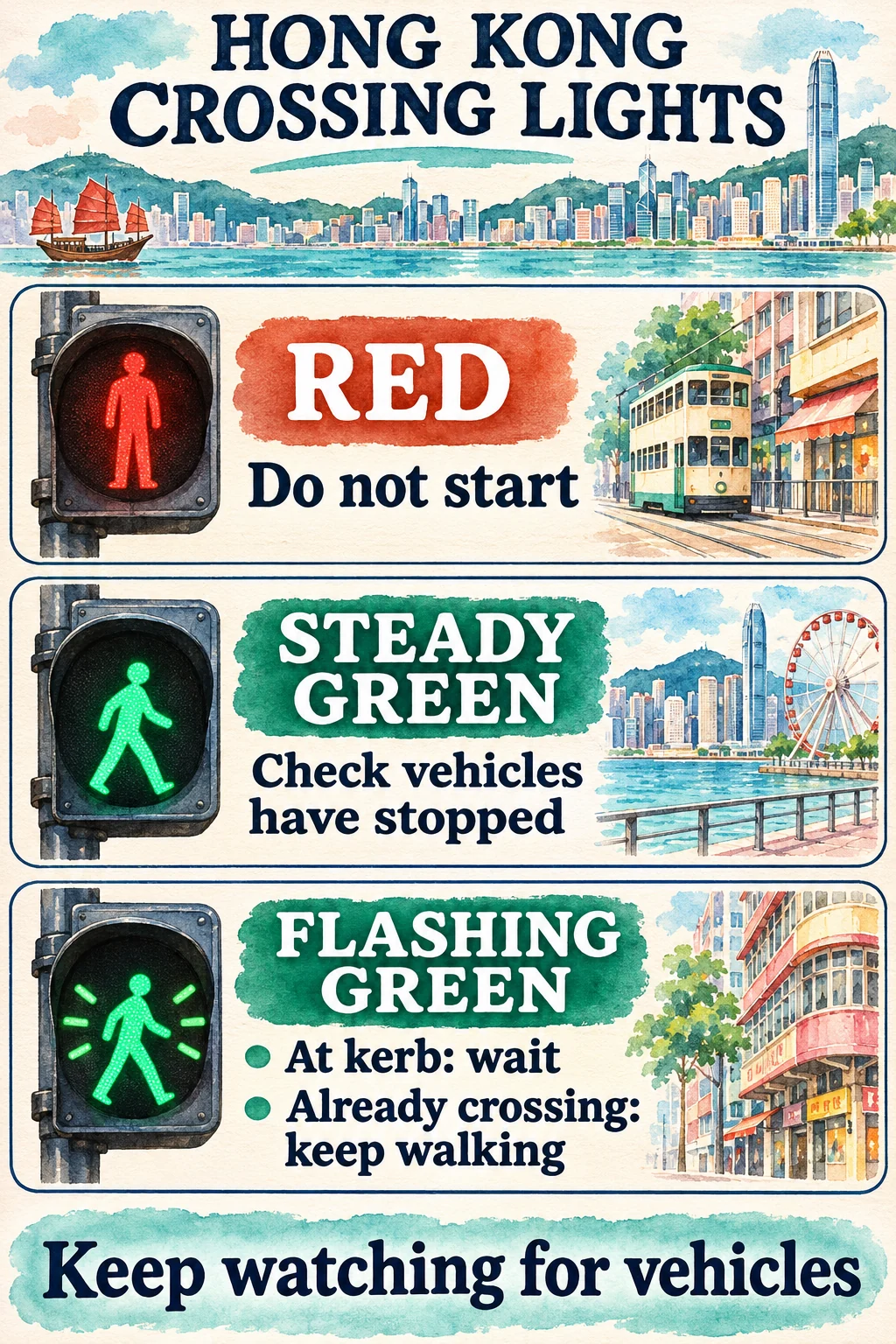
Read the pedestrian light facing your crossing, rather than a green traffic light serving a neighbouring lane. If there is a push button, press it and wait on the pavement. Pressing does not stop vehicles immediately.
| Signal | Before you leave the pavement | If you are already crossing |
|---|---|---|
| Red | Do not start, even if no vehicle is immediately visible | Complete the crossing promptly while watching traffic; do not stop in the road or suddenly run |
| Steady green | Check vehicles have stopped and it is safe before stepping out | Keep watching and continue towards the opposite side |
| Flashing green | Do not start; wait for the next cycle | Walk steadily to the opposite pavement or refuge island |
These distinctions follow the Transport Department’s pedestrian-light guidance. Agree with children before leaving that nobody chases a flashing green light from the kerb. That is easier to follow than making a rushed decision while pulling a child across. If a group separates, those already crossing should not wait in a traffic lane for the last person.
Why look for vehicles when the light is green?
The signal indicates when you may cross if it is safe; it does not establish that every driver has stopped. Turning vehicles, traffic from another direction and views blocked by a stopped vehicle still need your attention. Check before stepping off and continue watching while crossing rather than lowering your eyes to a phone as soon as the signal changes.
Reassess the next section at a refuge island
Some roads have two or more crossing sections separated by an island. Finishing the first section does not authorise continuing straight through the next. If the second section has its own pedestrian signal, check that signal and the traffic from the island before starting. A green light elsewhere does not mean the entire road is available to cross.
Keep the group in a safe waiting area without blocking the path, with pushchairs and luggage inside that area. If it is crowded, waiting for another cycle can be better than hurrying to catch the people ahead. The illustration explains the decision to reassess each stage; it is not a layout or instruction for a particular real junction.

A zebra crossing still requires a traffic check
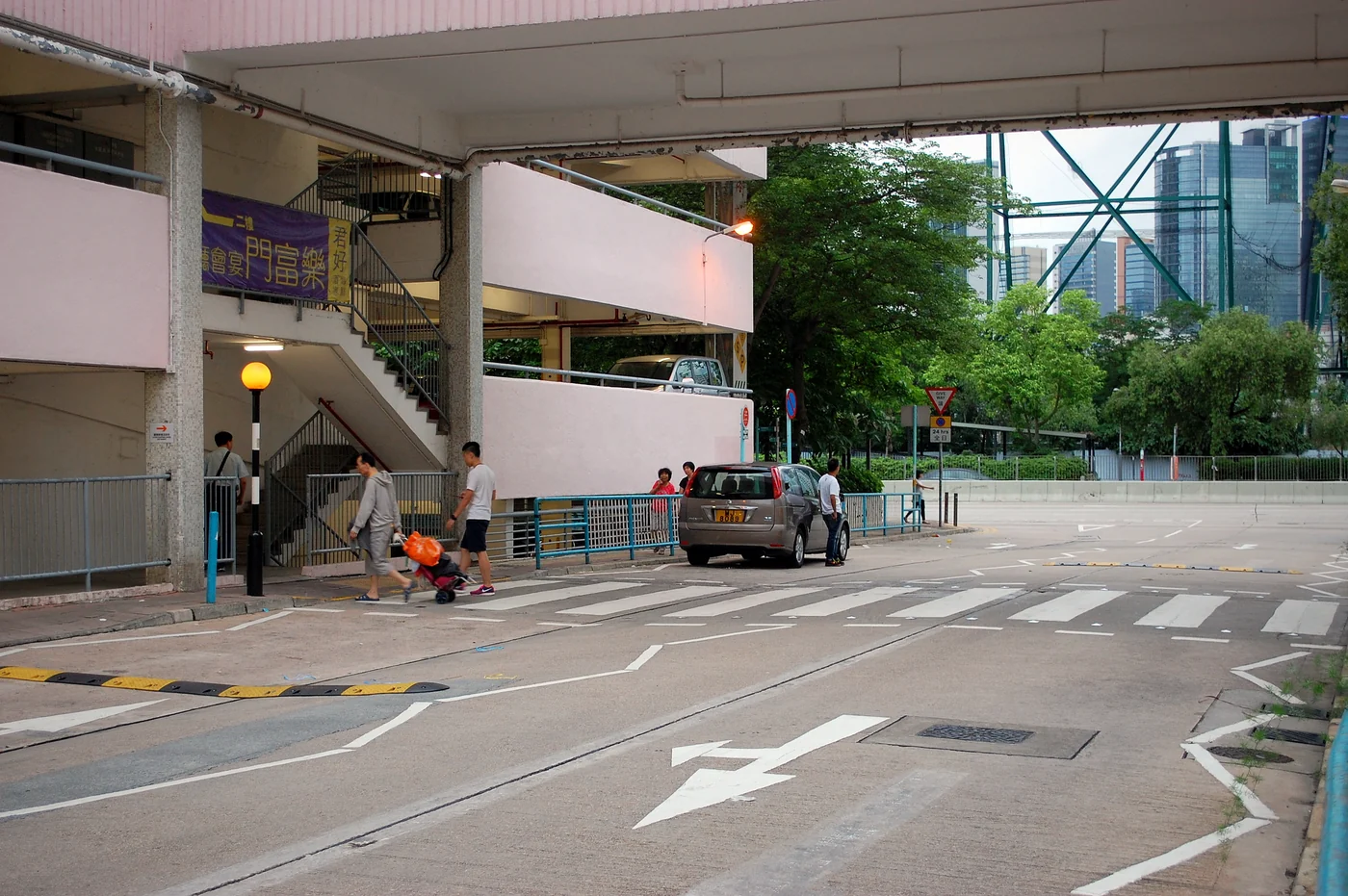
Zebra crossings have black-and-white stripes and may have flashing amber beacons nearby. The Transport Department says drivers must give way to pedestrians on the crossing. As a pedestrian, allow drivers time to see you and check that vehicles have stopped and you can cross safely. Do not emerge suddenly from an obstruction in front of a vehicle.
Use the black-and-white crossing itself, not the zigzag markings on its approaches. Look for vehicles approaching behind one that has stopped; seeing the nearest car wait does not establish that every lane is clear. Where a refuge island divides a zebra crossing, the Department treats each half as a separate crossing: stop on the island and check the traffic for the other half again. Official zebra-crossing guidance
Do not confuse crossing markings with a yellow box
A signal-controlled pedestrian crossing may have yellow transverse stripes between two rows of studs. Some junctions have white cross-hatched pedestrian crossing areas. A yellow box junction is not a pedestrian crossing. Road markings that look like a grid are not permission to take a diagonal shortcut through them.
Where a junction has no pedestrian signal, a green light for vehicles is not your invitation to cross. The Transport Department’s traffic-light-junction guidance says to wait until relevant traffic faces red and stops, while still checking turning vehicles and traffic from other directions. If the layout is unfamiliar, finding a clearly identifiable crossing is more dependable than guessing which traffic stream will stop.
In rain, after an event or at pickup, check your phone from a safe place
Wet roads can increase the distance vehicles need to stop, and umbrellas can obstruct your view. Adjust the umbrella, put away your phone and remove headphones that prevent you hearing traffic before checking all directions. Cross straight, without suddenly running. Do not work across a road one lane at a time by waiting in traffic lanes where there is no refuge island.
For a pickup, establish which side the vehicle is on from a safe pedestrian area, then use the crossing facilities. A waiting driver, a car opposite you or a recently finished show does not change the pedestrian signal. If you miss a cycle, let your companions and driver know you need a little longer; running is a poor way to recover a transfer schedule.
Your pre-journey checklist
- Identify the crossing and the pedestrian light that faces your route.
- Do not start from the kerb on red or flashing green.
- If already crossing when green flashes, walk steadily to the opposite pavement or island.
- Check again at the next stage, an island or the second half of a zebra crossing.
- Look in all directions, put the phone away and make your own assessment.
Sources & further reading
This article draws on the media coverage and public information below. Event and transport arrangements can change; check the latest details before travelling.
- Transport Department: pedestrian lightstd.gov.hk (Opens in a new tab)
- Transport Department: the Road Crossing Codetd.gov.hk (Opens in a new tab)
- Transport Department: traffic-light junctionstd.gov.hk (Opens in a new tab)
- Transport Department: using zebra crossingstd.gov.hk (Opens in a new tab)
- HK01: March 2026 pedestrian rules and enforcement report (historical background)hk01.com (Opens in a new tab)
Make it your journey
Plan walking and vehicle journeys separately. For hotel, airport or cross-border transfers, contact our team with your group size and pickup points. Allow time to walk to the vehicle and wait for signals, using proper crossing facilities throughout.