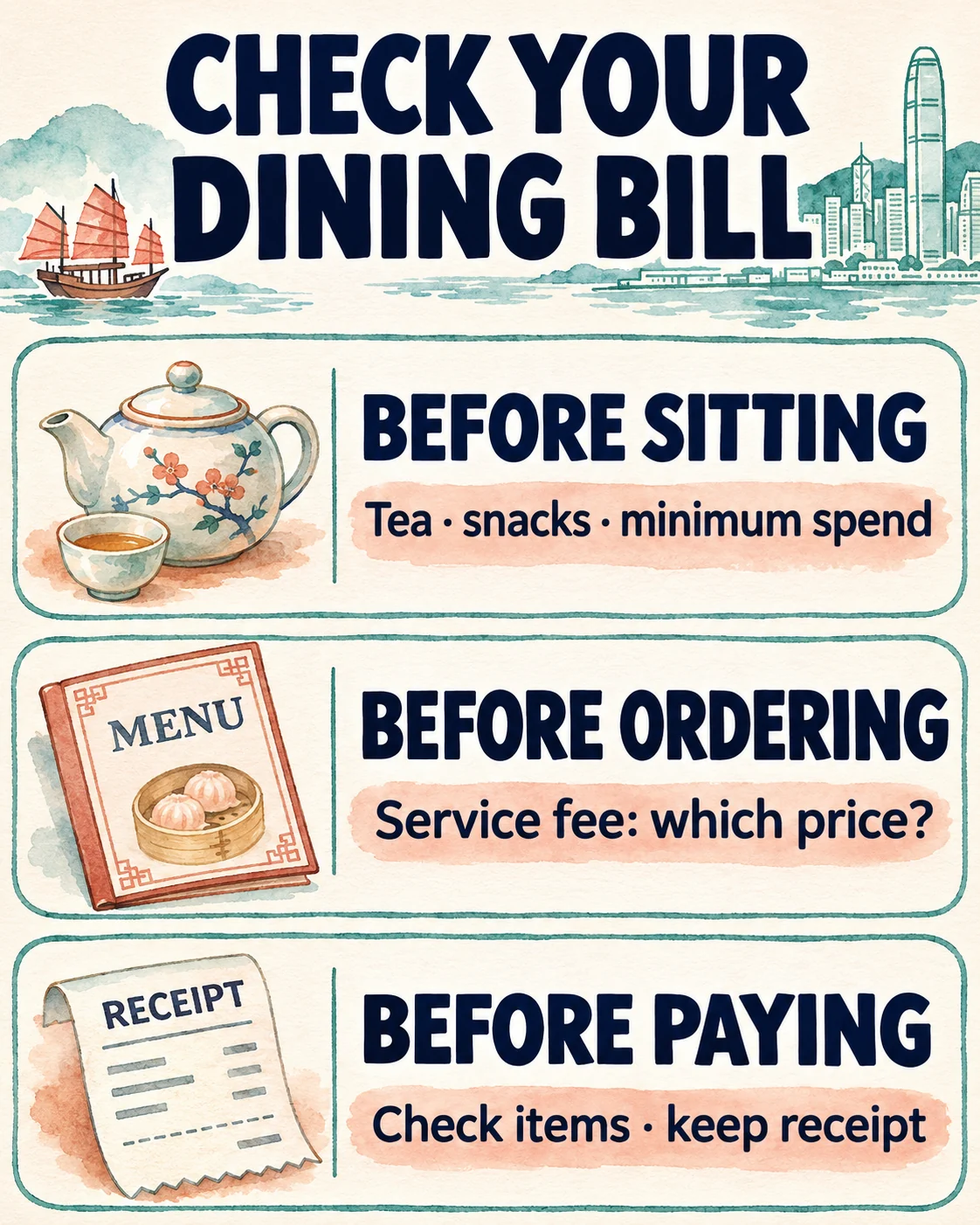
Before ordering in a Hong Kong restaurant, establish tea charges, snacks, minimum spending and the amount used to calculate service charges. A menu price, the subtotal on your phone and the final bill can include different things. Ordering through a QR code does not automatically remove a disclosed service charge. Ask about arrangements before sitting down, check prices before ordering, then review the itemised bill before paying.
Agree how the table is charged before sitting down
A reasonably priced dim sum menu can make a meal look easy to budget: choose several dishes and add their prices. But the tea already on the table, a small plate of peanuts or tea charges for individual diners may be separate. This does not mean every restaurant imposes all these charges. It means checking the actual branch, dining period and offer you intend to use.
The Consumer Council’s guidance on electronic ordering recommends checking minimum spending, dining time limits and table-sharing arrangements before deciding to patronise a restaurant. Two people stopping briefly and a family taking a slower lunch may need different arrangements. If a minimum is per person, ask whether children count; if it is per table, ask what purchases count towards it. A reference to “tea charge” alone does not explain the whole bill.
A useful opening question is: “There are [number] of us, including [number] children. How do tea, snacks, minimum spending and service charges work at this time?” Ask staff to point out the corresponding menu terms or notice. Clarify an unclear answer before placing the order. If a disclosed charge does not suit you, you can choose another venue before consuming anything.
Tea, condiments and snacks have no single citywide price list
The term cha gaai (茶芥) may relate to tea and accompanying supplies; establish what the particular restaurant includes. Do not assume hot water is always free, not drinking tea always removes a tea charge, or snacks placed on the table are necessarily complimentary. HK01’s 2023 report about pricing disputes included a disagreement about charging for hot water. That is a historical case, not a survey of present-day restaurant prices.
The Council advises reading menus and notices, or asking whether additional items are compulsory. If a snack is optional and you do not want it, tell staff before eating it, have it taken away and confirm its cancellation from the order. Eating it first does not establish an automatic right to have the charge removed later. Where a fixed charge has been clearly disclosed, decide whether you accept it before consuming.
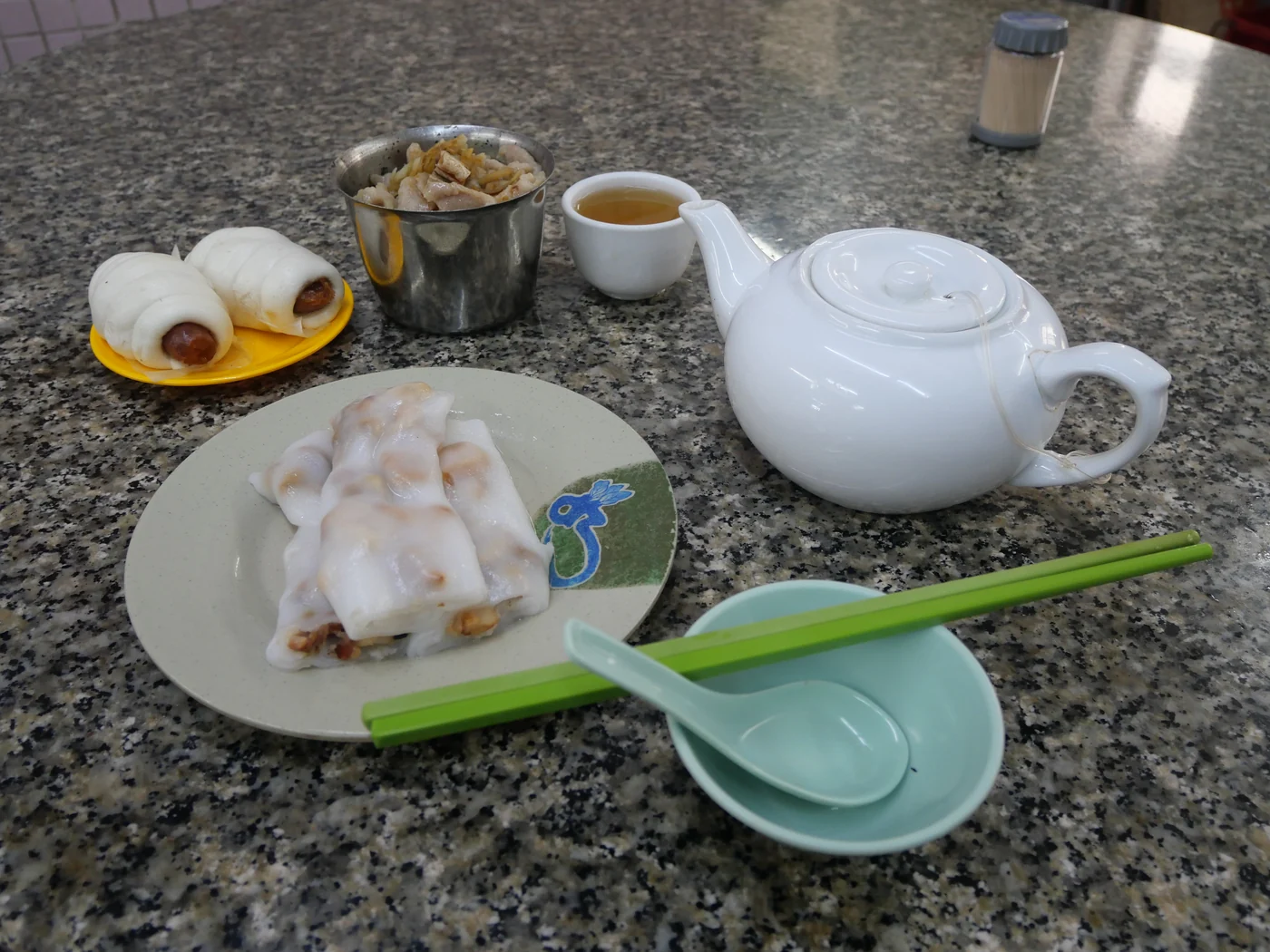
The yum cha photograph illustrates teapots, dishes and tableware, rather than proving that every pictured item is included in any set menu. Check the effect of increasing portions, adding diners or ordering extra drinks too. The Council’s explanation of restaurant terminology warns that a “larger portion” need not mean twice the food. Adding two diners to a set meal may involve extra food, service charges and tea charges separately.
With a 10% service charge, ask what the 10% applies to
In restaurant pricing, gaa yat (加一) usually means a 10% service charge. The practical questions are which items it covers, and whether it is calculated on the original or discounted price. A discount on the food does not necessarily discount the service charge by the same proportion. Ask separately whether tea charges enter the calculation; another restaurant’s practice does not establish this one’s.
Here is an arithmetic illustration, not a restaurant quotation. A set menu originally costs HK$400 and is discounted to HK$320. For this example only, leave tea and all other charges aside.
| Disclosed calculation | Illustrative service charge | Illustrative total |
|---|---|---|
| 10% of the discounted price | HK$320 × 10% = HK$32 | HK$352 |
| 10% of the original price, with the set still sold at the discounted price | HK$400 × 10% = HK$40 | HK$360 |
The difference is the calculation base. Seeing “20% off” alone does not establish that the final total must be HK$352. The Council’s guidance on offers and settlement says it should be clearly stated when service charges on an offer use the original price. Add separately any tea, snacks or corkage, checking whether each also attracts a service charge.
Scanning a code, preparing your own tea or paying at a counter does not automatically cancel a clearly disclosed service charge. The Council explains that services can cover the whole dining experience. Ask beforehand whether a charge can be waived; doing your own ordering is not itself a waiver. A service charge already on the bill and a further voluntary tip are also separate matters.
Match the digital menu, voucher and paper menu to this order
When ordering by phone, confirm the table and branch, then check dish names, portions, quantities, drink options or extra ingredients, unit prices and fee notices. A subtotal may cover only the selected dishes. If paper and electronic prices differ, ask which price applies to this order before submitting it. Save the menu and order screens with the time and branch details where useful.
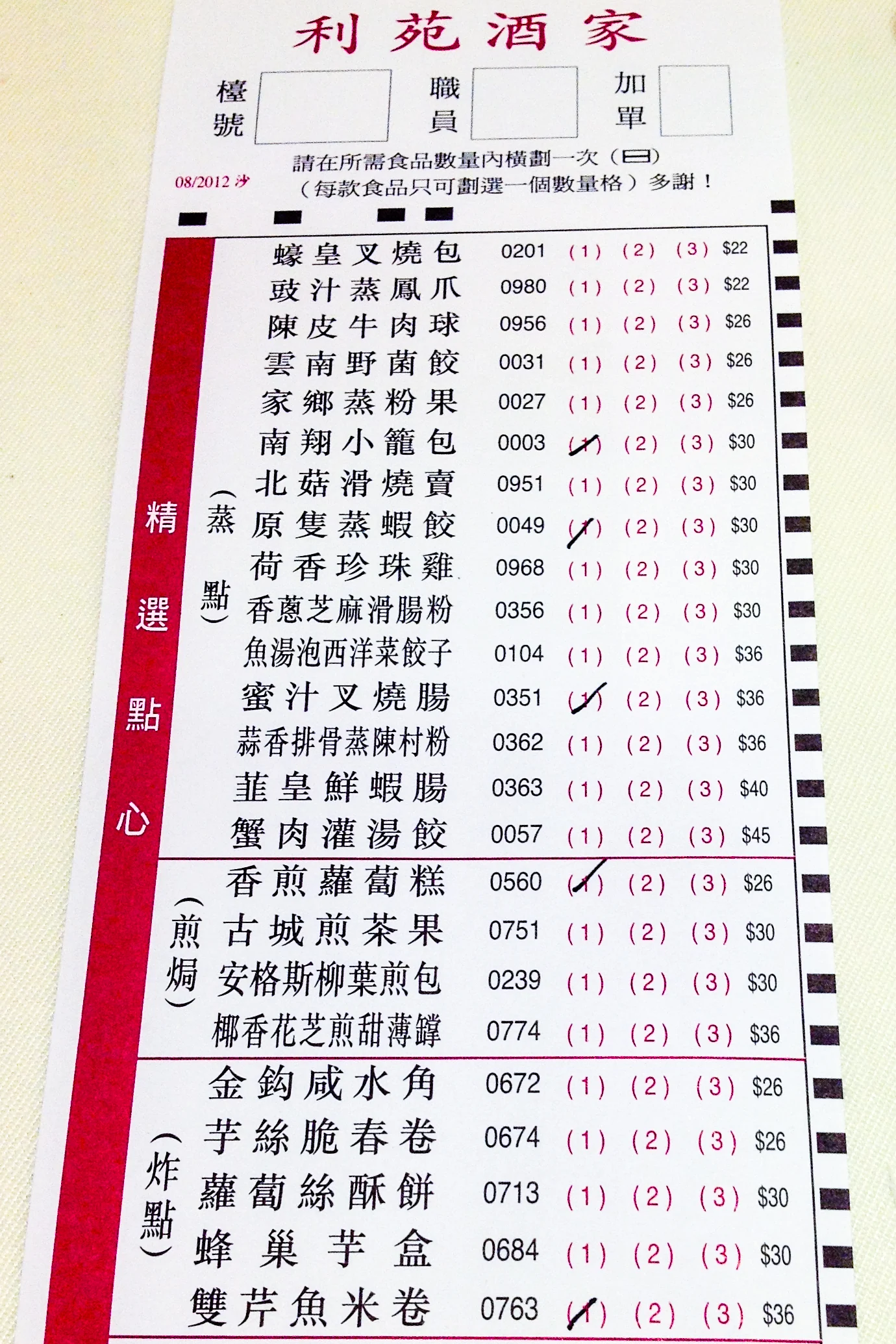
Check voucher dates, time slots, participating branches, reservation requirements, designated payment methods, whether offers can be combined, and cancellation or amendment restrictions. The Council also highlights risks in prepaid dining vouchers, including a restaurant closing. Before paying a large amount for a meal on an uncertain itinerary, establish that you can actually attend during the eligible period instead of comparing discount percentages alone.
For groups ordering on several phones, nominate someone to confirm the final selection so the same dish is not submitted twice. Adding a diner, changing a set or cancelling an item should be reflected in the order. If a confirmation does not arrive or the connection fails, ask staff to check rather than repeatedly submitting because your screen appears unchanged.
Mention cakes, extra diners and timing when booking
If bringing a birthday cake or wine, ask whether it is permitted and whether cake-cutting, corkage or storage charges apply. A restaurant welcoming celebrations does not establish that every associated service is free. If someone arrives late or the party shrinks, clarify whether set portions and minimum spending remain based on the original group size.
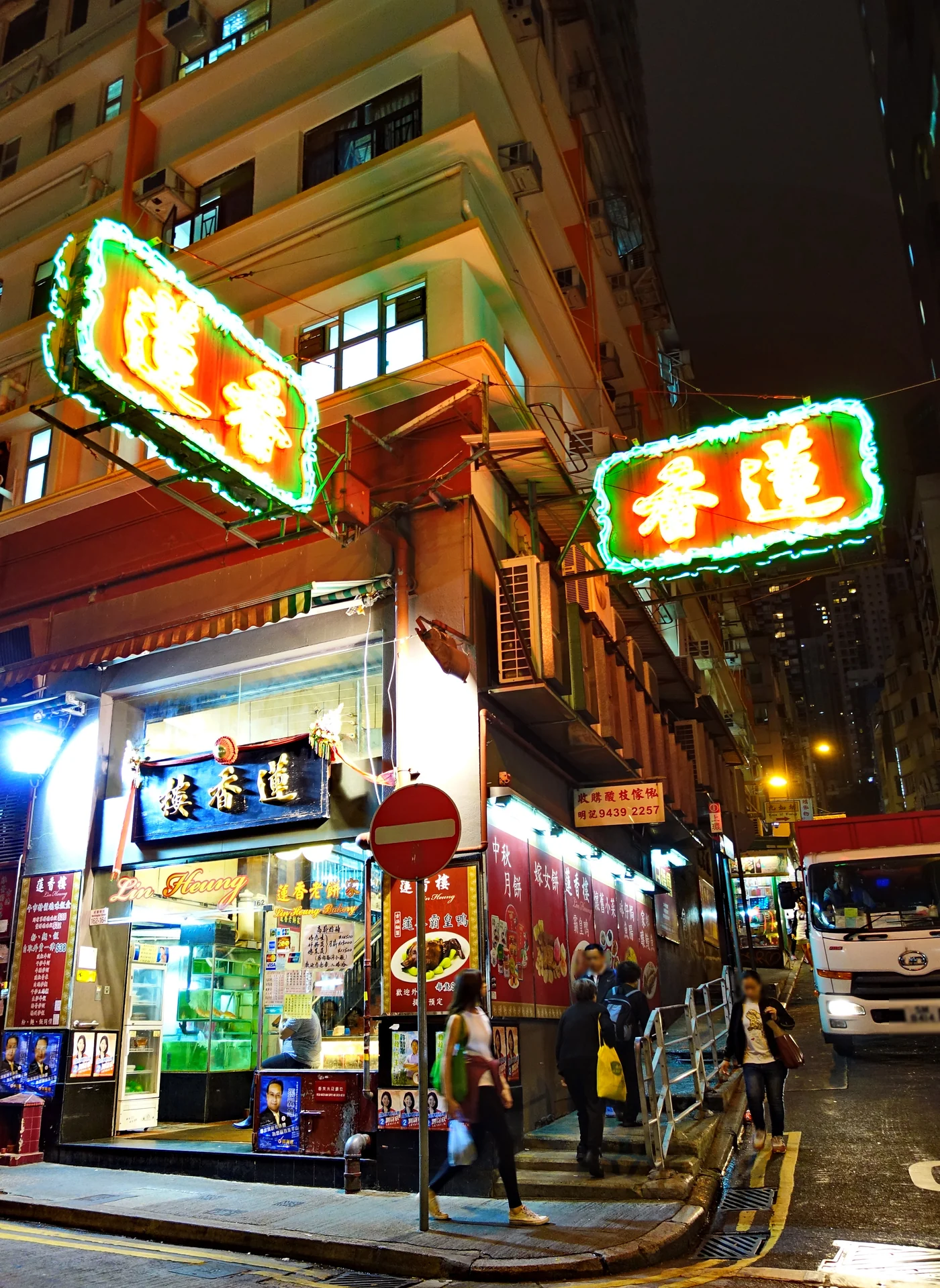
The historical restaurant exterior is background material, not a recommendation or evidence of current prices or opening arrangements. Save the actual branch address, confirmed time and dining restrictions instead of relying on an old shop photograph. If you have a ferry, performance or pickup afterwards, allow time to check the bill; do not leave settlement until the moment you must depart.
Check individual items before paying
Start with the table, number of diners and ordered or cancelled dishes. Then check tea, snacks, other extras, discounts, the service-charge base and the final total. Split bills, altered set menus and additional diners may need an explanation from staff. Ask something specific: “Which ordered item does this charge cover?” or “Which subtotal was used for service?” That gives staff a clearer question than a general complaint that the meal is expensive.

Do not treat rounding as an automatic rule applying to every restaurant. The Council’s settlement guidance says rounding arrangements should be disclosed beforehand. Where the amount differs from the stated price, ask staff to show the arrangement and explain the calculation. This article does not adjudicate individual payment disputes.
Once checked, keep the itemised receipt and payment record. If a discrepancy cannot be resolved, record the branch, time, disputed item and discussion before contacting the Consumer Council; a card-debit screenshot alone may not explain what happened. The consumer-dispute guide explains evidence and help channels in more detail. A bill query does not require making an unverified allegation against a business.
Your pre-journey checklist
- Confirm diners, tea, snacks, minimum spending and dining limits before sitting down.
- Ask whether service uses original or discounted prices, and which items are included.
- Do not assume QR ordering, self-service or hot water automatically means no charge.
- Keep voucher, menu and order information; check that amendments are recorded.
- Review items, discounts, service and total before paying, then retain the receipt.
Sources & further reading
This article draws on the media coverage and public information below. Event and transport arrangements can change; check the latest details before travelling.
- Consumer Council: digital ordering, tea and extra chargesconsumer.org.hk (Opens in a new tab)
- Consumer Council: offers, service-charge bases and settlementconsumer.org.hk (Opens in a new tab)
- Consumer Council: portions, restaurant terms and set-menu extrasconsumer.org.hk (Opens in a new tab)
- HK01: 2023 digital-menu and tea-charge disputeshk01.com (Opens in a new tab)
Make it your journey
Add the actual restaurant address and meal time to your Hong Kong itinerary before arranging transport. When requesting a transfer quotation , mention the time you want to reserve for dining. Confirm restaurant charges and booking terms directly with the venue.