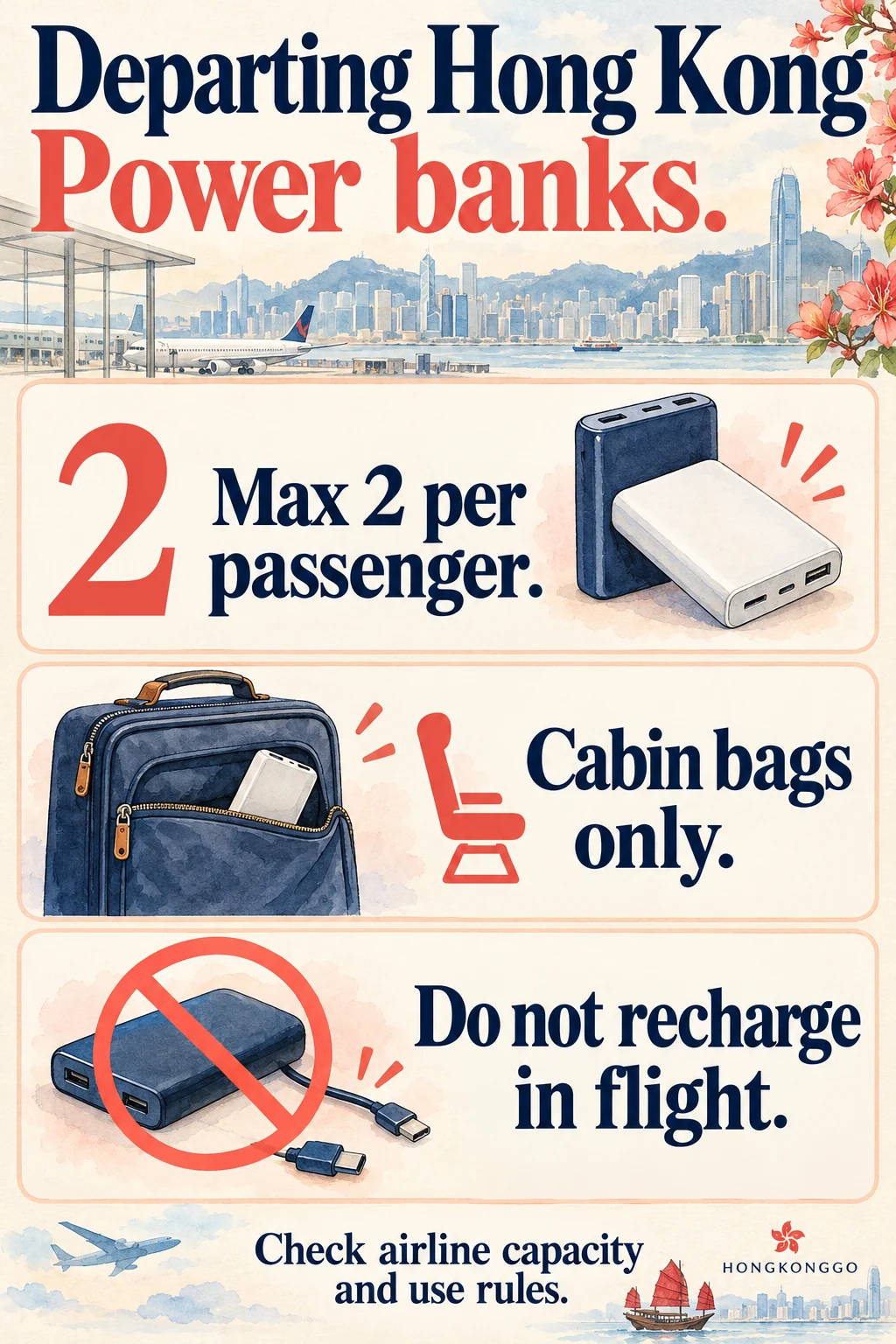
When departing Hong Kong International Airport, each passenger may carry at most two power banks. Keep them in cabin baggage, never checked baggage, and do not recharge them during flight. Your operating airline may impose further capacity, use and storage rules, so check those before packing.
Start with the Hong Kong rules, then check your airline
The Civil Aviation Department announcement of 28 March 2026 applies the two-power-bank limit and prohibition on recharging power banks in flight to all passengers departing HKIA. These are established rules, checked for this guide on 23 October 2026; they are not a newly announced October policy.
HKIA security guidance also says spare lithium batteries and power banks must not go in checked baggage. Permission to carry an item, permission to use it and the place where it must be stored are separate questions. Meeting the quantity limit does not mean you can leave a power bank connected to your phone throughout the flight.
Two power banks does not mean twenty spare batteries
Lay out the power banks from everyone's daypacks, camera bags and backup kits, then count them per passenger. HK Express lists both a maximum of 20 spare batteries and a maximum of two power banks. The latter is the separate power-bank ceiling; the general spare-battery number is not permission to take twenty power banks.
Do not combine batteries installed in phones or laptops with standalone power banks as one category. Camera spares, removable smart-luggage batteries and larger batteries need their applicable rules checked individually. Medical and mobility equipment has separate arrangements and should not be assessed using an ordinary holiday-electronics list.
Look for the Wh rating, not a claim about charging cycles
Find the watt-hour (Wh) rating on the product and in its manufacturer information, then read the operating airline's power-bank conditions. The HK Express controlled-items table specifies a rating not exceeding 100Wh for ordinary spare lithium-ion batteries, including power banks. Cathay's power-bank guidance points travellers to its small-lithium-battery conditions.
Do not assume that a separate 100–160Wh section for devices or other spare batteries also permits a large power bank. If the marking is unclear, the rating sits on a boundary or the product category is uncertain, send the airline the model, label photograph and flight details before departure. Keep its reply. Do not leave an unresolved product question until security screening.
| Check | Why it matters |
|---|---|
| Model, Wh rating and readable product label | The airline needs the actual specification, not a marketing capacity claim |
| Operating airline | A codeshare ticket seller may not set the onboard rules |
| Departure point for every flight | Return and connecting airports may have additional conditions |
| Damage or a safety recall | An acceptable quantity and rating do not cancel a battery defect |
Protect each item before putting it in your personal bag
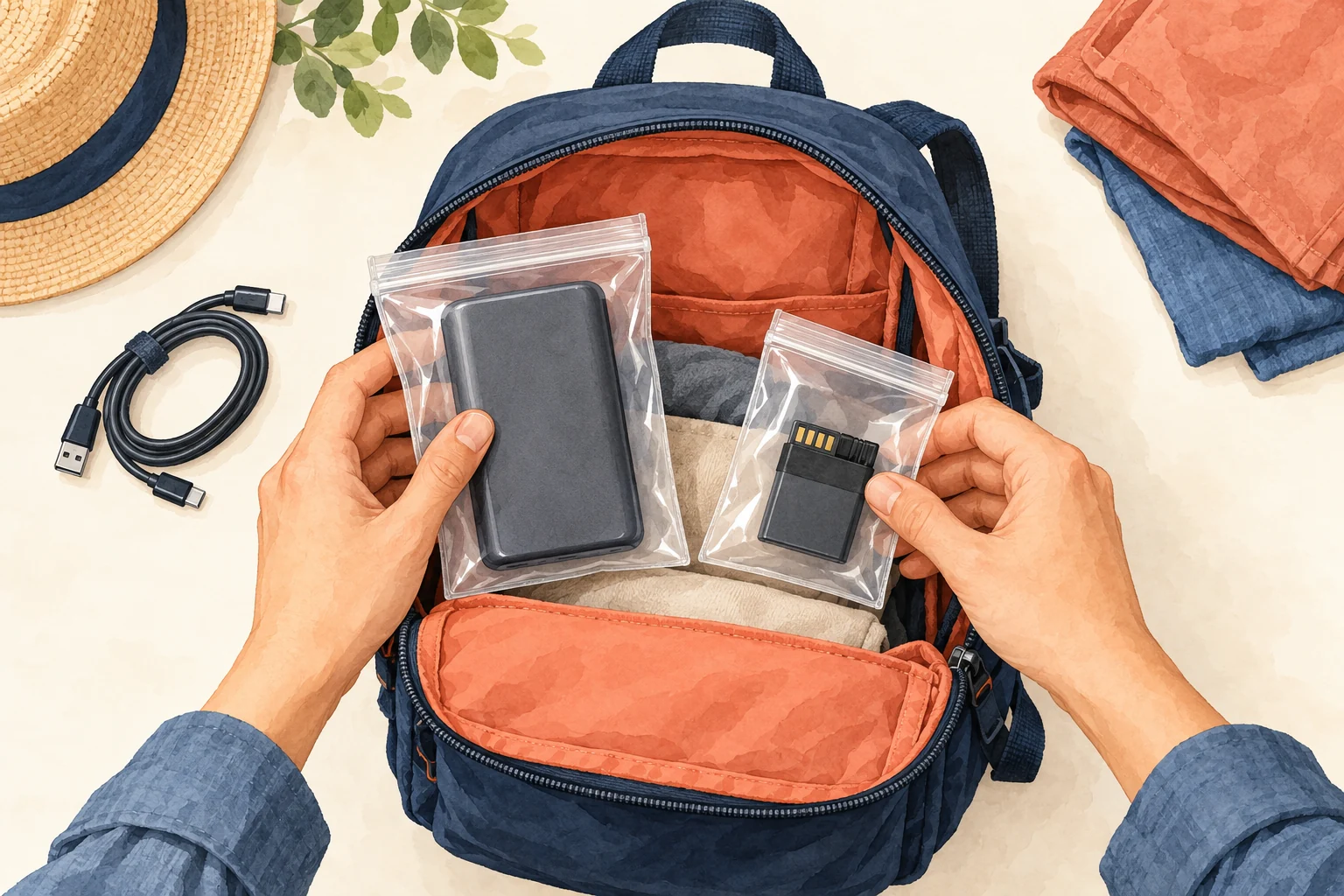
Cathay's lithium-battery rules describe short-circuit protection using original retail packaging or other terminal insulation, such as covering exposed terminals or placing each battery in a separate plastic bag or protective pouch. HK Express also requires individual protection. The purpose is to avoid contact with metal and accidental short circuits; loose batteries sharing one large bag are not individually protected.
Pack the protected power banks in a small personal bag that you can access easily when boarding or changing a bag to checked baggage. A homemade “airline approved” sticker does not replace genuine product specifications or an airline's assessment.
In the cabin: under-seat storage is not permission to charge
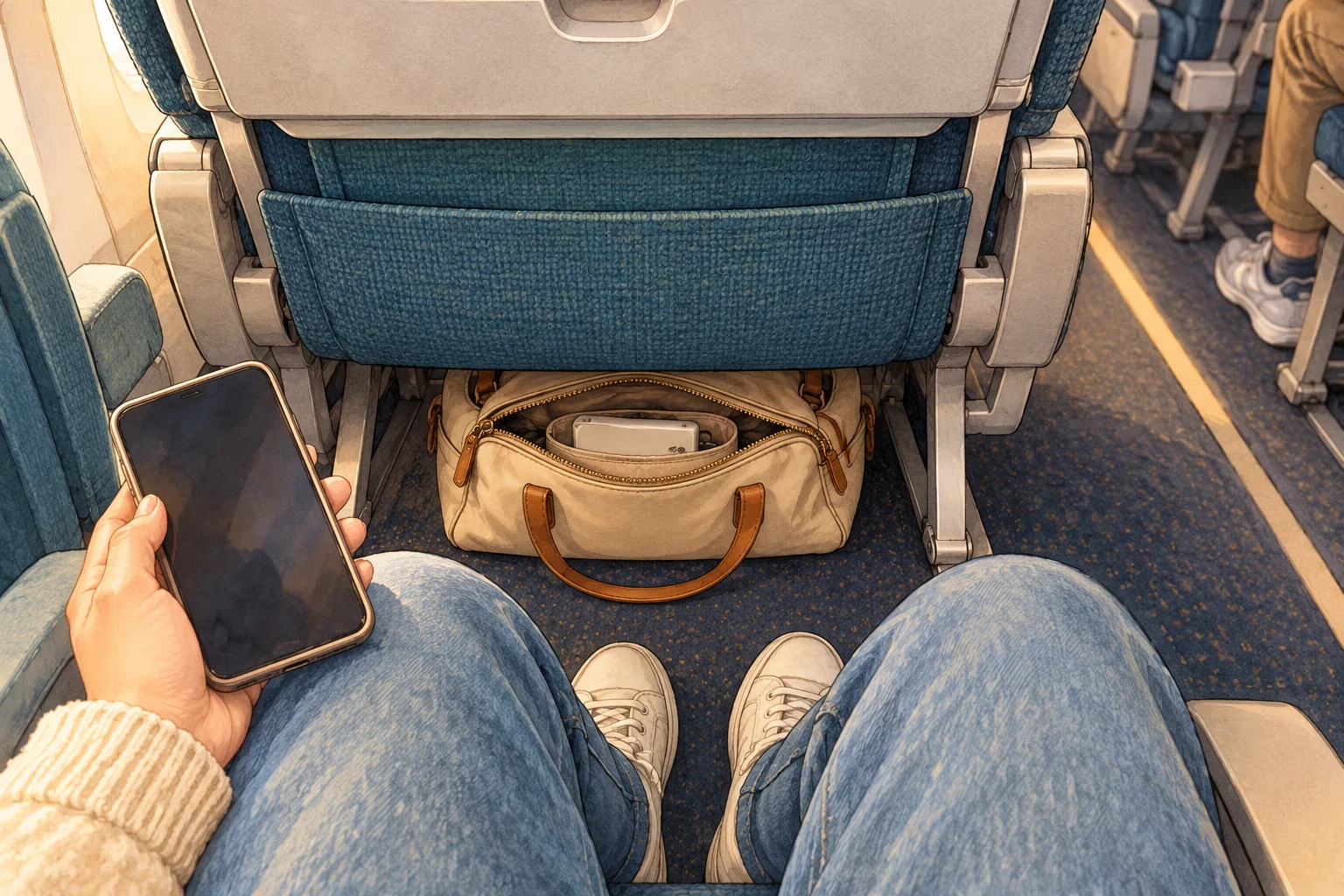
At the time checked, Cathay and HK Express prohibit using power banks to power other devices, recharging power banks onboard and storing them in overhead lockers. Cathay requires them in cabin baggage under the seat in front. HK Express specifies under-seat baggage or a designated location such as a seat-back pocket. Follow the crew's storage instructions for your particular seat, especially where normal under-seat space is unavailable.
Charge your phone before leaving and save boarding and transfer information for offline use. Availability and use of seat power depend on the aircraft and crew instructions; a USB socket does not make recharging a power bank permissible. If a device falls into the seat mechanism, Cathay advises leaving the seat unmoved and asking the crew for help.
If a cabin bag is gate-checked, remove the batteries first
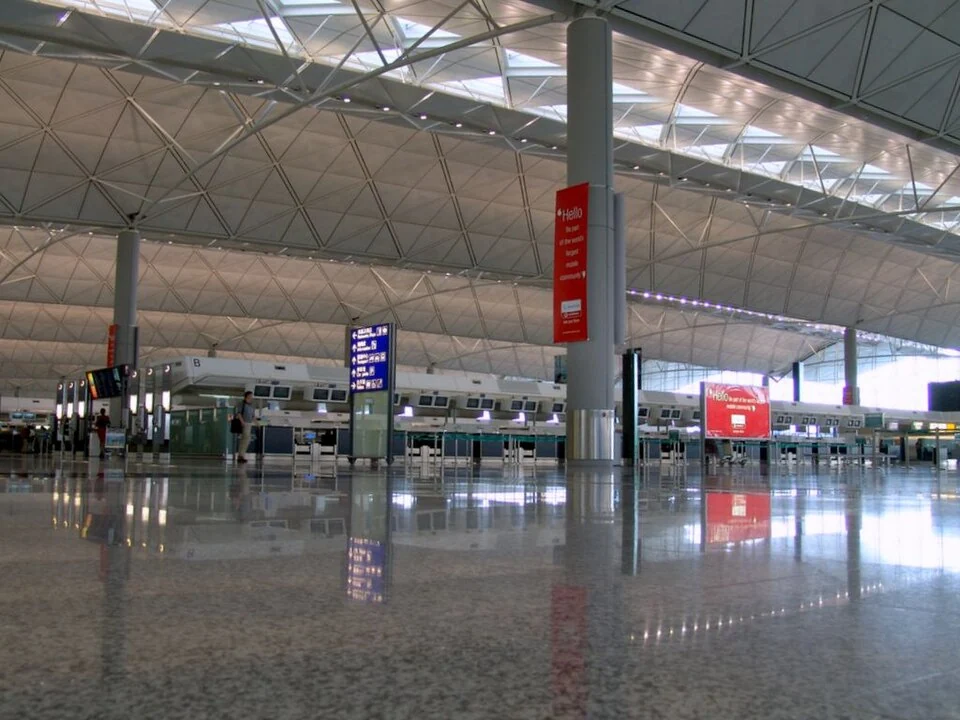
A suitcase originally packed as cabin baggage may still have to be checked at the gate. Before handing it over, remove power banks and loose spare lithium batteries and keep them in permitted cabin items. Having passed security does not allow those batteries to travel in the hold.
At home, each traveller can practise a quick check: open the case, locate the battery pouch and move it to the personal bag. This also catches batteries left in laptop-bag compartments, camera cases or a suitcase's removable power unit, rather than forcing a hurried search during boarding.
Swollen, damaged or recalled equipment is not a travel spare
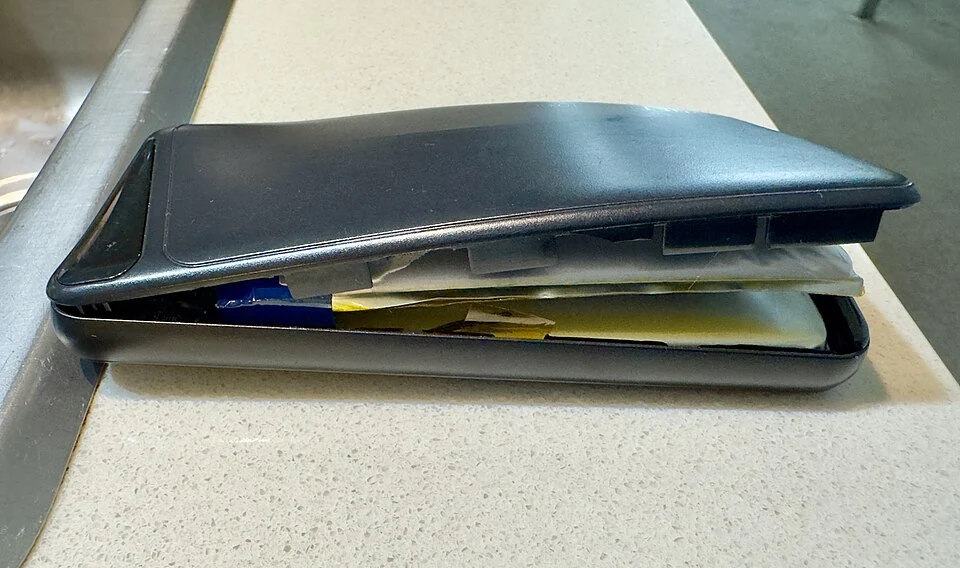
The CAD packing guidance warns passengers not to transport damaged, identified defective or safety-recalled lithium batteries or devices containing them because of their potential fire risk. A swollen or visibly damaged case needs manufacturer or appropriate recycling advice before travel. A protective pouch does not cure the defect.
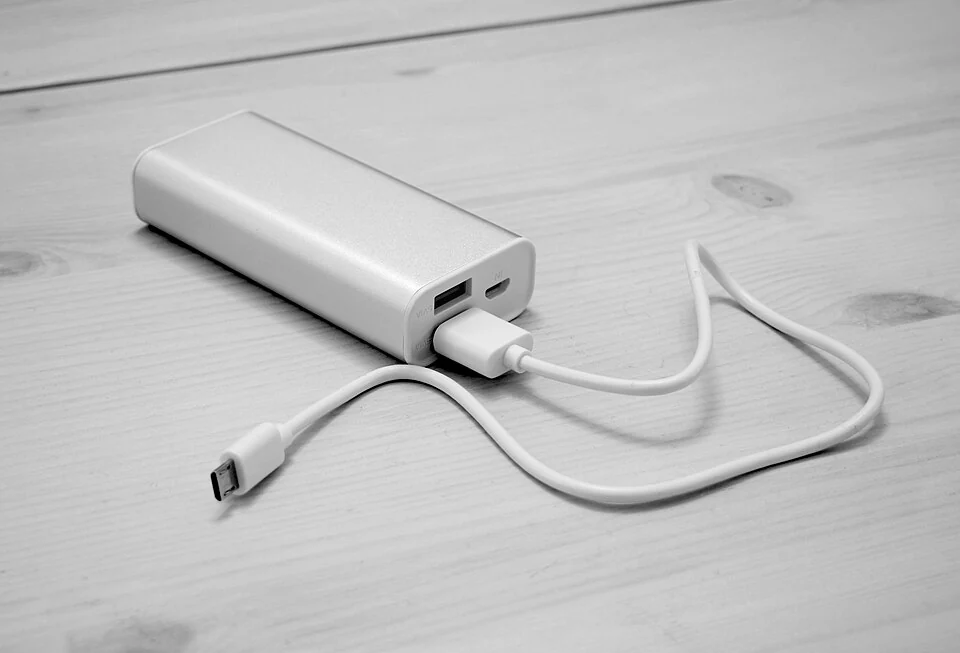
The photograph below shows one swollen unit, not proof that every product of its brand or similar appearance is recalled. Check the exact model against manufacturer notices. If an item becomes hot, smells unusual or smokes during the journey, tell the crew immediately rather than continuing to charge it or putting it out of sight.
Your pre-journey checklist
- Count at most two power banks per person; check the Wh rating, label and operating-airline conditions.
- Review each departure and connection rather than applying Hong Kong's outbound rules to the whole trip.
- Protect batteries individually; keep power banks and loose spare lithium batteries out of checked baggage.
- Plan permitted under-seat or designated storage and do not use or recharge power banks onboard.
- Remove batteries before gate-checking; leave damaged, defective or safety-recalled products out of your packing.
Sources & further reading
This article draws on the media coverage and public information below. Event and transport arrangements can change; check the latest details before travelling.
- CAD new regulations on air passengers carrying and using lithium battery power banks on board with immediate effectinfo.gov.hk (Opens in a new tab)
- Airport Security, Airport Facilities and Services - Hong Kong International Airporthongkongairport.com (Opens in a new tab)
- Spare batteries | Baggage informationcathaypacific.com (Opens in a new tab)
- Controlled and Banned Items - HK Express Airwayshkexpress.com (Opens in a new tab)
- Civil Aviation Department - Packing Tipscad.gov.hk (Opens in a new tab)
- Power bank usage is now restricted on Cathay Pacific flights – here’s what you need to know | Cathay HKcathaypacific.com (Opens in a new tab)
- 飛機限帶尿袋|即日起限每人最多帶兩個上機 飛行途中禁為其充電hk01.com (Opens in a new tab)
Make it your journey
After organising batteries, use the airport transfer departure checklist to confirm your flight, meeting point and bag count. Tell companions which small bag holds the batteries so none are left behind when a suitcase is checked at the gate.