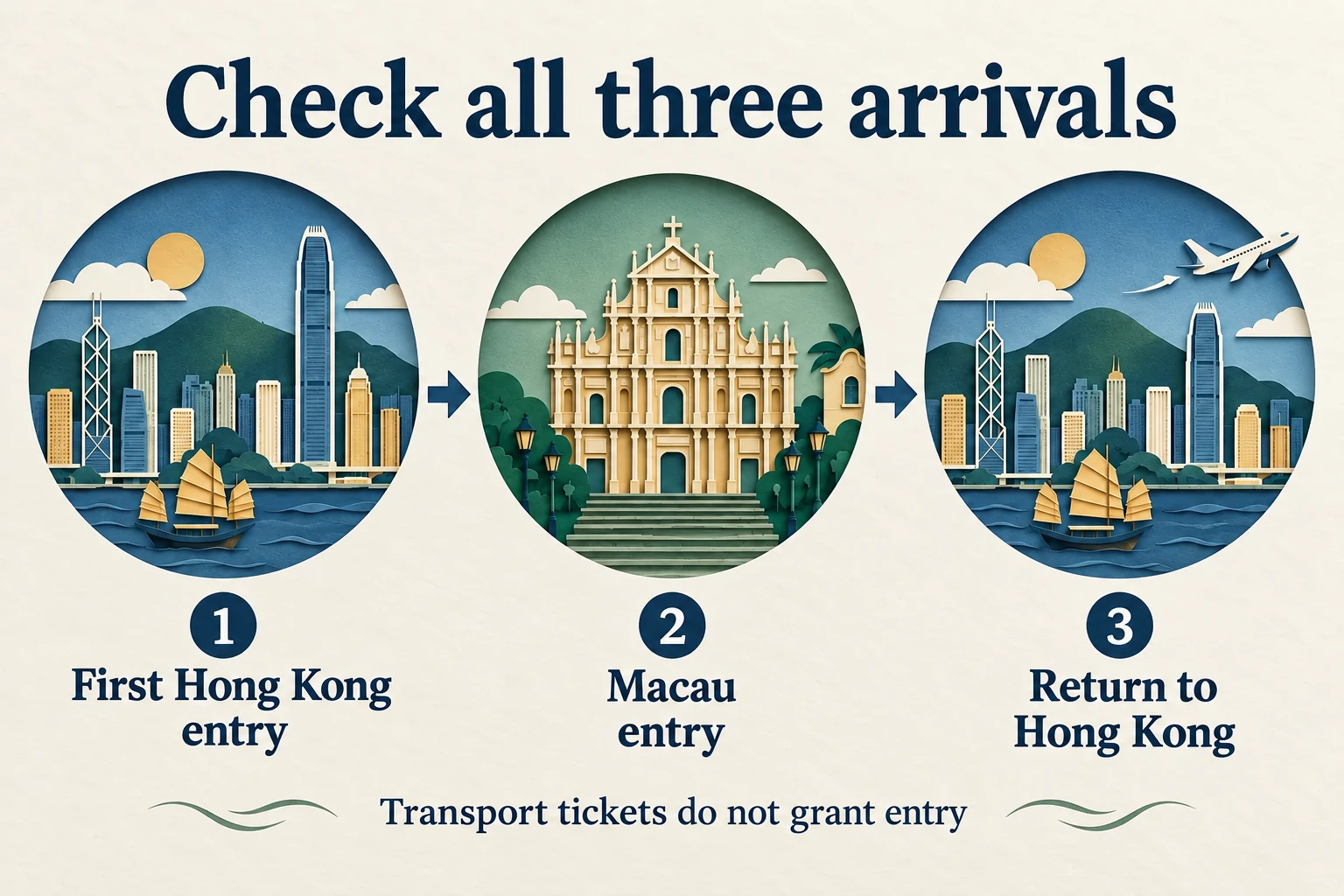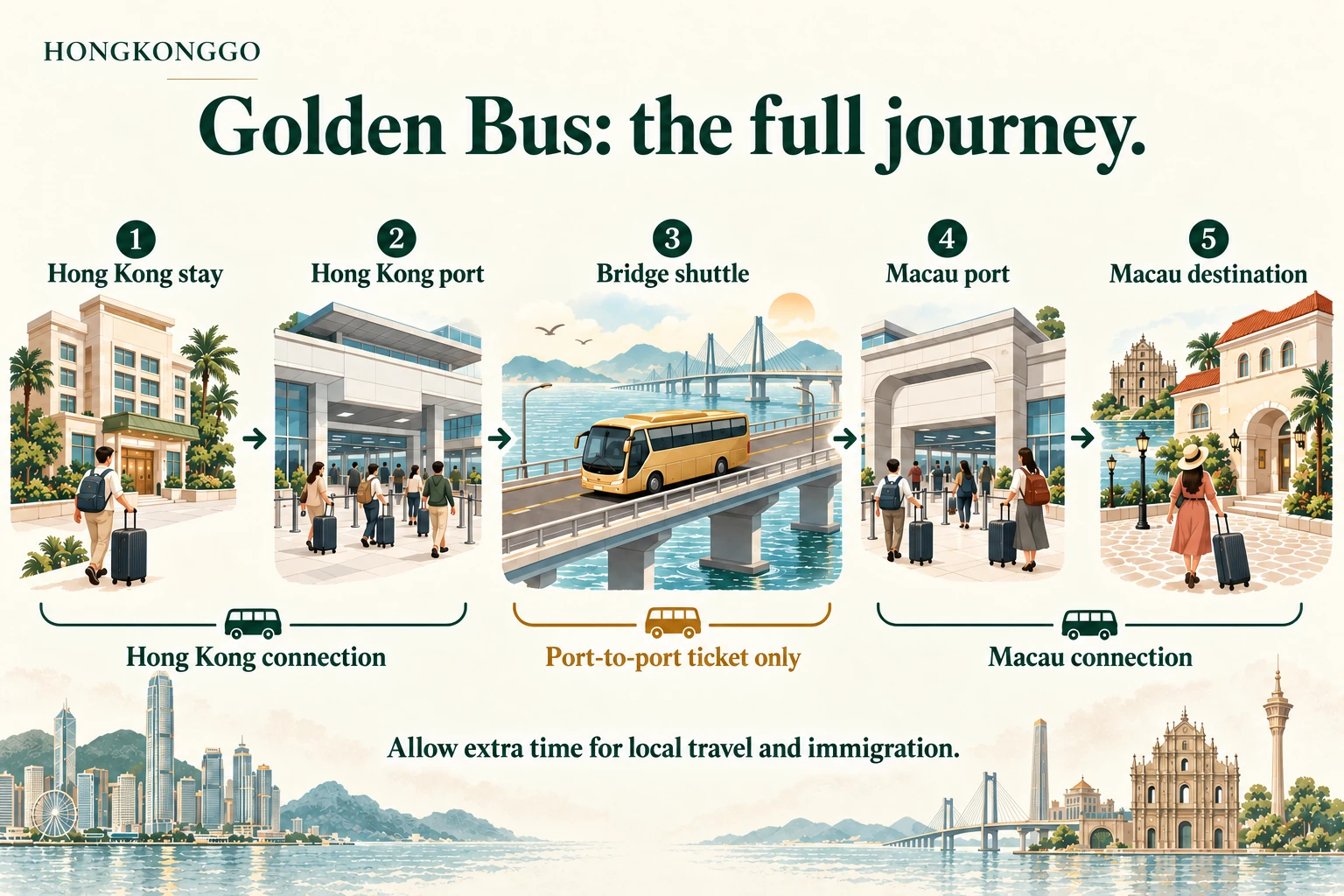
Whether a Hong Kong airport connection involves immigration depends on your onward journey, boarding pass and baggage arrangements, and travel document. An airside flight connection, entering to collect and recheck bags, and a SkyPier ferry transfer to Macao are different processes. Staying airside does not make every nationality exempt from a visa.
Ask three questions before booking anything beyond the airport
First, is your next journey a flight from Hong Kong International Airport, or a trip to the city, Macau or the Pearl River Delta? Second, where will your checked bag be tagged to, and has the airline confirmed through-checking? Third, can you obtain the next boarding pass airside, or must you visit a landside check-in desk? These answers establish the operational route; they do not replace a document check.
Layover advice often turns hours between flights directly into sightseeing time. Time Out’s airport activity guide also covers both departure facilities and arrivals areas. Before following such suggestions, establish whether the location is airside or in the public area after immigration. “Inside the airport” does not necessarily mean accessible to your connection. A restaurant, hotel or transfer booking does not confer permission to enter Hong Kong.
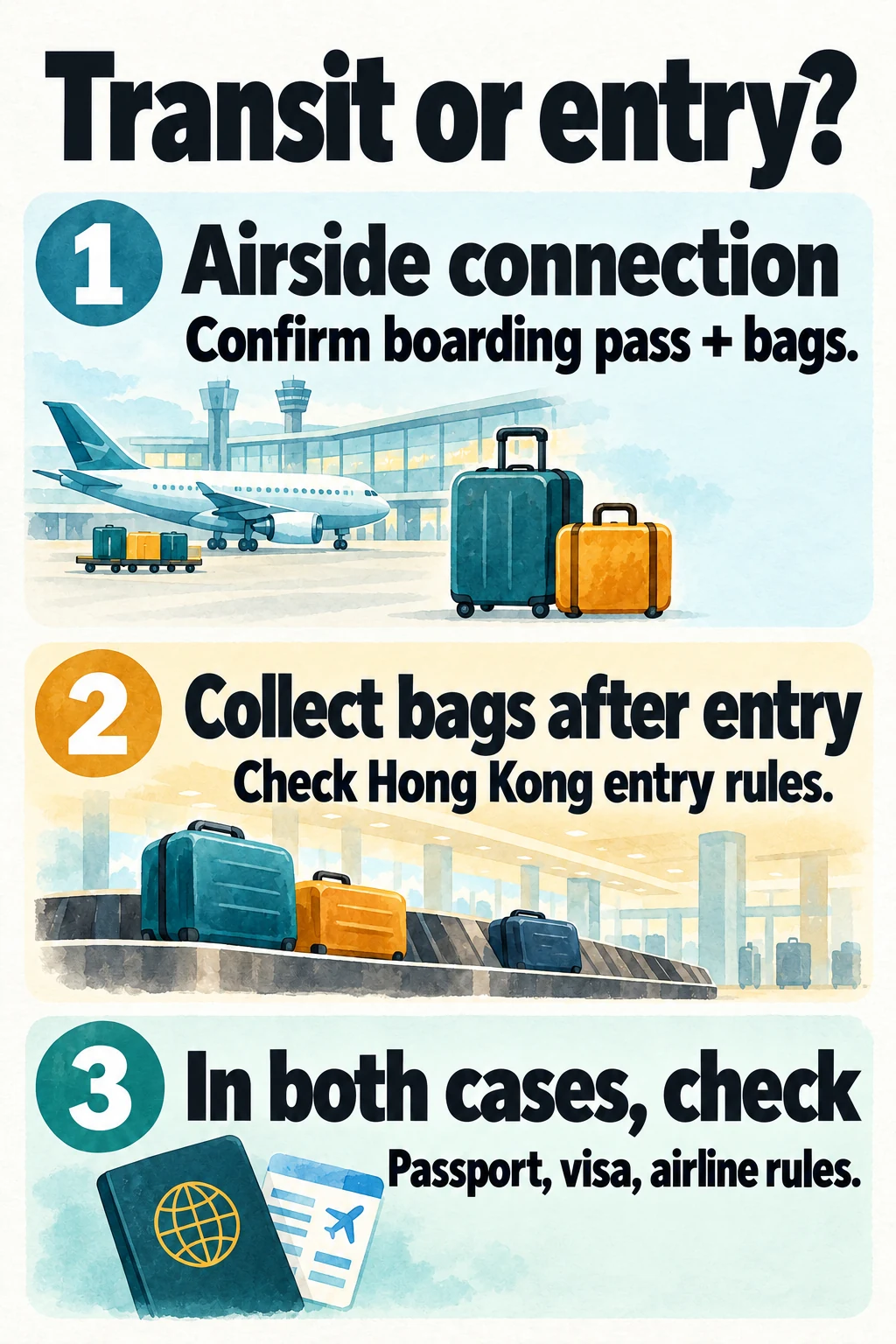
Connecting to another flight: check the boarding pass and bags
The airport’s transfer guidance directs passengers with onward boarding passes towards security and their departure gates. Passengers without a boarding pass should first use the relevant airline transfer desk. Before arrival, confirm that the desk can handle your particular ticket and itinerary, especially when flights were bought separately.
Separate tickets do not always require entry, and one booking reference is not a substitute for checking baggage arrangements. Cathay Pacific’s separate-ticket guidance explains that baggage agreements with connecting airlines affect through-checking. It also warns that a return journey starting with another airline may not offer the same arrangement. This describes Cathay’s service, not a universal policy. Ask the operating airlines about each direction and check the final destination printed on the baggage tag at your first departure airport.
If staff say you must collect and recheck the bag, clarify whether they mean the ordinary arrivals Baggage Reclaim Hall rather than a dedicated transfer process. Do not wait until landing in Hong Kong to raise the visa question. With cabin bags only, you still need to confirm check-in and boarding-pass arrangements. Travelling without a checked bag is not itself permission to remain airside.
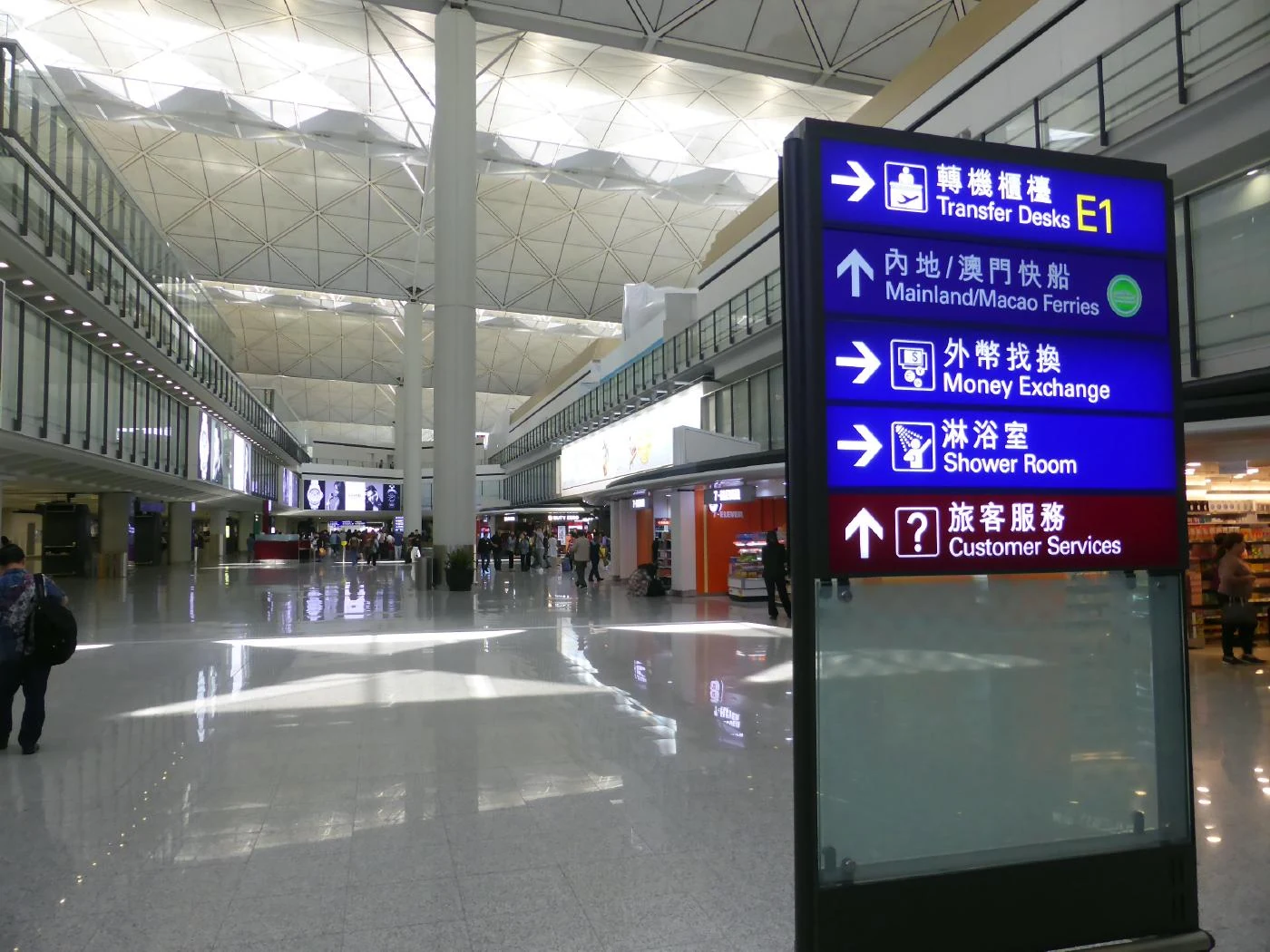
Ordinary arrivals baggage reclaim comes after immigration
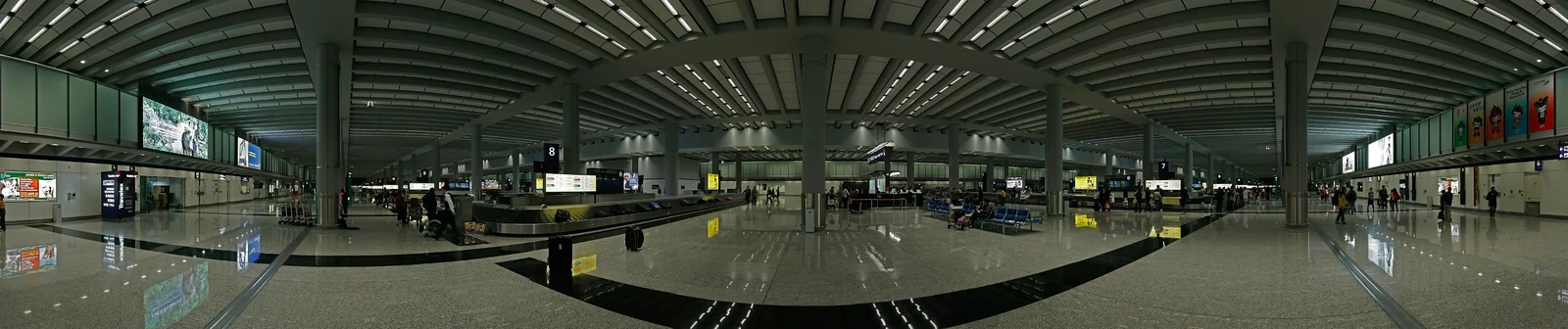
The airport’s arrivals guide sets out immigration, baggage reclaim, customs and then the public arrivals hall. A suitcase on the ordinary arrivals carousel is therefore not something you can casually step out to collect while treating your journey as entirely airside. If you must collect it there and check in again, establish your eligibility to enter Hong Kong before departure.
Likewise, a city hotel, a meeting with friends in the public arrivals hall or a landside car to Macau involves leaving the transit area. A stay of only a few hours does not remove entry requirements. Immigration officers determine admission according to your document and circumstances; visa-free eligibility does not guarantee entry.
Read the nationality and document footnotes, even for airside transit
The Immigration Department’s visit and transit requirements table must be read together with its footnotes. Some categories require a visa even for direct airside transit. Diplomatic or official passport holders may have different treatment from ordinary passport holders of the same nationality. Looking only at a “visa required” column or a visa-free period misses these distinctions; a friend’s experience is not a document check for your journey.
For example, the official Pre-arrival Registration guidance for Indian nationals says registration is unnecessary for direct transit by air without leaving the airport transit area. That specific exception does not allow an Indian passport holder to enter Hong Kong to collect bags, sleep in a hotel or sightsee without meeting the relevant entry requirements. Ordinary short visits and registration exemptions have separate conditions. For leaving Hong Kong for Macau and returning, see our Hong Kong–Macau entry and re-entry guide.
Give the airline or Immigration Department your nationality, travel-document type and validity, next destination, connection method and whether entry is needed. If you might switch between entering Hong Kong and staying entirely airside, check both plans before departure. Neither should be treated as an unconditional fallback for the other.
Flying in and taking a ferry to Macao: go to E2 before immigration
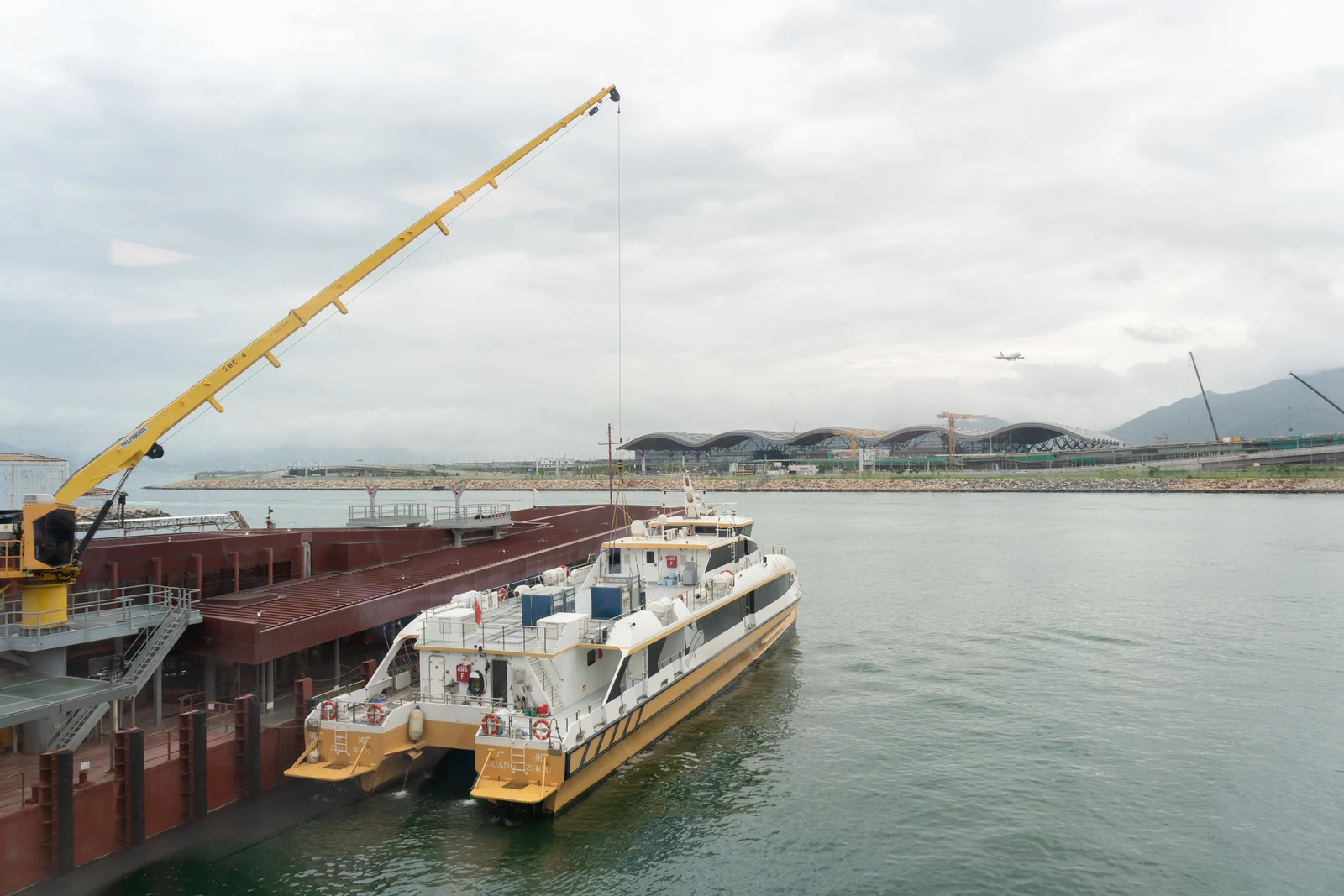
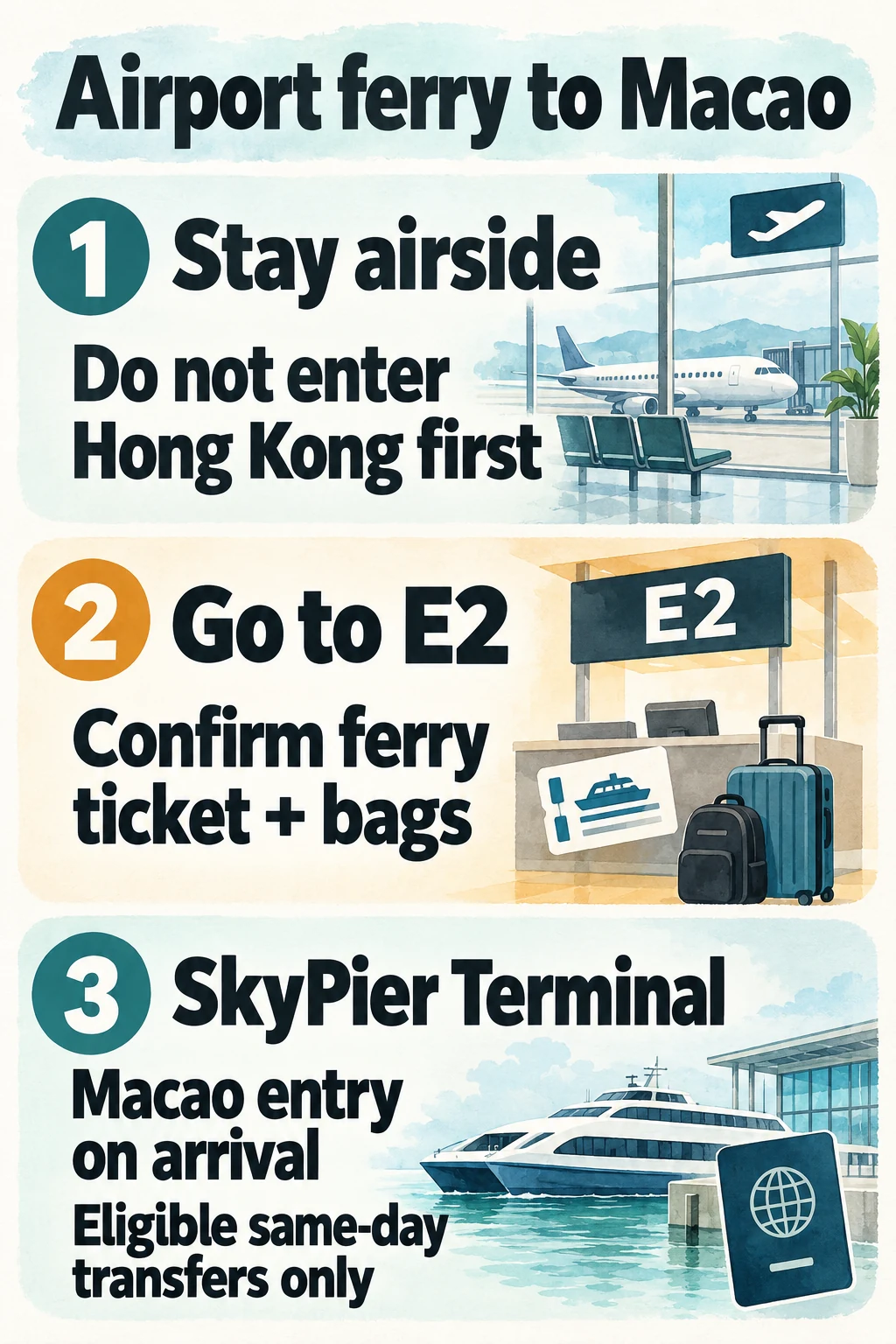
The airport’s SkyPier ferry guidance directs transferring passengers to the ferry counter at Transfer Area E2. Do not first clear Hong Kong immigration or reclaim your bags yourself. After immigration, you cannot return to that counter to use the SkyPier ferry service. It is also not a service for ordinary passengers starting from Hong Kong city.
The process requires evidence of a same-day arriving flight—a ticket, e-ticket or boarding-pass stub—a valid ferry ticket, a valid passport and any visa needed for the intended destination. You must transfer on the day you arrive and remain in the airport restricted area throughout. With checked luggage, present the airline baggage-tag receipt so staff can arrange its transfer.
The airport specifies arrival at the E2 counter at least 60 minutes before the scheduled ferry departure with checked luggage, or 30 minutes without it, for ticketing and transfer procedures. These are counter deadlines, not recommended intervals from an aircraft’s touchdown. Allow separately for disembarking, walking and processing, and verify the day’s sailings and the relevant airline and ferry arrangements.
As checked on 17 October 2026, the airport page still marks the Macao Taipa service as temporarily unavailable, while listing the Macao Maritime Ferry Terminal. A city-centre ferry to Taipa does not establish that the airport route is operating. Recheck the destination terminal, sailing status and onward transport before buying. This section concerns airport ferry transfers; dedicated coach transfers have their own procedures and should not be treated as the same service.
Apply the distinction to your actual itinerary
If you arrive from overseas and connect to another international flight, with the airline confirming both airside boarding-pass arrangements and through-checked bags, plan an airside connection while completing the relevant passport and transit-visa checks. If the bag is tagged only to Hong Kong and the next airline requires landside rechecking, treat Hong Kong entry eligibility as a condition of booking, not simply a question of hours between flights.
If you are flying to Hong Kong and continuing directly to Macau, first establish whether the same-day SkyPier ferry process fits. If you need to enter Hong Kong to collect something, use a hotel or board an ordinary landside car, plan an entry-based journey and meet the requirements for both Hong Kong and Macau. Hong Kong registration, visa or visa-free eligibility does not automatically provide Macau entry permission.
A flight delay may break a same-day ferry connection. Ask the carriers in advance about rebooking, baggage and overnight arrangements. Do not assume that every passenger can enter Hong Kong at short notice to stay overnight. There is no single minimum connection time offered here for every ticket: use your carriers’ confirmation for the specific itinerary and follow current airport instructions.
Your pre-journey checklist
- Identify an airside flight connection, a journey after Hong Kong entry, or a dedicated SkyPier transfer.
- Ask the operating airlines about boarding passes, through-checking, separate tickets and the return journey.
- Check nationality, document and official visa footnotes; airside transit is not universally visa-free.
- For a Macao ferry, verify E2, the same-day conditions, 60/30-minute counter deadlines and actual terminal served.
- Agree a delay plan without assuming you can enter at short notice or that Hong Kong eligibility applies in Macau.
Sources & further reading
This article draws on the media coverage and public information below. Event and transport arrangements can change; check the latest details before travelling.
- Hong Kong International Airport: transfer and transithongkongairport.com (Opens in a new tab)
- Hong Kong International Airport: arrivalshongkongairport.com (Opens in a new tab)
- Hong Kong Immigration Department: visit and transit requirementsimmd.gov.hk (Opens in a new tab)
- Hong Kong Immigration Department: pre-arrival registration for Indian nationalsimmd.gov.hk (Opens in a new tab)
- Hong Kong International Airport: SkyPier ferry transferhongkongairport.com (Opens in a new tab)
- Cathay Pacific: through-checking on separate ticketscathaypacific.com (Opens in a new tab)
- Time Out: things to do at Hong Kong airport (2024)timeout.com (Opens in a new tab)
Make it your journey
For a car journey after lawful entry to Hong Kong, confirm the documents and flight arrangements first, then use the HONGKONGGO quotation form to provide your arrival time, destination and luggage details. A car transfer does not replace immigration formalities and cannot collect passengers inside the airport transit area.