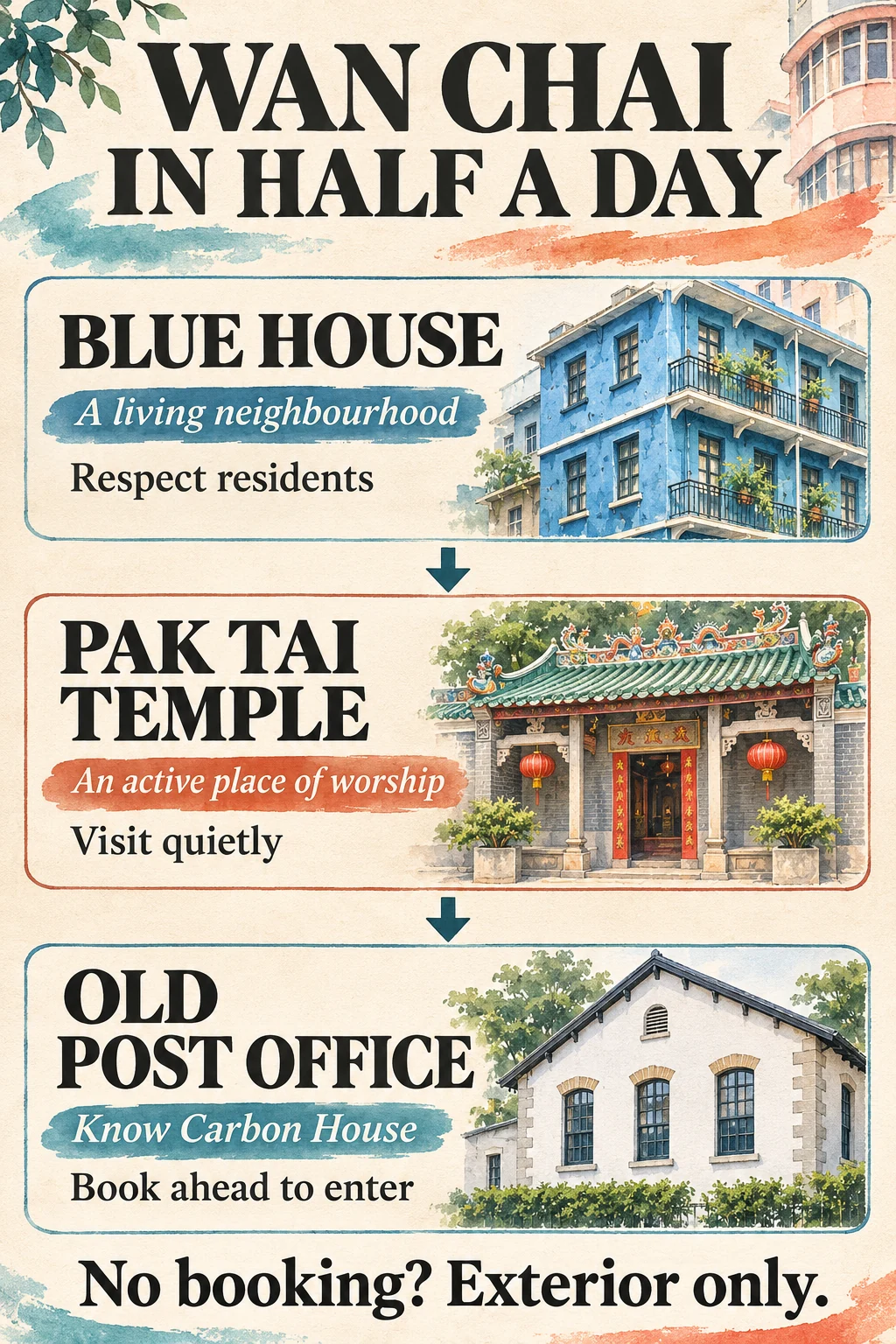
For a half-day in Wan Chai, keep the walk around the Blue House, Pak Tai Temple and the Old Wan Chai Post Office. One continues to house residents, one remains a place of worship, and one has become a public education venue. Understanding those present-day uses makes the walk more rewarding than collecting three façade photographs. The ordinary version uses public streets, accessible visitor areas of Hong Kong House of Stories, and parts of the temple where visiting is permitted. The old post office is now Know Carbon House and requires an advance booking. Without one, view its exterior from the street: free admission does not mean unrestricted walk-in access.
Choose a free walk or one booking to organise it around
Allow roughly three to four hours, including a meal and a rest, excluding hotel transfers or cross-border travel. This is for visitors comfortable with street crossings and some slopes, rather than a route verified as step-free throughout. Store large luggage first. Wheelchair users and families with pushchairs should check each venue's entrance and internal access separately.
For the ordinary version, start at the Blue House and House of Stories, continue to Pak Tai Temple, return to Queen's Road East for the old post office exterior, then eat. If you book a Blue House public tour, organise the start around its confirmed meeting time. If you book Know Carbon House, treat its roughly 90-minute programme as a main activity and shorten the other stops. Two guided tours, every interior and a leisurely lunch do not all fit comfortably into the same half-day.
From Wan Chai MTR Exit A3, Tai Yuen Street leads towards Queen's Road East. Cross at the pedestrian crossing near the Wan Chai Road junction, then continue into Stone Nullah Lane; the temple is on Lung On Street beyond it. These are the Chinese Temples Committee's access directions. Use current navigation and street signs for individual turns to the Blue House and old post office, rather than crossing moving traffic to follow the shortest map line.
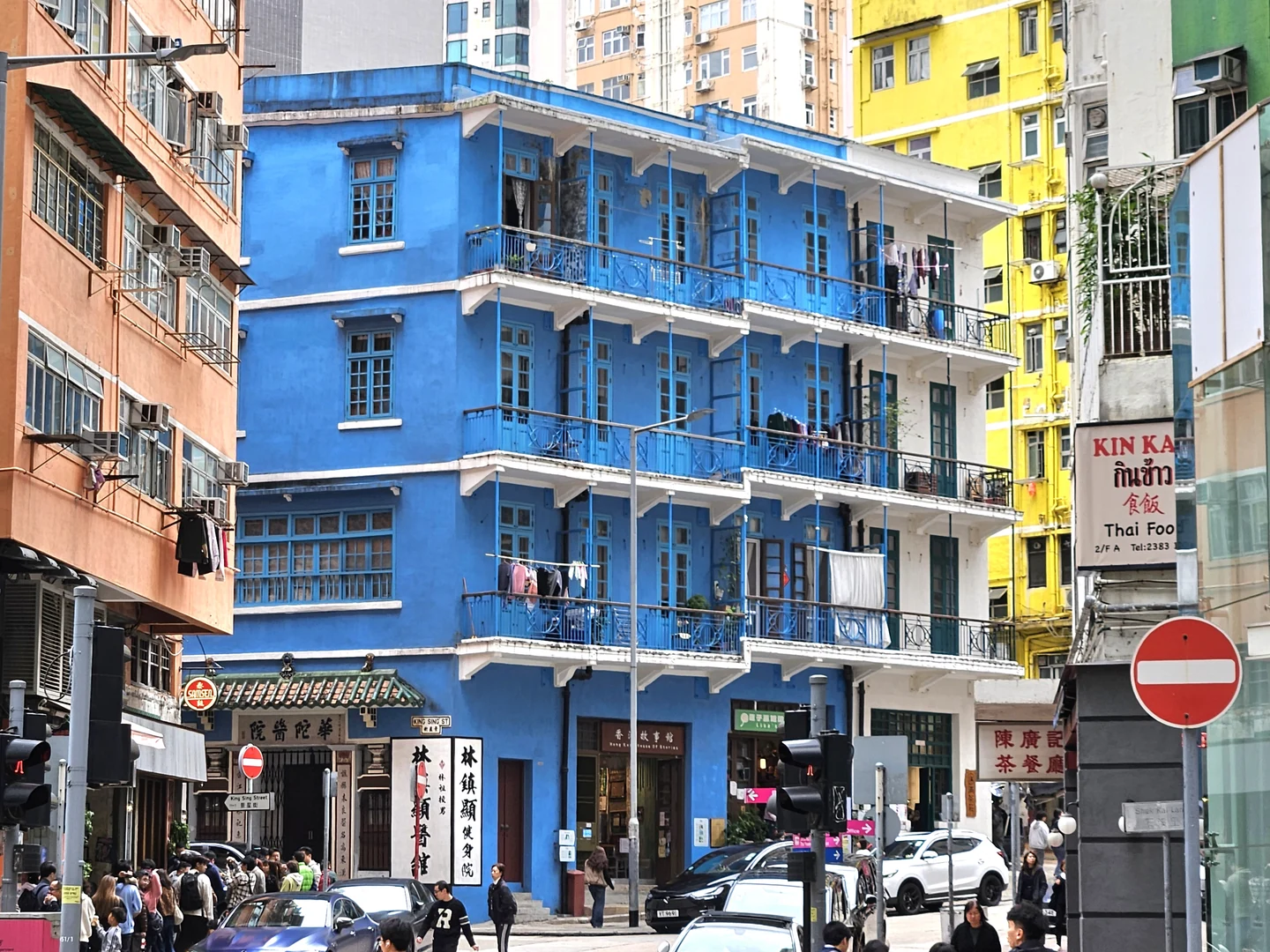
Blue House: look beyond the colour to the people living upstairs
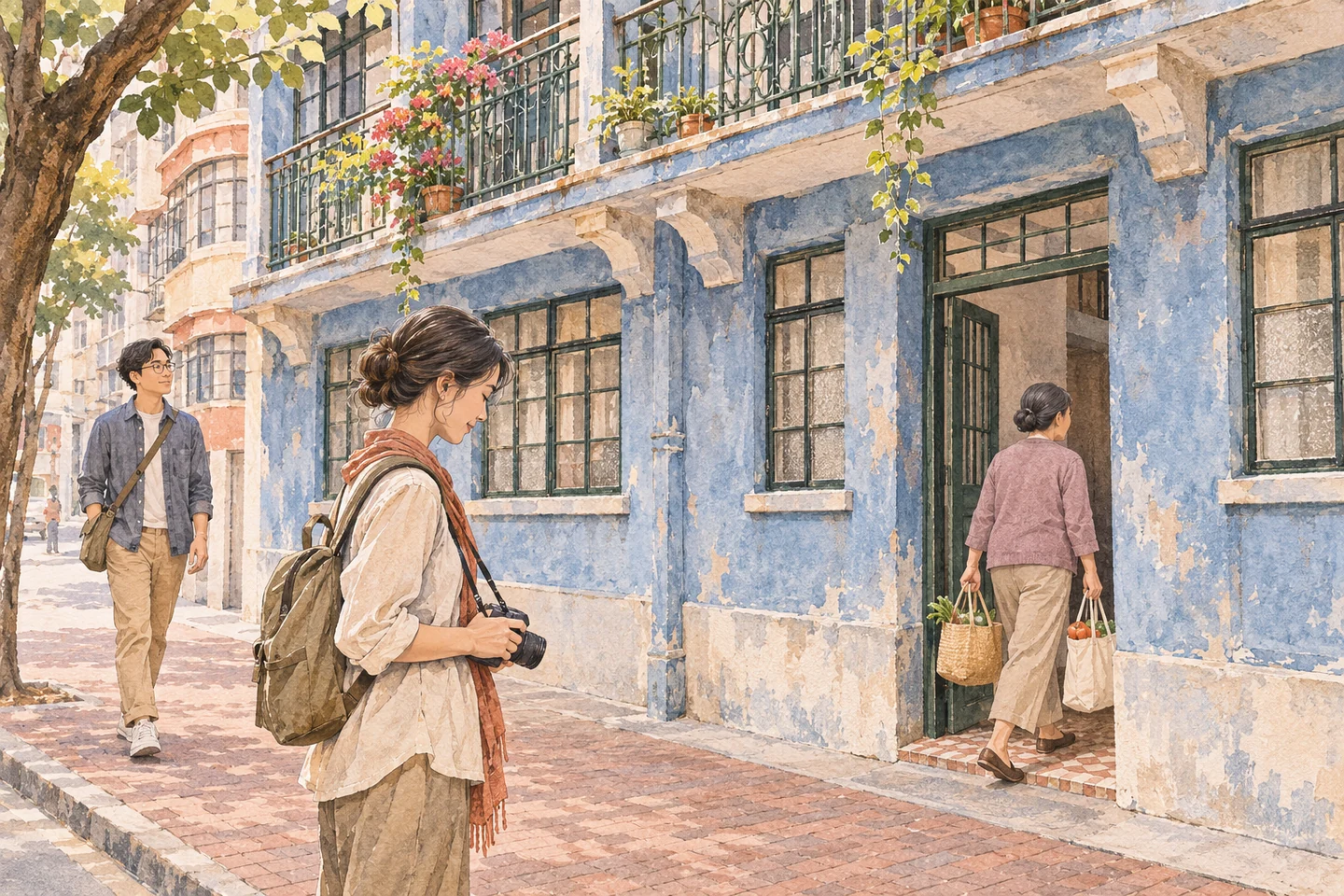
The Blue House is more than a museum painted blue. Its cluster comprises the Blue, Yellow and Orange Houses, built between the 1920s and 1950s. The revitalisation retains residential use alongside Hong Kong House of Stories and community cultural activities. The Commissioner for Heritage's project information records different historic-building grades for the three structures; the whole cluster should not be described as a declared monument.
Stand somewhere public without blocking pedestrians and look at the relationship between balconies and ground-floor shops. Then consider what photography, conversations and visitors lingering outside mean for people who still live upstairs. Keeping the buildings and their residents together preserves community relationships as well as a colourful façade. An HK01 report on heritage revitalisation discusses the Blue House as an example of community involvement. It is background reporting from 2021, not a source of current visiting arrangements.
Do not enter residential staircases to find a photograph, obstruct doorways or treat residents as subjects for your camera. Step aside when somebody carries shopping through an entrance, and ask before photographing people. Everyday life here does not have to accommodate a visitor's shot; quiet observation is part of the experience.
House of Stories and a Blue House tour need different planning
Hong Kong House of Stories, at ground-floor 72A Stone Nullah Lane, normally opens from 10:00 to 18:00. It closes on Wednesdays and specified public holidays: New Year's Day, the first three days of Lunar New Year, Good Friday, Christmas Day and the following day. The operator lists a maximum of ten visitors at a time. Do not touch exhibits; switch off flash for photography, and do not make video or audio recordings. Travel agencies and commercial groups must book. Official House of Stories information
If it is full, split into smaller groups or return later rather than assuming one extra family member will not matter. Inside, choose an object or community account that connects with domestic life you recognise. Ask how it was used and whose memories it represents, then relate that story to the surrounding streets. Displays can change, so avoid arriving with an expectation of seeing a particular object from an old online photograph.
A separate option is the Blue House Cluster public tour. At verification, the operator listed free tours at 11:00 and 16:00, lasting about 60 minutes, with a maximum of eight participants aged six or above. Wednesdays and special public holidays are excluded; schools, organisations and groups need a separate paid tour. Cantonese bookings require at least one day's notice. Mandarin and English tours run on specified dates and require an email enquiry at least seven days ahead. Two daily tour times do not mean all three languages are available every day. Tour reservations and rules
An email confirmation establishes the booking. Register 15 minutes before the start. Walk-in participation is possible only when spaces remain and is not guaranteed. Photography, audio and video recording are prohibited in residential areas and the old-object storytelling space. The House of Stories rule permitting photographs without flash does not extend to every space reached on a tour. Wheelchair users should telephone in advance to arrange access; consider weather and stamina for outdoor and non-air-conditioned sections.
Pak Tai Temple: move from a residential community into a living place of worship
Stone Nullah Lane leads towards Lung On Street and Wan Chai Pak Tai Temple, also known as Yuk Hui Kung. Local residents began building it in 1862 and completed it in 1863; it became a declared monument in 2019. It remains a religious site. The committee describes its three-hall arrangement, paired roof dragons and principal bronze statue. The statue and the building date from different periods: an older object does not establish the construction date of the entire temple. Temple history and heritage features
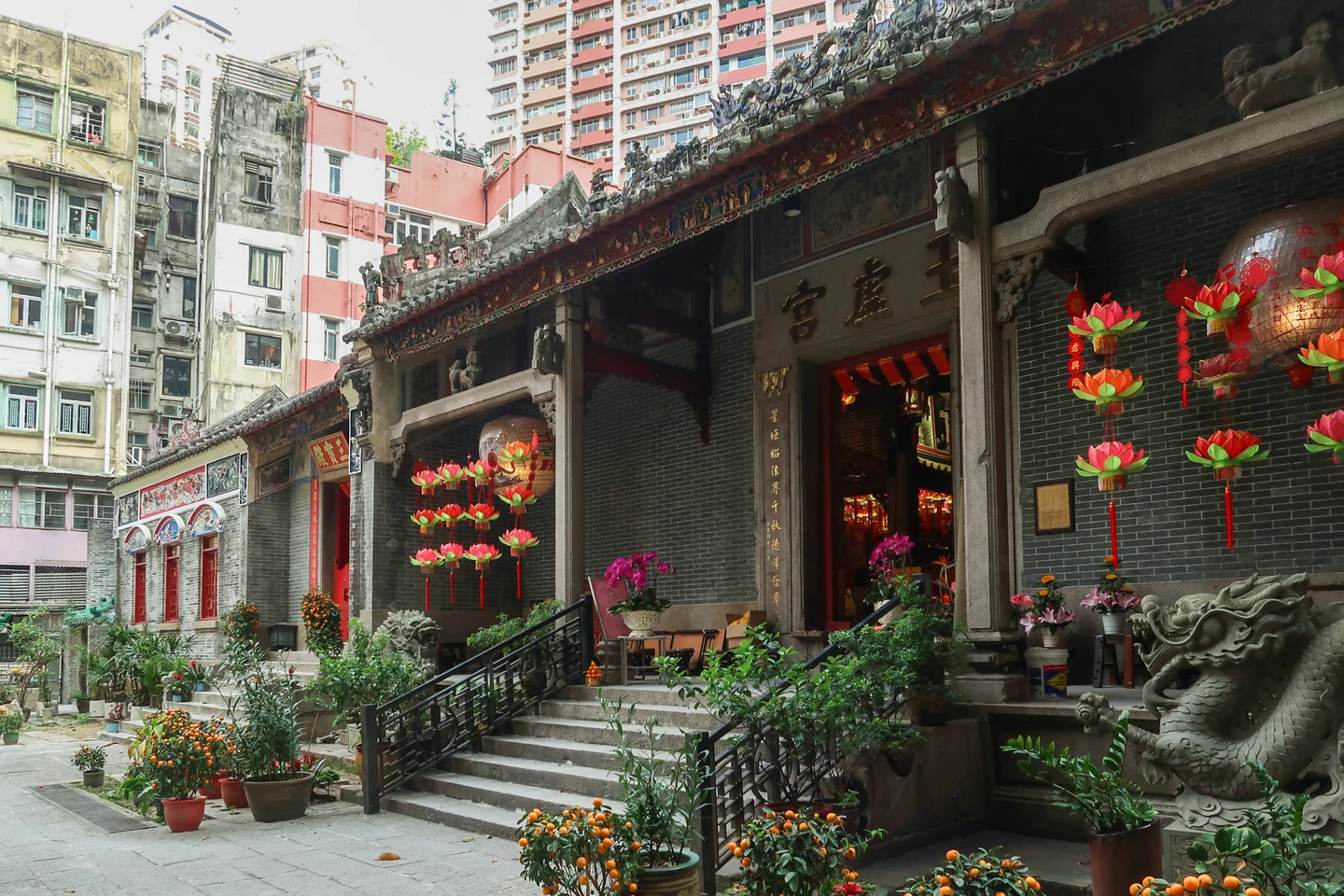
Start with the entrance plaque and roofline, then follow the route permitted on site. During worship or busy periods, keep passageways clear instead of occupying the centre for repeated photographs. Do not touch statues, offerings or ritual objects. Ask staff about photography in a particular area; images already online do not establish permission to photograph everywhere.
The official opening window is 08:00 to 17:00 daily, making this a more dependable middle stop than a late-afternoon dash. Steps, confined spaces and incense may affect some companions. Shorten the visit to exterior observation if staying longer is uncomfortable, rather than making entry into the main hall compulsory for everybody. For access questions, telephone +852 2573 2086. A short distance on a map does not prove an easy approach.
Old post office: view the exterior, book separately for Know Carbon House
Return to Queen's Road East and find the Old Wan Chai Post Office at number 221. The Antiquities and Monuments Office records construction in 1912–1913 and opening as a post office on 1 March 1915. It became an environmental resource centre in 1993 and reopened after renovation as Know Carbon House in 2024. Notice its L-shaped form, pitched tiled roof and gables rather than approaching it as an operating post office. Official building history
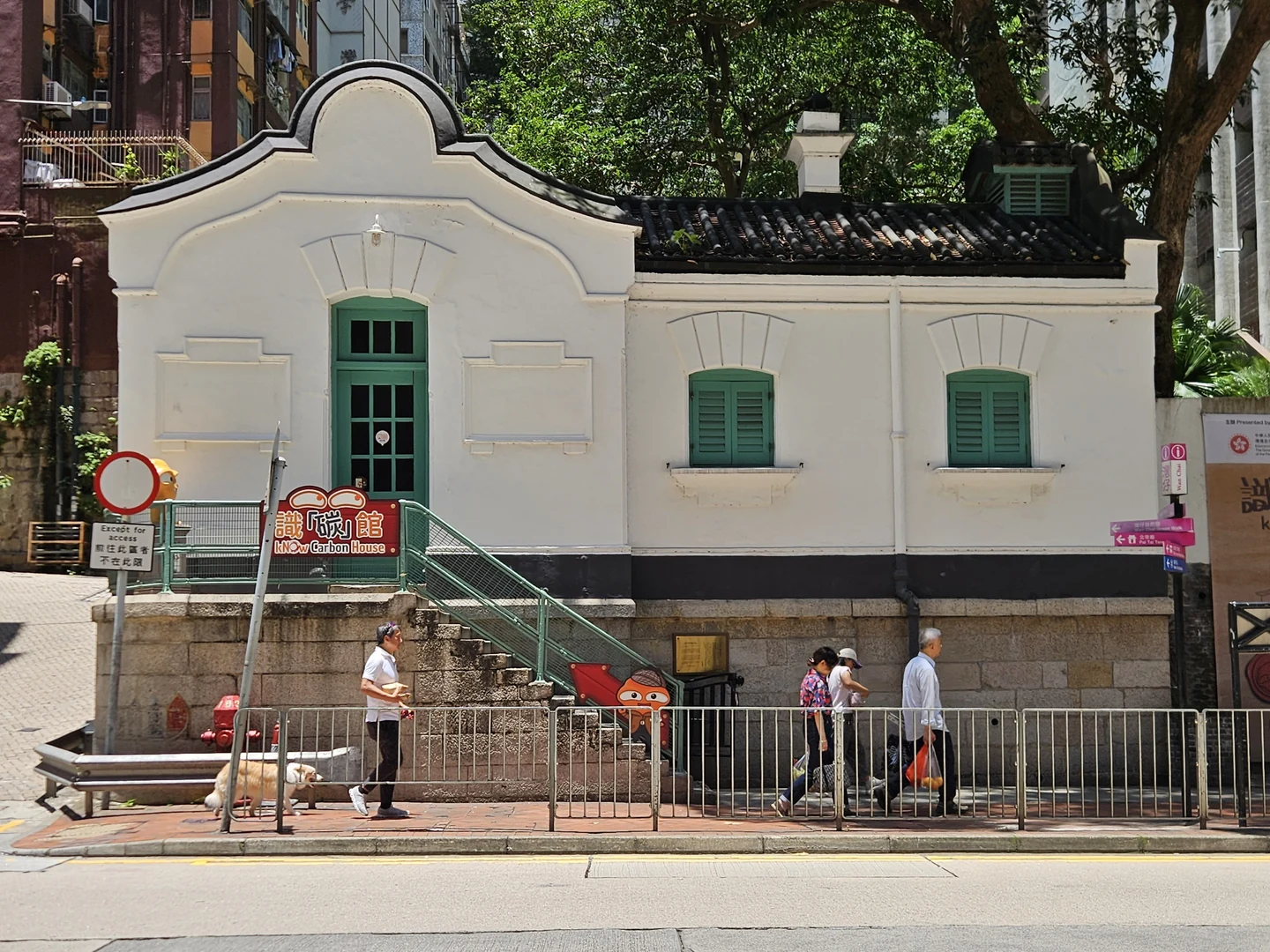
Observe from public pavement while watching crossings, pedestrians and vehicles. Do not stand in the carriageway to remove people from a photograph. Without a booking, end this architectural stop outside. The interior now concentrates on carbon-neutrality education; do not expect a comprehensive postal-history museum or plan to post a letter here.
Admission to Know Carbon House is free, but individuals must book at least three days in advance and groups at least 31 days. Use the confirmation message or QR code to register. The standard guided programme lasts about 90 minutes, and children under 12 must be accompanied by someone aged 18 or above. Old letter boxes, a stamp vending machine and a solid-wood table remain inside, offering a way to see how earlier objects coexist with the new use. Know Carbon House FAQ
The usual opening hours are Tuesday to Sunday and public holidays, 10:00–18:00. It closes on Mondays and the first two days of Lunar New Year, with shorter 10:00–16:00 hours on Lunar New Year's Eve, the winter solstice and Christmas Eve. These are operating windows; entry still follows the confirmed booking. Official visitor information
Finish with a meal and keep something optional
| Version | What to retain | How to keep it within a half-day |
|---|---|---|
| No booking | Blue House exterior, open visitor space at House of Stories, Pak Tai Temple, old post office exterior | Choose one observation at each stop and preserve time for a meal |
| Blue House tour confirmed | Meet at the confirmed time, then visit the temple and old post office exterior | Let the tour replace a separate long Blue House visit |
| Know Carbon House booked | Plan around its roughly 90-minute programme, adding either the Blue House or temple | Avoid attempting two full tours and every interior |
Tai Yuen Street, Queen's Road East and the surrounding streets offer places to eat. Choose according to the queue, available seats and budget at the time instead of crossing Wan Chai again for a supposedly compulsory restaurant. With older companions, sit down while everybody still has energy. If children are tired, finishing early can preserve the point of the walk.
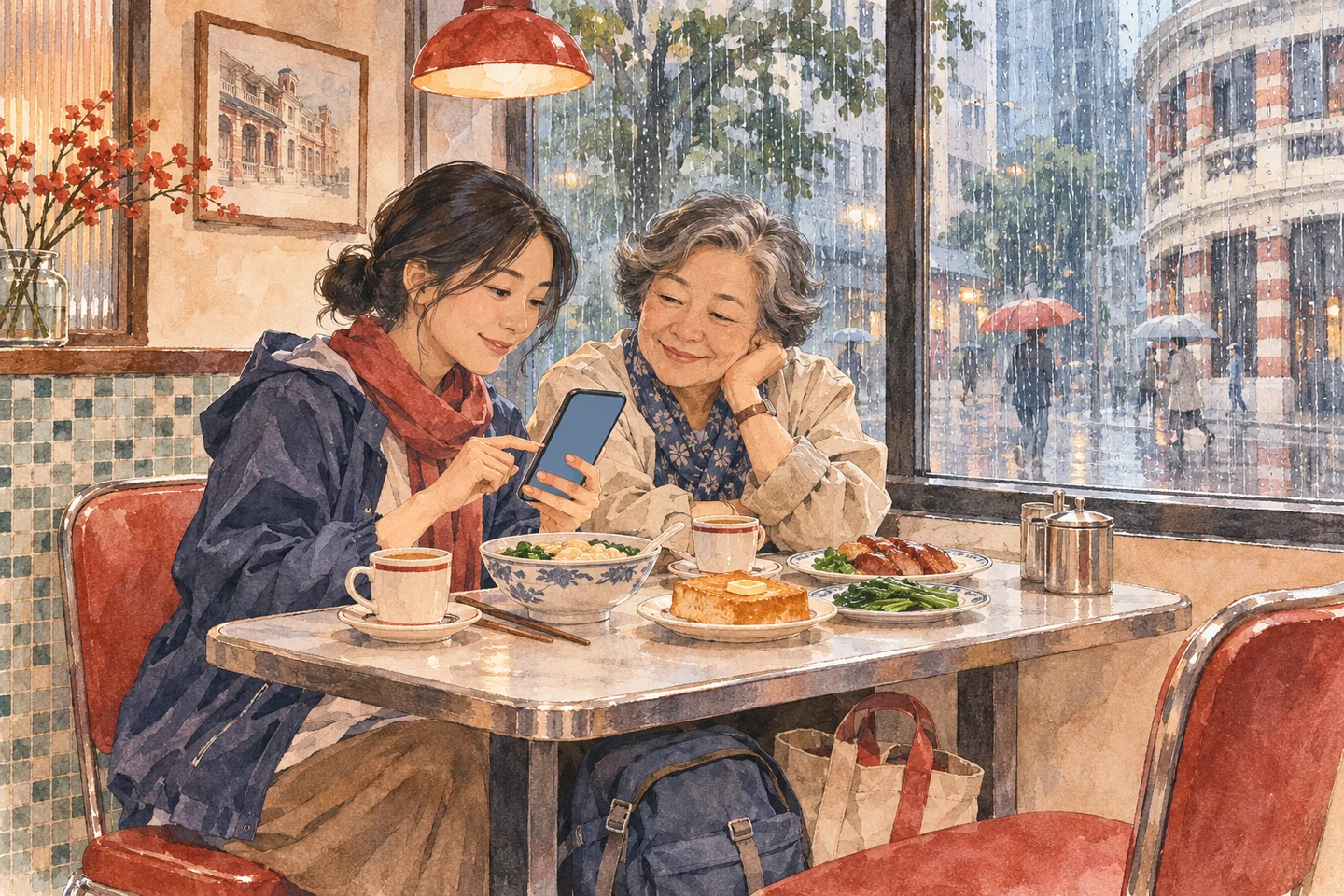
In ordinary rain, shorten time on the streets, but do not treat an unbooked Know Carbon House visit as an instant indoor alternative. In severe weather, check venue announcements rather than assuming indoor attractions remain open. When House of Stories and Blue House tours close on Wednesday, choose another day for the full version or deliberately plan an exterior-and-temple visit. Make that decision before arrival, not after the main reason for the trip turns out to be unavailable.
Your pre-journey checklist
- Choose one main structure: independent walk, Blue House tour or Know Carbon House booking.
- Check Wednesday and holiday closures at House of Stories, and the temple's 17:00 closing time.
- Confirm specified dates for English or Mandarin tours and wait for the booking email.
- Distinguish public exhibition areas, residents' spaces and places of worship when photographing.
- Keep the old post office stop exterior-only without a reservation; leave time for a meal and optional cuts.
Sources & further reading
This article draws on the media coverage and public information below. Event and transport arrangements can change; check the latest details before travelling.
- Commissioner for Heritage: Blue House Clusterheritage.gov.hk (Opens in a new tab)
- House of Stories: Hours and visitor rulesvivabluehouse.hk (Opens in a new tab)
- Blue House Cluster: Public tours and bookingsvivabluehouse.hk (Opens in a new tab)
- Chinese Temples Committee: Wan Chai Pak Tai Templectc.org.hk (Opens in a new tab)
- AMO: Old Wan Chai Post Officeamo.gov.hk (Opens in a new tab)
- Know Carbon House: FAQ and reservationsknowcarbonhouse.hk (Opens in a new tab)
- Know Carbon House: Hours and visitor informationknowcarbonhouse.hk (Opens in a new tab)
- HK01: Heritage revitalisation background report, 2021hk01.com (Opens in a new tab)
Make it your journey
The half-day can reveal three ways an old building continues to live: people reside, worship and learn. To explore how trading and making shape another neighbourhood, take the Sham Shui Po walk on a different day. Both communities deserve more than being squeezed into the same short outing.