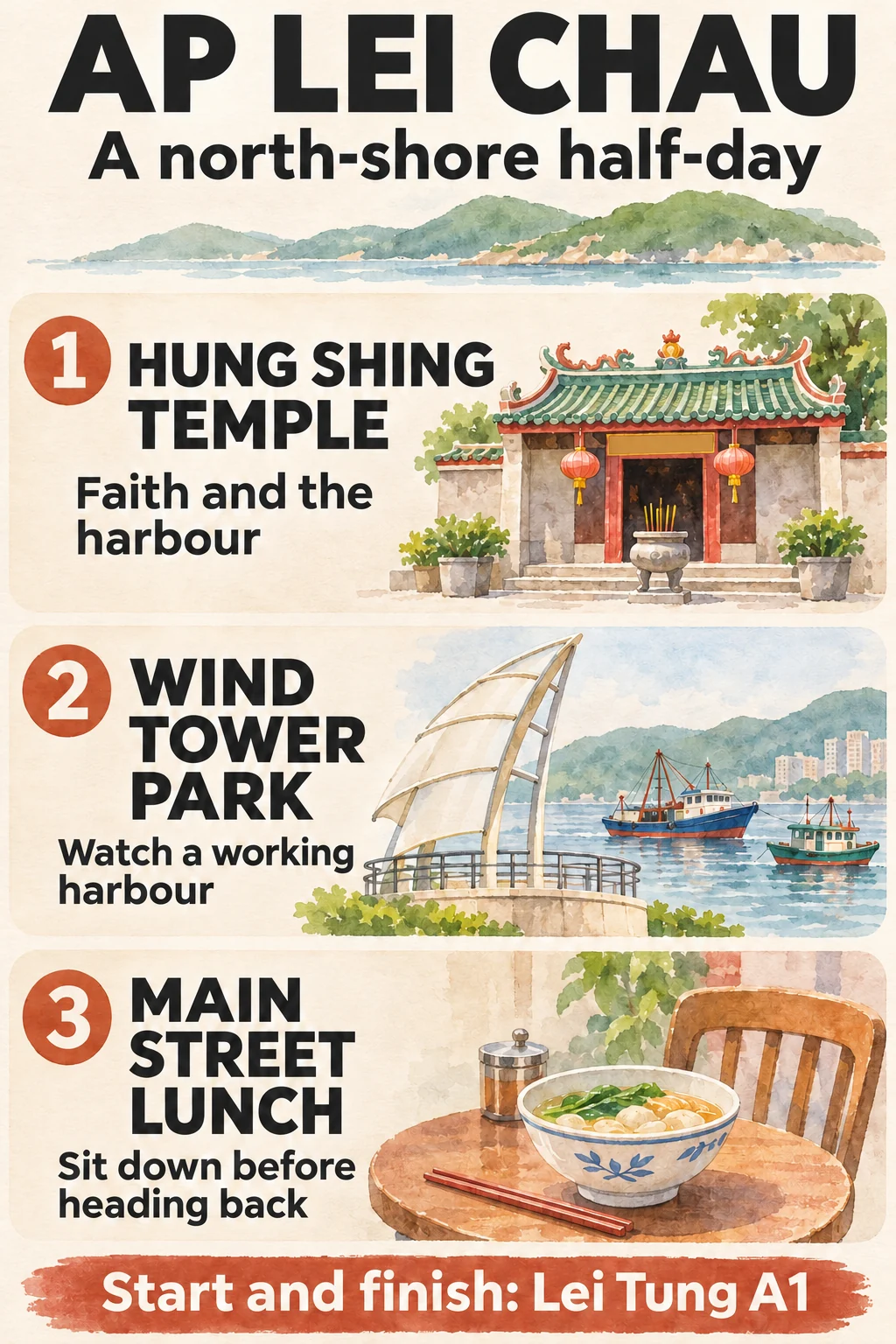
For a half-day introduction to a Hong Kong fishing community, start at Lei Tung station Exit A1 and connect Hung Shing Temple, the waterfront and Wind Tower Park, then lunch around Main Street. Begin around 10:00 and return towards the station around 13:30. The route stays within Ap Lei Chau's north-shore neighbourhood, without a ferry crossing, a climb up Yuk Kwai Shan or a circuit of the entire island. Look at how the temple faces the harbour, how the park interprets fishing culture and how residents use the waterfront today.
Keep the morning on the north shore
Ap Lei Chau contains residential, industrial and waterfront areas. Furniture-shopping lists, hiking itineraries and sunset recommendations for South Horizons do not automatically belong in the same half-day. This plan assumes you are already staying in urban Hong Kong, have no large luggage and want time to stop and observe. The suggested 10:00 start is near Lei Tung station; travel from and back to your hotel is additional.
MTR's South Island Line discoveries lists both Hung Shing Temple and Wind Tower Park near Exit A1. The temple operator's directions say to turn right from A1 and follow Ap Lei Chau Main Street to Hung Shing Street, taking around five minutes. Follow current signs and pavements, allowing for crossings and your group's pace instead of chasing a precise walking time.
UHK's older Southern District feature connects Wind Tower Park, temples and water transport as a way into fishing-community culture. It was published in 2021 and identifies its material as supplied by a client. It is useful for discovering questions, but its restaurants, fares and transport arrangements are not evidence of today's service. This route stays on one shore and returns to Lei Tung after lunch, avoiding an unplanned boat trip that changes the half-day's scope.
| Suggested time | Plan | What to notice |
|---|---|---|
| Around 10:00 | Leave Lei Tung A1 for Hung Shing Street | Identify the north-shore neighbourhood and return station |
| 10:10–10:45 | Temple exterior and areas visitors may enter | Its sea-facing position, dragon poles and roof decoration |
| 10:45–12:00 | Waterfront, Wind Tower Park and the gallery if open | Fishing-inspired design, tools and the typhoon shelter |
| 12:00–13:00 | Return towards Main Street for lunch | Allow time to choose, wait, order and sit down |
| 13:00–13:30 | A short browse or directly back to Lei Tung | Leave distant shopping and hiking for another outing |
This is a flexible editorial plan, not a scheduled guided tour. If the first stop takes longer, shorten the park visit. If lunch involves a long wait, drop the final browse rather than turning the afternoon into an exercise in catching up.
Hung Shing Temple: face the water before examining the details
The Antiquities and Monuments Office says local residents are believed to have built the temple around 1773 to worship Hung Shing, a deity associated with protecting fishermen and maritime traders. Declared a monument in 2014, it retains its sea-facing setting and close community connections. Its relationship with Shek Pai Wan and Aberdeen is as interesting as its age.
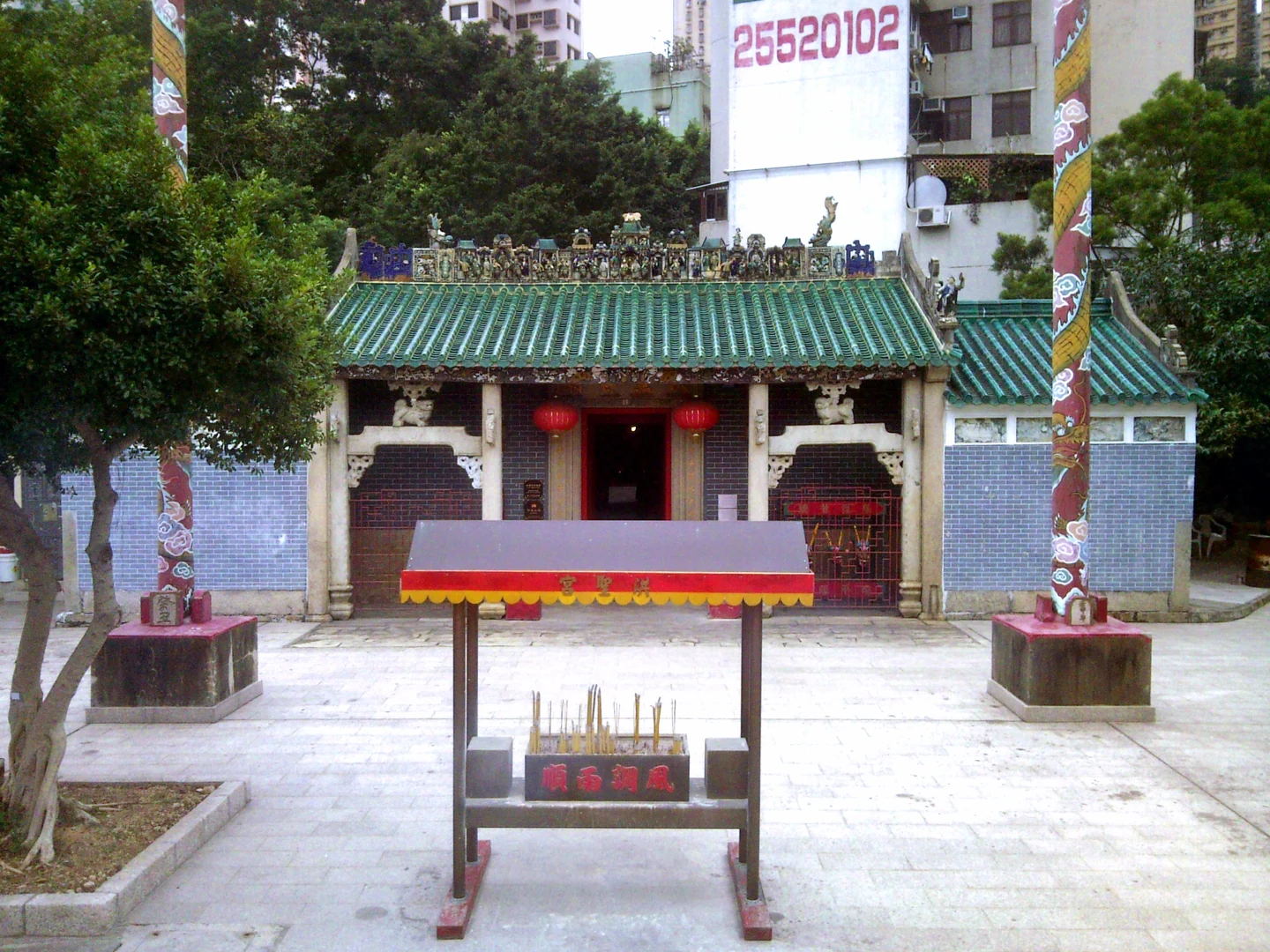
Begin somewhere that leaves the passage clear and observe the forecourt's orientation towards the harbour. Then examine the pair of timber poles painted with dragons. The AMO records a local belief that these “dragon poles” countered harmful influences from the so-called “tiger land” across the water. That is an account of belief, not a description of physical storm protection. The poles should not become props to lean on or climb for photographs.
Look for Shiwan ceramic decoration along the roof ridge, then compare the entrance with the spaces on either side. The AMO describes a two-hall, three-bay layout, with a covered pavilion in the courtyard and side chambers. If entry is permitted that day, compare the compact exterior with the sequence of spaces inside instead of immediately searching for the main deity to photograph.
Our lead photograph was taken on 18 December 2010. It helps identify the temple exterior and dragon poles, while subsequent repairs, furnishings and surroundings should be assessed on site. A historical image cannot prove that a particular component was never replaced, nor provide today's access directions.
Allow worshippers to use their temple
Under the “Temple Information” tab, the Chinese Temples Committee's current page gives daily hours of 08:00–17:00 and an enquiry number of +852 2552 6884. Check temporary arrangements before setting out. Permitted visitor areas and worship activities take priority over a photograph you hope to compose.
Pause at the entrance to see whether worship, cleaning or another activity is taking place. Enter individually if necessary rather than blocking the doorway or threshold as a group. Ask before photographing deities, interior arrangements or worshippers, and put the camera away where photography is prohibited. Someone else's ceremony is not a tourist performance requiring no consent.
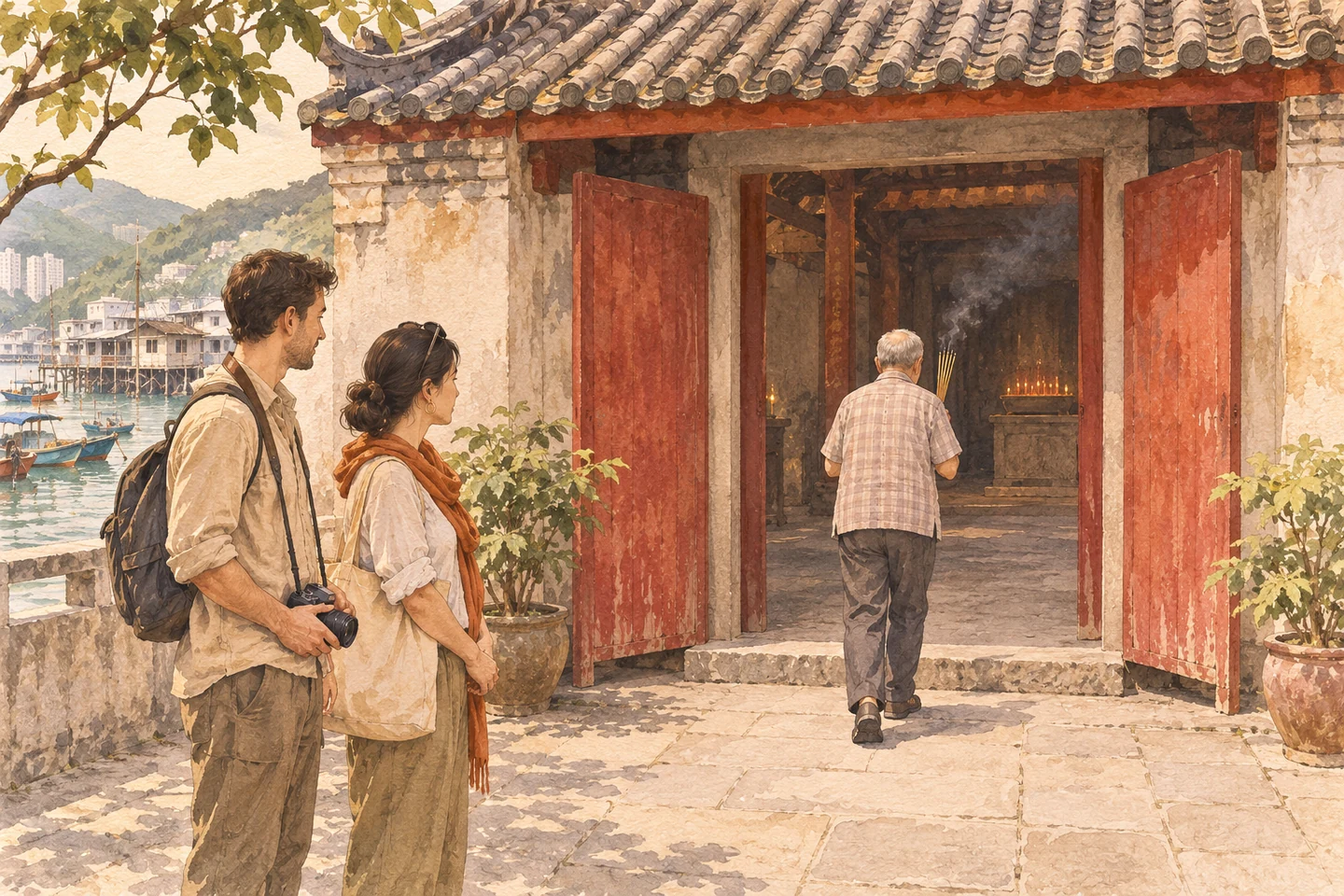
Hung Shing Festival falls on the thirteenth day of the second lunar month and is an important community celebration. An ordinary day's walk does not include a parade or ritual opera performance. Do not promise companions an event simply because you have seen festival coverage. A visit specifically for the festival needs its own current-year date, programme and crowd arrangements.
Continue along the waterfront to Wind Tower Park
After the temple, follow the public north-shore waterfront towards Wind Tower Park. This does not require climbing a hill or crossing to Aberdeen first. Use current signs to confirm the open paths, and follow permitted diversions around any works. Historical photographs do not establish that every ramp remains an available accessible route today.
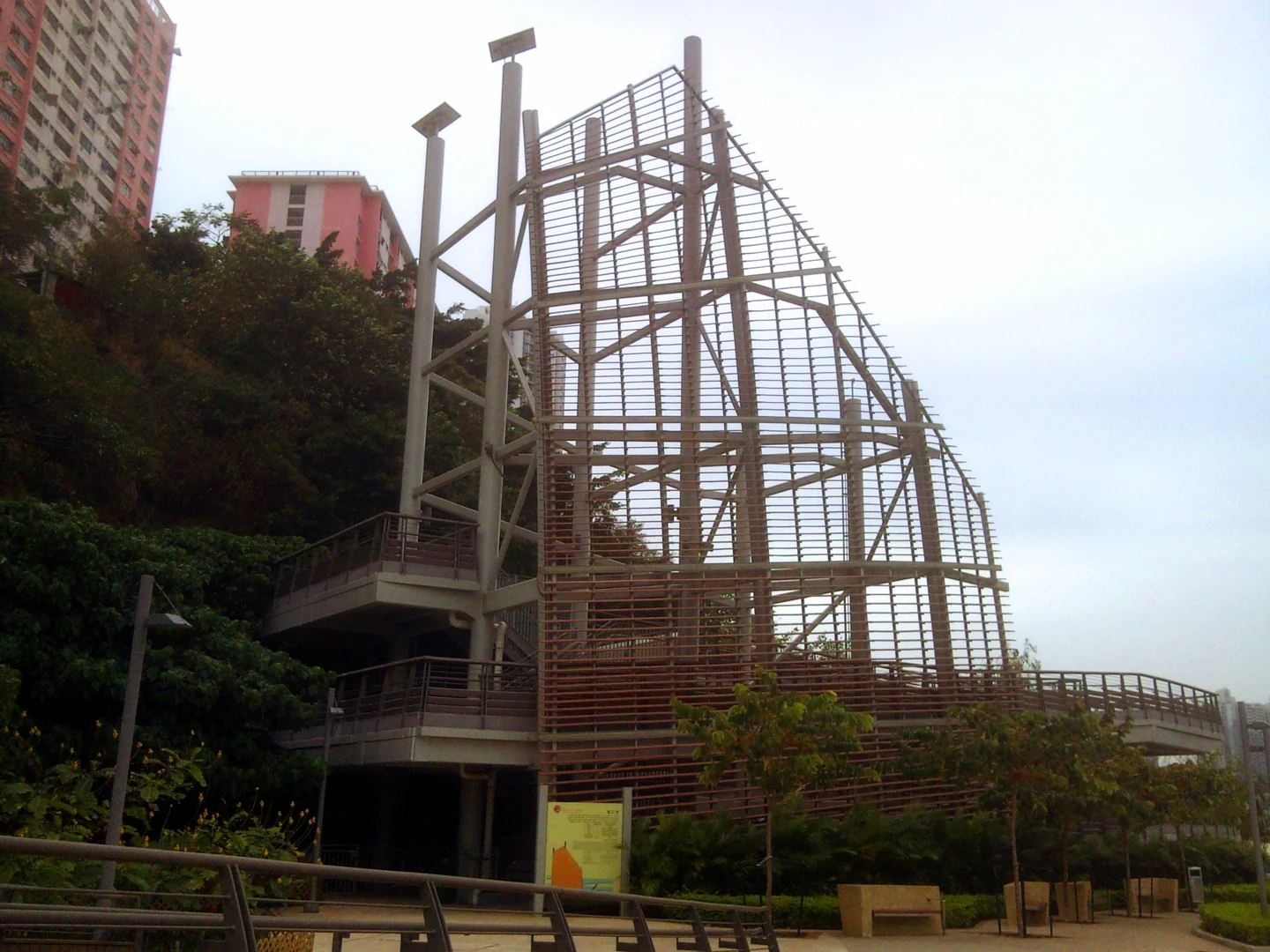
The government location introduction dates the park's opening to September 2009 and describes a traditional fishing-harbour design theme. The Wind Tower viewing structure takes its form from a traditional fishing boat. Start at ground level to compare its upright supports and curved outline before deciding whether to go up. Staying beside the water, resting and observing how people use the park can complete this section without a climb.
The page describes a gallery of traditional fishing and boatbuilding tools, open 09:00–21:00, with the other facilities open free of charge throughout the day. Published hours do not guarantee that every installation operates on the day of your visit. If the tower's electronic lights or another facility are under maintenance, there is no need to wait for them to resume. The commercial filming fees elsewhere on that government page concern production applications; they are not an ordinary visitor admission price.
If the gallery is open, choose one tool and establish whether it was used for fishing, building or maintenance. Then consider why its form suited the task. A tool connects materials, hand movements and divisions of labour; it need not be merely a nostalgic object. Remembering one actual use is more rewarding than calling everything “old fishing equipment”.
Watch a harbour that is still being used
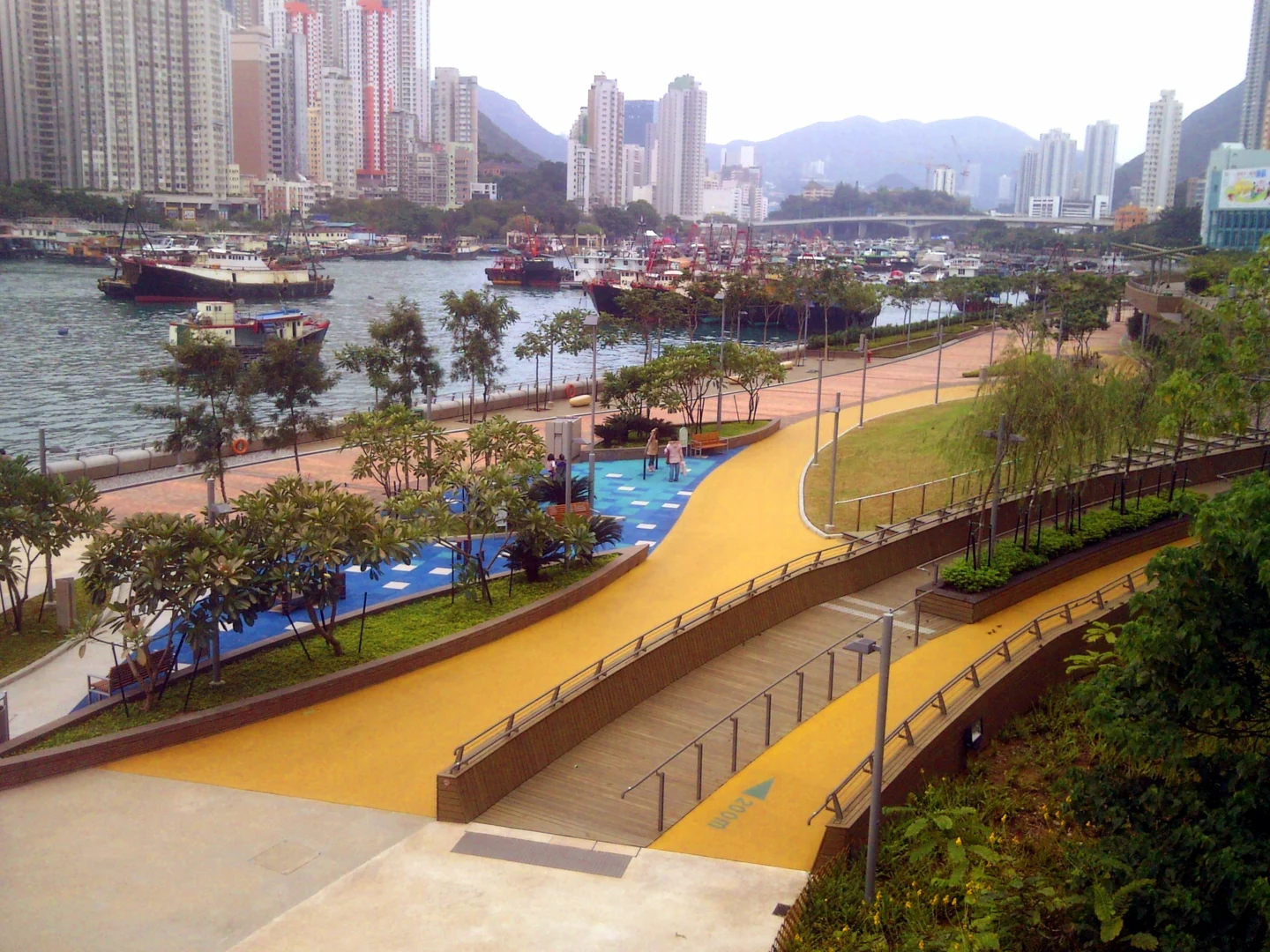
From the promenade, compare the size of moored vessels, the balance between cabins and working decks, and the relationship between water and waterfront housing. Boats, activities and mooring positions can change daily. The 2010 reference photograph introduces the setting; it does not promise that the same vessels will be present today.
With children, each person could look for a piece of equipment or infrastructure that allows a boat to stay here, then describe it from a safe position. If someone is handling ropes, moving supplies or repairing equipment, remain at a respectful distance. Do not enter working areas or board private vessels. People waiting for a ferry also need access, so avoid occupying a boarding position for a prolonged photo session.
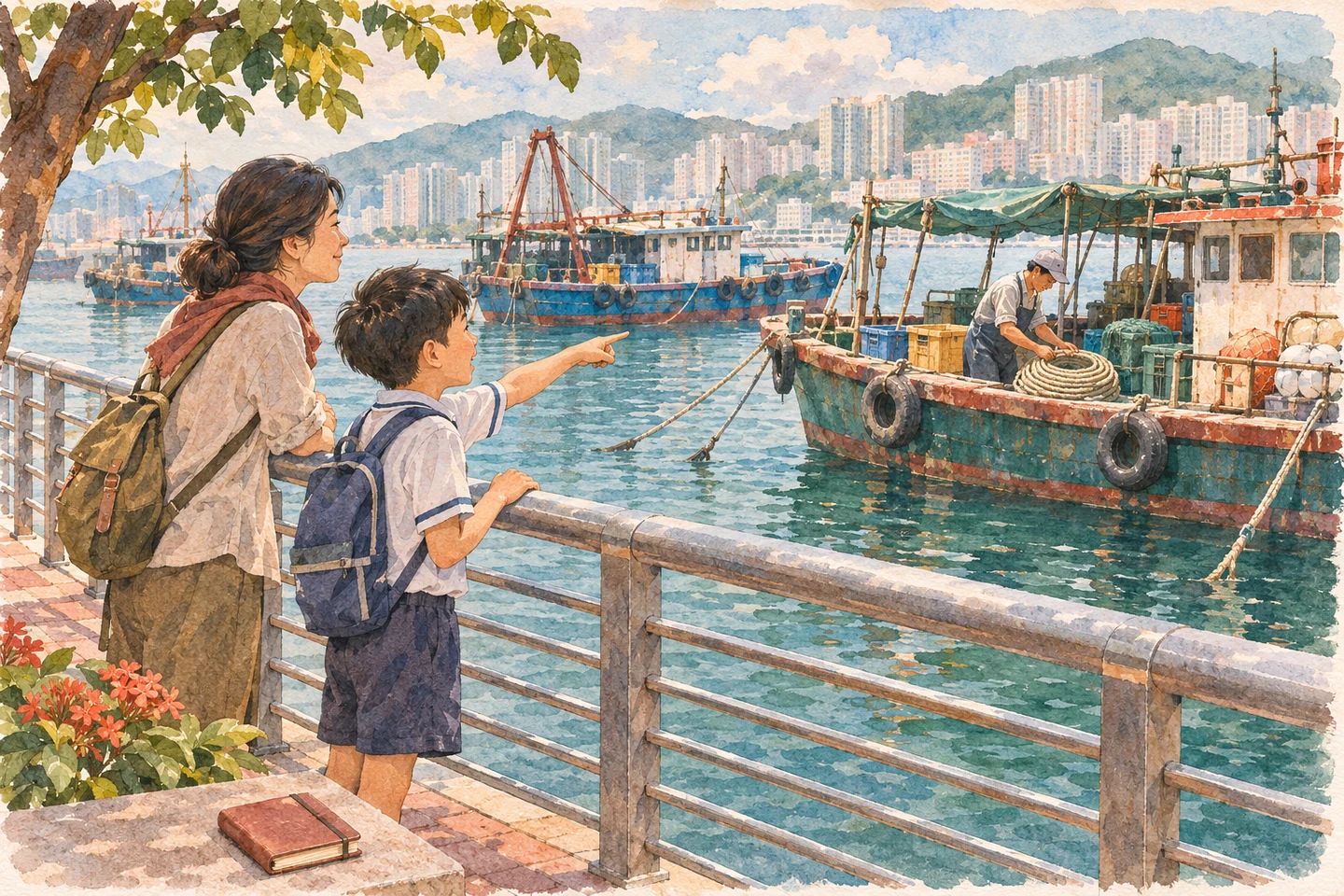
This outing is based on observation from shore. Seeing a sampan or sightseeing boat does not oblige you to buy a ticket. For a separate boat trip, first distinguish a local ferry from a sightseeing product, then check its route, fare, boarding conditions and return with the operator. This article does not quote boat fares that were not verified during this research, or present private cabins as freely accessible exhibits.
Main Street lunch is part of the itinerary
Return towards Main Street at lunchtime and choose somewhere that is open and suitable for your group's dietary needs. A fishing-harbour location does not establish that every restaurant serves seafood landed that morning. If ordering seafood, ask whether the price is per portion or by weight, and whether cooking and other charges are additional, before deciding on the total budget.
Ask about less oil, allergy handling, a high chair or an easier entrance before ordering if these matter to your group. Suitability matters more than completing an old restaurant list. If a queue is too long, choose another option and retain time to drink water and rest. Our Hong Kong restaurant bill guide explains useful charging distinctions.
After lunch, decide whether there is energy for another short look around the streets. With afternoon commitments, return directly to Lei Tung rather than adding South Horizons, furniture shopping and the opposite Aberdeen shore. For a separate Southern District beach day, see our Stanley and Repulse Bay itinerary.
Shorten the walk when weather or mobility requires it
In light rain, reduce waterfront time and bring lunch forward. The temple is not a dedicated visitor shelter, however, and the gallery cannot be assumed to accommodate the entire outing. In thunderstorms, strong winds or other severe weather, abandon a prolonged waterfront visit and choose another day rather than trying to preserve the timetable under an umbrella.
For a wheelchair or pushchair, first check the station's accessible exit and the usable surface route that day. A1 is this article's meeting reference, not a guarantee of accessibility for every traveller. Assess temple thresholds, the tower and individual ramps separately. Keeping the ground-level waterfront and lunch while omitting interiors or elevated sections is a valid shorter version. Return through the station entrance that actually meets your needs.
Your pre-journey checklist
- Keep the route on Ap Lei Chau's north shore, beginning and ending near Lei Tung.
- Plan the temple around its currently listed daily 08:00–17:00 hours, then check temporary arrangements.
- Understand the sea-facing setting and community beliefs; prioritise worship and clear passages.
- Choose Wind Tower and gallery areas according to actual access rather than trying every facility.
- Keep lunch around noon; a long wait can replace the final browse.
- Do not add an unplanned boat trip, hike or distant shopping stop; shorten the outing if conditions require it.
Sources & further reading
This article draws on the media coverage and public information below. Event and transport arrangements can change; check the latest details before travelling.
- MTR: South Island Line sights and Lei Tung Exit A1mtr.com.hk (Opens in a new tab)
- AMO: Hung Shing Temple's history, layout and dragon polesamo.gov.hk (Opens in a new tab)
- Chinese Temples Committee: hours and approach under Temple Informationctc.org.hk (Opens in a new tab)
- Government location guide: Wind Tower Park and gallery openingfpf.ccidahk.gov.hk (Opens in a new tab)
- UHK: three Southern District routes, client-supplied material from 2021hk.ulifestyle.com.hk (Opens in a new tab)
Make it your journey
Finish with one question: how does the same harbour appear in religious life, park design and everyday work? Taking away one specific observation from each is a more substantial half-day than collecting a list of places where you never paused.