A meeting in Hong Kong does not authorise every task you might perform there. Ordinary visitors generally cannot take paid or unpaid employment, establish or join a business, or become students. Specified business meetings, speaking arrangements and designated schemes have separate conditions. Describe your actual role, duties, remuneration and dates before checking the appropriate arrangement with the organiser and Immigration Department.
Who this guide covers
This guide is for non-local people planning to enter Hong Kong as visitors for meetings, exhibitions, short seminars or other activities, including visa-free visitors. Visa-free access concerns the need for a prior visit visa; it does not automatically confer employment or study rights. Residents and people admitted for employment, study or another purpose must follow their own conditions. Information was checked on 27 October 2026.
The Immigration Department’s permissible activities for visitors lists restrictions on paid or unpaid employment, establishing or joining a business, and becoming a student at a school, university or other educational institution. Assess what you will actually do, rather than relying on an invitation describing it as an exchange, experience or voluntary activity.
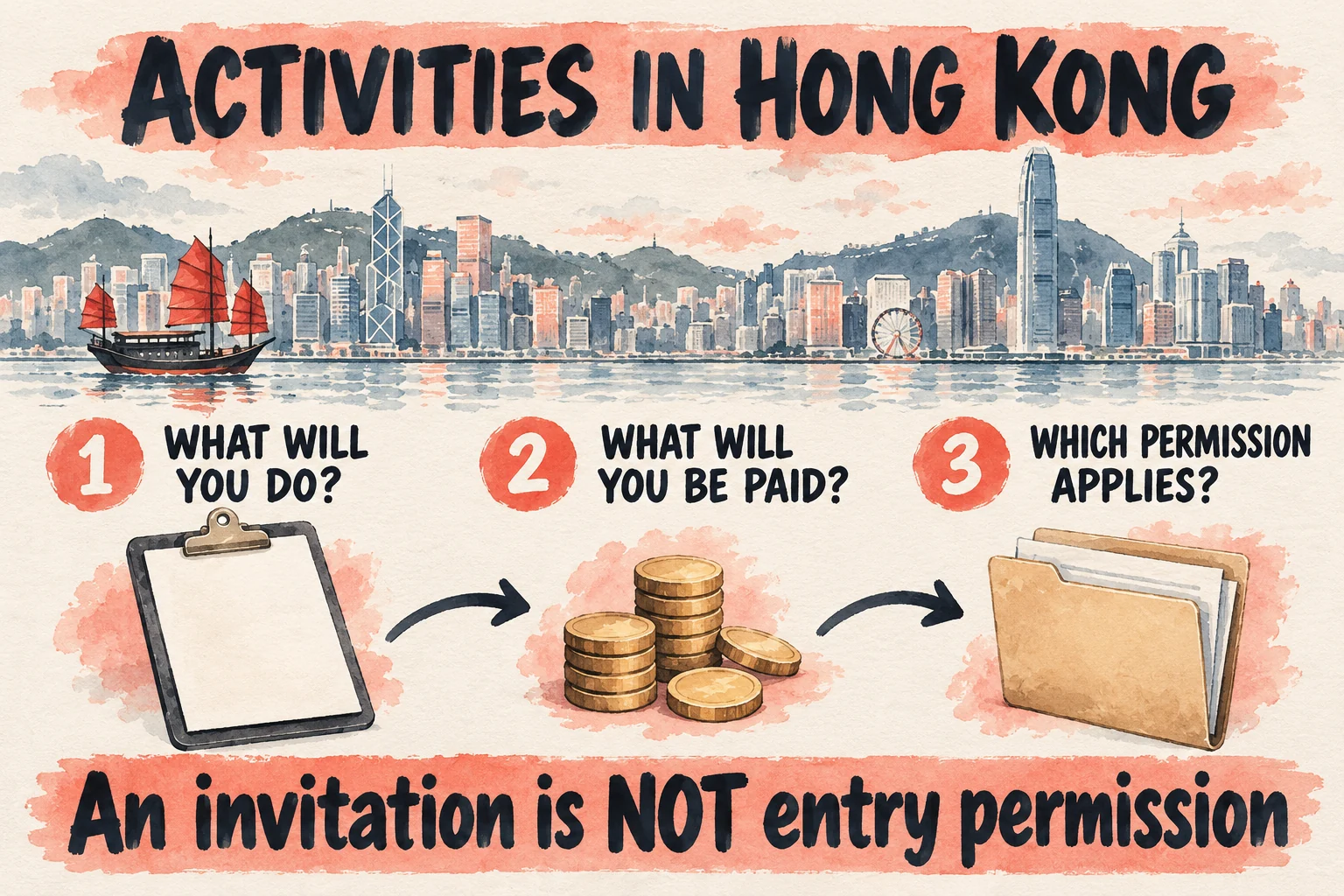
Replace “a three-day event” with a task list. Will you listen, negotiate contracts, provide services, work under instructions, perform, or attend an academic programme? Are travel and accommodation reimbursed, or will there also be a speaking fee, service fee or other payment? These distinctions are more useful than the event name when asking for guidance.
Attending a trade fair is different from building a booth
Immigration lists several generally permissible business activities: concluding contracts or submitting tenders, examining or supervising the installation or packaging of goods or equipment, product orientation, and short seminars or business meetings. Participation in exhibitions or trade fairs is also listed, but not direct sales or services to the general public or construction of exhibition booths.
| Proposed role | Boundary to check |
|---|---|
| Exhibition visitor or business negotiator | Do not extend this to direct public sales or services |
| Inspection or supervision of installation | Calling a task supervision does not establish that hands-on construction is the same activity |
| Invited speaker | Check remuneration and the 14-consecutive-calendar-day conditions, or a designated scheme |
| Classroom seminar participant | Distinguish a non-academic seminar from on-the-job training, secondment, internship or formal study |
| Volunteer or short-term helper | Being unpaid is not automatic permission; provide the actual duties for assessment |
A colleague attending negotiations does not establish that another traveller may construct the stand under the same visitor arrangement. The distinction concerns duties, not seniority. If a trip contains several roles, check each rather than treating one permitted activity as authorisation for the whole schedule.
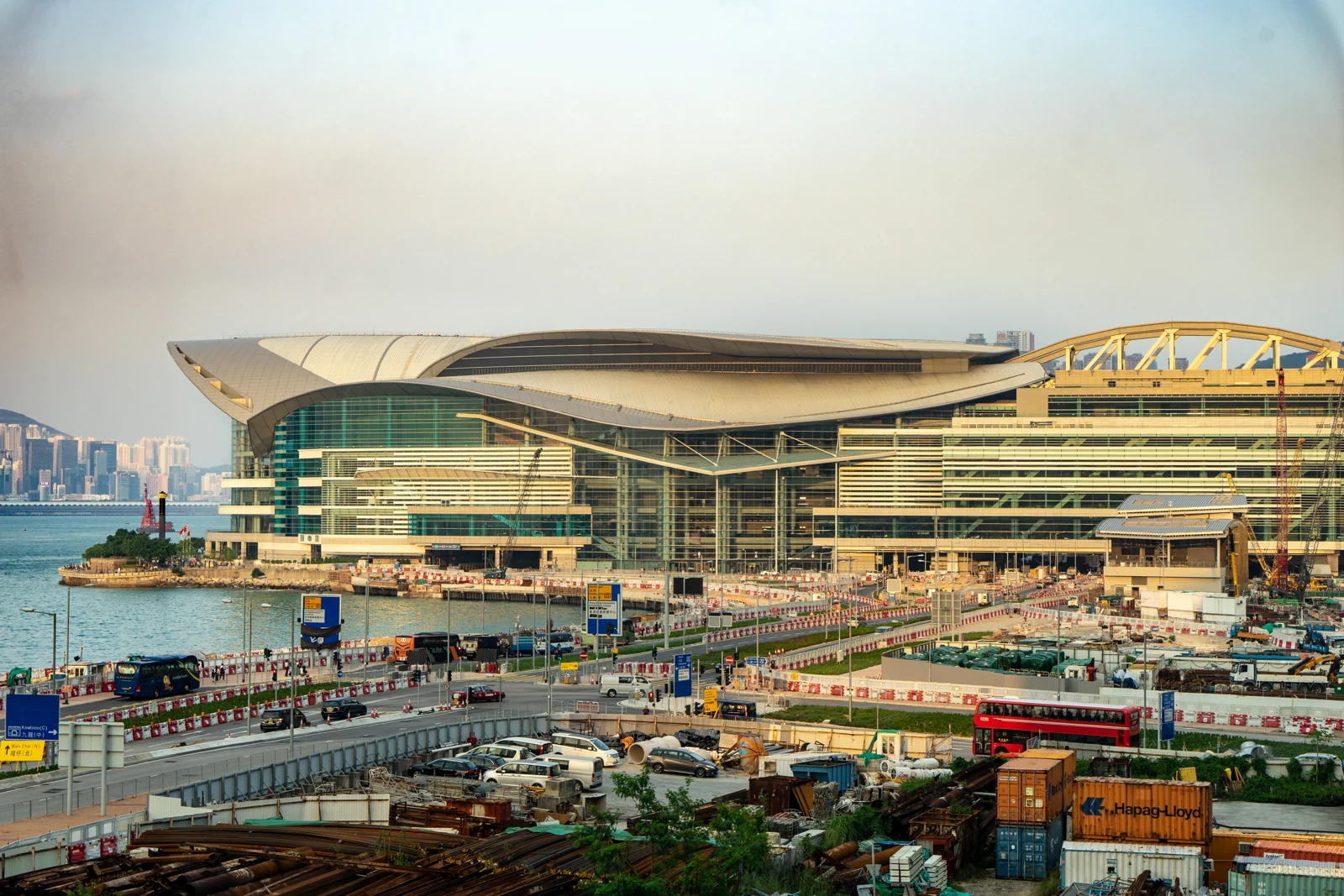
Venue and transport are a separate preparation. After checking your activity, use the Hong Kong exhibition transfer guide to identify the actual destination at HKCEC or AsiaWorld-Expo. A badge or transport booking does not confirm immigration or employment eligibility.
Speaking: check both payment and the 14-day window
Ordinary visitors may speak or present at events subject to the published conditions. The usual arrangement requires no remuneration for speaking or presenting, while allowing provision or reimbursement of event-related accommodation, passage, meals and similar expenses. Sector-specific speaking engagements under the designated short-term visitor scheme can involve remuneration where allowed on the relevant bureaux or departments’ recommendation; check that exception separately.
For the ordinary speaking arrangement, there is no maximum number of events within each period of permitted stay, but participation is limited to 14 consecutive calendar days from the first day of the speaking or presentation activity. These are not working days or 14 separate speaking days accumulated across several weeks, and the window does not extend your actual permission to remain.
Even a single speech requires clarification of payment. For events spread over several weeks, check the time window too. Ask the organiser to list speaking dates, the role and every payment item. Do not decide eligibility solely because an overseas company pays or no Hong Kong payslip is issued.

A classroom seminar and an internship may be treated differently
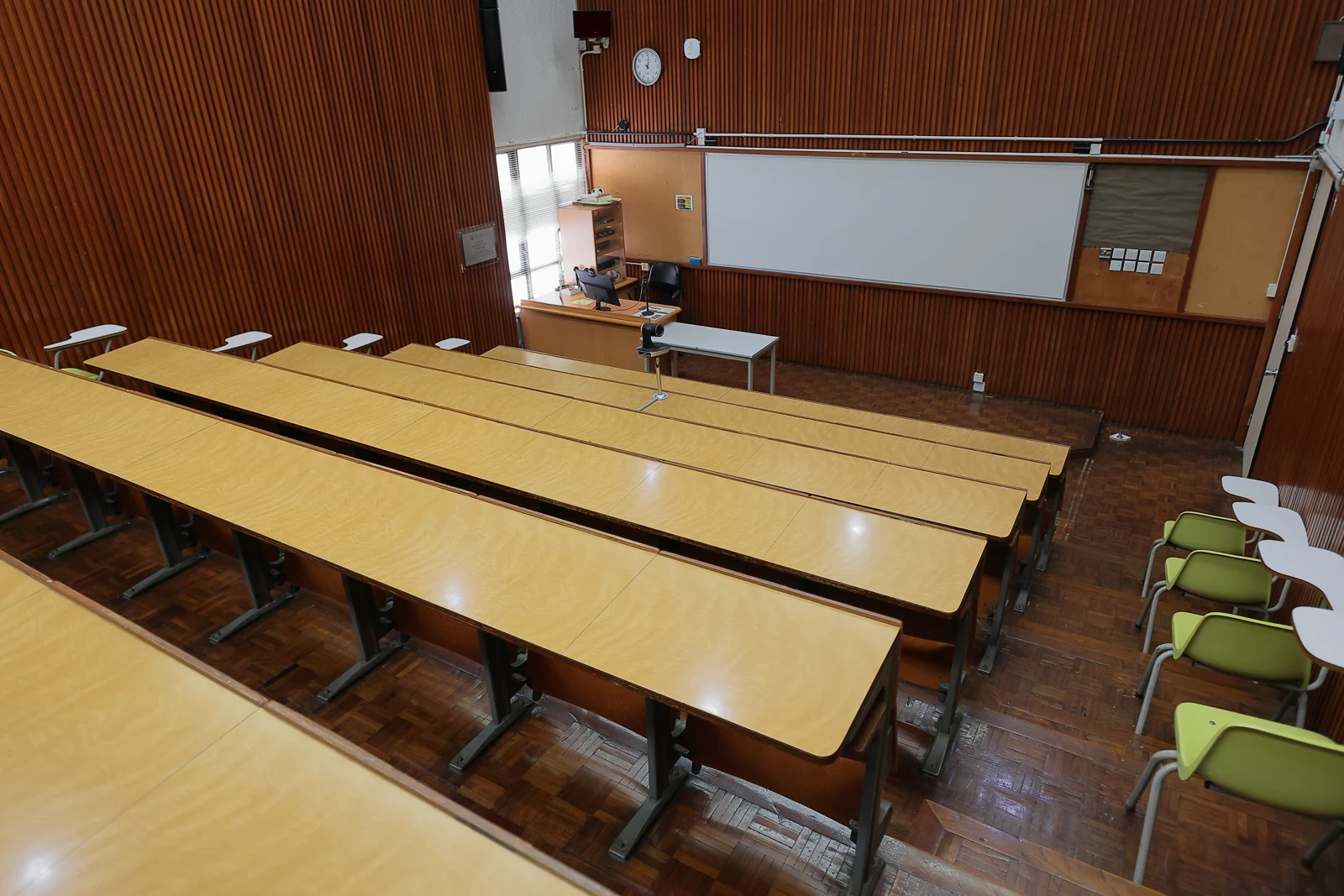
The Department’s training FAQ explains that visitors may attend short classroom seminars that can include field visits, experience sharing or incidental hands-on demonstrations, provided these do not amount to practice as part of employment. Its stated scenario is not an academic programme, involves no on-the-job training, secondment, internship or employment, and has no training contract with the organiser.
Where the actual arrangement amounts to on-the-job training, secondment or an internship in an employment relationship, a training visa or entry permit is required whether paid or unpaid. “Only a few days” and “entirely in an office” do not settle that question. A formal university course or academic programme is not interchangeable with a short seminar simply because both are called courses; have the institution confirm the applicable study arrangement.
Likewise, do not assume volunteering or helping is permitted solely because no money changes hands. Describe the duties, work assignments, beneficiaries, dates and organisation to Immigration or the relevant scheme authority. This guide neither treats all charitable activities identically nor omits unpaid employment from the general restriction.
The short-term visitor scheme is a conditional exception
The Immigration Facilitation Scheme for Visitors Participating in Short-term Activities in Designated Sectors, or STV Scheme, lets eligible visitors invited or sponsored by authorised hosts undertake specified activities without an employment visa or entry permit. The official page states that its scope expanded from 1 October 2026 and now lists 18 sectors. That does not make every company or every activity within those sectors eligible.
Check three things: the host is authorised, the activity falls within the endorsed scope, and your role matches the invitation. Follow the specified scope and role strictly. Employment, business or study beyond the scheme requires the appropriate permission. Host lists and permitted scope can change, so follow the current official-page links before travelling instead of relying on a forwarded screenshot.
For each period admitted as a visitor, participation can last up to 14 consecutive calendar days from the first day of specified activity, with no cap on the number of designated activities within that window. Starting on 10 November would count through 23 November: this is a calendar example, not approval of your entry or stay. If the permission actually granted is shorter, the activity period is shortened accordingly.
Check invitation, entry permission and stay limit separately
A scheme invitation is not an Immigration-issued visa or entry permit. It guarantees neither approval of a visit visa nor permission to land. People requiring a visit visa must still obtain it beforehand; Mainland, Macau and Taiwan residents remain subject to their respective entry arrangements. Mainland residents must also obtain travel documents and endorsements corresponding to the actual purpose through the relevant authorities. The invitation is neither an entry approval nor supporting documentation for those Mainland travel-document or endorsement applications.

Before departure, obtain an agenda, specific duties, places and dates, payment or reimbursement details, and the scheme or permission route on which the organiser relies. Separately check your travel document, applicable visit visa or registration, genuine itinerary and departure arrangements. After entry, read the actual limit of stay. An invitation describing 14 days does not permit an overstay.
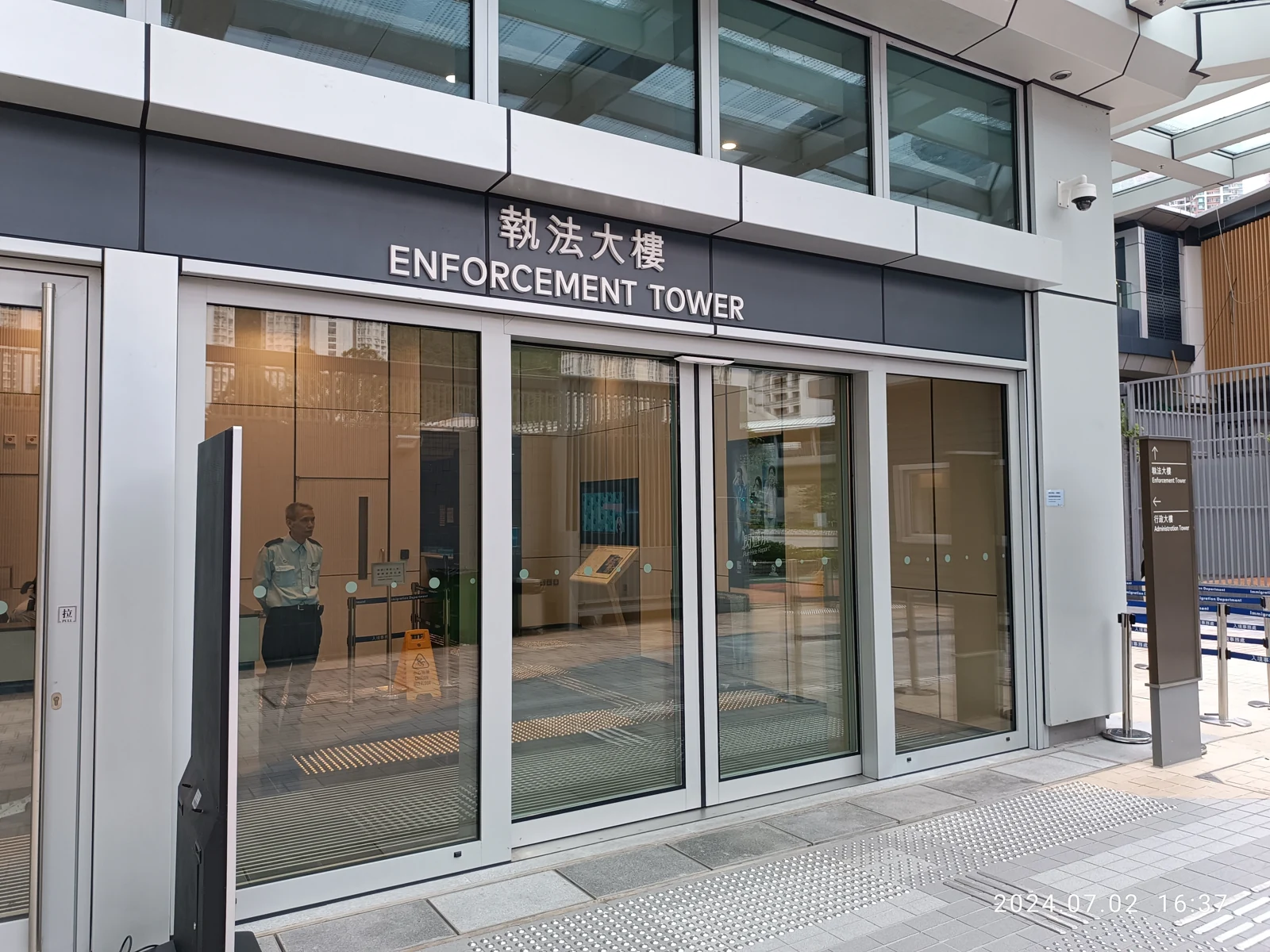
For uncertainty, use Immigration’s official enquiry channel or enquiry@immd.gov.hk with the actual duties and schedule. The STV page lists sector authorities and the scheme hotline, +852 3861 8414, Monday–Friday 08:45–17:15. Resolve the arrangement before committing to inflexible travel, rather than trying to explain an unexpected change of role on the event day.
Your pre-journey checklist
- Confirm the status and conditions under which you will enter.
- Separate listening, negotiating, speaking, selling, operating and internship duties.
- List all remuneration, reimbursements and activity dates.
- For the STV Scheme, check host authorisation, activity scope and the invited role.
- Distinguish the 14-consecutive-day window from the actual limit of stay.
- Refer unclear volunteering, course or training arrangements to the organiser and Immigration.
Sources & further reading
This article draws on the media coverage and public information below. Event and transport arrangements can change; check the latest details before travelling.
- Immigration Department: permissible activities for visitorsimmd.gov.hk (Opens in a new tab)
- Immigration Department: training FAQimmd.gov.hk (Opens in a new tab)
- Immigration Department: short-term visitor activities in designated sectorsimmd.gov.hk (Opens in a new tab)
- Hong Kong Government: scheme expansion announcement, 24 September 2026info.gov.hk (Opens in a new tab)
- RTHK: short-term visitor scheme adds social welfare sectornews.rthk.hk (Opens in a new tab)
Make it your journey
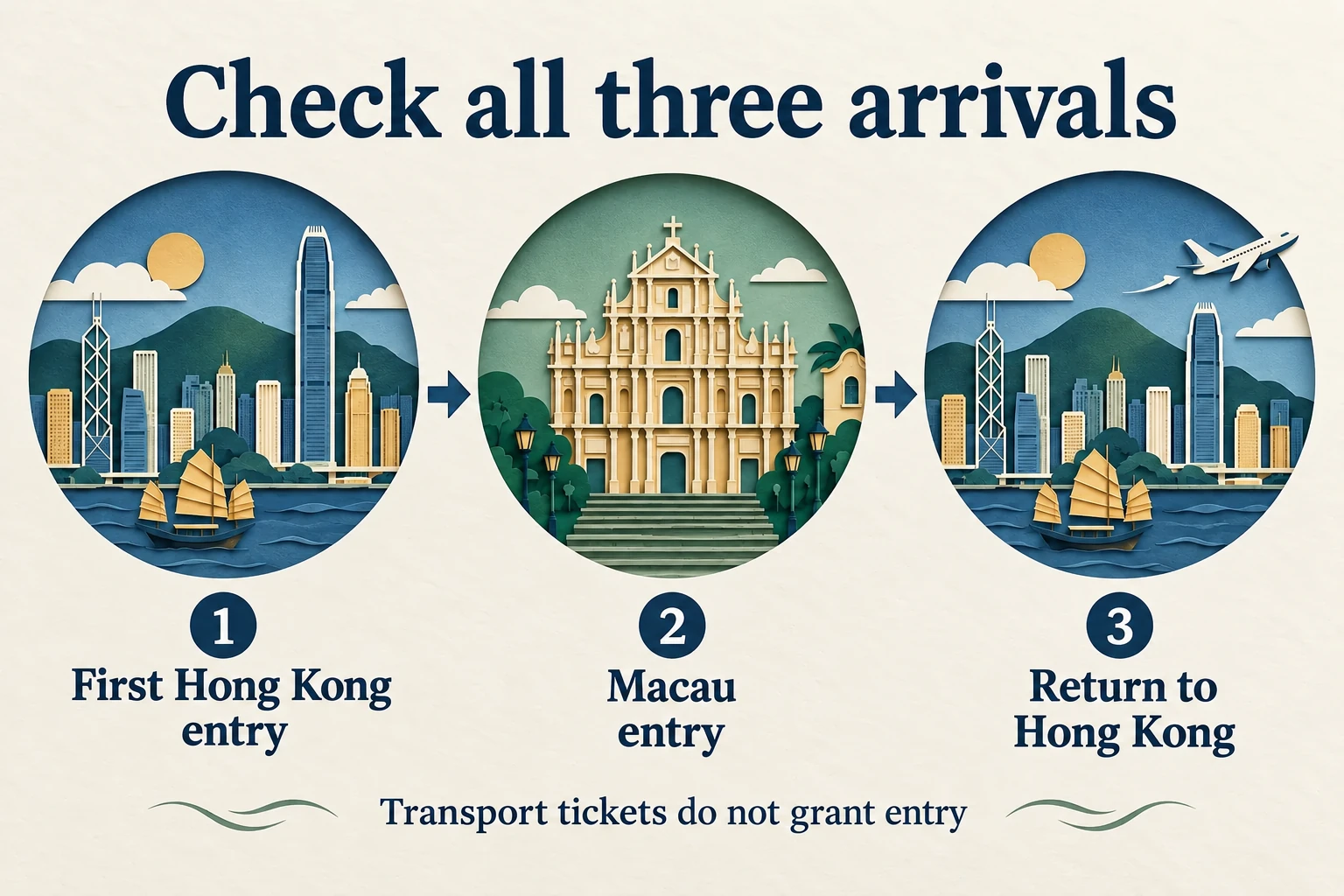
Confirm activity eligibility and dates before arranging hotels, meetings and departure transport. If the trip includes Macau and a return to Hong Kong, also read the Hong Kong–Macau–Hong Kong entry checklist and check each admission separately.