For a first Hong Kong tram ride, choose a short section of Hong Kong Island, check the destination board, board at the rear, then pay and leave through the front. The tram suits unhurried sightseeing with a small bag. For a timed appointment, bulky luggage or a journey requiring step-free access, compare the MTR and other accessible options before deciding.
Make sure you mean the street tram
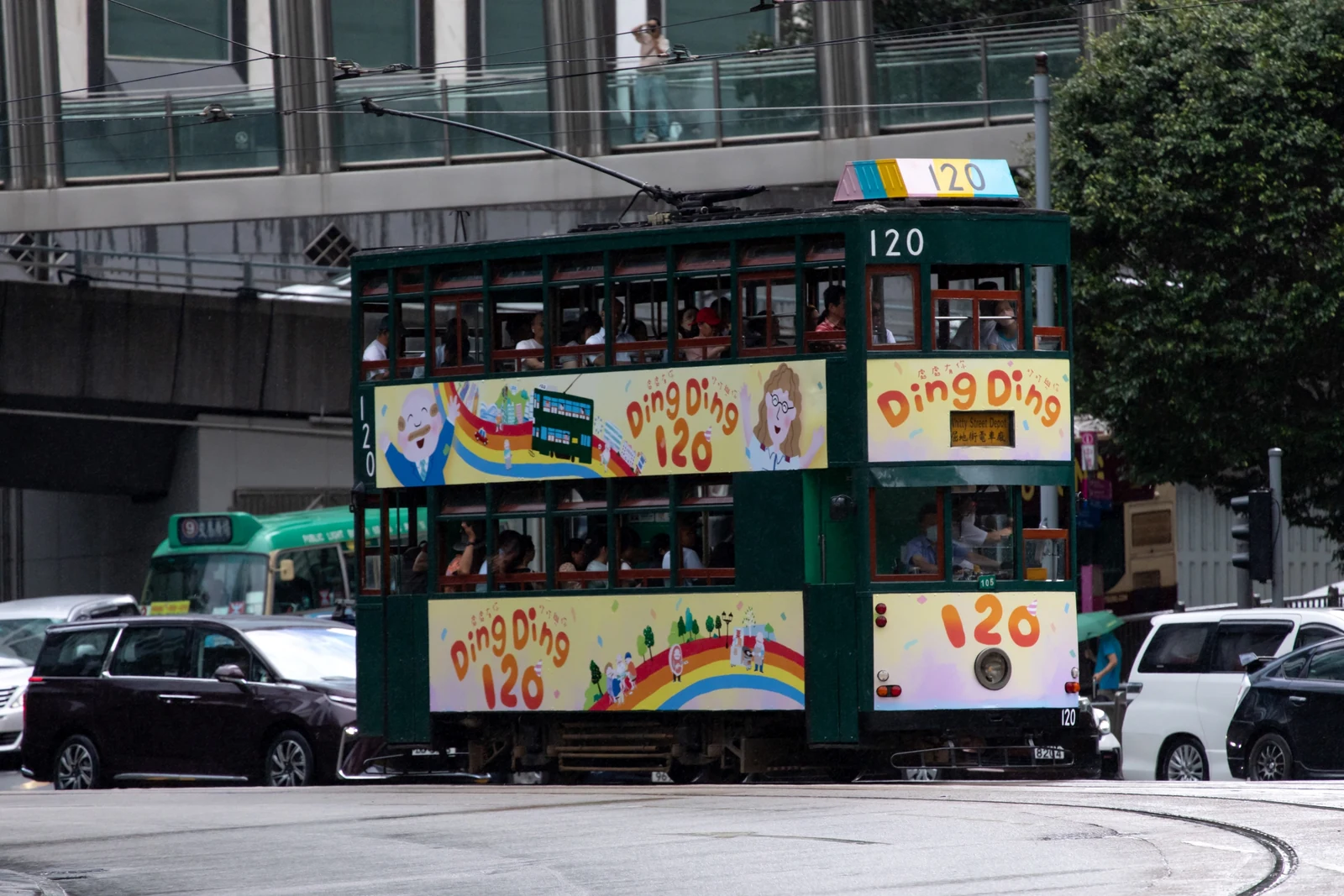
This guide covers Hong Kong Island's double-decker street trams, affectionately called the ding ding. They are different from the Peak Tram and the New Territories Light Rail. The Hong Kong Tourism Board's tram introduction describes a network along the island's northern shore, between Kennedy Town and Shau Kei Wan. These trams do not take you to Tsim Sha Tsui, the airport or Macau.
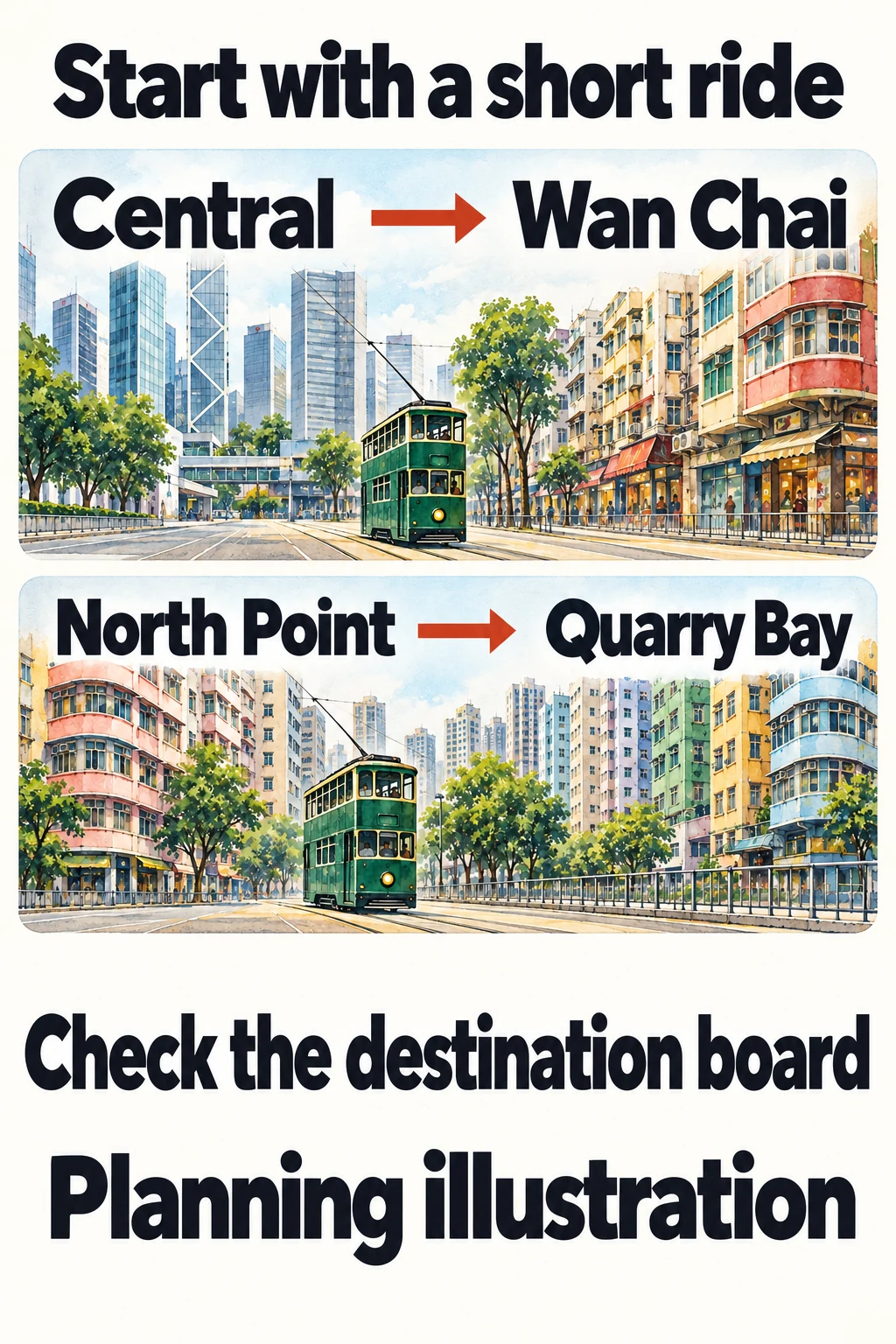
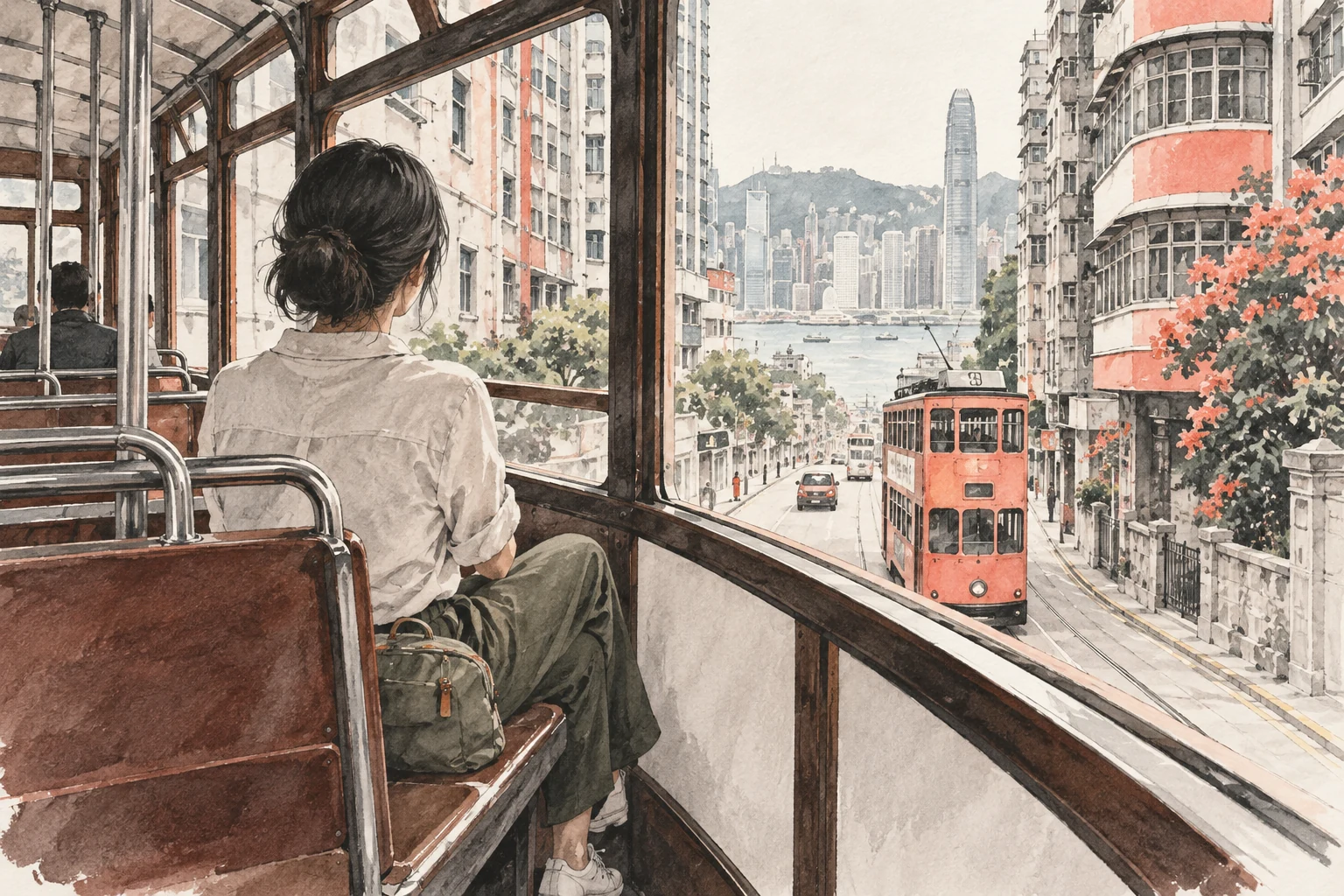
Treat the ride as time to watch a changing streetscape. Upstairs gives a different perspective on signs and buildings; downstairs avoids an extra staircase. On a busy sightseeing day, a short ride linking lunch and a walk is usually easier to fit in than a dedicated return trip between termini. An upstairs front seat is never guaranteed, and waiting for one should not dictate the rest of your day.
Read the destination, not the advertisement
Trams travelling in the same direction can finish at different termini. Use Hong Kong Tramways' journey planner to identify boarding and alighting stops, then read the approaching tram's destination board. Confirm that its journey passes your destination, especially where the Happy Valley branch matters. A fleet number or advertising livery identifies a vehicle; it is not a fixed bus-style route number.
Use designated pedestrian crossings to reach stops in the road. Watch the signals and traffic on both sides; do not cut across railings or tracks to catch an approaching tram. If you miss it, check the destination on the next one as well. When uncertain, ask the driver when it is safe and practical for them to respond, rather than guessing after boarding.
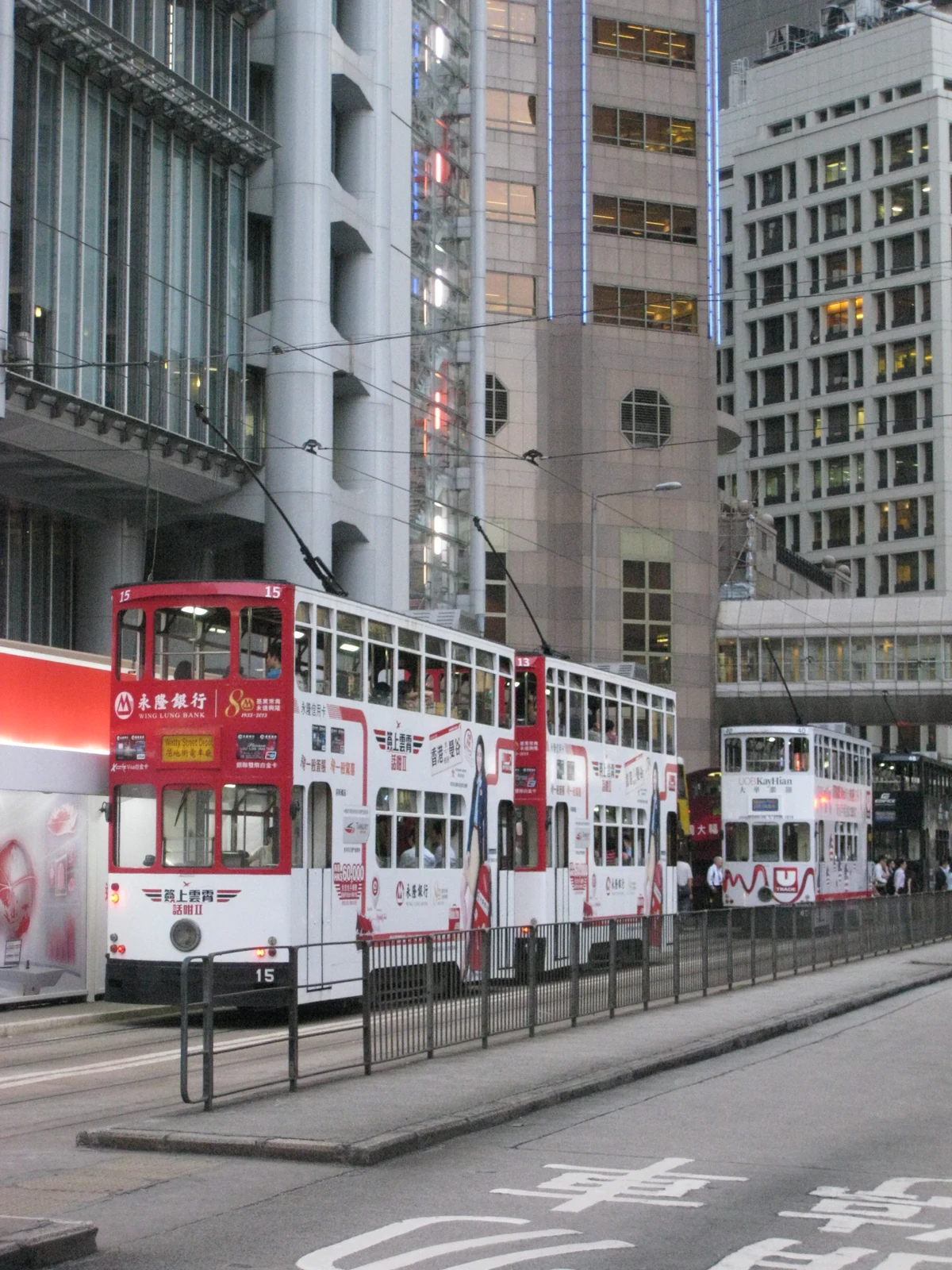
Rear entrance, front payment, front exit
- Wait for the tram to stop completely, board through the designated rear door and move into the carriage rather than sorting your bag in the doorway.
- Choose the lower deck, or use the stairs carefully while holding on. Keep stairs clear and keep your body inside the windows.
- Prepare your payment method before your destination and follow onboard directions towards the front. If you are upstairs, allow time to come down safely rather than rushing.
- Pay at the front and leave through the front door. Put cash directly into the farebox; change is not provided. Follow the equipment instructions for Octopus and supported electronic payments.
The Tourism Board confirms this rear-board, front-pay, front-exit sequence. A Hong Kong 01 report about a rear-turnstile exit dispute is a reminder to use the correct entrance and exit; it does not establish why the passenger acted that way. Do not climb across the rear turnstile to leave, or assume that this works like a bus where you pay on entry.
Ordinary single fares and payment preparation
The Transport Department's fare notice sets out the fares effective from 12 May 2025. We checked the notice on 15 October 2026. These are ordinary single fares; check the displayed information again before travelling.
| Passenger category | Fare in Hong Kong dollars |
|---|---|
| Adult / age 12 and over, with the senior category listed separately | HKD 3.30 |
| Child aged 3–11 | HKD 1.60 |
| Senior aged 65 and over | HKD 1.50 |
The operator's Notice to Passengers also says that an accompanied child under three who does not occupy a seat travels free, with no more than two such children per adult. Do not extend this condition to children aged three or over, or calculate the child fare yourself by simply halving the adult price.
For an easier exit, establish everyone's fare category, check Octopus balances or separate the exact coins before reaching the front. Avoid having an entire group search for wallets at the door. Contactless bank cards and other electronic methods depend on the equipment markings and current operator support. A foreign card may also incur an issuer charge; a small local fare does not automatically mean a fee-free international transaction.
Two manageable ideas for a first ride
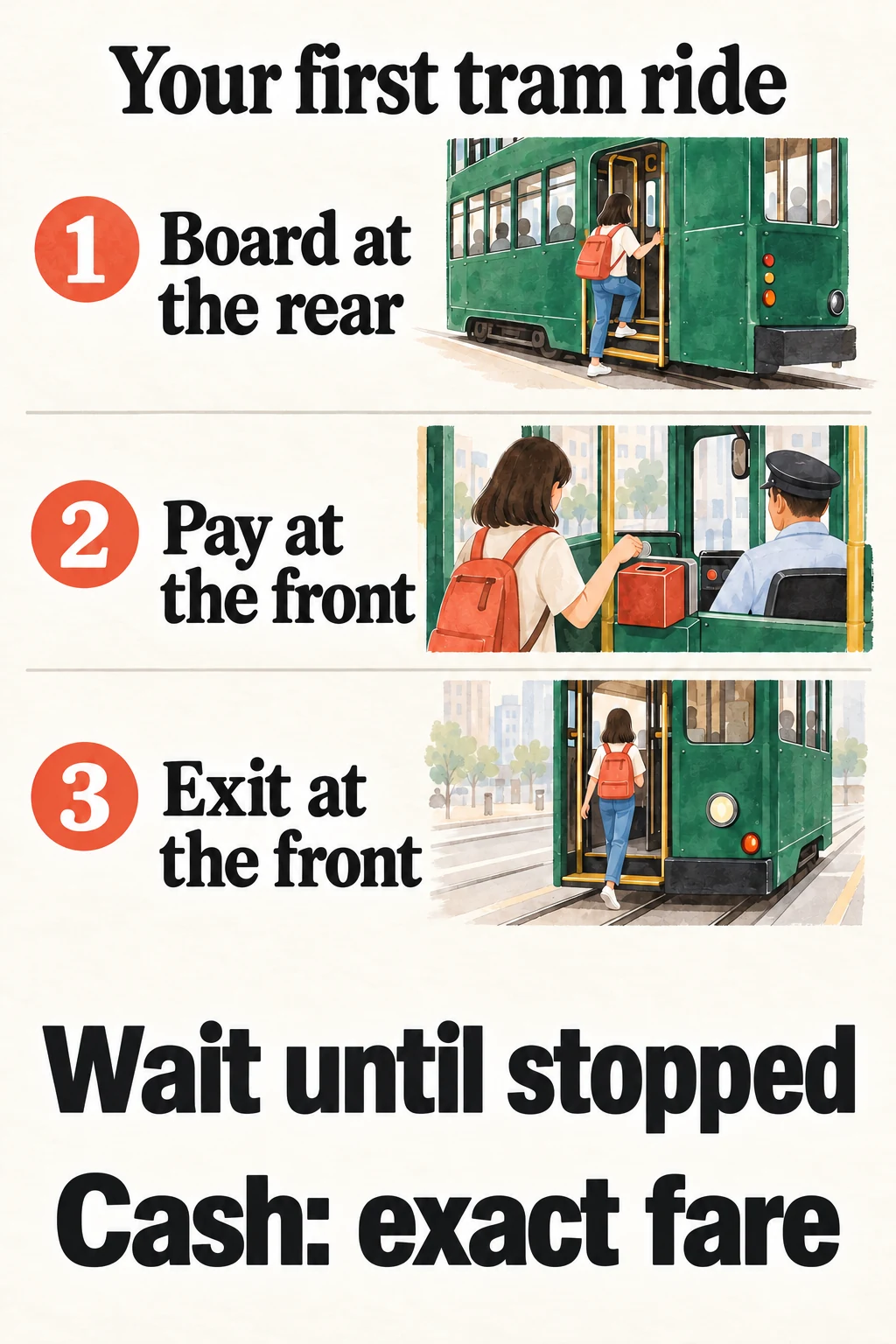
These are editorial suggestions for areas to connect, not a charter route or guaranteed journey time. Check actual stops, direction and the arriving tram's destination in the planner.
| Where your day takes you | Short section to consider | How to use it |
|---|---|---|
| Around Central | Central towards Wan Chai | Ride after lunch or a city walk, then explore on foot in Wan Chai |
| Eastern Hong Kong Island | North Point towards Quarry Bay | Watch the changing scale of homes, shops and streets; choose a destination near your actual alighting stop |
You do not need to do both on the same day. A low fare is not a reason to squeeze a long return tram journey into an already tight itinerary. Road traffic affects progress, and the operator says frequencies may change with traffic conditions. If you have a fixed appointment, compare the MTR and allow for walking at either end.
Stairs, bags and children: check suitability first
Ordinary trams are narrow, and aisles and staircases need to remain clear. The Notice to Passengers specifies luggage limits using 7 kg and 30 litres and allows the driver to refuse goods that inconvenience other passengers. Its wording addresses weight, volume and inconvenience together. If your bag is near a limit, ask the operator directly; do not assume that being below just one measure guarantees acceptance of a large suitcase.
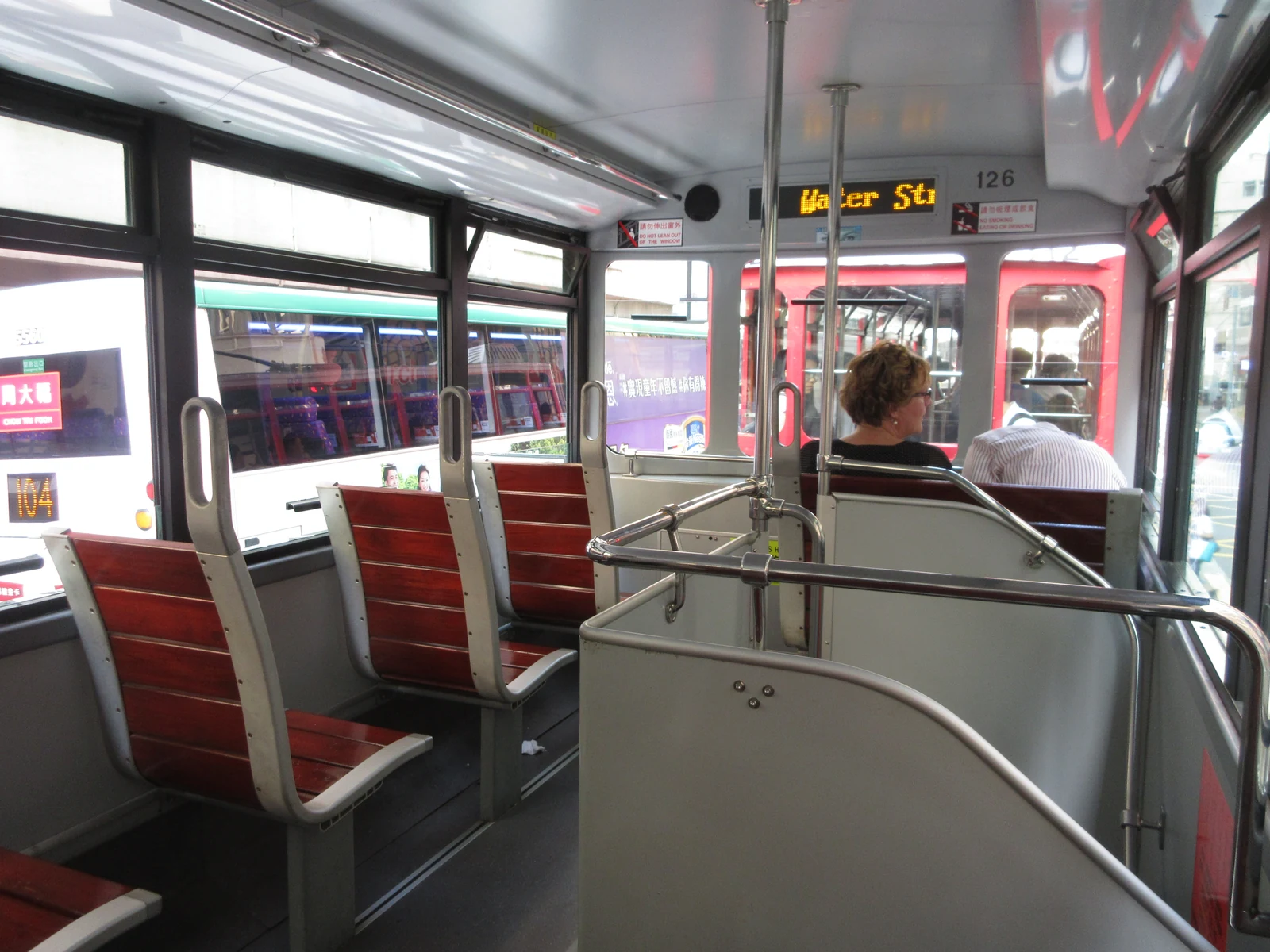
For sightseeing, leaving larger luggage at your hotel and carrying a day bag is the simpler choice. If you have a pushchair, mobility equipment or need step-free travel, confirm feasible arrangements with the operator and compare accessible MTR routes before setting off. Do not arrive expecting to roll a wheelchair or pushchair straight onto an ordinary tram.
With children, agree in advance not to chase a tram, linger on the stairs or put hands outside the windows. Eating and drinking are not allowed onboard. If no upstairs seat is available, there is no need to crowd the front window for a photograph: a short lower-deck ride still shows Hong Kong's everyday street life.
Your pre-journey checklist
- Confirm that your destination is on the island tram network, not the Peak Tram or Light Rail.
- Check both stops and the arriving tram's destination, and use proper pedestrian crossings.
- Board at the rear; pay and exit at the front. Carry exact cash if needed.
- Identify each passenger's fare category and check all conditions for free child travel.
- Travel light and consider stairs, mobility needs and any later appointment.
Sources & further reading
This article draws on the media coverage and public information below. Event and transport arrangements can change; check the latest details before travelling.
- Hong Kong Tourism Board: Everything to Know About the Beloved Ding Dingdiscoverhongkong.com (Opens in a new tab)
- Hong Kong Tramways: Notice to Passengershktramways.com (Opens in a new tab)
- Transport Department: Revision of Tram Farestd.gov.hk (Opens in a new tab)
- Hong Kong Tramways: Plan Your Ridehktramways.com (Opens in a new tab)
- 香港01:電車後門下車討論報道hk01.com (Opens in a new tab)
Make it your journey
Give your island tram ride room to be unhurried. If your wider trip also includes Hong Kong–Macau travel, plan those cross-border legs separately so that city sightseeing and intercity journeys each use a suitable form of transport.