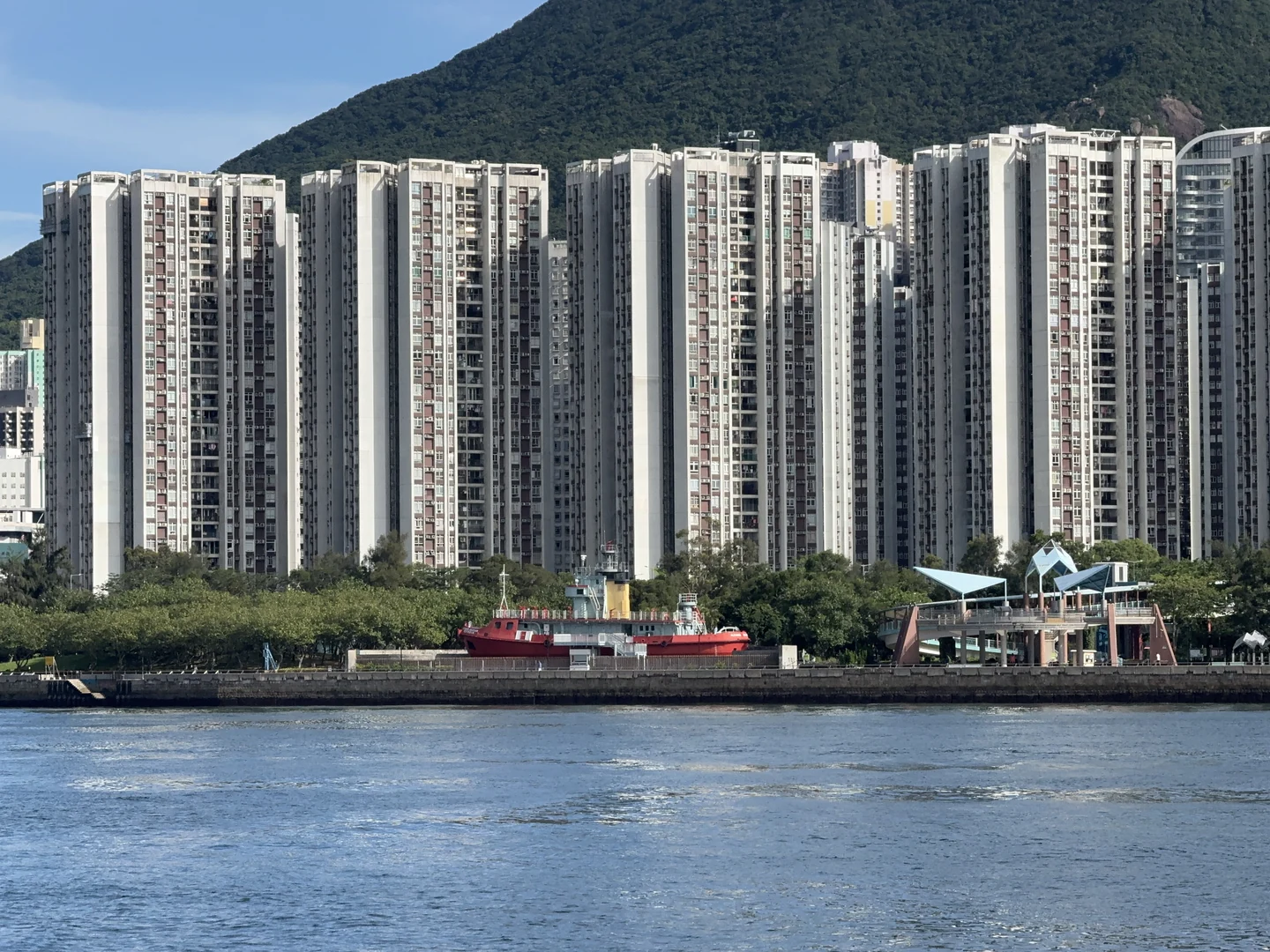
For a family half-day in Hong Kong without a boat trip, combine the Fireboat Alexander Grantham Exhibition Gallery, Quarry Bay Park's waterfront and its ocean-themed playground. Visit the exhibition first, take a short waterside walk, leave time for lunch, then make play optional. The fireboat gallery closes on Tuesdays except public holidays. An accessible promenade does not mean the museum is open too. Allow roughly three to four hours after reaching eastern Hong Kong Island, with travel to and from your hotel counted separately.
Keep the half-day around the park
Honeycombers' Quarry Bay neighbourhood guide presents the district as a mix of homes, cafés, restaurants and parkland. This itinerary selects its waterfront side: let children first encounter a vessel that carried out real rescue work, then look at today's harbour with those questions in mind. It is not a checklist combining Monster Building photography, Taikoo Place shopping and a Mount Parker hike.
Set navigation to “Fireboat Alexander Grantham Exhibition Gallery”, rather than simply “Quarry Bay”. Different parts of the park, nearby MTR exits and waterfront entrances are not interchangeable. Choose current public transport from your accommodation, then follow present walking directions to the gallery. With a pushchair or wheelchair, check station lifts and crossings separately. We do not promise a fixed short walk from every station exit.
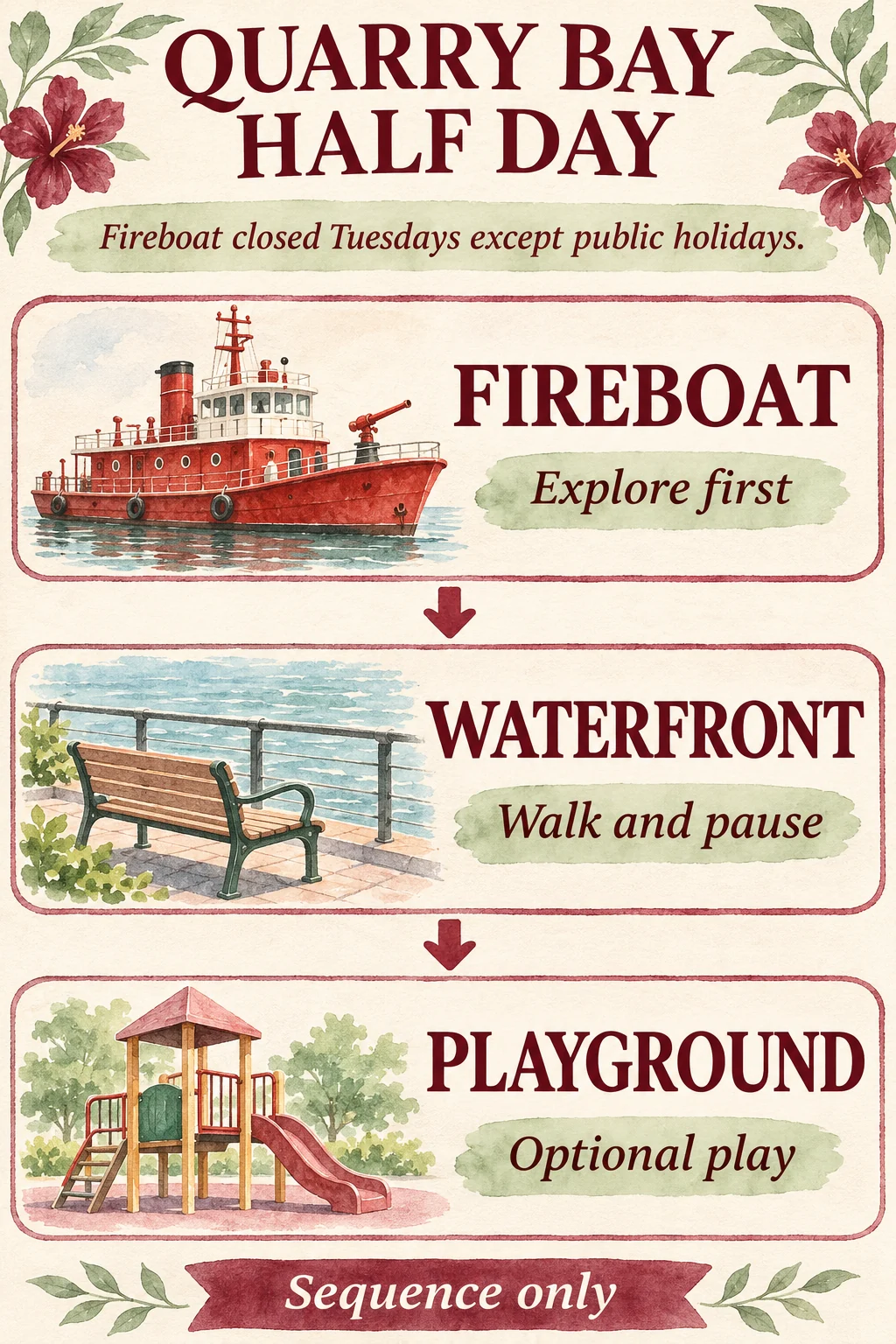
The timing below is our suggested rhythm, not an official tour. If you arrive late, drop the playground or shorten the walk instead of continually delaying lunch.
| Suggested time | Activity | Allow for |
|---|---|---|
| 10:00–11:15 | Fireboat gallery | The vessel, displays and an unhurried look around open areas |
| 11:15–11:45 | Short waterfront walk | Water, harbour watching and a chosen turning point |
| 11:45–12:45 | Seated lunch | Adjusting for the actual walk to a restaurant and waiting time |
| 12:45–13:15 or later | Optional playground | Energy, weather and the rules of each piece of equipment |
Start with the fireboat: what makes this vessel different?
The Hong Kong Museum of History's gallery page records that Alexander Grantham entered service in 1953, retired in 2002 and served as flagship of the Hong Kong Fire Services Department's fireboat team. Built by Hong Kong & Whampoa Dock Co. Ltd., it connects marine rescue history with local shipbuilding. The purpose-built gallery opened in 2007. The vessel is not a decorative attraction newly constructed for visitors.
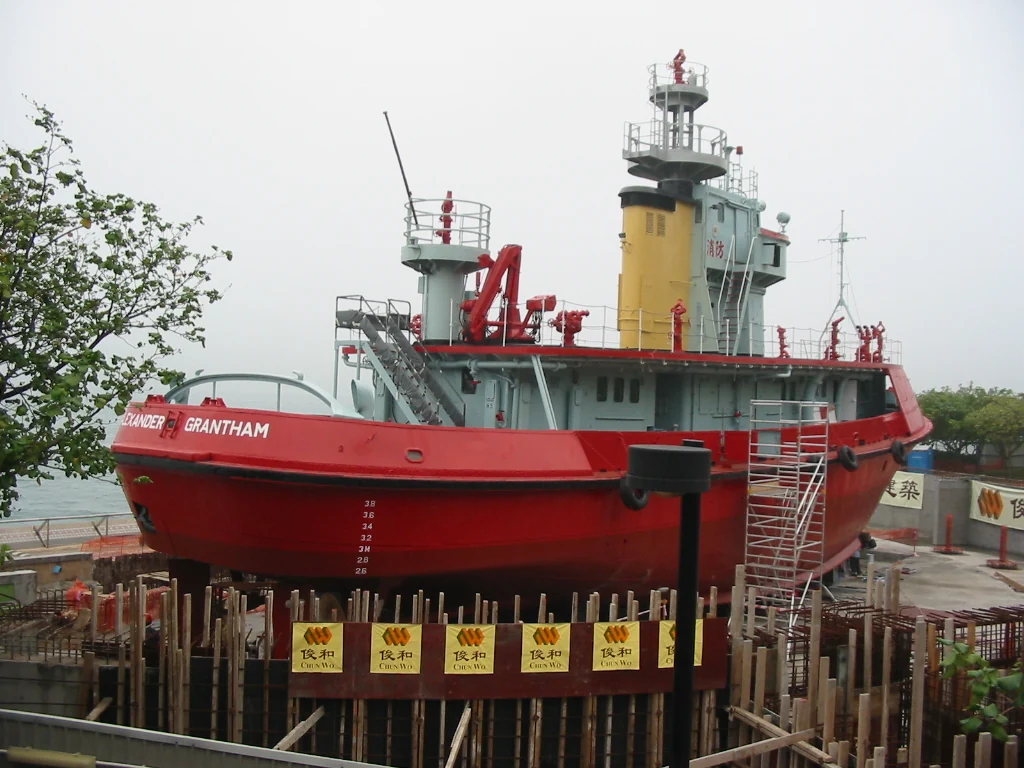
This 2006 photograph predates the gallery's opening and shows construction around the vessel. It helps with observing the hull, not establishing today's entrance or accessible deck areas. On site, look from permitted positions at the hull, wheelhouse area and water monitors, then read the relevant explanations. Asking how firefighters delivered water to a fire can reveal more about its work than simply asking its length. If you do not know a component's purpose, avoid inventing an answer from its shape.
Let a child choose one object and look for its name, use or an older photograph in the displays. Adults can help separate observation from imagination: a vessel preserved in a gallery is not carrying out an operational task, and today's visitor route is not the entirety of the crew's former working space. Respect closed areas, barriers and equipment. Large machinery is not playground equipment.
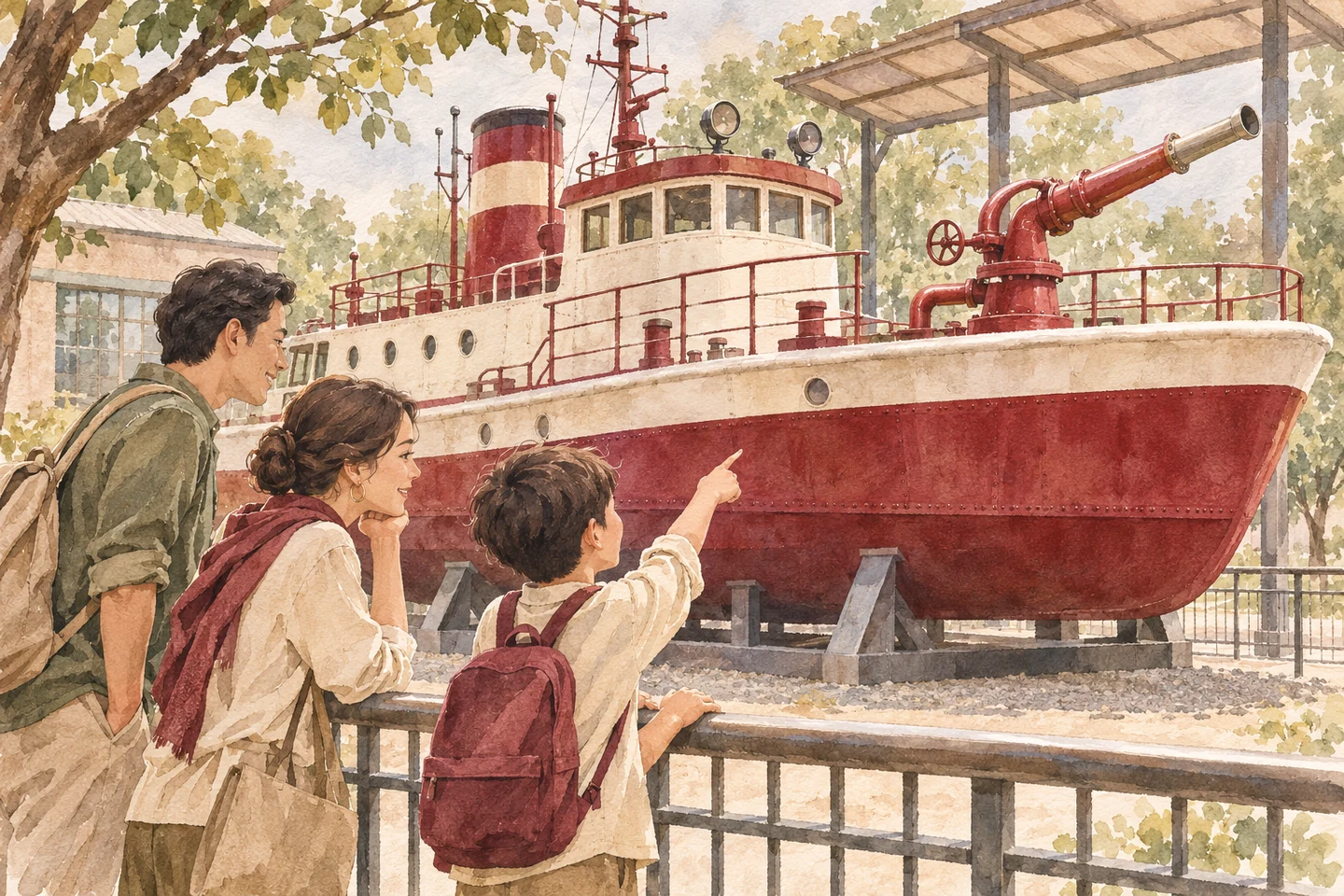
The illustration shows an approach to family observation, not an engineering drawing or a reconstruction of accessible museum areas. If the boat interests your child more than the text, examine two or three details carefully. Finishing every panel is unnecessary if it leaves everyone exhausted for the rest of the half-day.
Take the museum's questions onto the waterfront
After leaving the gallery, follow a short stretch of promenade that is open that day. Stop where you will not obstruct movement and notice vessels' relative sizes, speeds and directions. When you cannot identify a purpose, describe what you see rather than confidently calling every boat a fireboat, ferry or cargo vessel. Having just examined a working boat, children may now notice wheelhouses, sterns and harbour movements they would usually overlook.
A waterfront walk does not need to be long to feel complete. Agree to turn back after ten minutes or stop at a comfortable resting place. This is a family pacing choice, not an official route duration. Stay behind railings and out of closed shoreline areas, even for a better photograph. Share the path with runners and other pedestrians and move a stopped pushchair away from the main line of movement.
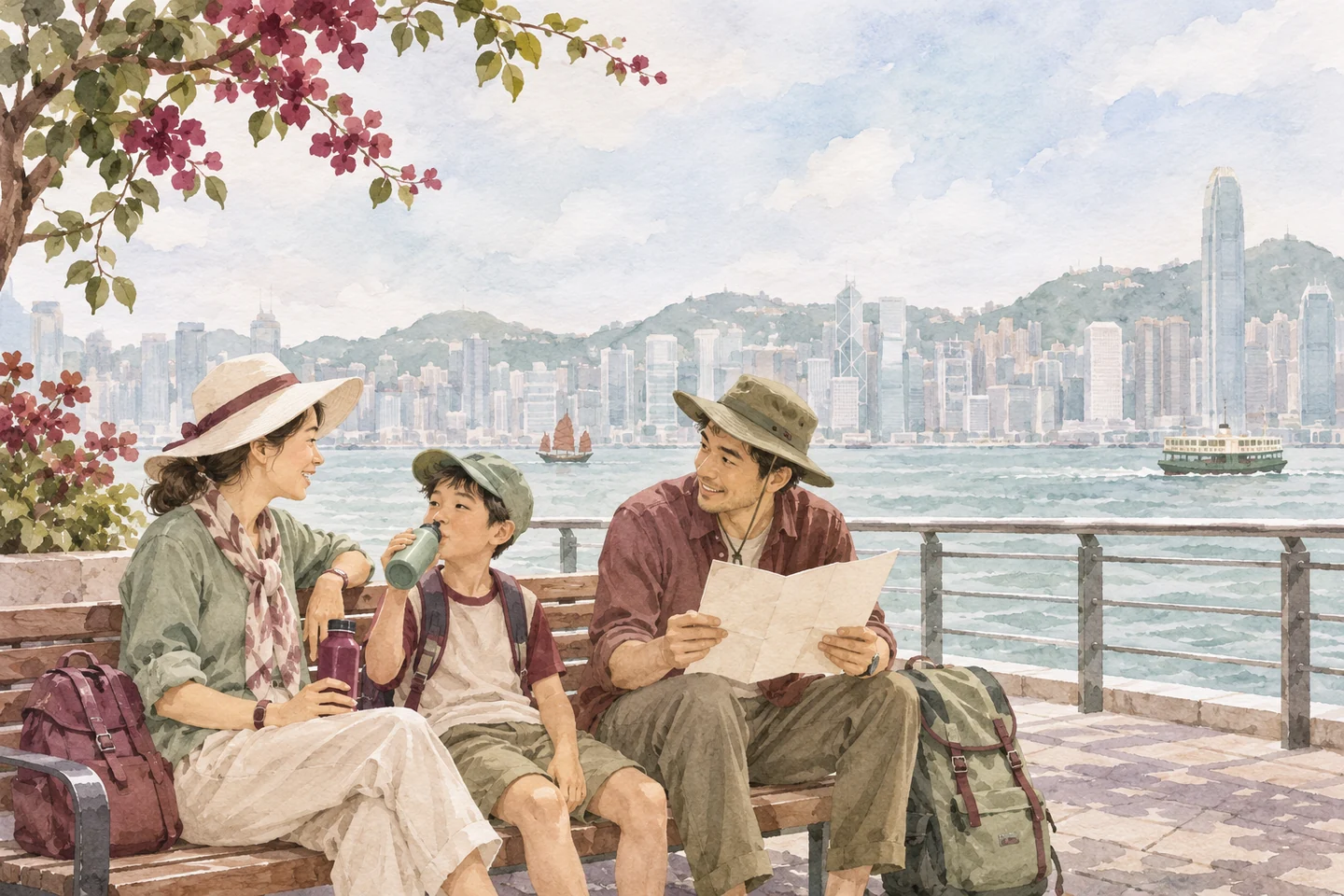
The rest-stop illustration is conceptual; its distant skyline is not a surveyed view from Quarry Bay. Parts of the real waterfront are exposed, so wind, heat and passing showers can change the experience. Bring water and sun protection. If a child no longer wants to walk, sit down or move to lunch rather than chasing another harbour photograph.
Make lunch a proper pause
A neighbourhood feature can provide food ideas, but older prices, menus and opening information do not guarantee today's service. There is no compulsory restaurant in this itinerary. From your actual position, look for somewhere open with suitable seating and a menu that works for the family, then check the walk before leaving the park. If there is a queue, decide whether the children need food promptly instead of waiting only to complete an online recommendation.
For a simpler half-day, choose two possible restaurants in the same area before setting out. Ask about pushchair access, any high chair you need and individual dietary requirements. These facilities are not universal. Clarifying them early is easier than reshaping the visit at a restaurant doorway. Follow local rules for drinks and snacks; exhibition spaces are not picnic areas.
The ocean playground is optional
The Leisure and Cultural Services Department's play-space page locates this children's playground in Quarry Bay Park Phase I, near Lei King Wan. It covers approximately 940 square metres and uses an ocean-adventure theme. Listed equipment includes a starfish swing set, crab trampoline, lantern-fish carousel, octopus climbing tower and swirl climbing net. The waterfront and fireboat gallery are identified as nearby facilities, which does not mean there is no connecting walk or that every piece of equipment is open today.
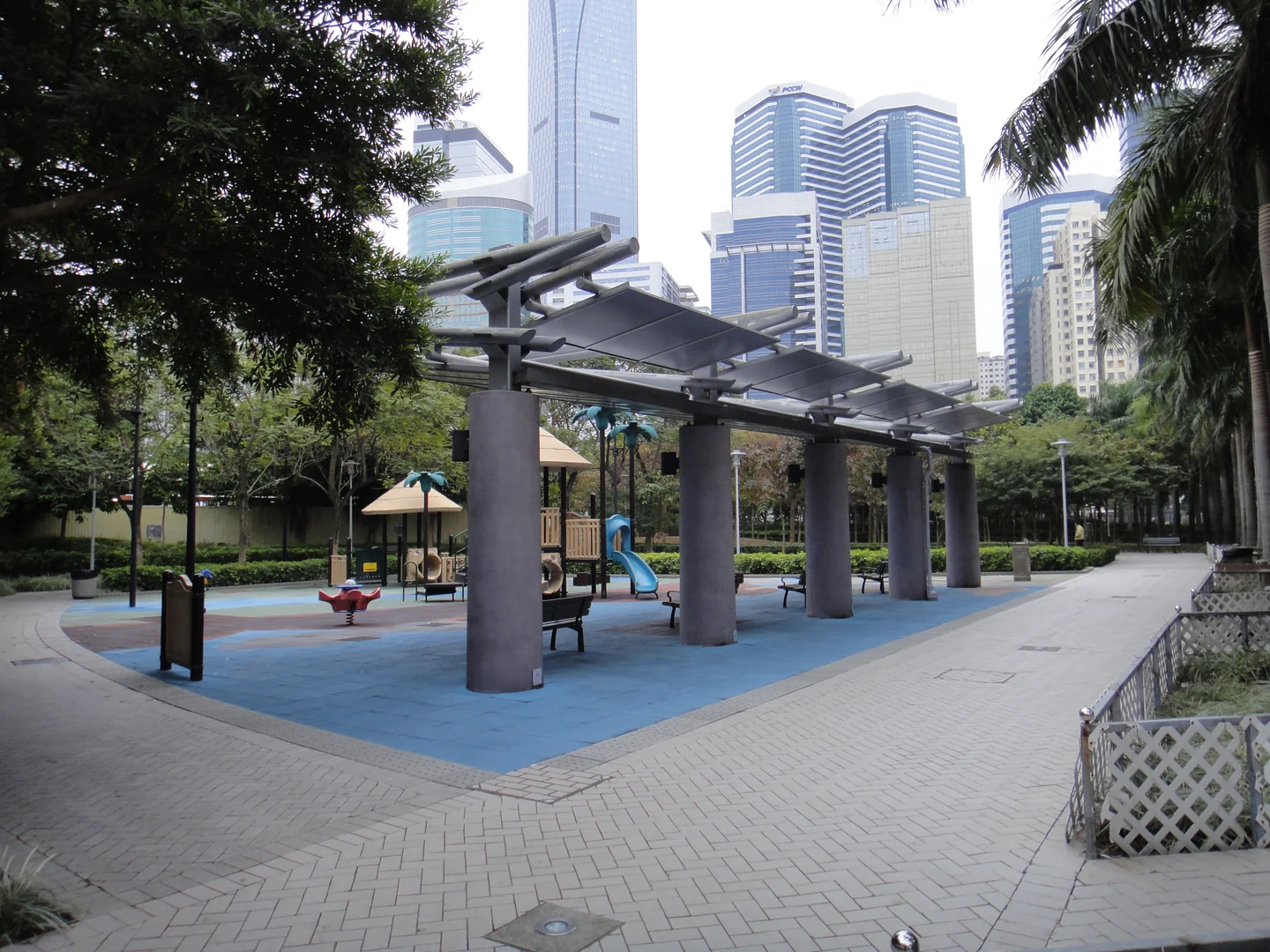
The 2011 park photograph records an older layout and should not be used to identify the current ocean-themed equipment. Read age and usage notices on arrival and choose according to your child's ability. Reduce or skip play if equipment is crowded or slippery. Supervise actively rather than letting photography replace attention, and do not insist on a half-hour session simply to match the timetable.
Older children may prefer the vessel and need only a short rest afterwards. If grandparents are travelling too, everyone does not have to stand beside the playground: agree on a clear resting place and meeting time. Making this final stop optional is the most useful flexibility in the itinerary.
Check opening, tours and access before leaving
These are the arrangements on the museum's page read on 11 November 2026. The Home Affairs Department's attraction page also describes the vessel's service history and the gallery's location.
| Item | Normal arrangement |
|---|---|
| Admission | Free |
| Monday, Wednesday–Sunday | 10:00–18:00 |
| Tuesday | Closed except public holidays |
| Christmas Eve and Lunar New Year's Eve | 10:00–17:00 |
| First two days of Lunar New Year | Closed |
| Public tours in Cantonese | Saturdays, Sundays and public holidays at 14:30 and 16:00; about one hour, 20 places, first come, first served; subject to change or cancellation |
To join an afternoon tour, shift the plan to lunch first and start the exhibition with the tour. Do not automatically retain both a complete morning visit and the same afternoon interpretation unless your family wants the additional depth. The museum lists entrance and rear ramps and tactile facilities, and says the exhibition area and upper deck are accessible via ramp. This is not a claim that every part of the vessel is step-free. Call +852 2367 7821 to clarify a wheelchair or pushchair route.
On a Tuesday that is not a public holiday, families whose priority is the fireboat should choose another day. In ordinary showers, shorten the promenade, eat first and check the gallery's status. During severe wind or rain, or official advice against outdoor activity, postpone; check park and museum arrangements separately. Add time afterwards for walking to transport, waiting, interchanges and traffic. Leaving the park at 13:15 does not mean reaching your hotel at 13:15.
Your pre-journey checklist
- Navigate to the fireboat gallery and check the actual MTR exit and final walk.
- Check Tuesday, holiday-eve and Lunar New Year rules; allow a separate hour for a tour.
- Distinguish entry into service in 1953, retirement in 2002 and gallery opening in 2007.
- Set a waterfront turning point, avoid successive food queues and make play optional.
- Historical photographs do not establish current equipment or access; follow on-site notices.
- Plan accessible approaches and any onward cross-border travel time separately.
Sources & further reading
This article draws on the media coverage and public information below. Event and transport arrangements can change; check the latest details before travelling.
- Honeycombers Quarry Bay neighbourhood guidethehoneycombers.com (Opens in a new tab)
- Hong Kong Museum of History: Fireboat galleryhk.history.museum (Opens in a new tab)
- LCSD: Quarry Bay Park play spacelcsd.gov.hk (Opens in a new tab)
- Home Affairs Department: Fireboat gallerygohk.gov.hk (Opens in a new tab)
Make it your journey
If your children would prefer a ferry and village atmosphere, compare a Peng Chau village and art half-day for another date. Keep this Quarry Bay visit focused on the fireboat, waterfront and rest. If a transfer follows, agree on the family's actual meeting point before connecting to your hotel or onward journey.