You can enjoy the Hong Kong Museum of Art by choosing two galleries and looking carefully at six or seven works. Start with an object's material, then explore either Chinese painting or Cantonese export art through composition and context. This guide suggests about two hours and identifies exhibitions listed by the museum on 27 November 2026. Recheck rotations, individual displays and visiting arrangements before setting out.
Choose a question before a gallery
The museum is at 10 Salisbury Road, Tsim Sha Tsui. Its waterfront building is photogenic, but leave time for differences within the collections: how carving gives lacquer its depth, how a fan accommodates a landscape, or how silverware connects Guangdong makers with distant customers. One question that interests you gives the visit more direction than simply going up every floor.
Our suggested two-hour allowance divides into ten minutes finding the galleries, forty minutes with one group of works, a ten-minute rest, forty minutes in another gallery, then twenty minutes for a second look and departure. This is an editorial plan, not an official guided-tour duration. Travel, storage and queues are additional. With children or companions who need more rest, reduce the number of works rather than trying to read every label.
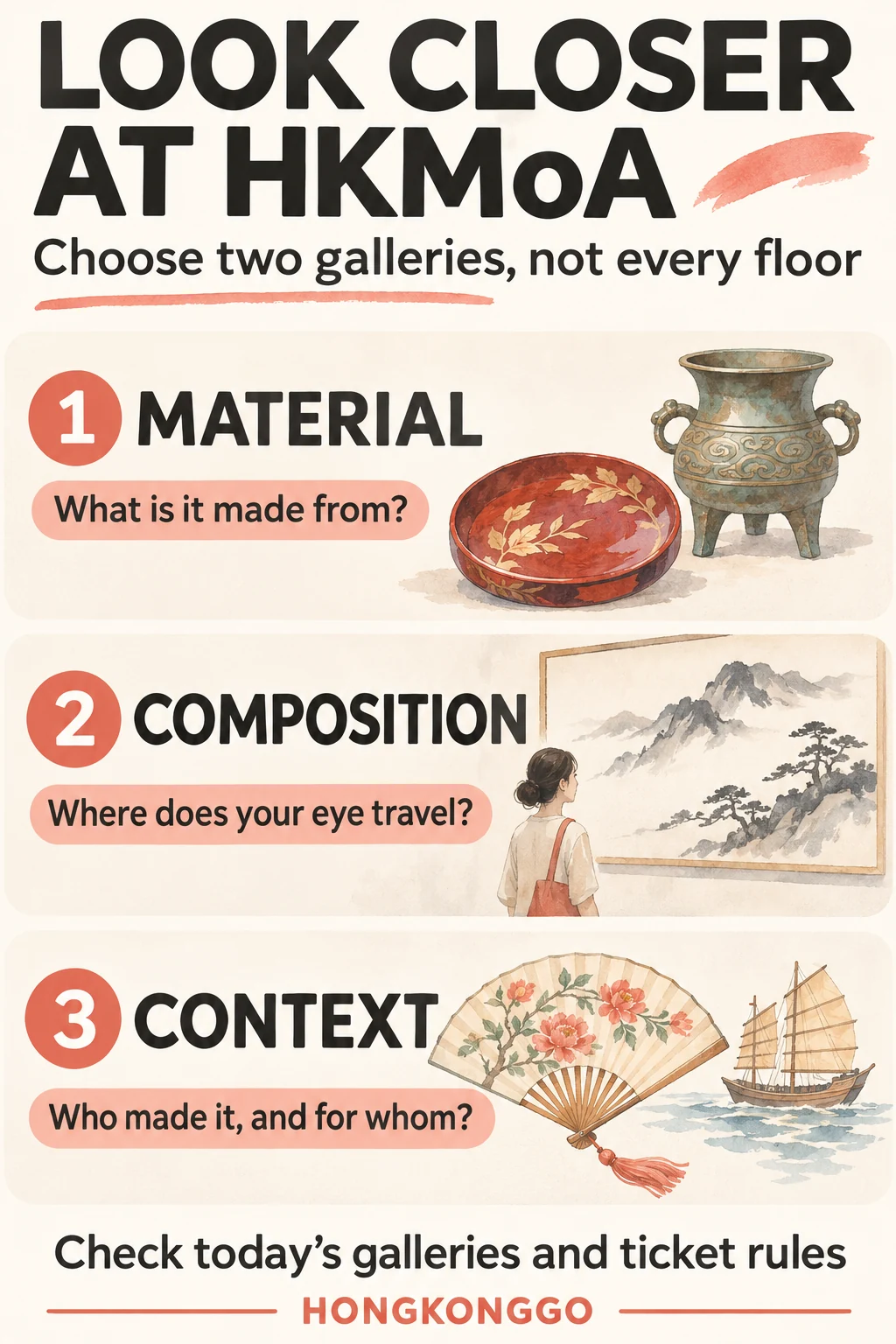
The museum pages checked for the following exhibitions all list free admission. Combine any two according to your interests; this is not a requirement to finish all three. Check each exhibition's actual floor and dates instead of relying on an old poster.
| Your interest | Exhibition to consider | Gallery and starting date |
|---|---|---|
| Comparing different materials | Art Personalised: Masterpieces from the HKMoA | The Wing (Upper), 1/F; from 18 July 2026 |
| Painting, literature and pictorial format | Reading & Re-reading: Chinese Painting and Calligraphy (Phase II) | Xubaizhai Gallery of Chinese Painting and Calligraphy, 2/F; from 27 November 2026 |
| Cantonese craft and overseas exchange | Proudly from Canton: The Muwen Tang Collection of Cantonese and Export Art | Muwen Tang Gallery of Cantonese and Export Art, 3/F; from 29 May 2026 |
A starting date does not make a display permanent. Special exhibitions may also charge separately. Check the opening and admission information before selecting the day's galleries. An exhibition featured in a spring article does not necessarily continue into autumn or winter.
First question: what is it made from?
Art Personalised selects nearly one hundred works from four core collections and groups them around personality traits. A personality test, characters created by Joey Leung and scents in different zones add ways into the exhibition. The test can be a playful starting point without deciding which art you are allowed to enjoy. Visitors sensitive to fragrances should ask about the relevant areas first.
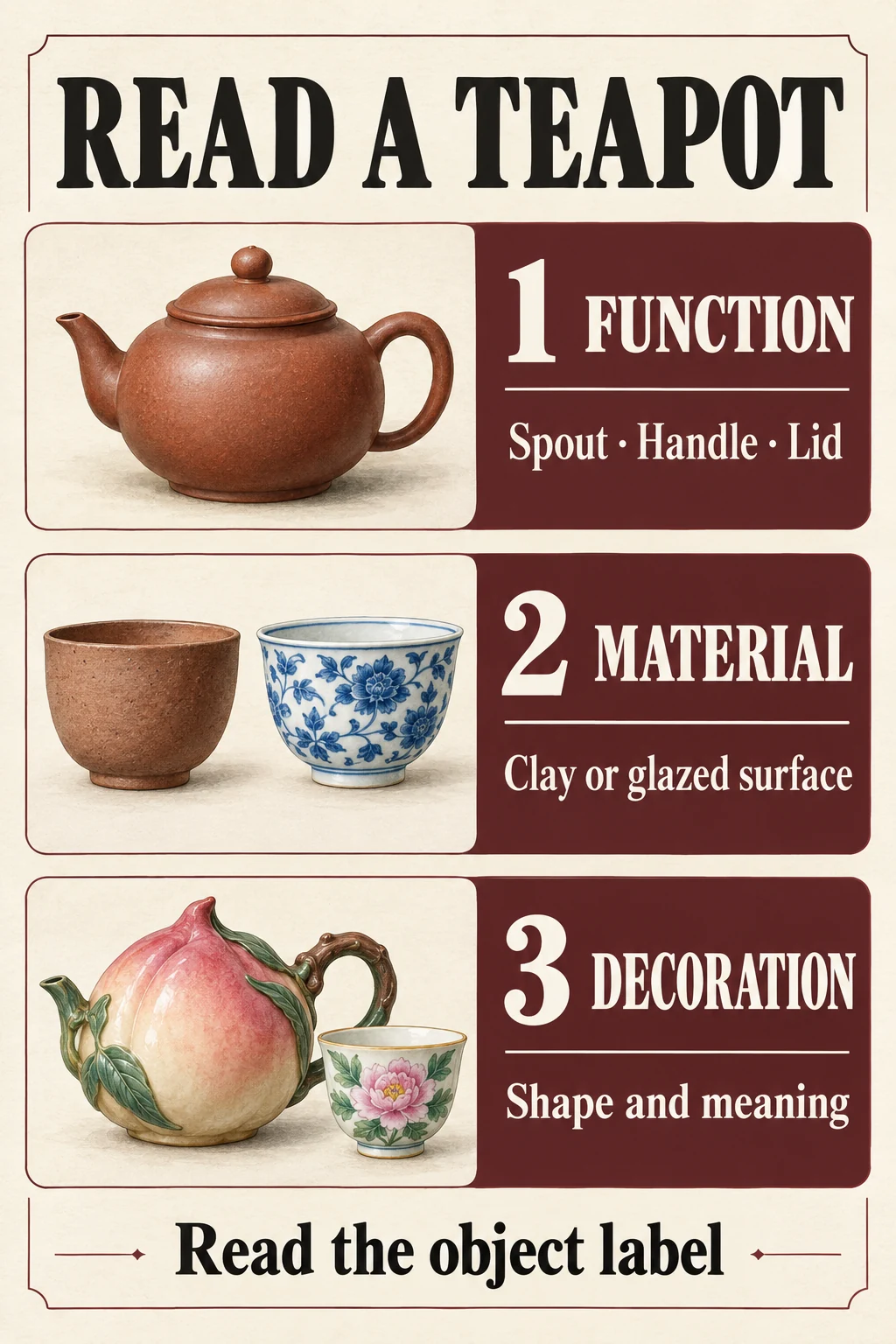
The website highlights a carved red lacquer dish from the Ming Yongle period, Wu Guanzhong's 2009 oil painting Patchwork, and Lam Yau-sum's 2016 mixed-media Metal tree. These names need not become a compulsory treasure hunt. Choose two different materials and notice how their surfaces meet the light: the recesses of carving, the traces of paint, and the boundaries between assembled materials turn a first impression such as “red” or “tree” into something more specific.
Do not touch a work or lean too close to verify its texture. Read the label for its medium and date, then separate that information from your response. “It is lacquer” comes from identification; “this shadow makes the carving feel deep” describes your experience. Both are useful, without presenting a personal impression as the artist's only intention.
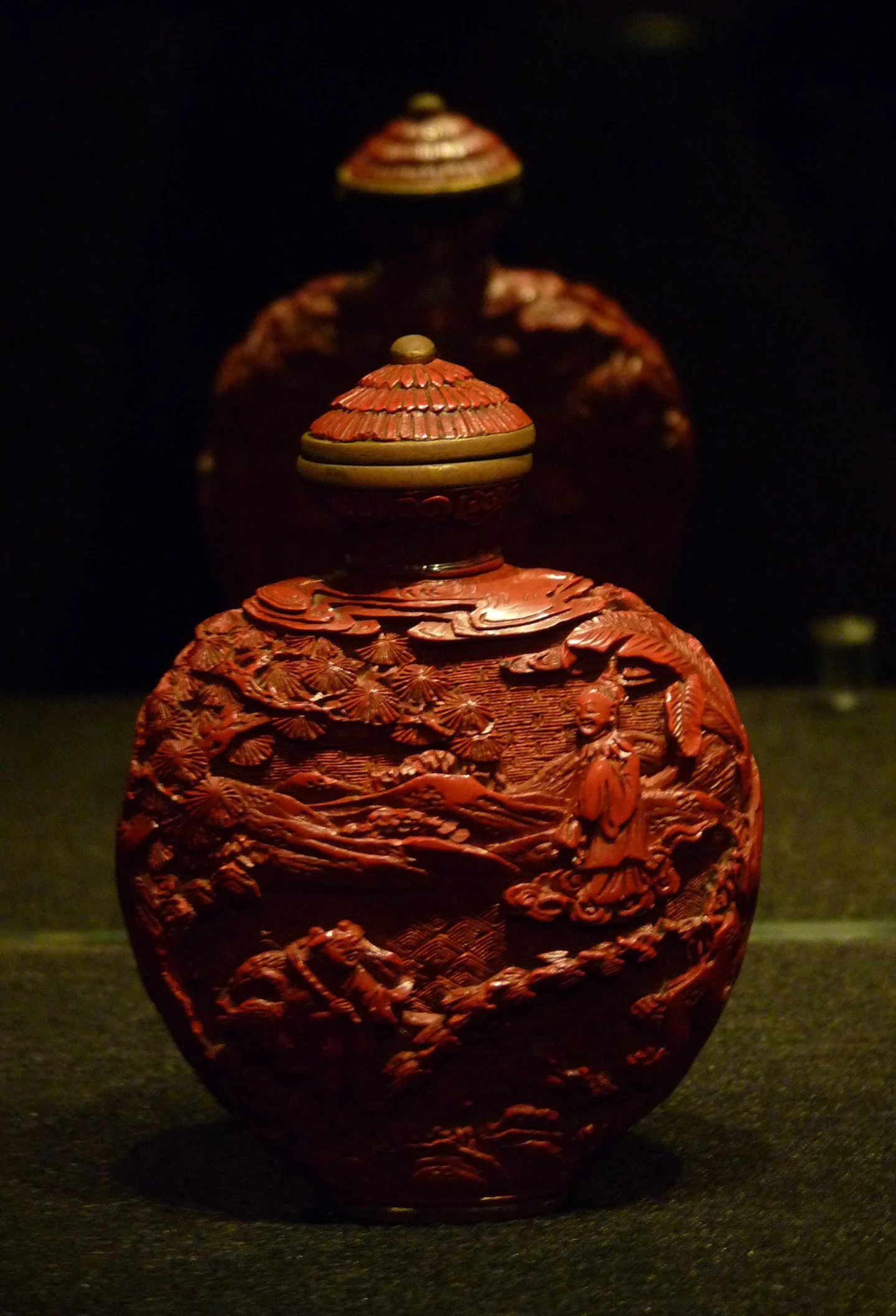
This 2011 photograph of a red lacquer snuff bottle offers a way to compare shallow and deep carving with the vessel's shape. Its source dates the object to approximately 1720–1820. It is an archival illustration, not the carved dish in Art Personalised, and does not establish that this bottle is currently displayed. Identify the particular work in front of you through its own label.
Second question: how does your eye move across the format?
Reading & Re-reading, Phase II connects painting and calligraphy with literary memories through four chapters: Timeless Elegance, The Way of the Gentleman, Landscape Reveries and Sentimental Years. You can begin with the shape of a picture even if its literary references are unfamiliar.
Among the museum's selected examples, Fu Baoshi's Boating under the Red Cliff (1947) is a folding fan, Chen Chun's Orchid and Rock (1543) is a hanging scroll, and Zhang Chong's Life Sketches (1644) is a handscroll. First find the edges, then notice how people, rocks and empty space are arranged. How does a fan's curved boundary compress or release space? How does a hanging scroll encourage looking upwards and downwards? Why might a long scroll reward following the image gradually? These are questions for observation, not directions towards one fixed answer.
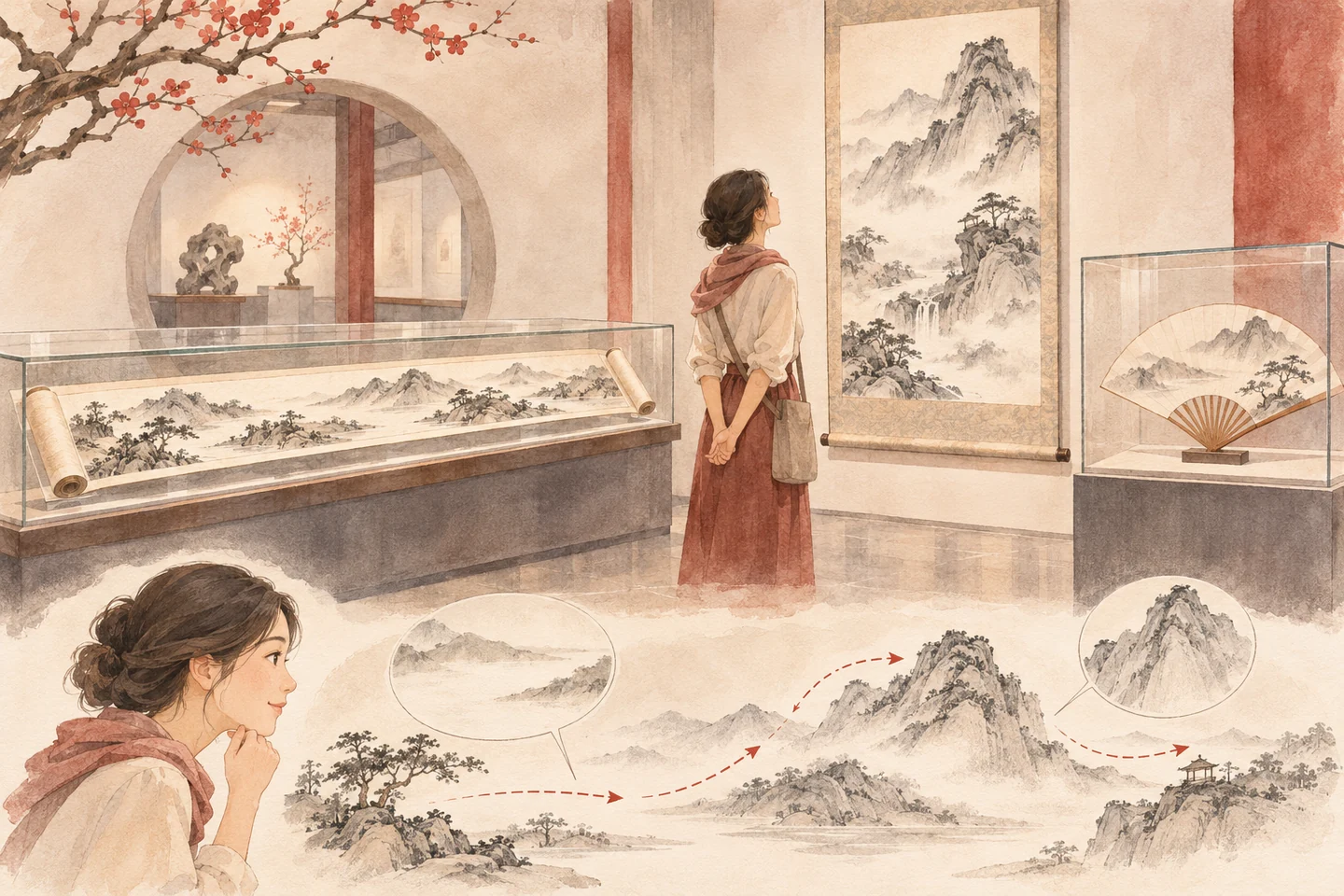
After reading the title, date and literary explanation, look again at the detail that first caught your attention. A small boat may attract you initially; the context can then change how you perceive its scale within the landscape. Looking and reading support each other. You do not need to understand every symbol on first sight. The portion of a handscroll opened and the album leaves shown depend on the actual display: the dimensions online are not a promise that the full length is visible.
Third question: who made it, and for whom?
Proudly from Canton introduces Cantonese and export art donated by Muwen Tang. The donation contains over two thousand items, while the inaugural exhibition presents over one hundred and twenty representative sets. More than ten categories include export paintings, silverware, painted enamels, fans, carvings, textiles, lacquerware and timepieces. The size of the donation is not the number of objects you must see that day.
Follow one object towards its intended setting. The highlighted gilt silver filigree tea service of around 1740–1750 and the mid-nineteenth-century gouache-on-pith-paper Foreign Factories, Guangzhou differ in medium and function, but both can lead into craft production, trade and the circulation of images. Examine the tea service's form and details before reading about its users. At the painting, notice how buildings, water and commercial space are organised. “Export” alone does not establish that every object was made for the same overseas market.
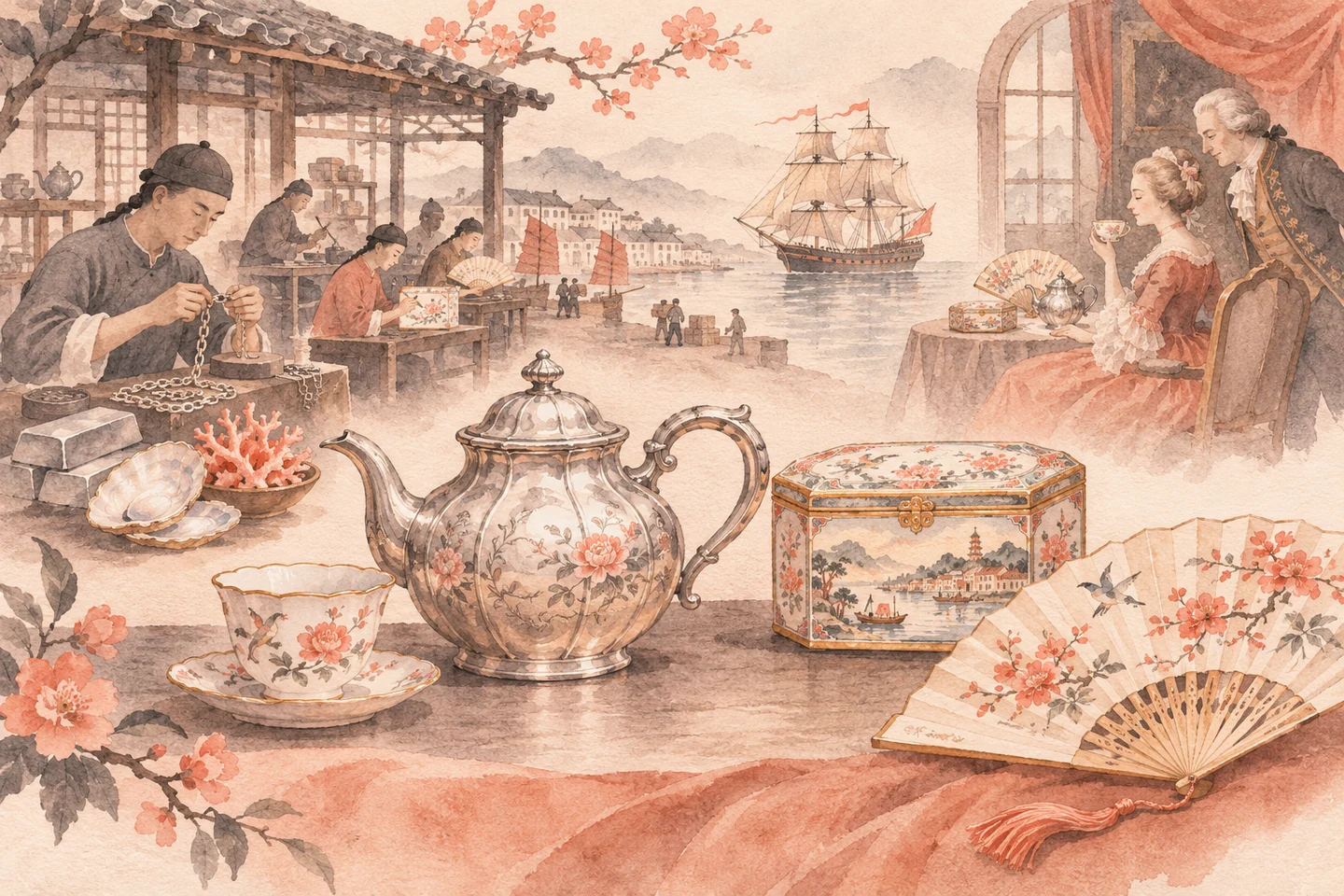
The illustrated objects and ship suggest connections, rather than reconstructing a particular museum work or historical scene. The exhibition also includes historical materials such as ivory. Their interpretation in a museum does not establish that equivalent products can be bought, sold or carried across borders today. Keep the visit focused on making and circulation; check applicable rules separately for any shopping or travel question.
Before leaving, choose one object about which you can say what you initially thought and what you now understand. If a particular material interests you, consider the Flagstaff House Museum of Tea Ware guide for another day rather than putting both museums' entire displays into one afternoon.
Rest, photography and the needs of your group
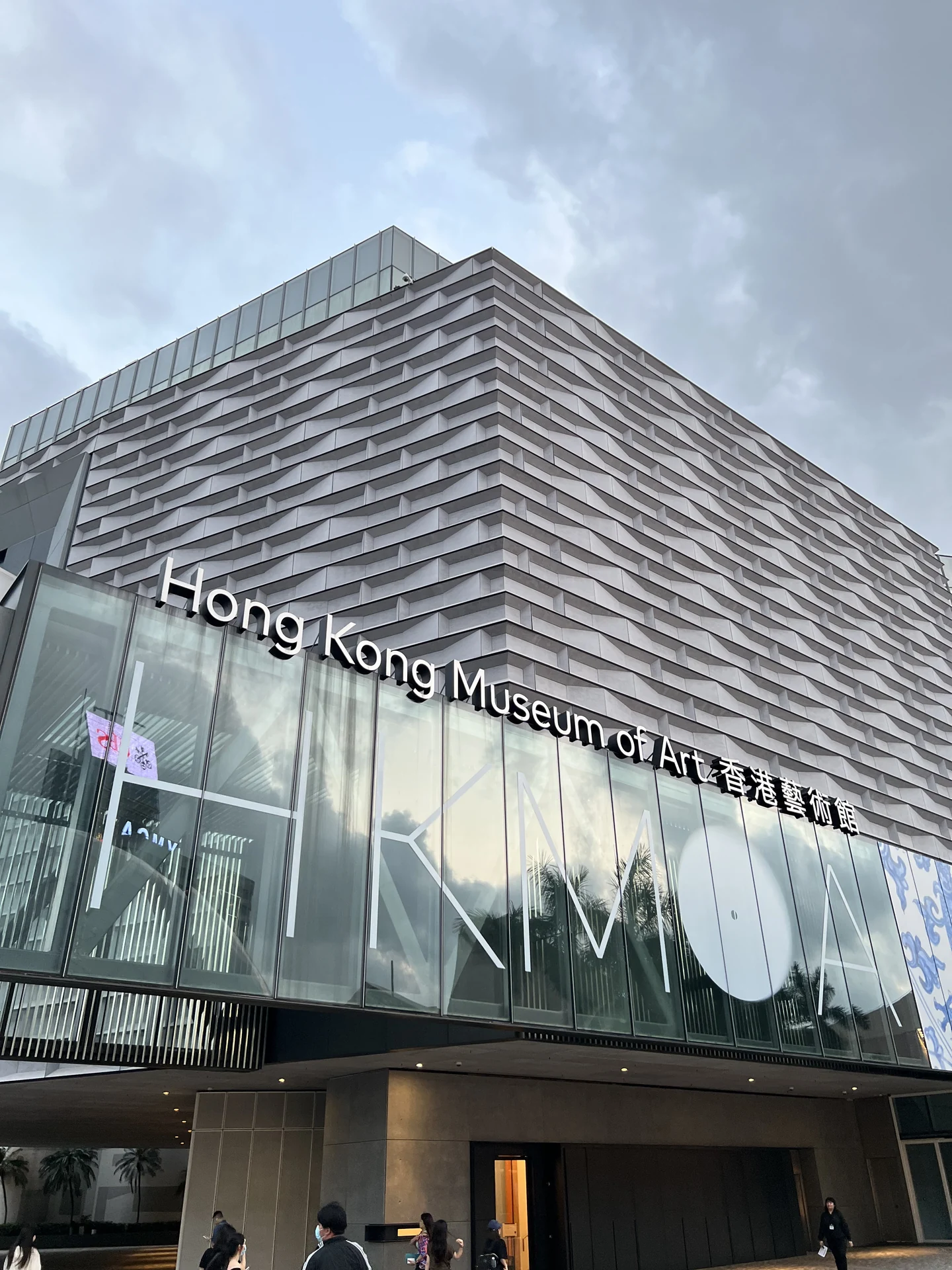
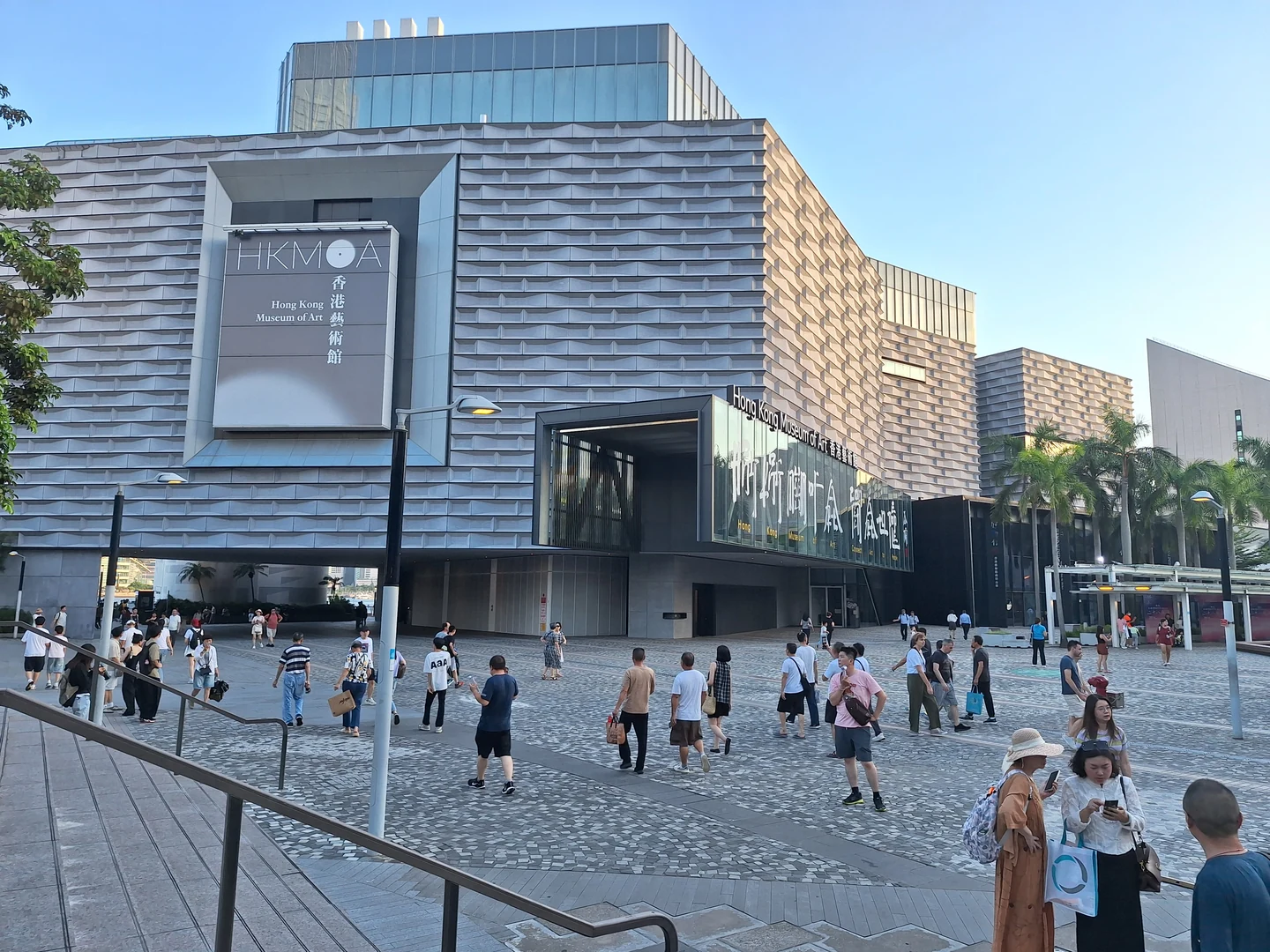
The upward-looking archive photograph shows the façade's repeated texture. It is an exterior, not a gallery or a view through a harbour-facing window. A waterfront break can change the pace between displays without turning a group photograph into another task to queue for. Check each gallery's photography notices: the museum prohibits flash, lighting equipment and tripods, and individual exhibitions may impose further restrictions. Other visitors taking photographs are not evidence that every work can be photographed. Keep passages clear, speak quietly and follow the designated-area rules for refreshments. Visiting rules
Arrange storage before arriving with large suitcases. The museum may require items that obstruct visiting to be left in a cloakroom or locker; do not assume every bag can accompany you into galleries. Listed facilities include lifts, accessible toilets on each floor, tactile facilities, a ground-floor baby-care room and pushchair loans. For particular wheelchair, hearing or care requirements, call +852 2721 0116 to ask about arrangements. Barrier-free facilities
Fit the opening day into Tsim Sha Tsui
The regular hours checked are 10:00–18:00 on Mondays to Wednesdays and Fridays, and 10:00–21:00 on Saturdays, Sundays and public holidays. Thursdays are closed except public holidays. Christmas Eve and Lunar New Year's Eve have 10:00–17:00 hours, with closure on the first two days of Lunar New Year. The ticket office closes thirty minutes before the museum. Evening opening does not mean every special programme needs no booking; check tours and workshops individually.
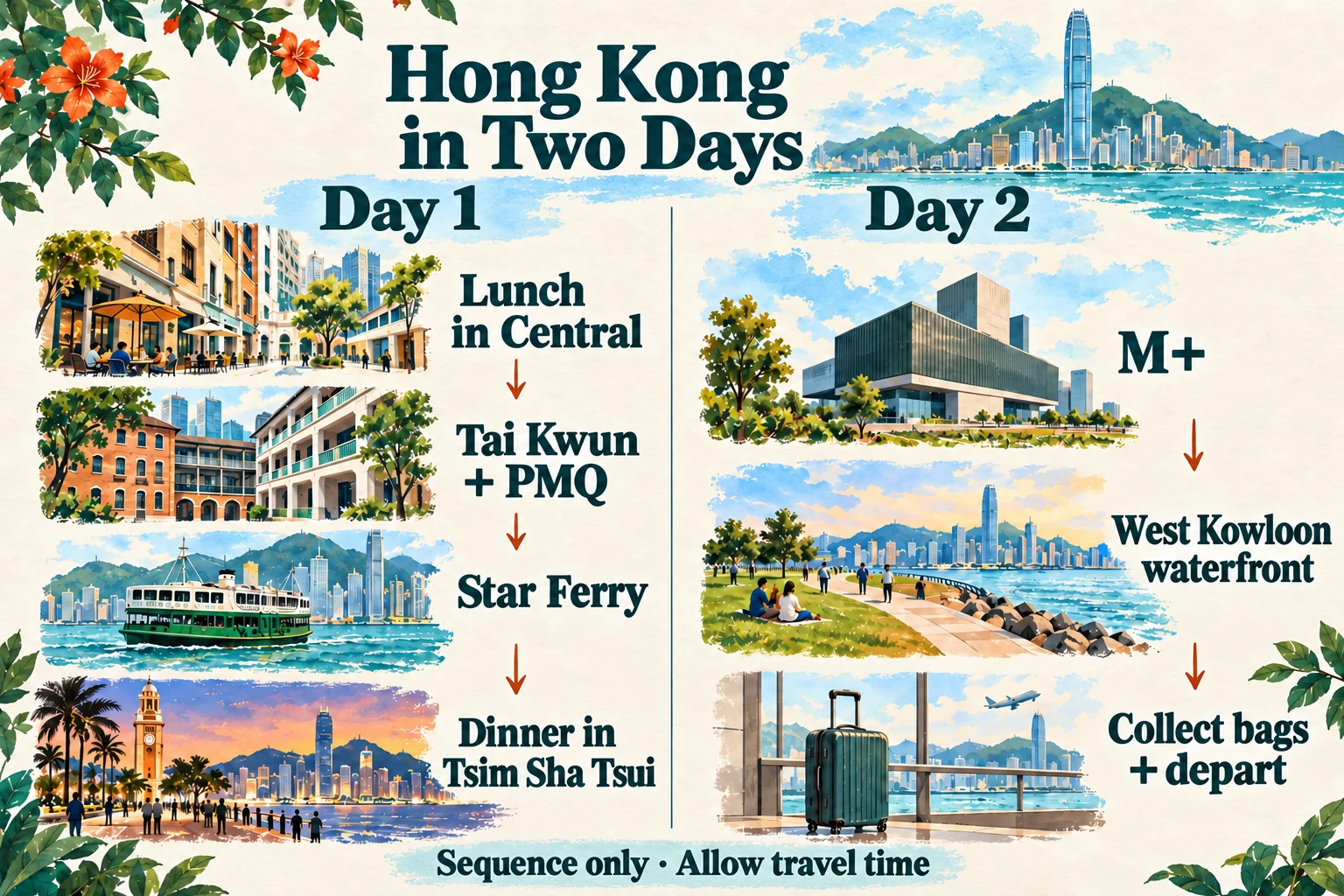
If arriving in Tsim Sha Tsui in the afternoon, retain two galleries. With only an hour, choose one gallery and three works instead. Decide on the waterfront or dinner afterwards according to energy. To fit the visit into a broader stay, consult the Central, harbour and West Kowloon two-day itinerary and replace one museum period, rather than compressing all of its stops into a day.
Your pre-journey checklist
- Check that exhibitions continue, which galleries are open and whether any charge applies.
- Choose two galleries and three or four works in each; allow separately for travel and rest.
- Distinguish the total collection, the current exhibition and the actual works on display.
- Observe material and composition before reading names, dates and context; do not touch works.
- Follow photography restrictions and account for fragrance sensitivity, mobility and care needs.
Sources & further reading
This article draws on the media coverage and public information below. Event and transport arrangements can change; check the latest details before travelling.
- HKMoA: opening and admissionhk.art.museum (Opens in a new tab)
- HKMoA: Art Personalisedhk.art.museum (Opens in a new tab)
- HKMoA: Reading & Re-reading, Phase IIhk.art.museum (Opens in a new tab)
- HKMoA: Proudly from Cantonhk.art.museum (Opens in a new tab)
- HKMoA: visiting ruleshk.art.museum (Opens in a new tab)
- HKMoA: barrier-free facilitieshk.art.museum (Opens in a new tab)
- HK01: spring 2026 garden-art feature (past exhibition)hk01.com (Opens in a new tab)
Make it your journey
Keep enough time to look slowly. If connecting with a hotel, airport or cross-border journey, settle the departure time and a lawful meeting point so that food, walking and onward transport each have their own allowance.