M+'s special exhibition Myths and Monsters: The Art of Fantasy in Asia runs from 17 October 2026 to 4 April 2027 in the West Gallery on Level 2. It suits visitors interested in mythology, anime and visual culture who want time to compare works. Allow half a day and use four questions to guide your looking. Monday 9 November 2026 is a regular museum closing day, so choose an actual open day for your visit.
Start with a familiar character, then look before and beyond it
HK01's current-edition report introduces the exhibition through Godzilla, Ultraman, Cardcaptor Sakura drawings and Ghost in the Shell background paintings. Familiar works can provide an inviting starting point, but the exhibition is broader: it brings together fantasy imagery from the nineteenth to twenty-first centuries to consider how creators respond to the world around them.
The official exhibition page sets out four sections covering traditional supernatural imagery, Surrealism in Asia, post-war Japanese popular culture and contemporary fantasy across media. M+ reports more than 400 works. Recognising every character is not necessary preparation; comparing the different answers that works from different periods give to one question is more rewarding.
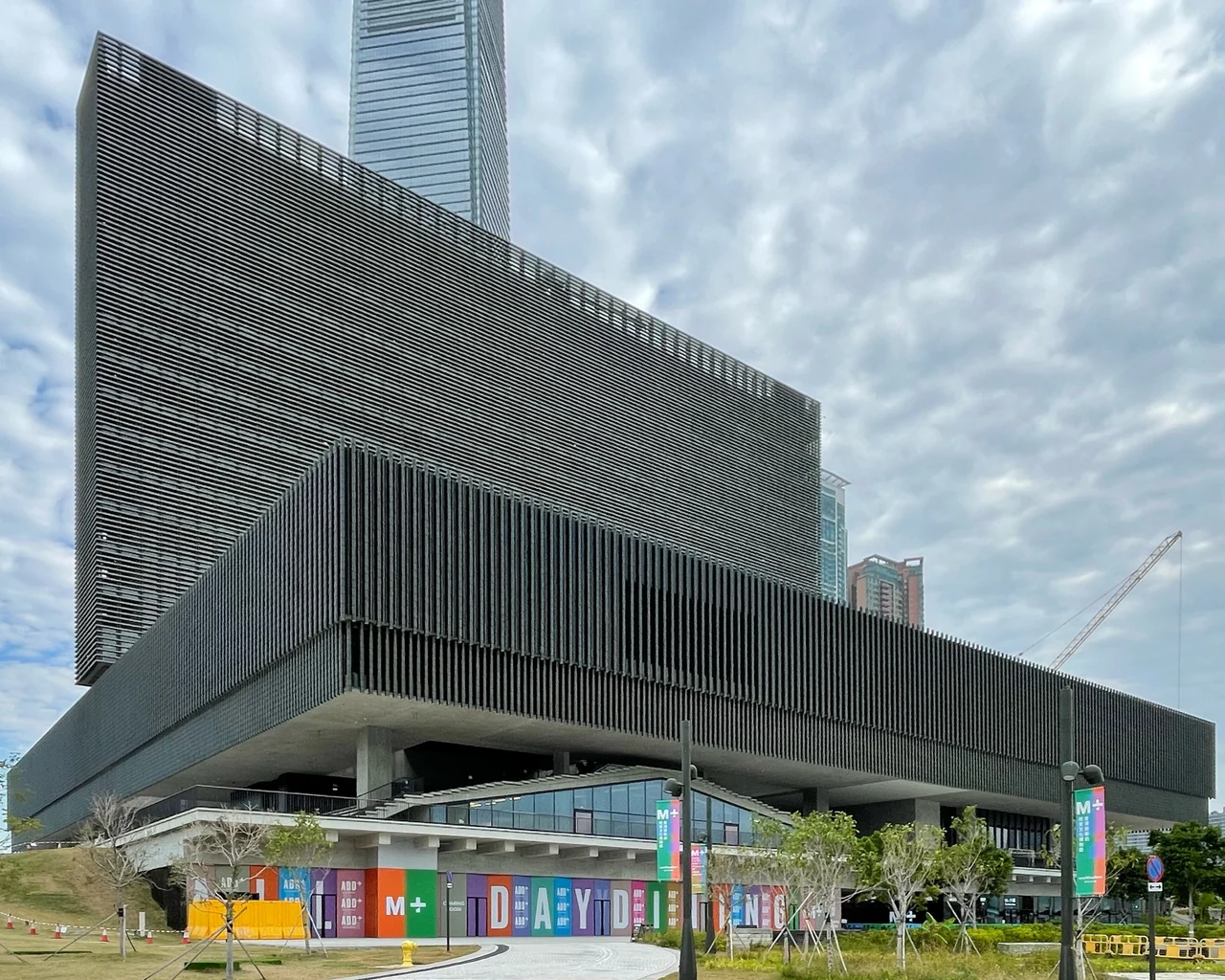
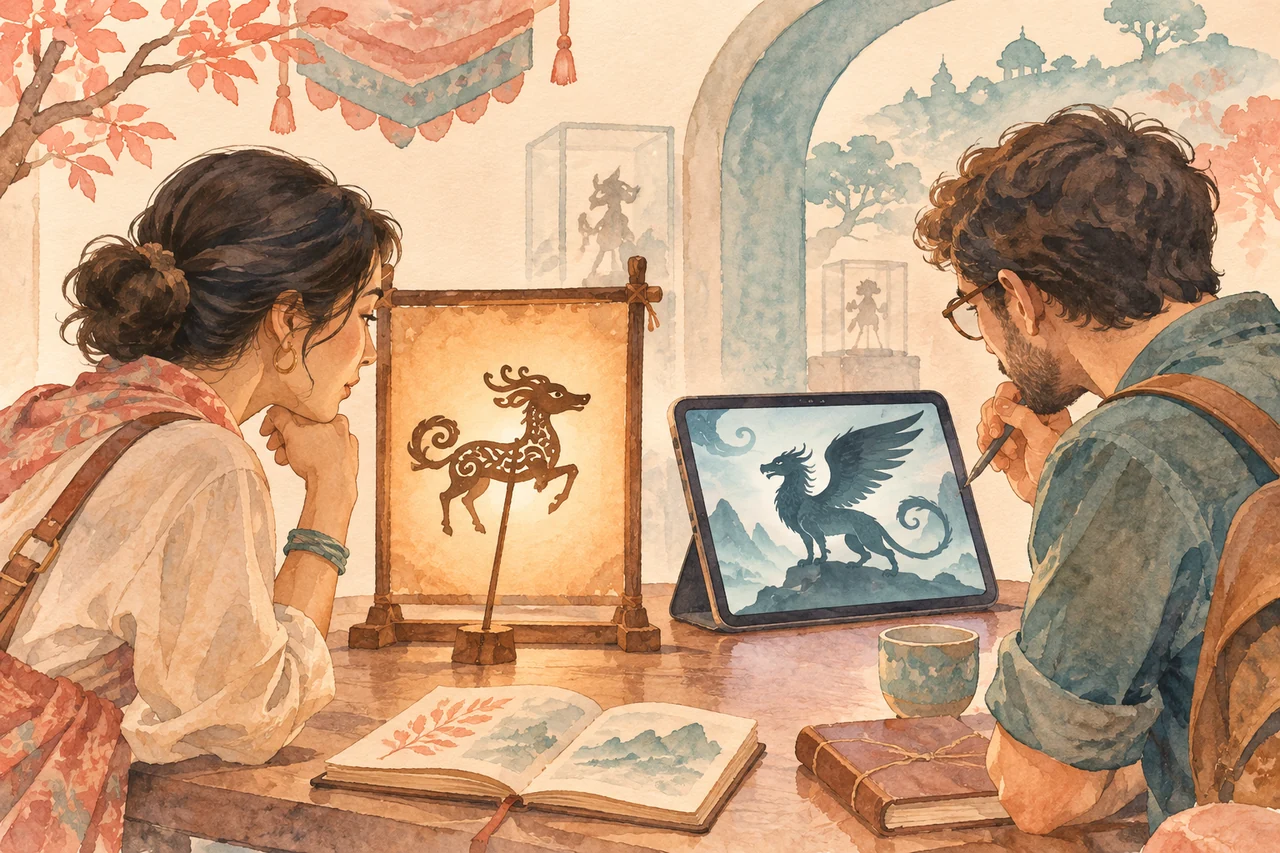
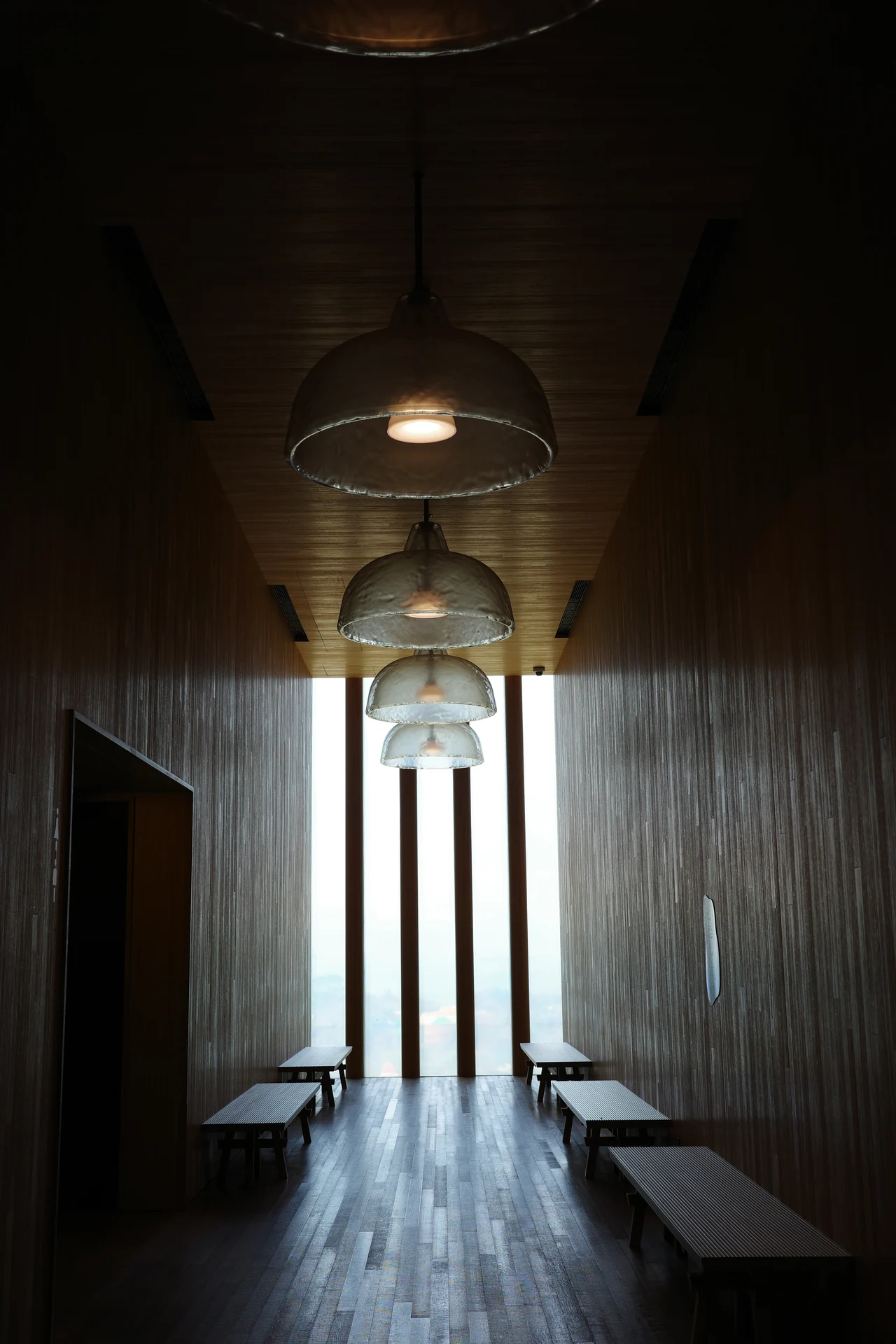
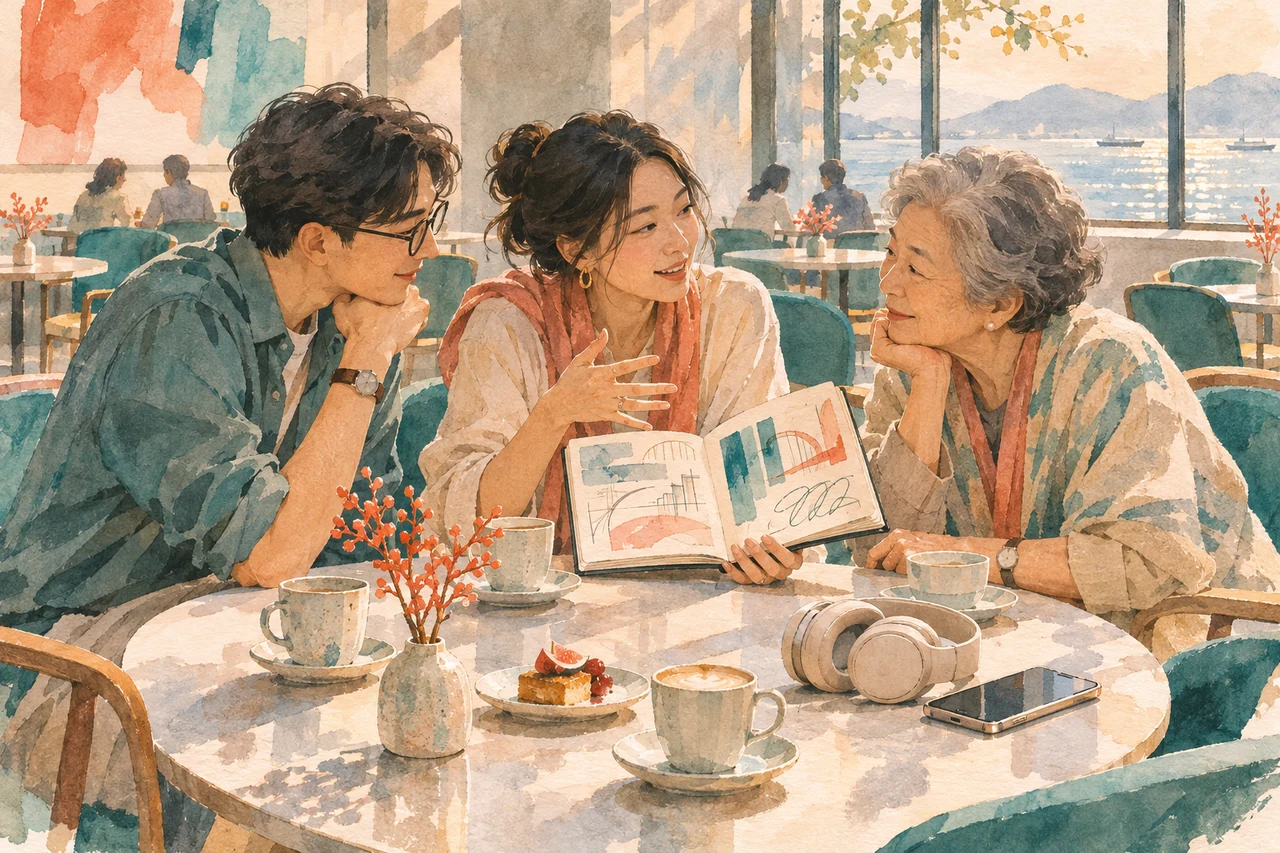
This is a viewing approach based on the museum's published material, not a first-person review. The architectural photographs carry their original dates, and the concept illustrations do not depict actual exhibits or gallery layouts. Arriving only to photograph a familiar character could miss the cross-period connections that make the show distinctive.
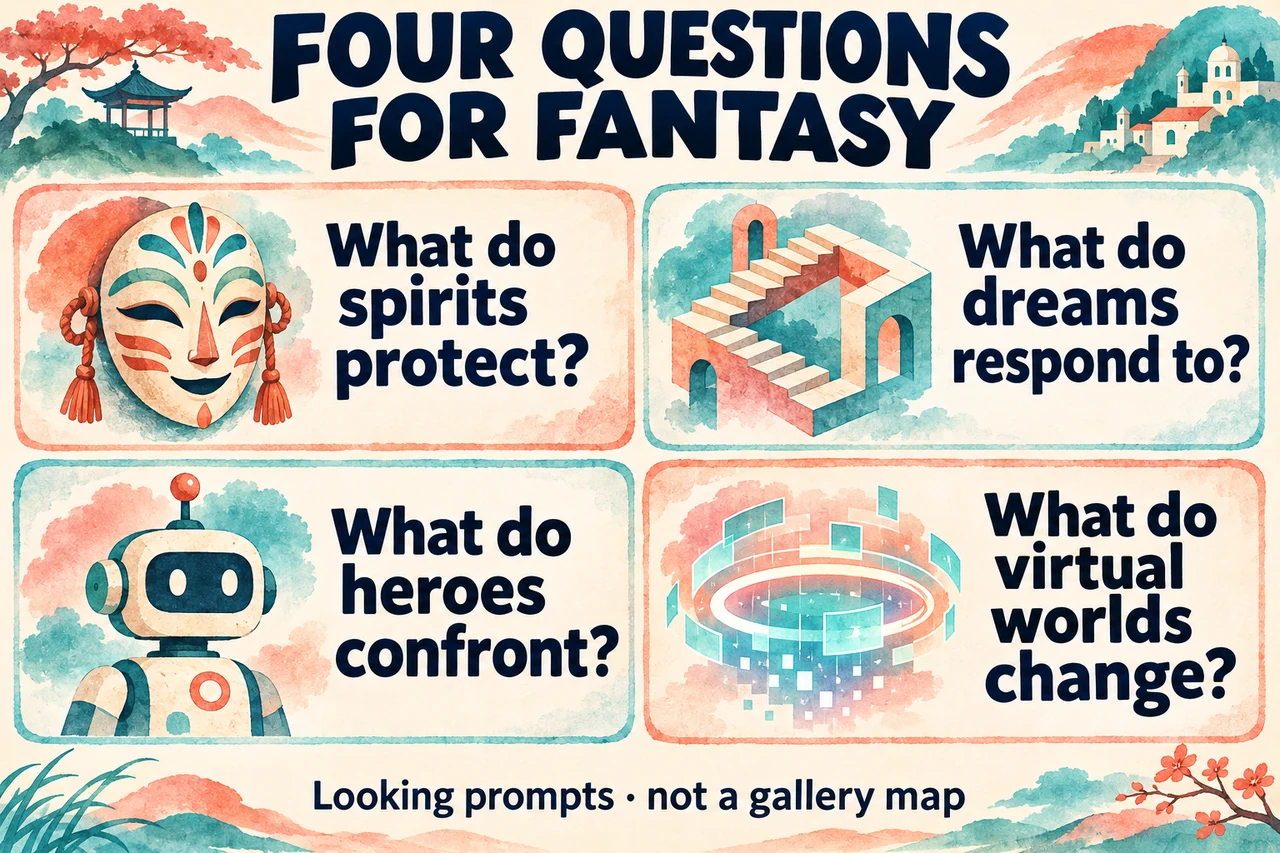
Question one: what do spirits protect?
The opening section brings together Japanese ukiyo-e prints, Chinese shadow puppets, Tibetan Buddhist thangkas and vernacular objects. Before dividing the figures into cute or frightening, consider their role: do they warn, protect or make a difficult wish visible? Look at expressions, gestures and relationships with people, then read the label to connect the image with its context.
M+ describes Oscar Chan Yik Long's new commission Fear Catcher (2026) as drawing on Zhong Kui. Seen in this context, it offers a way to move from banishing an external ghost to recognising one's own fears. That is a curatorial clue, not a claim that every supernatural figure has the same meaning. Read the specific religious, regional and historical context of each work.
With children, choose one figure and ask them to describe visible details before helping with the label. Not everyone enjoys monsters or unsettling imagery. Shorten this part if a child is uncomfortable; family programming does not establish that every work suits every age.
Question two: what realities do dreams respond to?
The second section considers Surrealism and Asia. When an image seems illogical, find an ordinary object or space that has been changed: its scale, location or relationship to something else. Saying what feels strange is an easier starting point than trying to guess one correct meaning.
The museum's curatorial account connects these visual languages with war, social instability and experiences in different regions. Compare an Asian artist's work with one from another cultural background: both may use dreamlike imagery while addressing different concerns. Read the maker, date and context, then return to what first caught your attention.
This section benefits from slower looking. Companions more interested in anime need not spend exactly the same time on every work; agree to meet at a permitted resting place after the section, then continue together. Labels and image sequences take time to read, so avoid scheduling the entire exhibition as a brief walk-through.
Question three: what do familiar heroes confront?
The third section places post-war Japanese popular culture in a wider historical discussion. Recognition of Astro Boy or Godzilla can lead into questions about technology, loss, social change and imagined futures. Drawings and background paintings also reveal the lines, colours and production work behind a world usually encountered on screen.
With Ghost in the Shell backgrounds, try shifting attention from characters to space: how do layers of buildings, street density, light and empty areas establish atmosphere? With Cardcaptor Sakura drawings, consider how movement and composition direct the eye. These are suggestions for looking, not permission to touch, turn pages or photograph every exhibit.
M+ also announces related cinema programming, but film material in the gallery, a cinema screening and a separate talk are different activities. Check the chosen screening's date, subtitles, ticket and age conditions if you want to combine them. An exhibition ticket does not automatically include any cinema programme. October's opening talk has already passed and should not be treated as a drop-in November activity.
Question four: how does fantasy enter digital life?
The final section follows anime and fantasy languages into contemporary art, design, architecture, fashion, video games and digital culture. Pick one medium you know and compare it with one you rarely encounter. When a fantasy moves from a picture into clothing or a virtual world, what changes in the viewer's participation?
The museum describes an in-gallery digital interaction called Fantastical Planet, where visitors can create imagined creatures. Availability, queues and equipment conditions depend on the actual visit. That does not make the entire exhibition interactive or guarantee immediate access to every activity. If interaction is your main reason for coming, ask the museum first; the concept illustrations here are not device interfaces.
Before leaving, invite each companion to name one work they would like to learn more about and explain why. This gives different interests space in the conversation. Decide afterwards whether to explore other galleries or rest rather than filling the day simply because one ticket covers several exhibitions.
Tickets cover the galleries; screenings and purchases are separate
The exhibition press release and current ticket page list these Hong Kong dollar prices, checked on 9 November 2026. A single-price M+ ticket provides access to all galleries. The table excludes transport, food, shopping and separately ticketed programmes.
| Ticket | Published price | Conditions to check |
|---|---|---|
| Standard | HK$190 | Select the appropriate date and admission session |
| Concession | HK$100 | Listed categories include full-time students, children aged 7–11, people aged 60+, persons with disabilities and one companion, and CSSA recipients |
| One adult plus one child aged 7–11 | HK$250 | Adult and child must enter together |
| Two adults plus one child aged 7–11 | HK$400 | Adults and child must enter together |
Children aged six and under do not need a ticket; that is different from the 7–11 combo condition. Check the evidence required for a concession before payment. Two standard adult tickets total HK$380. Adding a 7–11 child separately makes HK$480, while the eligible three-person combo is HK$400. This example compares published ticket amounts only; it does not promise availability or additional discounts.
The ticket page lists morning, afternoon and Friday-night admission sessions and specifies single admission. Select the actual date and session you intend to use and retain the order terms. Do not assume a ticket permits repeated entry throughout the day. Ask the museum about changes, re-entry or separately booked activities before relying on them.
Choose an open day and leave room for tired feet
The visitor guide lists Tuesday–Thursday and weekend hours of 10:00–18:00, Friday hours of 10:00–22:00, and Monday closure. Last admission is 30 minutes before closing. Public holidays generally follow opening arrangements, but a Monday remains closed unless a special arrangement is announced.
Reading this on 9 November is therefore not a reason to head straight to the West Gallery. Choose 10 November or another actual open day. The final admission boundary is not a recommendation to view more than 400 works in half an hour. Our planning suggestion is around two hours for this exhibition, plus travel, entry, belongings and rest, forming a half-day outing. This is editorial advice, not the museum's stated average visit duration.
Friday's later opening lets you separate dinner and gallery time. If companions have already walked extensively, reduce other galleries and preserve a seated break. Cinema, restaurants and shops have their own schedules; one venue staying open late does not keep all galleries open.
Arrive lightly equipped, with headphones and time to find the entrance
The address is M+, West Kowloon Cultural District, 38 Museum Drive, Kowloon. Save the full museum name when planning from your hotel. A railway station, the edge of WestK and the Level 2 West Gallery are different points. Use the visitor guide's MTR and walking directions for the final approach, checking actual step-free facilities if needed rather than treating a straight line on a map as walking time.
The museum allows gallery bags smaller than 30 × 42 × 10 cm; backpacks must be worn on the front. Larger belongings require paid lockers or cloakroom storage. Travellers arriving after checkout should confirm capacity and conditions instead of relying on a guaranteed spare locker. Wheelchairs and strollers are welcome in galleries and available to borrow free on a first-come basis, which is not a reservation guarantee.
Free audio guides work on your own phone with headphones. This exhibition includes interviews with artists, curators and researchers among its material. Preserve battery power and choose what to hear at individual works rather than playing sound aloud. Follow on-site instructions for photography, touching and particular moving-image spaces.
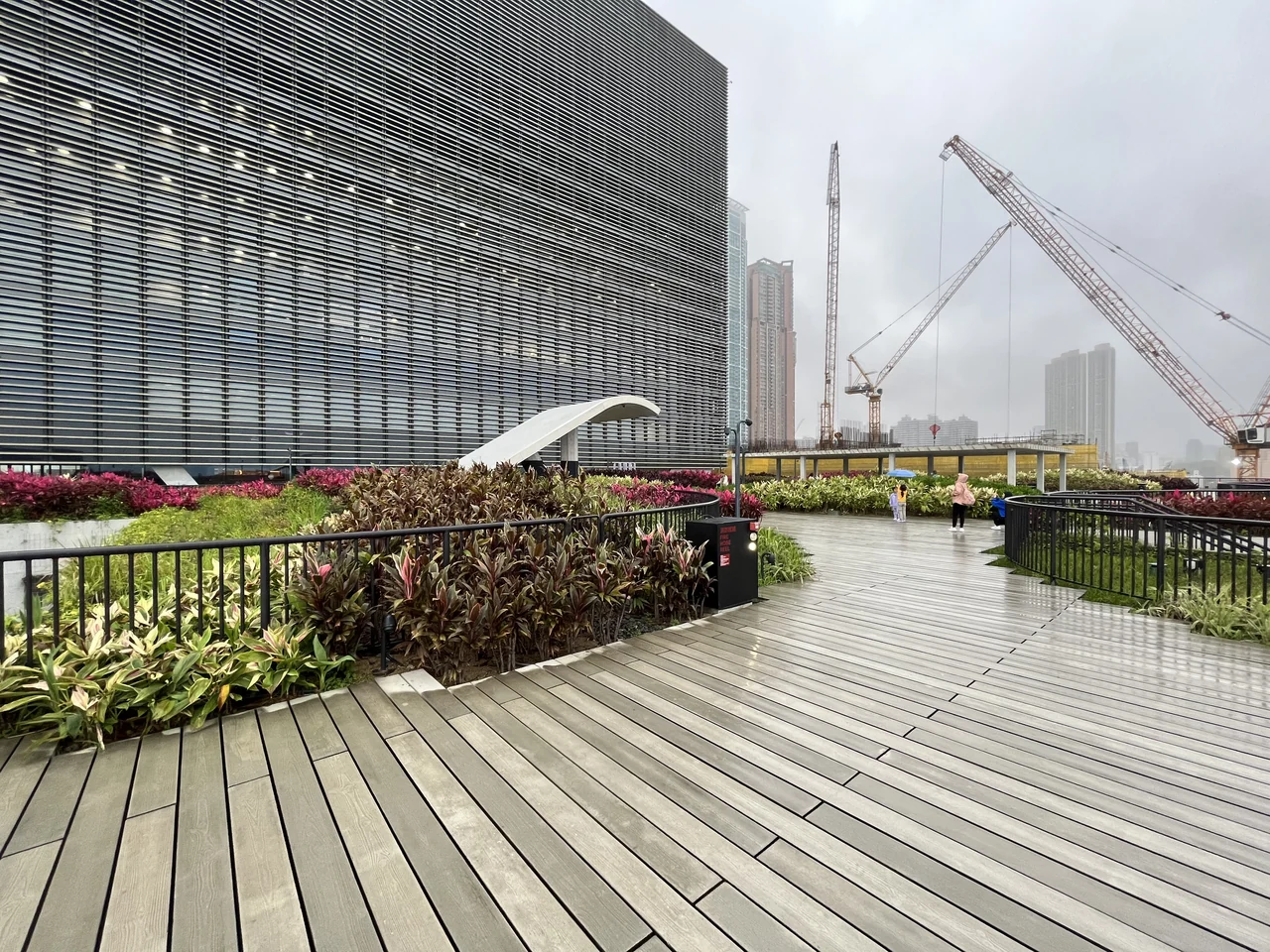
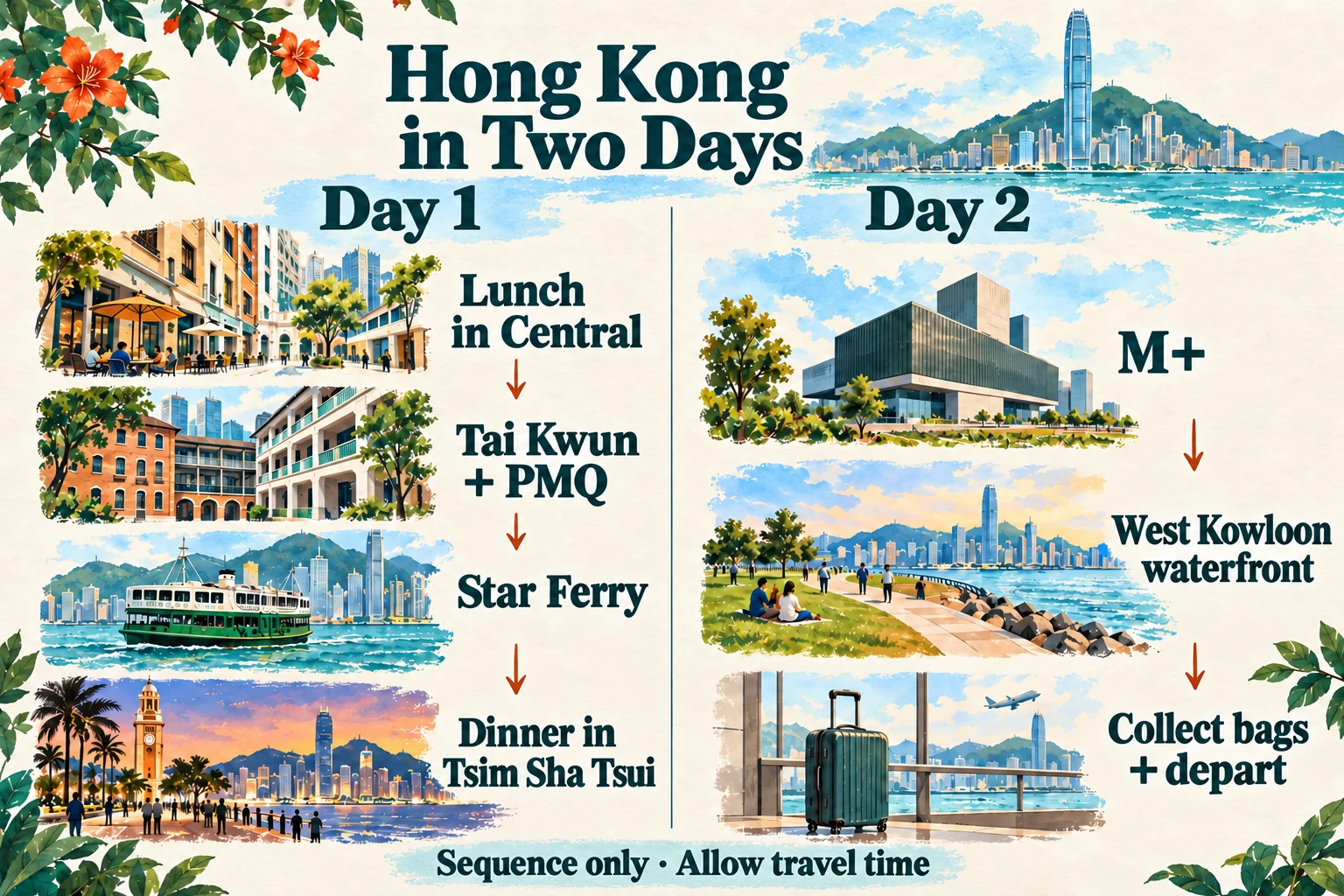
The Roof Garden is among the free spaces listed in the visitor guide and can provide an additional short stop when open and weather permits. It is separate from the Level 2 West Gallery and does not replace an exhibition ticket. To fit the show into a longer trip, use our Central, harbour and West Kowloon two-day itinerary and replace its museum slot rather than adding another rushed stop.
Your pre-journey checklist
- Confirm 17 October 2026–4 April 2027 and the Level 2 West Gallery.
- Avoid regular Monday closure; match the open day and admission session.
- Choose one or two main viewing questions and allow time for reading, listening and rest.
- Check standard, concession or combo eligibility; investigate cinema and other programmes separately.
- Bring a small bag and headphones, and confirm storage, borrowed equipment and accessible routes where needed.
Sources & further reading
This article draws on the media coverage and public information below. Event and transport arrangements can change; check the latest details before travelling.
- M+: Myths and Monsters exhibitionmplus.org.hk (Opens in a new tab)
- M+: curatorial and ticketing announcementmplus.org.hk (Opens in a new tab)
- M+: current ticketsmplus.org.hk (Opens in a new tab)
- M+: plan your visitmplus.org.hk (Opens in a new tab)
- HK01: current exhibition reporthk01.com (Opens in a new tab)
Make it your journey
Choose an open day and the material you want to study before arranging travel from your hotel and onward. Leaving room in the visit makes it possible to move from recognising a familiar character to understanding the stories behind it.