The most rewarding part of Hong Kong's Lei Cheng Uk Han Tomb Museum is learning how brickwork, inscriptions and burial objects tell a story. It is not an underground walk: the tomb is closed to entry, and visitors look through glass at the entrance passage. Read the exhibition first, study the view into the tomb, then consider a short visit to the adjoining Han Garden. Allow about sixty to ninety minutes for that sequence, as an editorial planning allowance; travel is additional.
You can see into the tomb, but cannot enter it
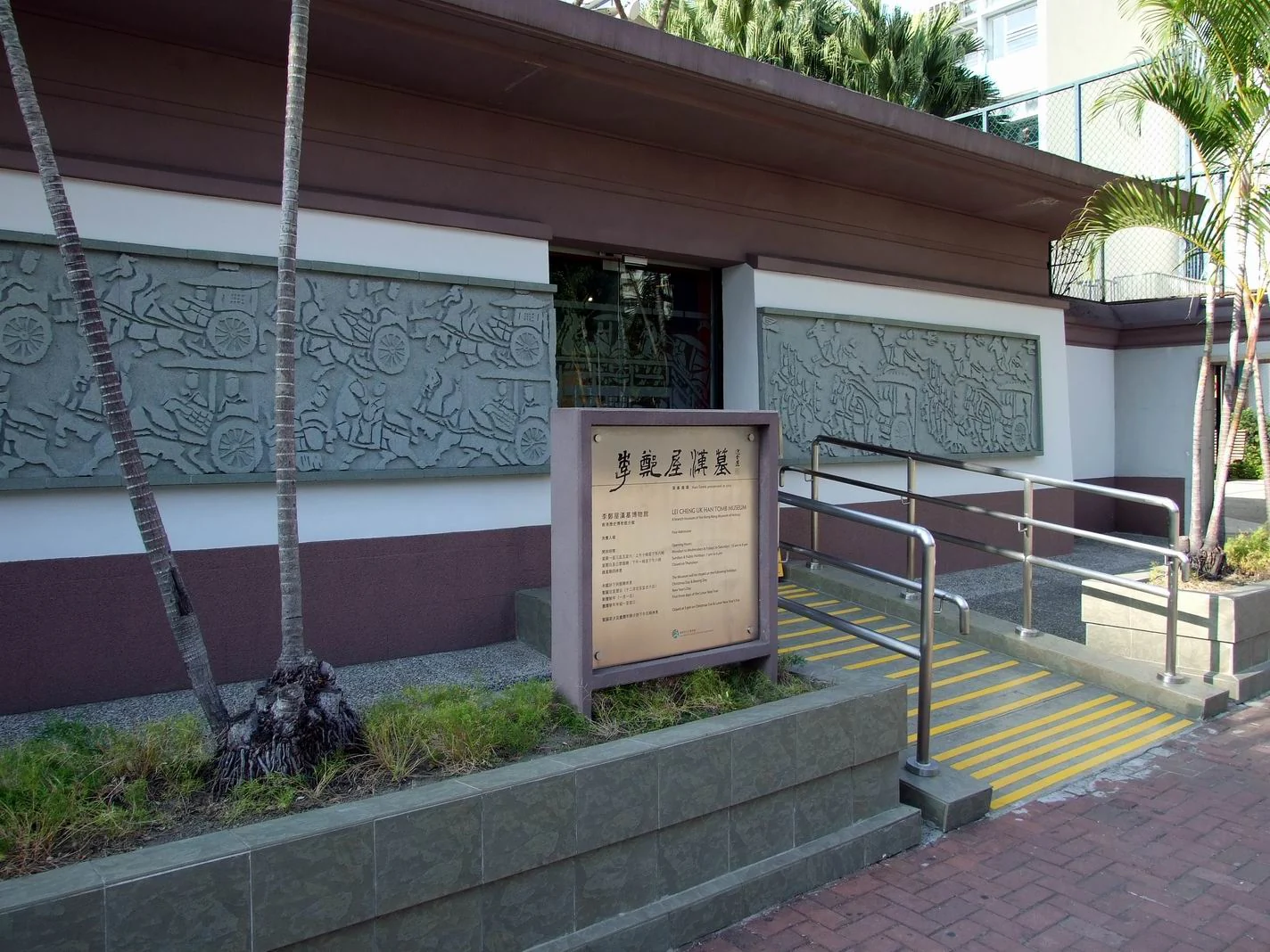
The museum is at 41 Tonkin Street in Sham Shui Po, Kowloon. The tomb was discovered in 1955 while a hillside was being levelled for the Lei Cheng Uk Resettlement Area. Excavation and conservation led to the museum at the original site. The museum dates it to the Eastern Han dynasty, AD 25–220, on evidence from its form, brick inscriptions and excavated objects; it became a declared monument in 1988. Museum introduction and visitor information
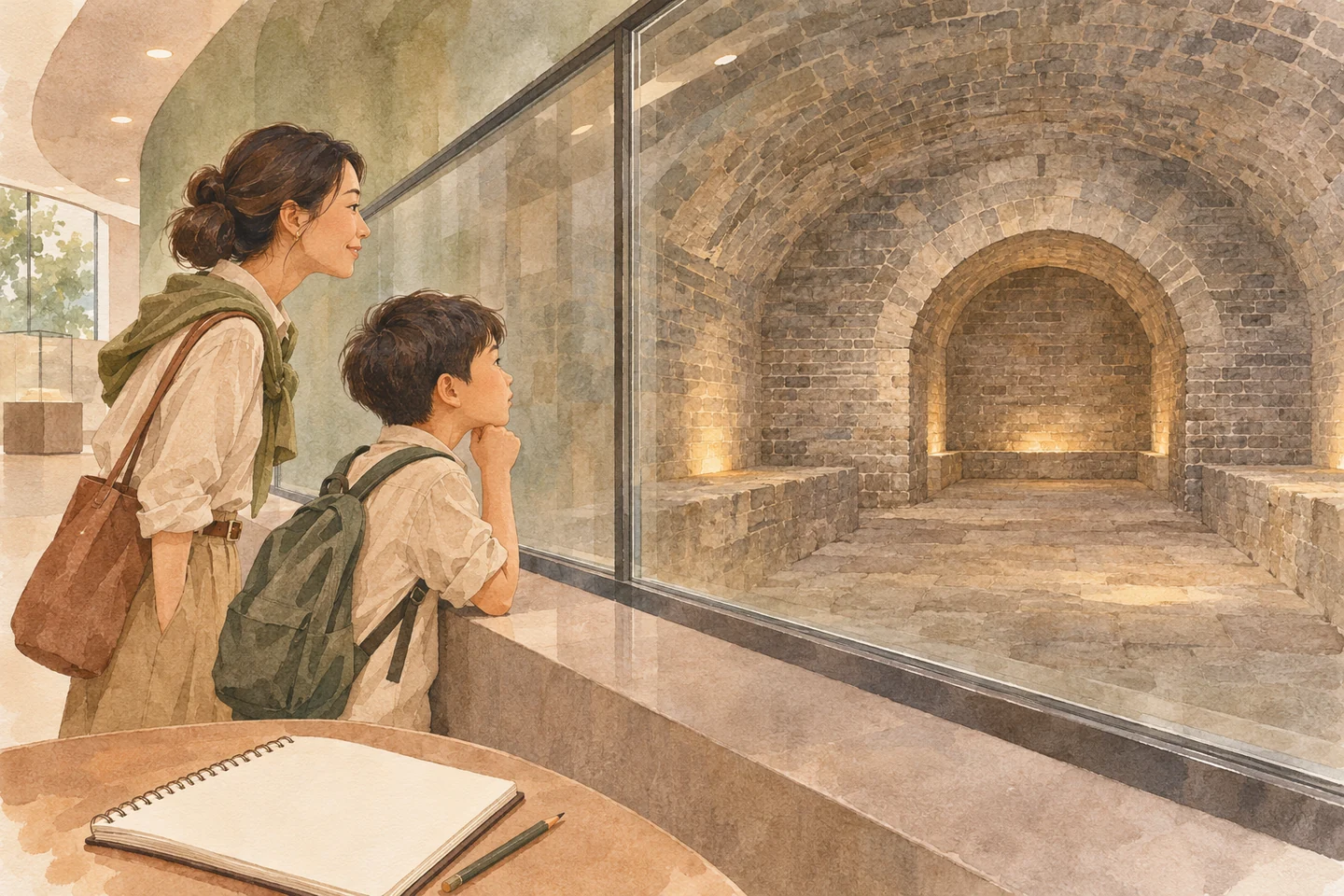
The interior remains closed to maintain the temperature and humidity required for preservation. Start with the exhibition, then move to the viewing glass at the passage. Seeing part of the interior from there is a different experience from entering all four chambers. Explain that distinction beforehand if someone is expecting underground exploration, so the visit can be planned around what is actually available.
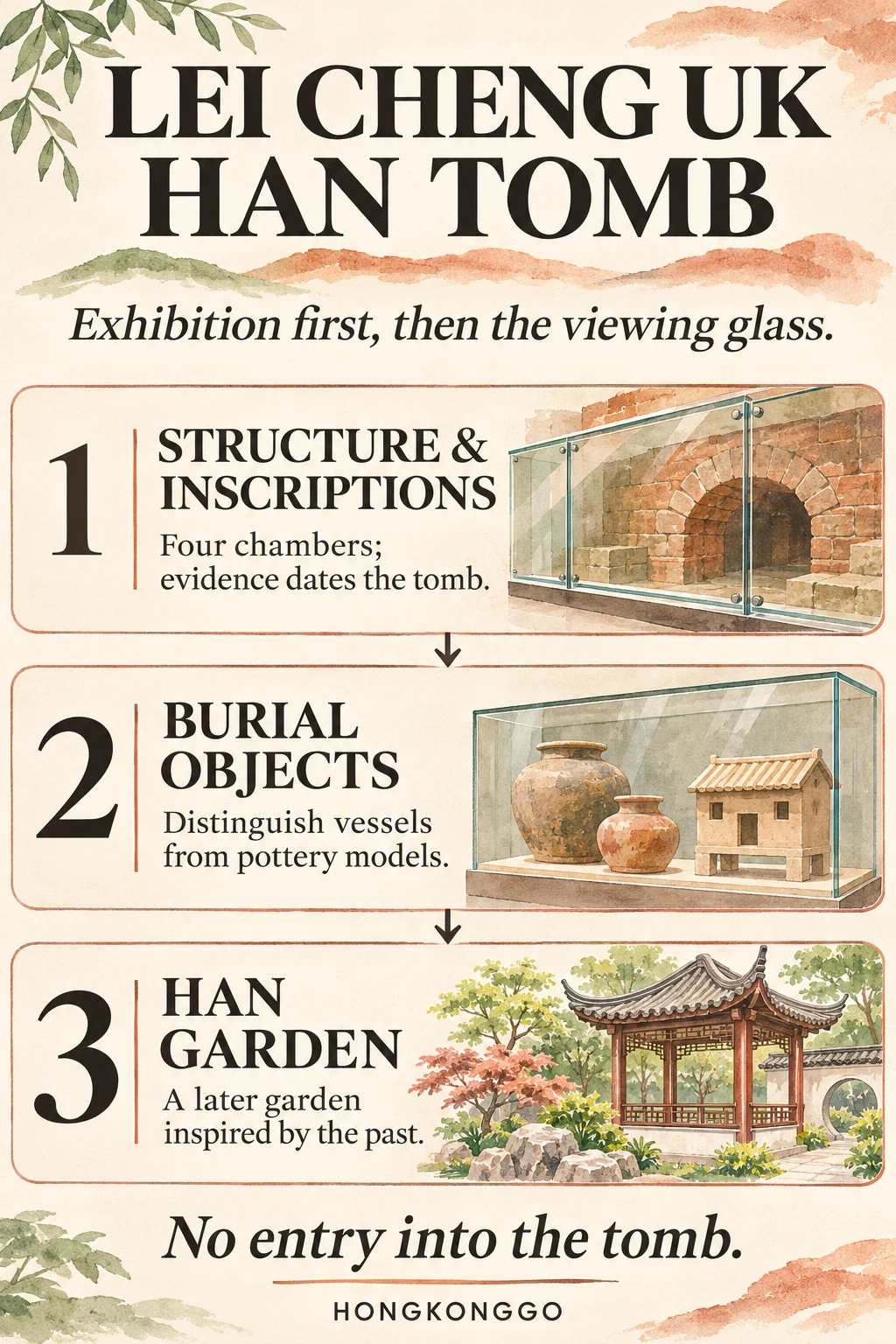
The museum currently lists an exhibition on the Han tomb and a photographic exhibition about Silk Road trade during the Han dynasty. Give priority to the archaeological material directly connected with the site, then consider the wider trading context if time allows. A plan of the chambers makes the limited view through the glass easier to understand. For step-free needs, ask the museum about its entrance ramp and the actual viewing position rather than relying on exterior photographs.
The shape of the chambers helps date the tomb
The tomb has front, rear, left and right chambers, together with an entrance passage, arranged in a cruciform plan. The front chamber has a domed roof; the other three have barrel vaults. Use the exhibition's plan and structural explanation to place a visible arched opening within the whole: which chamber does it lead to, and which direction is difficult to see from the glass? One opening does not mean the entire tomb is a long corridor. Museum's tomb exhibition
Building a curved surface with bricks differs from laying a flat slab over walls. Follow the curve of the visible brick joints, then compare it with the construction explanation. There is no need to decide on the spot whether each brick is original, or to calculate dimensions from an illustration. The diagrams here organise observations; they do not replace archaeological surveys or the museum's structural drawings.
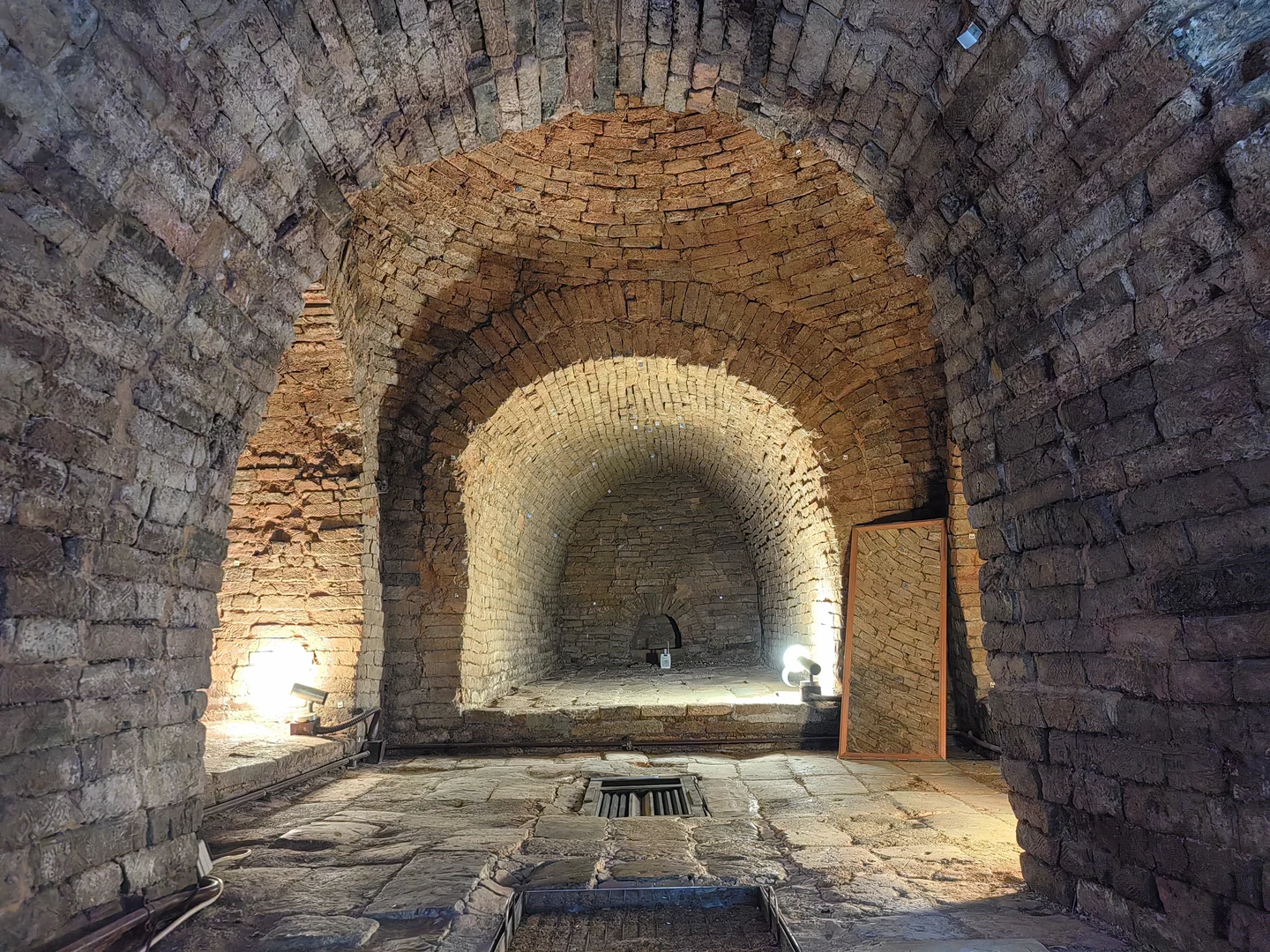
This August 2026 photograph makes the brick arrangement easier to distinguish, but its camera angle is not permission to enter. Remain in the permitted viewing area. Reflections, lighting and distance affect how much you can see on the day; do not press against the glass or cross a barrier for a clearer photograph.
Inscriptions: separate the discovery from its interpretation
Most bricks have no writing. Some carry incised or stamped characters, geometric patterns or animal designs. Museum examples include “大吉番禺”, “番禺大治曆” and “薛師”. Begin with the original characters and their transcription, then see how researchers connect them with the date of the tomb, the historical region and its makers.
A 2026 Antiquities and Monuments Office article explains the administrative context of Panyu, written “番禺”, and the interpretation of “薛師” as a clue to a craftsman's surname and role. These are not modern destination labels, and a name on a brick is not automatically the identity of the person buried. Dating and interpretation depend on combining different kinds of evidence. AMO: clues to Hong Kong's history two thousand years ago
With children, one useful question is: what do the characters let us know, and what remains unknown? No human bones were found in the tomb. The available evidence does not establish a particular named person or social identity as its occupant. Media discussion about that identity can spark curiosity; distinguishing physical evidence from interpretation or hypothesis is more valuable than choosing the most dramatic answer.
Fifty-eight burial objects: vessels and miniature buildings
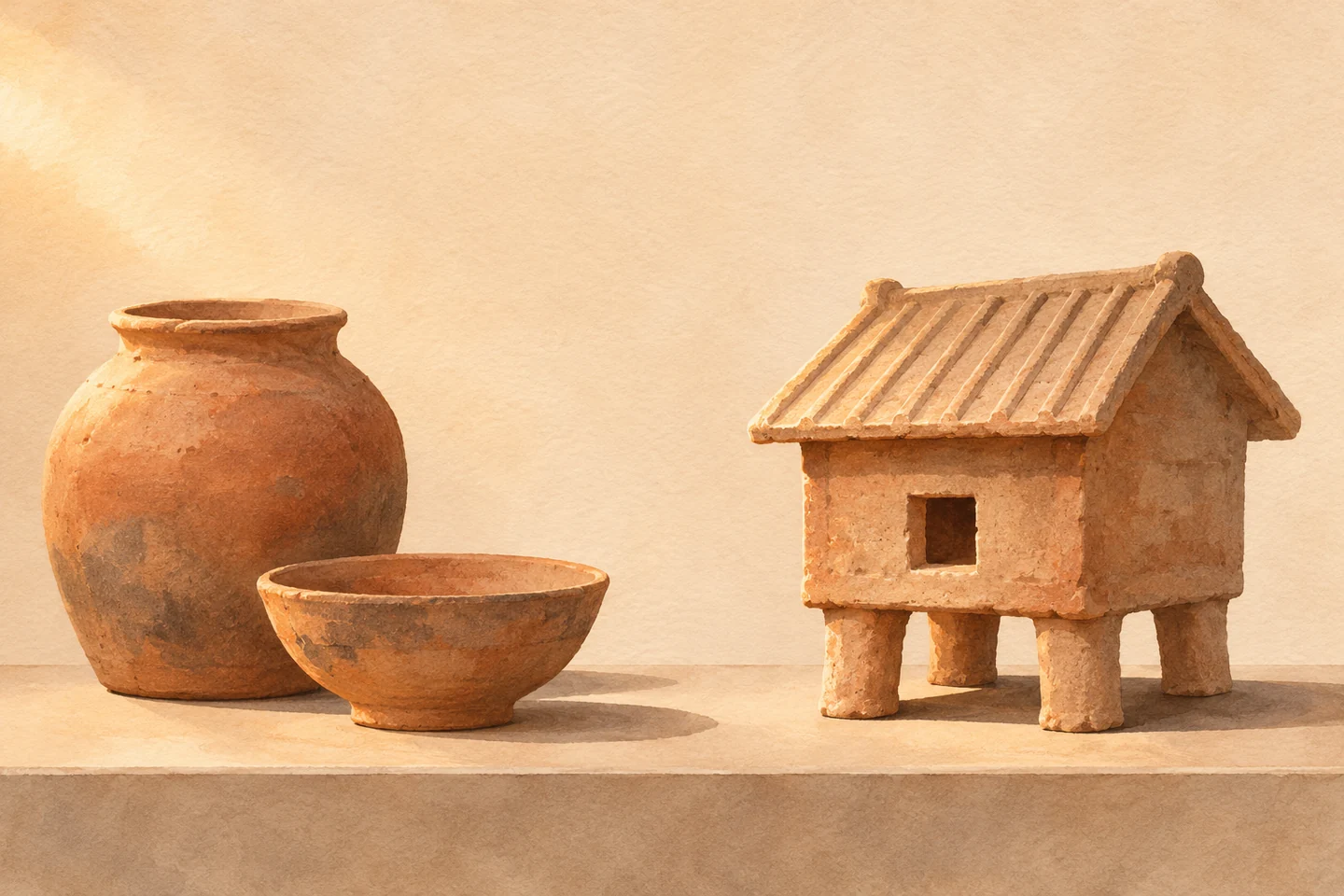
The museum records fifty-eight excavated objects: fifty pottery items and eight bronze objects. The pottery includes forms associated with cooking, eating and storage, alongside models of houses, granaries, wells and stoves. The bronze objects include a basin, mirrors, bells and bowls. This turns the visit from simply asking how old the tomb is to considering how vessels and small models represent arrangements for life.
Choose one vessel and identify its rim, body and base before comparing it with a building model. A form may suggest storage or cooking, but use the display label to confirm its name and interpretation. A granary model has a roof and openings; that does not make it a scale drawing that can simply be enlarged into an actual village. Distinguish excavated objects, reconstruction models and explanatory displays through their labels.
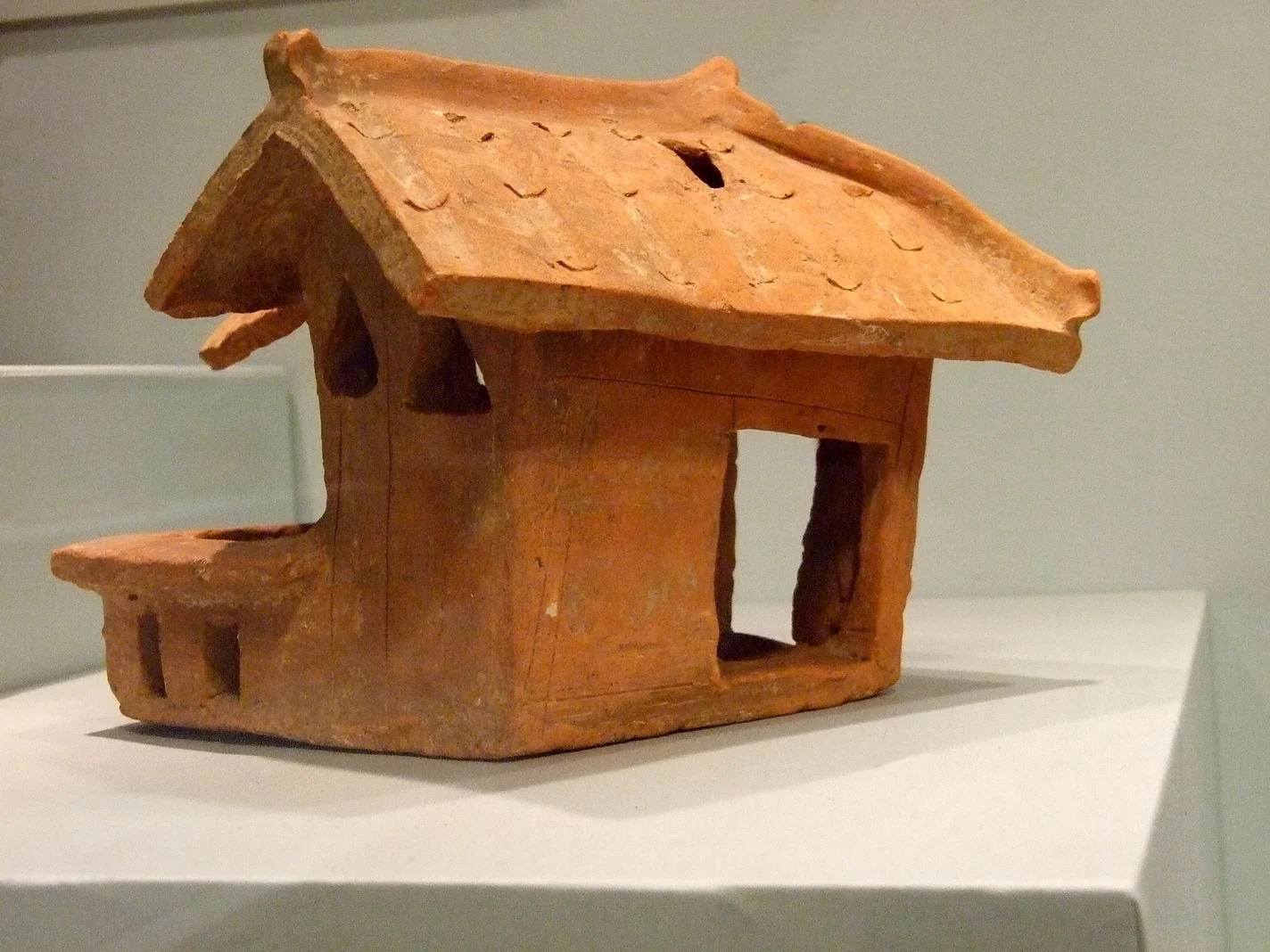
This 2008 photograph shows a pottery granary model. Look first at the roof, openings and supports, then consult the explanation. A Hong Kong Museum of History architectural article used pottery houses and granaries to discuss Han-period construction: small burial objects can also supply architectural clues. That article dates from 2011, and its description of a particular exhibition is not evidence that the same exhibition is running today. Museum article on Han architecture
Comparing one model with one vessel is more memorable than copying fifty-eight names. Let each visitor select a detail: the slope of a roof, the width of an opening, or how a model stands. At the end, describe one visible shape and one use confirmed by a label, keeping guesses separate from answers.
Han Garden is a later garden, not an excavated landscape
The adjoining Han Garden has pavilions, bridges and water features. The Home Affairs Department describes it as a Chinese garden inspired by Han style. It can offer a short pause after the exhibition, but it was not discovered together with the tomb as an ancient Han garden. Official attraction introduction
The three parts have different roles. The tomb is an archaeological survival preserved in place. The exhibition interprets it through research and display. The garden responds to historical imagery in another way. Similar-looking architecture or photographs do not establish that everything belongs to the same historical layer.
If you have only half an hour, concentrate on the exhibition's structure and objects, followed by the viewing glass. Do not rush the displays merely to complete the garden. For more time in the district, consider a section of the Sham Shui Po fabric-market and street itinerary according to the time actually left, rather than adding two complete plans together.
Check Thursday and holiday arrangements before setting out
The following regular arrangements were read on the museum's website on 25 November 2026. Admission is free; an open museum does not mean entry into the tomb.
| Day | Regular arrangement |
|---|---|
| Monday to Wednesday, Friday to Sunday | 10:00–18:00 |
| Thursday | Closed, except public holidays |
| Christmas Eve and Lunar New Year's Eve | 10:00–17:00 |
| First two days of the Lunar New Year | Closed |
Plan travel to 41 Tonkin Street from your accommodation, allowing separately for station exits, crossings and finding the entrance. The museum lists an entrance ramp, automatic doors, tactile facilities and assistive listening facilities. For particular mobility or hearing needs, call +852 2386 2863 to discuss assistance and the viewing area. In severe weather, check museum and transport announcements rather than assuming an indoor exhibition will necessarily remain open.
Your pre-journey checklist
- Set the destination as Lei Cheng Uk Han Tomb Museum, 41 Tonkin Street, with travel time additional.
- Thursday is normally a closed day; check public-holiday and Lunar New Year exceptions.
- Study the exhibition plan, then look through the glass; do not plan to enter the tomb.
- Separate inscriptions and objects from unconfirmed explanations of the occupant's identity.
- Neither the pottery building models nor the later Han Garden is a complete reconstruction of the tomb's original surroundings.
Sources & further reading
This article draws on the media coverage and public information below. Event and transport arrangements can change; check the latest details before travelling.
- Hong Kong Museum of History: visitor informationhk.history.museum (Opens in a new tab)
- Museum: tomb structure and excavated objectshk.history.museum (Opens in a new tab)
- AMO: brick inscriptions and historical cluesamo.gov.hk (Opens in a new tab)
- Museum: Han architecture article (2011)hk.history.museum (Opens in a new tab)
- Home Affairs Department: museum and Han Gardengohk.gov.hk (Opens in a new tab)
- am730: archaeology featuream730.com.hk (Opens in a new tab)
Make it your journey
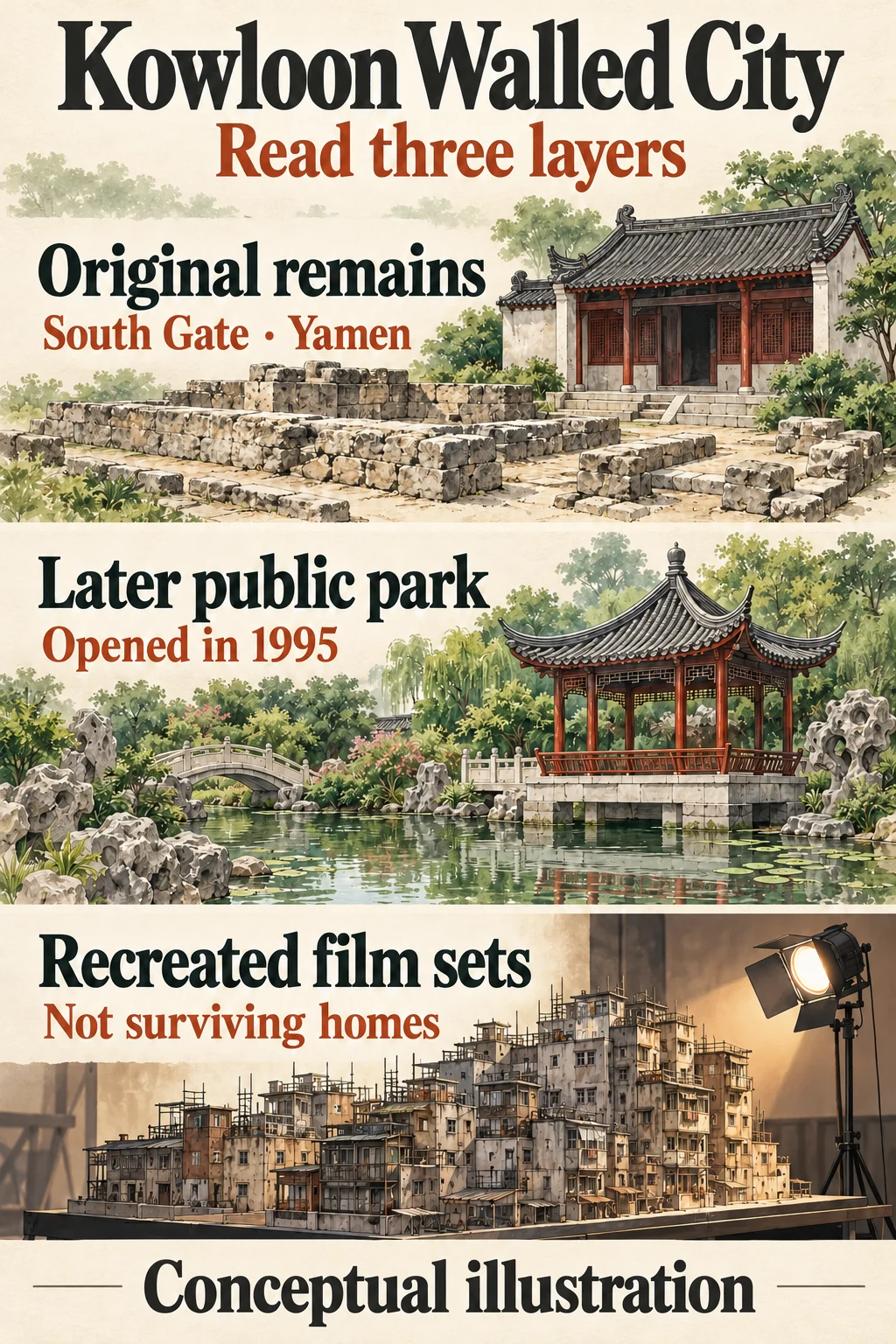
Leave with one brick arch, one pottery object and one question you would like to explore further. For another day's comparison of surviving remains and a later public space, see the Kowloon Walled City Park guide and consider how preservation works at sites from very different periods.