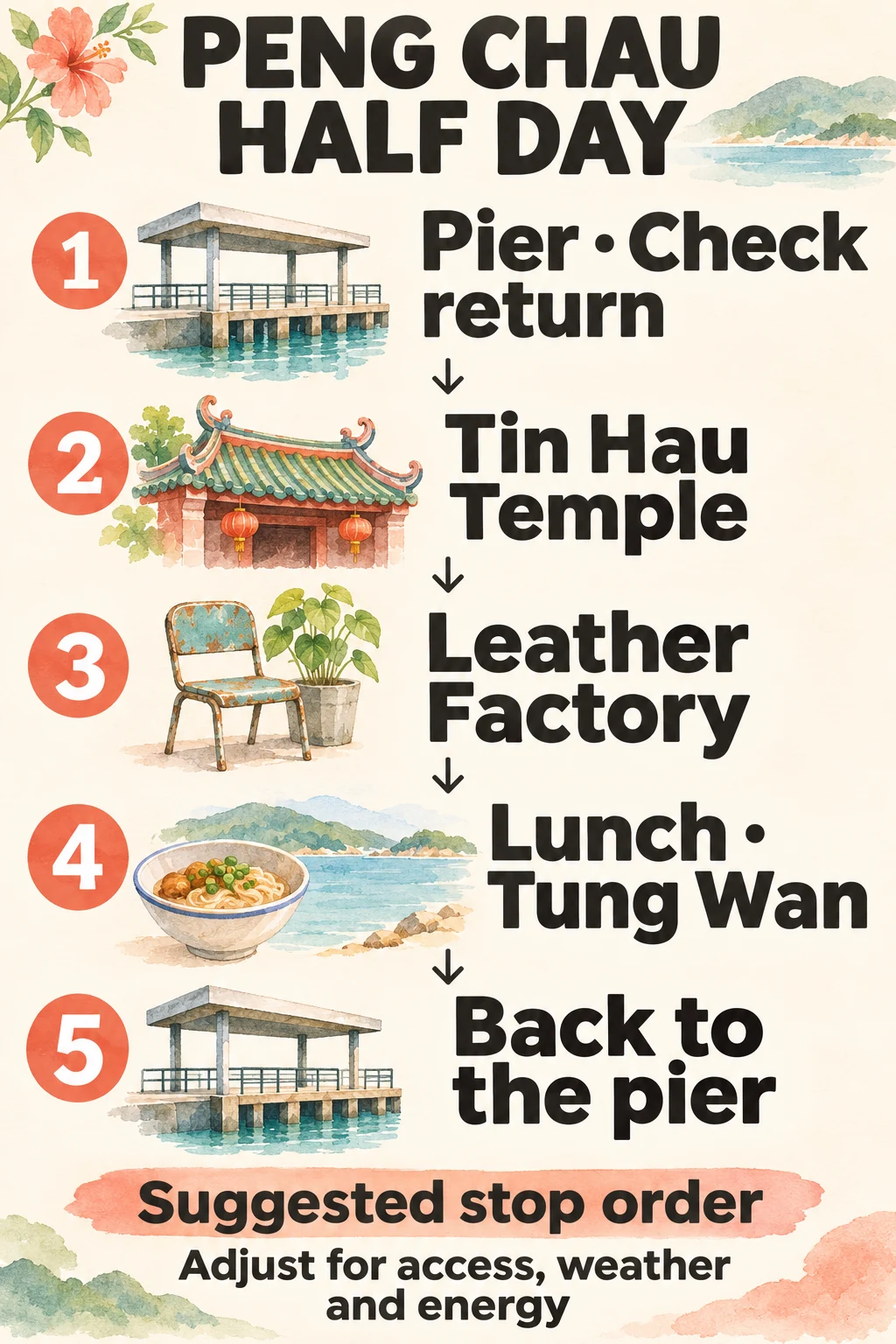
A half day on Cheung Chau can centre on Pak Tai Temple and Tung Wan: walk north from the ferry pier to study the temple, return through the village for lunch, then pause by the eastern bay before heading back to the same pier. Allow roughly three to four hours after arrival, with ferry travel additional. The official heritage page currently states that there is no access path to Cheung Chau Rock Carving, so this route does not climb down to find it or add Cheung Po Tsai Cave, hill trails and every snack stall.
Two shores and a temple still in use
After disembarking, establish the position of the western pier and Cheung Chau Bay, then save Pak Tai Temple and the eastern Tung Wan on your map. The temple stands north of the island's central area, facing Cheung Chau Bay; the Hong Kong Tourism Board gives its address as Pak She Street. Use public roads around the pier, Pak She Praya Road and Pak She Street, following signs rather than assuming every narrow lane on a phone is a visitor shortcut. Tourism Board temple introduction
The interest here is the transition between a working bay, a temple and a different shore, rather than a complete island circuit. Along the harbour, notice boats and everyday movement; at the temple, architecture and belief; across the village, an open sandy bay. Those three ways of looking are enough for a half day without adding hills or caves to prove that the outing is complete.
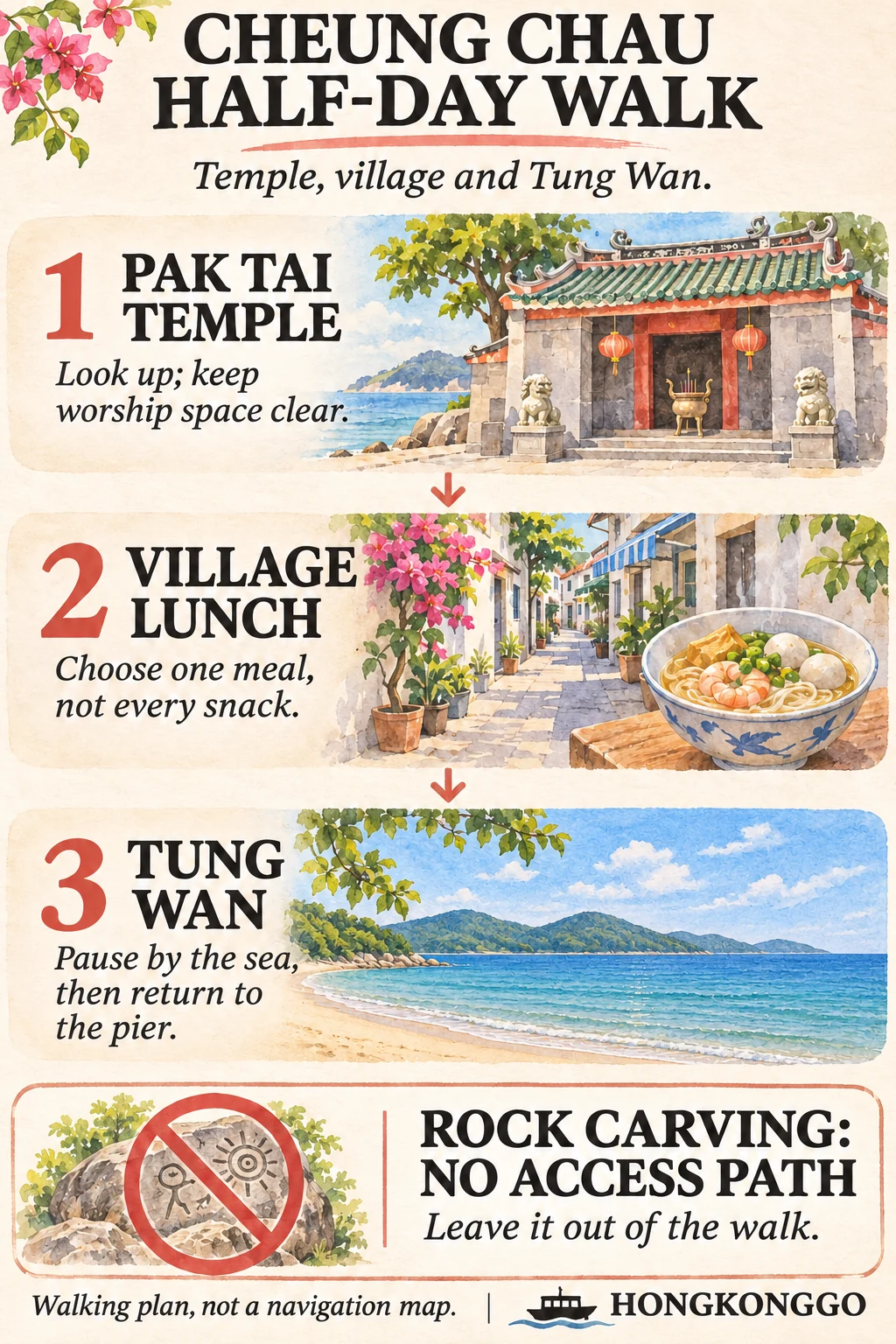
Three to four hours is an editorial allowance for walking, stopping and eating locally. It is neither a measured walking time nor inclusive of queues and sea travel. If you arrive in the afternoon, retain the temple and a meal, then decide whether to continue to the shore. Wheelchair users, visitors with pushchairs and anyone avoiding steps should check boarding and the actual temple entrance first. A route without a hill climb is not automatically threshold-free.
Pak Tai Temple: look from the roof ridge into the courtyards
The temple's formal name is Yuk Hui Temple. The Chinese Temples Committee records its construction in 1783 and its Grade I historic-building status. It remains a place of worship for Pak Tai, with other deities including Tin Hau, Kwun Yum and the year's Tai Sui. Start with the overall building from public space without obstructing access, then decide whether entry fits the day's arrangements. Chinese Temples Committee introduction
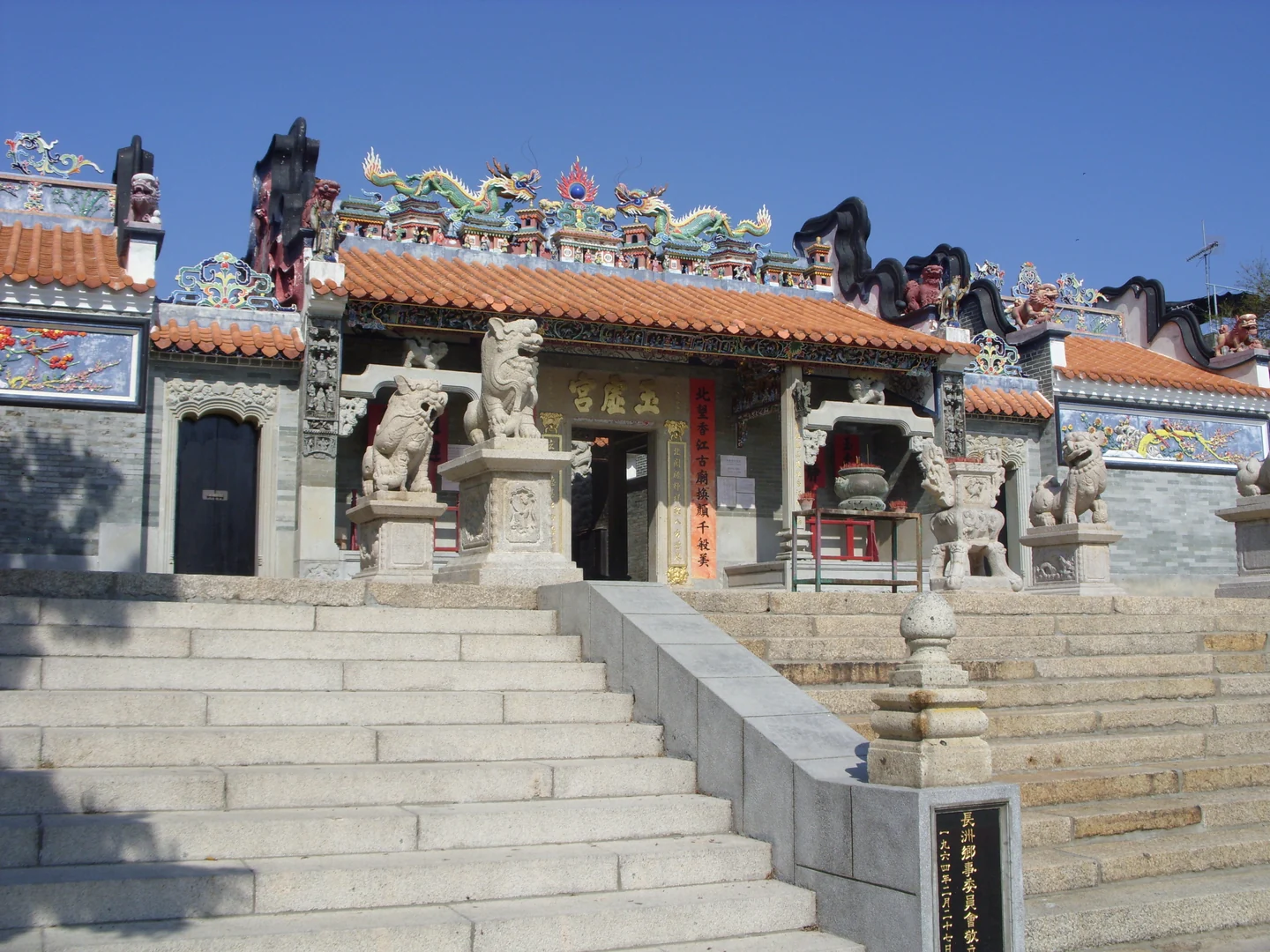
Look for three details. First, the decorated roof ridge: the committee describes dragons with a pearl and figures formed in ceramic ornament. From farther away it reads as an outline; a closer permitted view reveals its detail. Second, the layout of two halls, three bays and a courtyard reminds you that the entrance leads into a sequence rather than a single room. Third, the stone vessel in front is dated by the committee to 1861, the eleventh year of the Xianfeng reign. That is different from the temple's 1783 founding date.
Do not step onto a base to see the roof, or assign every figure a familiar story of your own. Keep visible form, an official explanation and a guess distinct. The steps and doorway in the photograph were recorded in 2009; they do not establish which entrance is open today. Follow current arrangements.
The space serves worshippers first. If people are praying, a ceremony is taking place or stopping inside would be inappropriate, the exterior still offers roof and façade details. Check notices or ask before photographing statues, rituals or people. Do not obstruct the doorway while waiting for a picture with nobody in it. A casual visit does not include a reserved guide or a special religious experience.
Hear the stories, and distinguish their dates and evidence
The committee's foundation account includes a tradition about an epidemic in 1777 and fishermen from Huizhou bringing an image of Pak Tai. It also records another account of an image brought from Tai Ping Shan Street on Hong Kong Island. These are ways the community remembers its faith, rather than medical explanations of cause and effect. Beliefs connecting Pak Tai with water and protection at sea help explain the relationship between this bay-facing temple and fishing life.
The beardless image of Pak Tai has a fire-rescue legend, while an old black sword is described as having been caught in fishermen's nets and estimated to relate to the Song period. Do not turn an estimate into a claim of modern scientific confirmation, or expect every object to be available for close viewing that day. You can leave with one architectural date, one local story and an understanding of which explanation each came from.
Many visitors associate Cheung Chau with the Bun Festival. Official material places the principal Tai Ping Ching Chiu observances on the fifth to ninth days of the fourth lunar month, while Pak Tai's birthday falls on the third day of the third lunar month. This is festival context, not a promise of bun scrambling or a procession during a November visit. Festival crowds, sites and access have separate arrangements: check that year's notices rather than applying an ordinary half-day plan unchanged.
Return to the village for a proper pause
Use public streets back towards the village for lunch. The island's variety of snacks need not become a requirement to queue repeatedly. Choose between a seated meal and a modest snack before continuing. With older relatives or children, sitting down, drinking water and finding suitable facilities may matter more than trying another two foods.
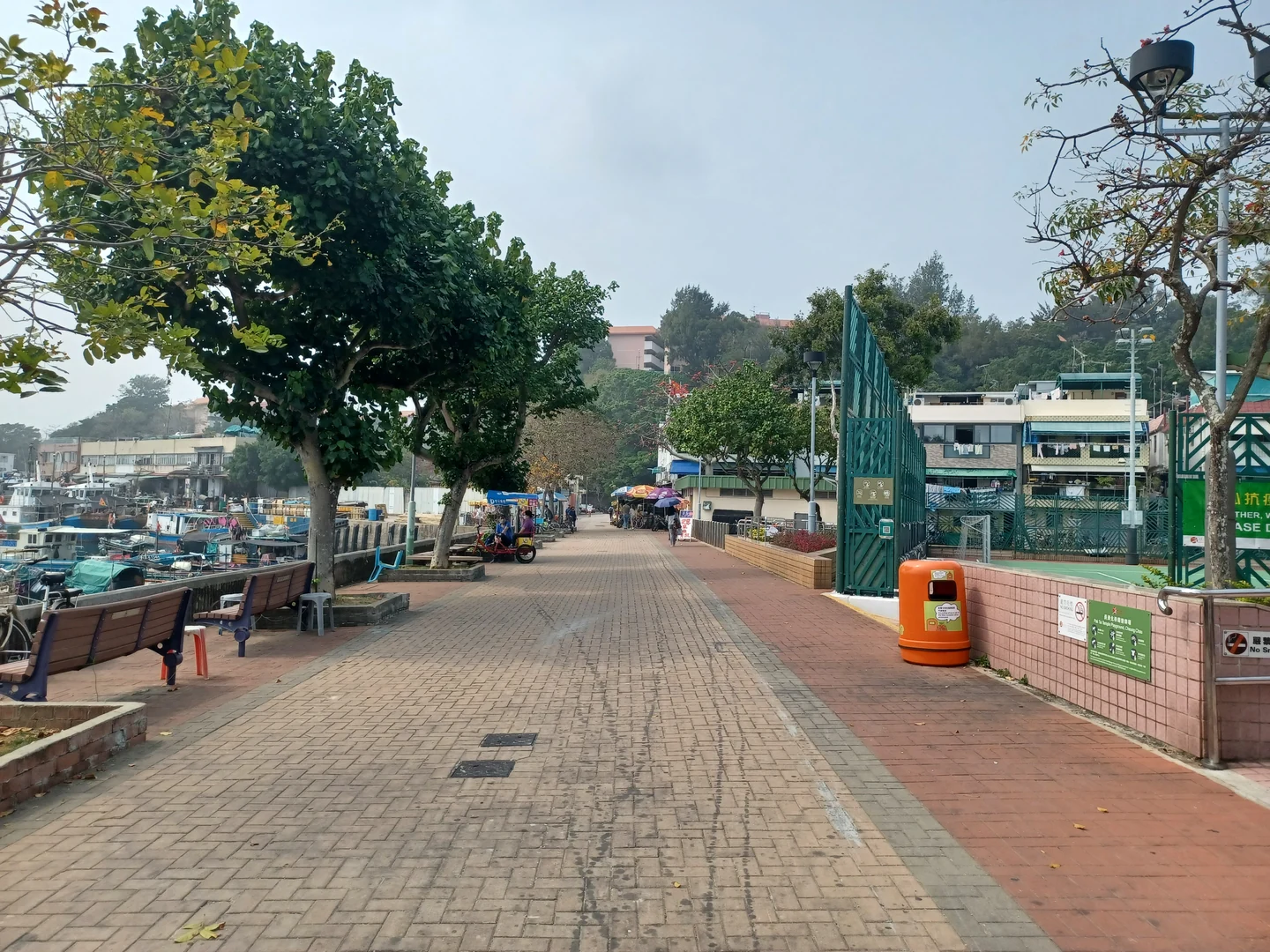
The historical Pak She Praya Road photograph shows public waterfront space beside everyday facilities. This is not an enclosed tourist walkway: residents, delivery workers and people walking bicycles need room too. Step safely aside for photographs without blocking doors, corners or the throughway. Ask businesses about today's menu, opening, wait and allergens, rather than treating a years-old feature as a promise about current prices or availability.
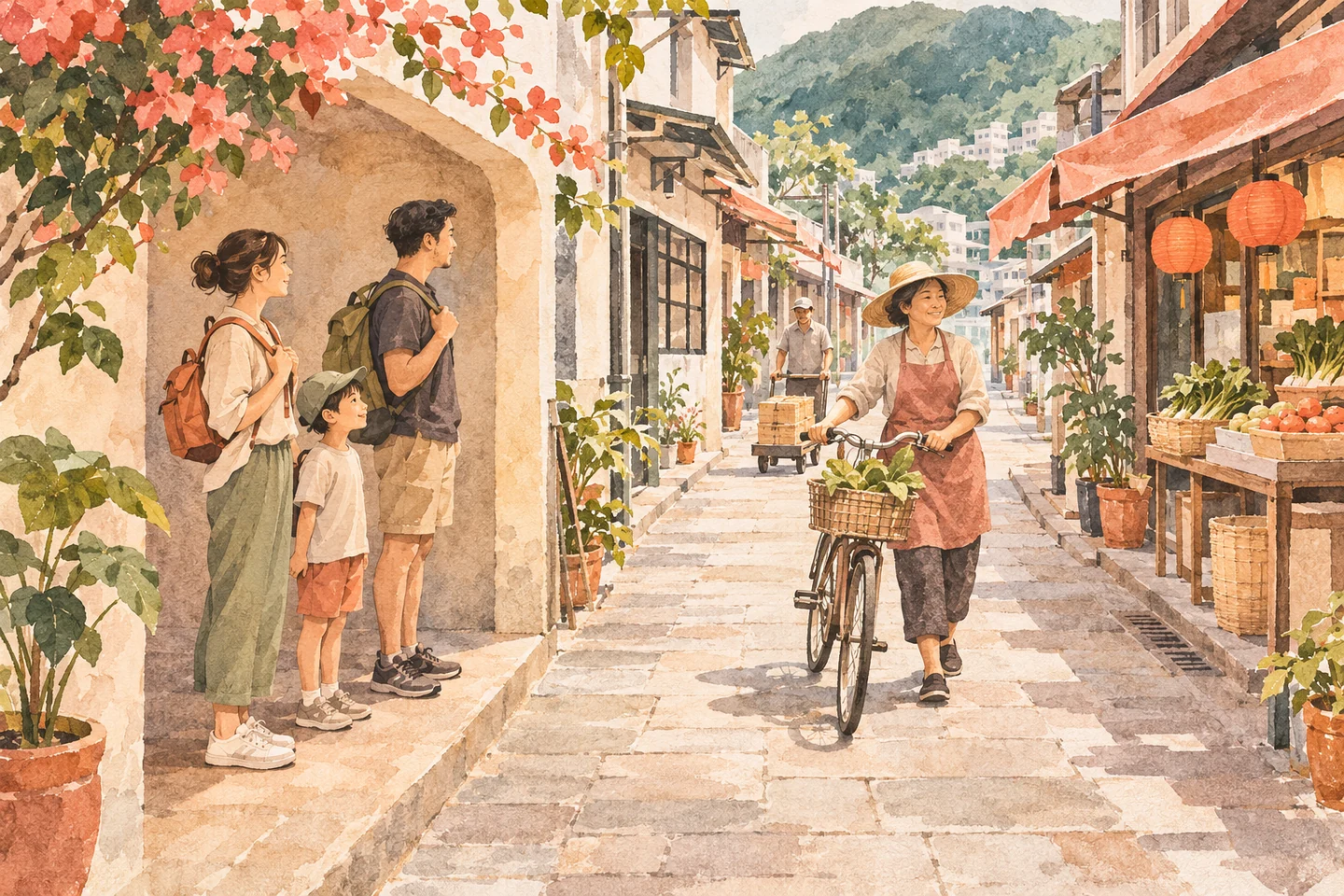
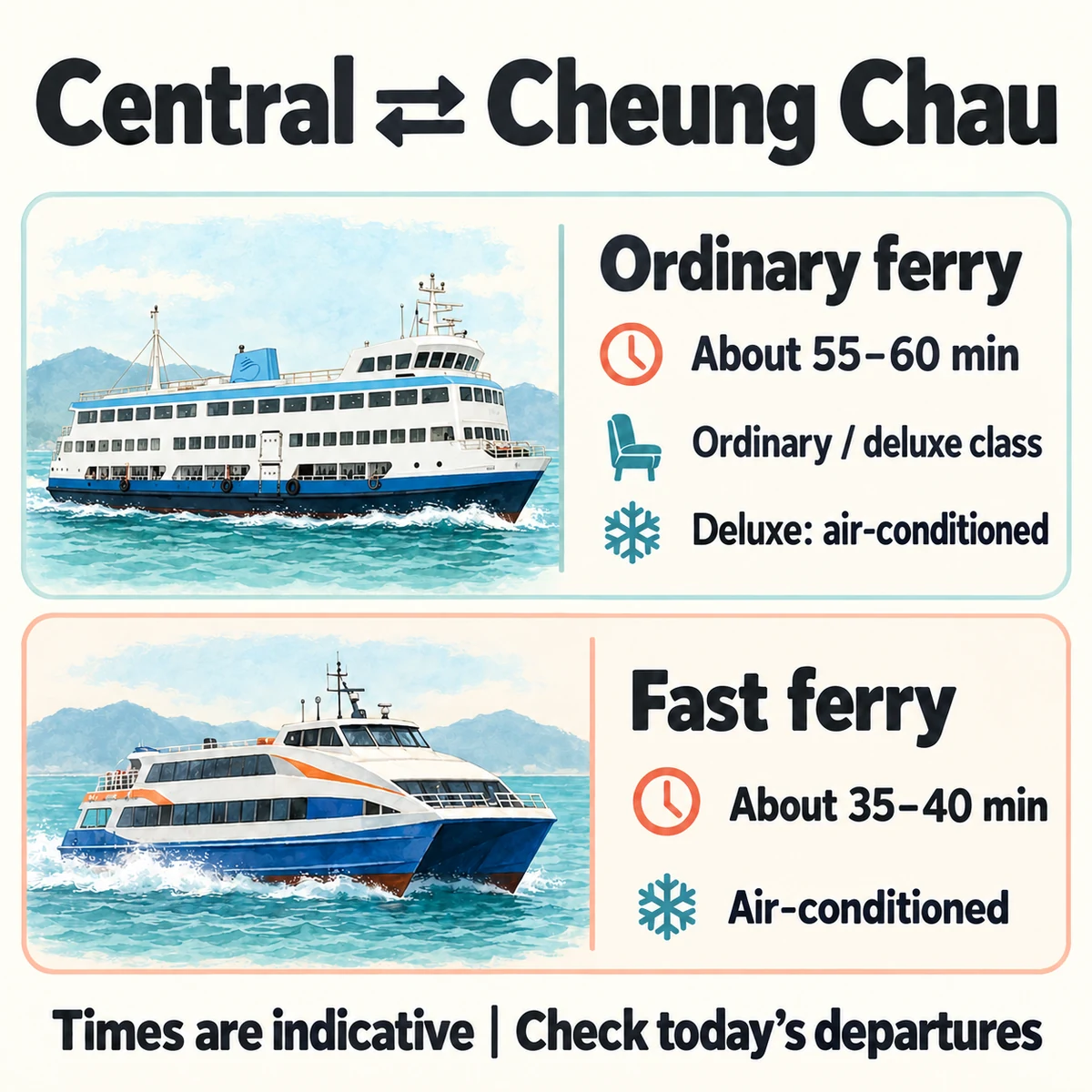
Check the return plan around lunchtime so that queuing does not consume the remaining margin. This article does not repeat detailed ferry classes and fare tables. First-time passengers can use our Central–Cheung Chau ferry guide before checking the operator's current page for their date and sailing. Arrange tickets, island walking and any city transfer as separate stages.
Tung Wan: a different shore, without an automatic swim
From the village, follow public directions towards Tung Wan around Tung Wan Road, noticing how enclosed streets open towards the sand. Take a short walk along an accessible waterfront section, sit if desired, and return through familiar public streets. This plan does not continue to Kwun Yam Wan, the island's southern end or a rocky coast route, and no single camera position is its finish line.
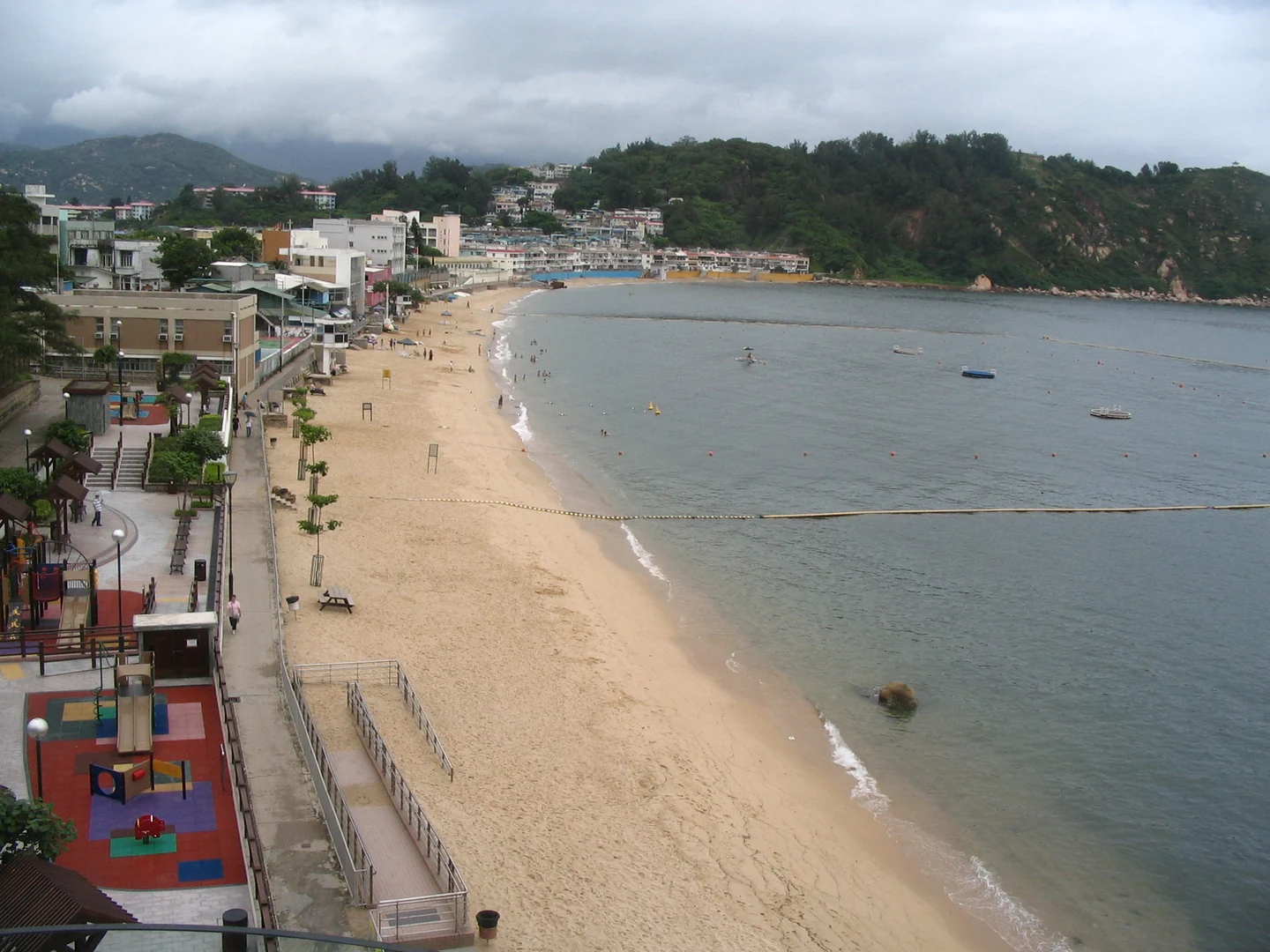
The 2007 photograph introduces the landform and shoreline. It does not show current water quality, sea conditions or lifeguard service. On 27 November 2026, the latest-grading field of the Environmental Protection Department's Tung Wan page stated that the beach was not graded during winter months. That does not confirm water suitable for swimming. A separate swimming plan requires current beach notices, lifeguard arrangements and weather checks, rather than an inference from an old photograph or annual ratings.
Shorten the shore stop in wind, rain or fatigue. You need not reach the far end of a beach to have visited it. Supervise children near the water and do not move onto slippery rocks to escape a crowd. If swimming is the main activity, give changing and rest their own time and reduce the temple and village sections.
Rock Carving: check access before planning a heritage stop
An important archaeological site lies nearby, but “nearby” does not mean a straightforward walk from the sand. The Antiquities and Monuments Office account records its discovery by a geologist in 1970. It is at the south-eastern end of the tombolo connecting the island's northern and southern parts, below the Warwick Hotel area, and became a declared monument in 1982. The patterns include incisions around small hollows; another group was exposed when soil was cleared.
The same official page currently states that there is no access path to the carving. This guide therefore treats it as further reading about the coast's history, without providing a scramble, barrier crossing or descent beside the hotel. An older travel feature calling it a convenient extra stop does not override current access information.
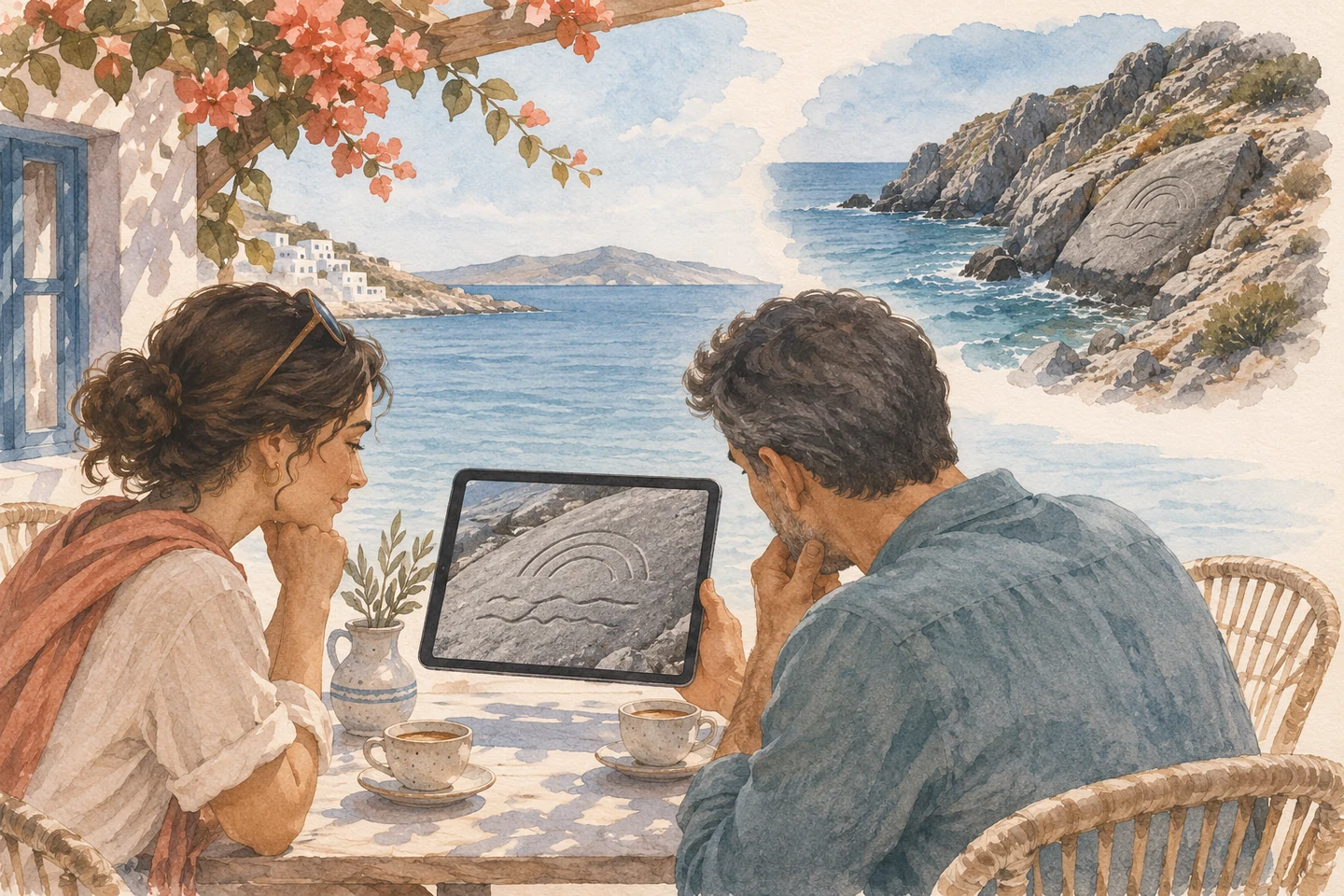
Use the official photographs and information to consider how curves, hollows and rock surfaces relate, then recall the coastal landform you saw. The tablet illustration represents digital study; its markings do not reproduce the actual carving. Interest in archaeology does not require physically reaching every site. Respecting the present absence of a path is itself part of understanding heritage conservation.
Finish the half day without adding a circuit
One flexible allocation is around half an hour for arrival and approaching the temple, forty-five minutes for architecture and an appropriate visit, an hour for village lunch and rest, and an hour for Tung Wan and returning towards the pier. Add a waiting allowance according to crowds. This is planning guidance, not a guarantee that each stage takes exactly that time. If entry is temporarily unsuitable, retain the exterior visible from public space. If weather is poor, shorten the waterfront rather than replacing it with a hill walk.
Leave time to walk familiar streets and locate the queue, without making the last boat your only option. For a flight or cross-border connection, work backwards from the journey after returning to the city before deciding how long to stay. Cheung Chau is not a car-based, stop-to-stop sightseeing route. A chauffeur transfer can connect with a lawful city meeting point around the piers, while island walking and the ferry remain separate arrangements.
Your pre-journey checklist
- Save Cheung Chau Pier, Pak Tai Temple and Tung Wan; omit caves and an island hill circuit.
- Distinguish the 1783 temple, the 1861 stone vessel and local traditions.
- Lunar festivals are not year-round performances; leave worship and residential access clear.
- Use Tung Wan for a shore break; historical photographs and ratings do not confirm swimming conditions.
- With no access path currently listed for the rock carving, explore it through official information instead.
- Allow separately for ferries, waiting and city connections, shortening the walk when needed.
Sources & further reading
This article draws on the media coverage and public information below. Event and transport arrangements can change; check the latest details before travelling.
- Chinese Temples Committee: Yuk Hui Temple, Cheung Chauctc.org.hk (Opens in a new tab)
- Hong Kong Tourism Board: Pak Tai Templediscoverhongkong.com (Opens in a new tab)
- AMO: Cheung Chau Rock Carving and access noteamo.gov.hk (Opens in a new tab)
- EPD: Cheung Chau Tung Wan beach informationcd.epic.epd.gov.hk (Opens in a new tab)
- HK01: Cheung Chau attraction feature (2021 background)hk01.com (Opens in a new tab)
Make it your journey
A roof detail, the different character of two shores and an understanding of a currently inaccessible archaeological site are enough to take from this half day. For a hotel or airport connection, select a realistic return sailing before agreeing the city meeting time.